
 Worksheets
Class_8_Science Quiz_2
Total questions: 175
Worksheet time: 2hrs 11mins
The cut of 'wool coat' of a sheep along with the thin layer of skin is called
Grease
Fleece
Wool
Burrs
The silkworm spins cocoon in the pattern of
Zero
1
8
6
The bacterium by which the people working in wool industry get infected is
Rhizobium
Anthrax
Streptococcus
Bacillus
In which of the following process new offspring with special characters is produced by selecting parents
Reeling
Selective breeding
Separating
Rearing
Which component is present in silk fibre
Carbohydrates
Lipids
Proteins
Fats
The following pictures show the particles of a substance in different states. All of the pictures show the same substance. Which is most likely a solid?


What form of energy cooks food in a solar cooker?
chemical energy
electrical energy
light energy
mechanical energy

What is the atomic number of oxygen?
5
Sandwich
8
17
What was the first animal sent into space?
Alfred the monkey
Laika the dog
Ursula the fish
Sandwich

How long does it take for light to get from the Sun to the Earth?
150 million years
10 seconds
8 minutes
Sandwich
Which particle is the most porous and allows for the most water to travel between them?
silt
sand
clay
loam

This term indicates the relative content of particles of various sizes, such as sand, silt and clay in the soil.
texture
type
pH
nutrient content

The leaves of a plant gets orange and yellow from the inside out due to a lack of what element?
Phosphorus
Potassium
Nitrogen
Nitrogen and Phosphorus
Dry cleaning" of clothes means ___________
putting out the clothes to dry in the sun
using a liquid other than water to clean the clothes
using water vapour to clean the clothes
using warm air to clean the clothes
Morning dew is an example of which portion of the water cycle?
transpiration
condensation
evaporation
precipitation
The food or chemical energy source made by plants through photosynthesis is:
water
glucose
sunlight
carbon dioxide
The inner wall of small intestine have millions of small finger like projection called
villi
trachae
appendix
oesophagus
Fat is completely digested in the
stomach
mouth
small intestine
large intestine
The enzymes present in the saliva convert
(a) fats into fatty acids and glycerol.
(b) starch into simple sugars.
(c) proteins into amino acids.
(d) complex sugars into simple sugars.
Indicator is a substance which shows different colours in acidic and basic solutions.
True
False
In the absence of which of the following will photosynthesis not occur in leaves?
vacuole
stomata
chlorophyll
cytoplasm
The acid present in the stomach
(a) kills the harmful bacteria that may enter along with the food.
(b) protects the stomach lining from harmful substances.
(c) digests starch into simpler sugars.
(d) makes the medium alkaline.
Two organisms are good friends and live together. One provides shelter, water, and nutrients while the other prepares and provides food. Such an association of organisms is termed as
saprophyte
parasite
autotrophs
symbiosis
Sodium hydroxide turns blue litmus red.
True
False
Which of the following raw material is available in the air for photosynthesis?
oxygen
carbon dioxide
nitrogen
hydrogen
Water from the undigested food is absorbed mainly in the
stomach
foodpipe
small intestine
large intestine
Tooth decay is caused by the presence of a base.
True
False
Boiling water is an example of what two types of heat transfer
Conduction and Radiation
Conduction and Convection
Radiation and Convection
Manure is added , when the soil is too ...................................
Acidic
Basic
Neutral
None of these
Common salt is
Acidic
Basic
Neutral
None of the snove
Milk of Magnesia is used as an _------.
(a)
Lime water turns
Blue litmus red
Red litmus blue
No change
Neutralisation is a reaction between
Acid and base
Acid and a neutral substance.
Two acids
Two bases
Sting of Ant contains _-----.
(a)
The taste of acid is ---- and taste of base is -----.
(a)
The plant from which litmus is extracted is called -----.
(a)
Turmeric turns red with----.
(a)
China rose solutions turn_-------- with acid and turns -------- with base.
(a)
The acid present in tamarind is
Oxalic acid
Tartaric acid
Formic acid
Acetic acid.
The gas given out during burning is ---------.
(a)
The metal used in galvanisation
Copper
Bronge
Zinc
Chromium
The chemical name of rust is-------.
(a)
When magnesium ribbon burns in air _--------- is formed
(a)
Copper sulphate + iron = ------- + ----------.
(a)
Lime water turns milky due to the formation of ---------.
(a)
The conditions required for rusting are _-------- and ---------
(a)
______ takes in food by the use of pseudopodia.
Goat
Tiger
Amoeba
Human
The inner walls of the stomach secrete _________.
Mucus & hydrochloric acid
Bile
Lime
Salt
______secretes pancreatic juice.
Liver
Brain
Pancreas
Skin
The ___ helps in mixing saliva with food.
Heart
Stomach
Nose
Tongue
The Digested food is absorbed by____.
Small Intestine
Large Intestine
Lungs
Brain
____ is the largest gland in our body.
Skin
Hand
Liver
Leg
Amoeba digests its food in the ____.
Food vacuole
Stomach
Liver
Intestine
Digestion starts from _____.
Mouth
Stomach
Liver
Ribs
Mostly grass eating animals are called____.
Carnivore
Omnivore
Ruminants
Scavenger
Liver secrets _____.
Acid
Bile Juice
Base
Water
The process of breaking down of food is called__.
Digestion
Ingestion
Excretion
Respiration
The process of food intake is known as ______.
Excretion
Calculation
Respiration
Ingestion.
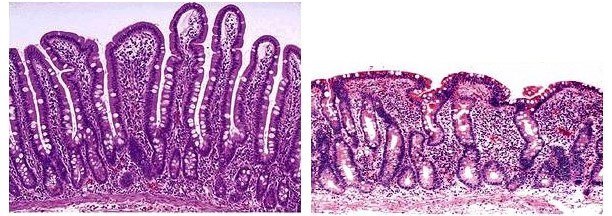
The piercing and tearing teeth is called
incisor
Canine
Pre-molar
Molar
Choose the correct order after reading the statement below.
Digestion is a complex process involving:
Ingestion, Absorption, Digestion, Assimilation, Egestion
Ingestion, Digestion, Assimilation, Absorption, Egestion
Ingestion, Digestion, Absorption, Assimilation, Egestion
Ingestion, Absorption, Assimilation, Digestion, Egestion
The mode of feeding of the mosquito_____.
Chewing
Cuddling
Scraping
Sucking
In _____ most of the nutrients are absorbed by the small intestine.
Lotus plant
Rosemary
Human beings
Ant
The enzymes present in the saliva convert
fats into fatty acids and glycerol.
starch into simple sugars.
proteins into amino acids.
complex sugars into simple sugars.
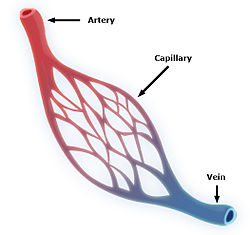
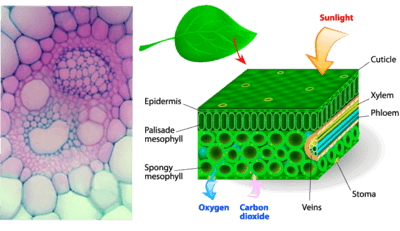
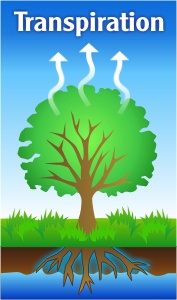
Recall that the movement of food in the phloem is called.
Translocation
Transpiration stream
Evaporation
Respiration
Cyclones of American continent are called typhoons.
True
False

A dark funnel shaped cloud that reaches from the sky to the ground is
Hurricane
Tornado
Typhoon
Thunderstorm
Which of the following is not a type of silk?
Mulberry silk
Tassar silk
Mooga Silk
Moth Silk
Which of the following is not a method of heat transfer?
Conduction
Induction
Covection
Radiation

Identify the process:
Shearing
Scouring
Combing
Sorting
Sodium hydroxide and Hydrochloric acid reacts to form
Sodium Chloride
Sodium
Hydrogen gas and Chlorine gas
Sodium hypochlorite
How crystals of pure substances are formed?
Crystallization
Chromatography
Peptization
All of the above
Which of the following is generally not predicted in daily weather report?
Temperature
Pressure
Humidity
Rainfall
4.Plant remove excess water in the form of vapour by the process of (a)
5.The process of inhalation and exhalation of air is important to the (a) process.
10. Which of the following is a food factory of a plant?
root
shoot
leaf
stem
12. Which of the following protects the flower in the bud state?
sepal
petal
leaf
stem
15. Animals having backbone in their body are called (a)
16. Hard covering of a snail is called (a)
17. The phylum of microorganism is (a)
18. The animals having cylindrical and unsegmented body are kept in the phylum (a)
19. Which one of the following animals belongs the phylum Arthropoda?


20. Which one of the following is kept in the phylum Aschelminthes?


21. What is the locomotory of the hydra called?
setae
tentacle
flagellum
cilia
22. Which one the following belong to the phylum Mollusca?
octopus
crayfish
hydra
sea anemone
22. Which one has no tissue?

crayfish
jellyfish
spongilla
………….do not have chlorophyll and cannot
perform photosynthesis.
Lotus
Fungi
Cactus
Cactus said- My fleshy, green part is a leaf
True
False
The gradual changes which occur in the body parts and in the behavior of organism to adjust with their surrounding is called ---------------------
Classification
Adaptation
oxidation
Lizards uses its ----------------- for creeping.
Muscles
legs
tongue
The method of binomial nomenclature was suggested by Darwin
TRUE
FALSE
_____ adapt to any kind of habitat
Insects
Birds
Fox
Long ears are seen in____
Carnivores
Herbivores
None of the above
Cuscuta have___
Fibrous roots
Tap roots
Haustorial roots
Substances which are bitter in taste and feel soapy in texture are known as
Bases
Acid
Special type of substances are used to test whether a substance is acidic or basic. These substances are known as
Indicators
Gudhal
None of the above

Identify the image.
Fungus
Lichens
Plant
Acids turn ____________ and Bases turn_____________.
Both turn red litmus blue
Blue litmus red, Red litmus blue
Both turn blue litmus red
No change
An acid and a base neutralise each other and form __________
Remains the same
Chemical substance
Salt
None of the above
The cell is enclosed by thin outer body known as
Nucleus
Cell membrane
Stomata
Cytoplasm
Cuscutta is the example of-
Parasite
Insectivorous Plants
Saprotrophs
Host
The process of Photosynthesis produces
Carbon Dioxide
Nitrogen
Oxygen
Hydrogen
Ultimate source of energy for all living organisms is
Plants
Atmosphere
Earth
Sun
Foods synthesized in the process of Photosynthesis by plants is stored as
Starch
Protein
Vitamins
Fats
Which of the following is a parasite
Fungus
Cuscuta
Mushroom
Bacteria
Which of the following is not necessary for photosynthesis
Chlorophyll
Carbon dioxide gas
Oxygen
Water

Which plant part collects the sun's energy and makes food?
Leaf
Stem
Roots
Flower

Leaves absorb CO2 through...
mouth.
stomata.
nose.
What is the equation for photosynthesis
Carbon dioxide + water sunlight + chlorophyll = glucose + oxygen
Glucose + water + sunlight + oxygen = carbon dioxide
What protects Stomata and helps it in opening and closing?
Guard Cells
Leaf
Stem
Carbon Dioxide
Organisms which prepare food for themselves using simple naturally available raw materials are referred to as
heterotrophs
autotrophs
parasites
saprophytes
The device used to close or open an electric circuit is
switch
Ammeter
Voltmeter
Resistance
Electric bulb converts electrical energy into
sound energy
mechanical energy
light energy
Magnetic energy
The safety device used for electrical appliances is
resistance
Fuse
Connecting wire
None of these
A coil refers to
an electric wire
a fuse
a wire twisted in the form of a circle
None of these
In an electric bell, which of these gets attracted to the electromagnet?
the hammer
the soft iron strip
the screw
None of these
An electric circuit is a closed path in which current flows.
True
False

Identify the circuit given here.
Close circuit
Open circuit
When you breathe, your lungs take in ___ and remove ___.
air/oxygen
oxygen/carbon dioxide
carbon dioxide/waste
waste/air
.
Which of the following option presents the passage of air from outside to lungs?
nostril, trachea, nasal cavity, lungs, bronchi
nasal cavity, trachea, lungs, nostril, bronchi
lungs, bronchi, nasal cavity, trachea, nostril
Nostril, nasal cavity, trachea, bronchi, lungs
Which equation shows the reaction for anaerobic respiration?
carbon dioxide + water --> glucose and oxygen
glucose + oxygen --> carbon dioxide and water and energy
glucose --> lactic acid and energy
glucose + Oxygen --> lactic acid and energy
Q.
Gills of a fish are equipped with blood vessels to help in the exchange of gases
TRUE
FALSE
When breakdown of glucose occurs with the use of oxygen it is called
cellular respiration
aerobic respiration
anaerobes
Cellular Respiration takes place in
anaerobes
ANIMAL
HUMANS
Cells of all organisms
When we inhale air, it passes through our nostrils into the
NASAL CAVITY
tracheae
chest cavity
Lungs are present in the
Chest Cavity
Diaphragm
Respiration
Nasal cavity
During inhalation diaphragm moves
UP
DOWN
LEFT
RIGHT
From the nasal cavity the air reaches our lungs through the
WIND PIPE
MOUTH
CHEST CAVITY
The food synthesized by plants is stored as
(a)
In photosynthesis, solar energy is stored by the pigment called
(a)
fat is completely digested in the
stomach
mouth
small intestine
large intestine
Substances from which an organism derives energy and materials for growth
Feed
Food
Sources
Every year May 28 is celebrated as the _______________.
World Health day
World Nutrition day
World Ozone day
None of the above
Wind pipe is also called _____________.
oesophagus
bronchus
trachea
nasal cavity
In _________, the United Nations General Assembly proclaimed September 16 as the International Day for the Preservation of the Ozone Layer.
1990
1991
1993
1994
Which country was the first to celebrate world tourism day?
England
India
Spain
Italy
Which day promotes preventative measures to reduce the risk of cardiovascular diseases.
World heart Day
World Kidney Day
World Cardio Day
Though frogs have a pair of lungs they can also breathe through their ______________.
nose
heart
liver
skin
Heat from the sun reaches us by the process of _________.
conduction
convection
radiation
all the above
A black body with a rough surface is a_____________.
good reflector and poor absorber of heat
good absorber and good radiator of heat
good absorber and poor radiator of heat
good reflector and poor radiator of heat
Normal temperature of human body is ___________.
37 degree celcius
37 degree fahrenheit
39 degree celcius
39 degree fahrenheit
When is World Heart Day celebrated?
30 th September
28 th September
29 th September
None of the above
20% of Earth's oxygen is produced by the ______________rainforest.
Evergreen
Amazon
Sundarbans
Gir Forests
Dolphins are _______________-
herbivores
autotrops
omnivores
carnivores
रक्त का लाल रंग रक्त में किसकी उपस्थिति के कारण दिखाई देता है-
श्वेत रक्त कणिकाएं
हिमोग्लोबिन
आयरन
उपयुक्त सभी
In amoeba,ingestion of food takes place with the help of false feet called................
Vacuole
Lysosome
Arms
Pseudopodia
Name the process by which the digested food molecules are taken up by the intestine wall and sent to circulatory system.
Assimilation
Digestion
Absorption
Egestion

The process of washing of sheared skin with hair in tanks to remove any kind of dust, dirt or grease is called
shearing
reeling
scouring
dyeing
54 km/h = …. m/s
10
20
15
18
1) A superfast train with constant speed covers a distance of 135 km in 1.5 hour. What would be its speed?
120 km/h
100 km/h
105 km/h
90 km/h
1) The basic unit of speed is
Km/min
km/h
m/min
m/s
1) On which effect of an electric current does a fuse work?
Thermal
Physical
Magnetic
Chemical
1) Which type of image is obtained in the plane mirror?
Inverted
Virtual
Real
Magnified
Rain is the ultimate source of water.
true
false
A concave mirror always forms a real image
true
false
There is a coil of nichrome wire in the electric iron
true
false
A speedometer records the speed of the vehicle directly in km/h
true
false
Which day is celebrated as the ‘World Water Day’?
Define time period of a simple pendulum.
Write uses of the distance-time graph.
How many hours are there in a year (non-leap year)?
What is a battery?
Which type of wire is used in the fuse?
which of the following is A parasitic plant with yellow, slender and branched stem.
cascuta
pitcher plant
both
none
Motion of a child on a merry go round is what type of movement?
Movement along a straight line
Oscillatory
Circular
none of these
Yeast is a
Parasite
saprotroph
Symbiont
Autotroph
Separating the grains is done by which process
Winnowing
Handpicking
Pouring
Filteration
What is habitat of animals
The place where animal live
The place where human live
The place where insects lives

