
Font size
 Worksheets
Enzymes and Biological Molecules
Total questions: 75
Worksheet time: 43mins
Fats
How many different types of amino acid are there ?
Type the number.
(a)
Which biological molecule contains nitrogen ?
Glucose
Haemoglobin
Lipid
Glycogen
What type of biological molecule is sugar ?
Carbohydrate
Protein
Fat
Oil
Which of the following are made out of glucose molecules ?
Glycerol and glycogen
Lipids and antibodies
Starch and maltose
Cellulose and glycerol
Glucose + Glucose = ???
Fructose
Sucrose
Maltose
Cellulose
Which of these is not a biological molecule?
Carbohydrates
Proteins
Lipids
Carbon dioxide
Which element is not found in carbohydrates?
Carbon
Nitrogen
Oxygen
Hydrogen
What is the name of the building block that proteins are made from?
Amino Acid
Fatty acid
Glycerol
Simple sugar
Starch is a carbohydrate. Which building block is starch made from?
Amino acids
Fatty acids
Glycerol
Simple sugars
Which solutions are used to test for the presence of carbohydrates?
Buiret
Benedict's
Iodine
Ethanol
If a solution tested positive for proteins, what colour would it turn?
Green/yellow/orange/red
cloudy white
blue/black
purple/lilac
Which statement is true about enzymes?
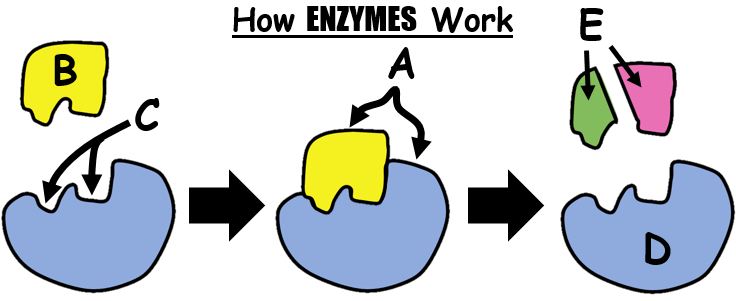
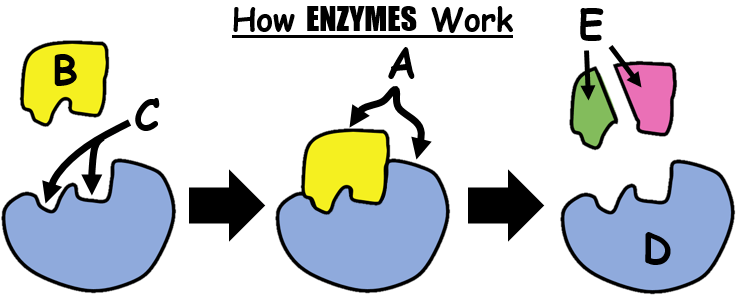
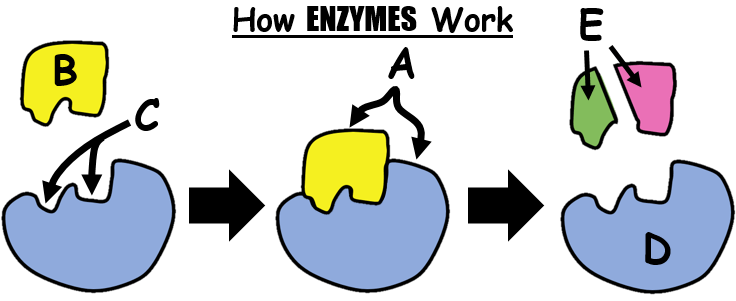
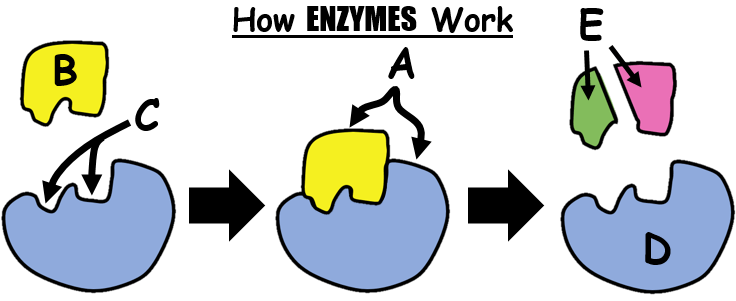
The shape of an enzyme's active site matches the shape of its substrate
Enzymes are used up in biological reactions
Enzymes work faster at higher temperatures
Every enzyme has one specific substrate that it breaks down or builds up.
Enzymes are an example of
Lipids
Carbohydrate
Protein
Nucleic Acid
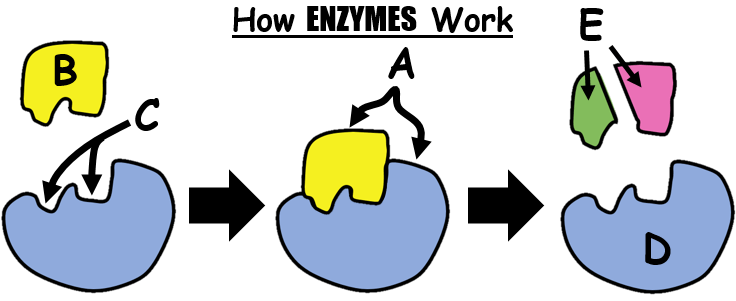
What happens when enzymes are heated to a high temperature?
The enzymes die.
The shape of the enzyme are changed and it denatures
The enzymes' amino acid sequence changes.
The enzymes remain the same
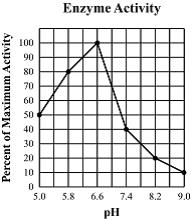
Which of the following best explains why enzymes are necessary for reactions in our cells?
The reactions are too slow to meet the needs of the cell if enzymes are missing.
Enzymes supply the oxygen necessary for the reactions.
Enzymes change reactants from solid to liquid during the reactions.
The reactions take up too much space in the cell if enzymes are missing.
Changes in pH and temperature can ___________________ an enzyme which causes it to lose its shape and affects its function.
puncture
denature
double
delete
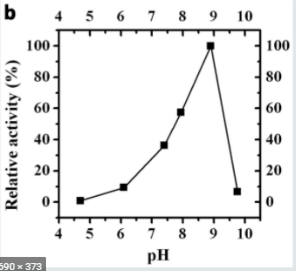
What is the optimal pH for this enzyme?
6
10
9
7
The ____________________ mechanism describes how each substrate must fit into the enzyme.
lock and key
hammer and nail
jigsaw puzzle
seesaw
Where do substrates bind to an enzyme?
calcium channels
active site
receptor molecules
voltage-gated channels

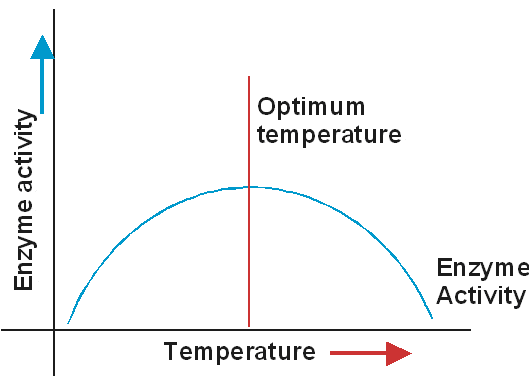
What is the optimal temperature of this enzyme?
60
40
70
30
What is disaccharide?
A sugar, such as sucrose or lactose, made up of two sugar units
Any complex carbohydrate molecule that is a polymer of sugar units
A storage molecule, such as starch, made of repeating sugar units
The products of digetion of a polysaccharide
What is cellulose used for by plants?
To absorb water
To absorb light energy
For cell membranes
For cell wall
Which of the following statements does not apply to enzymes?
They are used up by the reactions that they carry out
They allow reactions to happen at lower temperatures
They are biological catalysts
They are specific for one type of reaction

This graph shows a graph of rate of reaction plotted against pH for two different digestive enzymes. From the graph, at what pH do the two enzymes appear to show the same activity?
pH 4.5
pH 2.5
pH 5.5
pH 7.5

This graph shows a graph of rate of reaction plotted against pH for two different digestive enzymes. Which point on the graph corresponds to the pH optimum for enzyme B?
A
B
D
E

What enzyme could act better in the stomach?
A
B
Basic units of proteins.
simple sugars
fatty acids and glycerol
nucleotides
amino acids
What Biological Molecules is responsible for muscle formation?
Carbohydrates
Lipids
Protein
Nucleic Acids
Which of the following tests for starch?
Iodine
Benedict's
Biuret
Emulsion
When starch is present iodine turns...
purple
blue-black
orange
brick red
Where on the enzyme does the substrate bind?
Active Area
Binding Site
Binding Area
Active Site
An enzyme and its substrate bind together because they have ...
the same shape
complementary shapes
opposite shapes
different shapes
Which enzyme breaks down protein?
Amylase
Catalase
Lipase
Protease
Which enzyme breaks down starch?
Amylase
Catalase
Lipase
Protease

Which of these are digested by protease?
A
B
C
D
When a substance is added to meat, amino acids are produced. What is this substance?
a hormone
an enzyme
an oil
water

The diagram represents a protein molecule. What do the small circles represent?
amino acids
fatty acids
glycerol
simple sugars
Which nutrient produces a purple colour when mixed with biuret solution?
fat
protein
reducing sugar
starch

The diagram shows two food tests carried out on solution X. Which nutrients are present in solution X?
protein and starch
protein and sugar
starch and fat
starch and sugar
A student set up a test-tube containing starch, water and amylase. How could the student test whether the amylase had digested all the starch?
Add Biuret solution.
Add dilute hydrochloric acid.
Add iodine solution.
Weigh the test-tubes and contents before and after the experiment.

The diagram shows part of a starch molecule. Which diagram shows this molecule after it has been completely digested?


Which row identifies the graphs that show the effect of temperature and the effect of pH on an enzyme-controlled reaction?
A
B
C
D

The graph shows how the activity of an enzyme varies. Which label for the x-axis of this graph is correct?
enzyme activity
pH
temperature
time

Four different foods were tested for their composition. The results are shown in the table. Which food contains protein but not reducing sugar or starch?
A
B
C
D
What are the basic units of fat molecules?
amino acids
simple sugars
fatty acids and glycerols
starch

The data show the concentrations of sugar and starch in an onion.
A
B
C
D

Which row correctly identifies the chemical elements found in proteins?
A
B
C
D

The diagram represents enzyme action. What are parts W, X and Y in this chemical reaction?
Enzyme (W), Product (X), Substrate (Y)
Enzyme (X), Product (Z), Substrate (Y)
Enzyme (X), Product (Y), Substrate (W)
Enzyme (Y), Product (Z), Substrate (X)

The diagram represents a chemical reaction. Which diagram represents the enzyme for this reaction?
A
B
C
D
What happens to most enzymes above 60 degrees celsius?
They are denatured
They are destroyed by white blood cells
They are digested
They are made more active

The graph shows the effect of pH on the rate of reaction of three different enzymes. What does the graph show?
Each enzyme works best at a different pH
Each enzyme works best over a narrow temperature range
Enzymes work best in acid conditions
Enzymes work best in alkaline conditions

Four test tubes were set up as shown in the diagram. In which tube is the starch digested most quickly?
A
B
C
D

An enzyme from the stomach that digests protein, and cooked egg white that contains protein, are placed in four test tubes. When the egg white is digested the mixture becomes clear. Which tube becomes clear first?
A
B
C
D

A [BLANK] emulsion will form if the ethanol test for lipids is positive.
(a)

Enzymes are specific to one particular substrate as the enzyme is a [BLANK] shape to the substrate.
(a)

Low temperatures do not denature enzymes, they just make the enzyme activity very [BLANK].
(a)

If the pH is too high or too low, the bonds that hold the protein together can be destroyed. This will change the [BLANK] of the active site, so the substrate can no longer fit into it, reducing the rate of activity.
(a)

