
Font size
 Worksheets
GCSE Physics 23 mmd
Total questions: 146
Worksheet time: 2hrs 40mins
Which of the following is a derived SI unit?
Newton
Kilogram
Celsius
Second
Which of the following situations indicates zero acceleration?
A durian falling down from the tree
A netball is thrown up to the sky at the beginning of the game
A force of 2 N, acting on a toy car which is on rough surface with frictional force of 2 N
An aircraft climbing up to a certain height

Diagram 2 shows a displacement – time graph of a moving car.
Which pair of object motion from P to R is correct?
Motion at PQ =Velocity increases ;
Motion at QR= Velocity decrease in the same direction
Motion at PQ =Uniform velocity ;
Motion at QR= Velocity decrease in the same direction
Motion at PQ =Uniform velocity ;
Motion at QR=Velocity decrease in opposite direction
Motion at PQ =Velocity increases ;
Motion at QR=Velocity decrease in opposite direction

Diagram 3 shows a chili sauce in the bottle can be easily poured out if the bottle is moved down fast with a sudden stop.
Right hand grip rule
Newton’s first law of motion
Newton’s second law of motion
Newton’s third law of motion

Diagram 4 shows two identical trolleys, P and Q with masses of 1 kg on a frictionless plane. Trolley P is moving with a velocity of 10 ms-1 and trolley Q is moving with a velocity of 5 ms-1 in an opposite direction.
Trolley P and trolley Q collide with each other and then move together with a common velocity, v. What is the magnitude of v?
2.5 ms-1
5.0 ms-1
7.5 ms-1
15.0 ms-1
In which situation will the block move with acceleration?


Diagram 5 shows an athlete performing the high jump
What is the function of the mattress?
To reduce the collision time between the athlete and the mattress
To reduce the change of momentum of the athlete when he hit the mattress
To reduce the impulsive force acting on the athlete when he hit the mattress
To increase the impulsive force acting on the athlete when he hit the mattress

Diagram 12 shows 20g of milk at temperature 10oC being poured into a glass containing 50g of coffee at temperature 60oC.
What is the final temperature of the mixture?
Between 20oC and 70oC
Between 5oC and 30oC
Between 5oC and 70oC
Between 10oC and 60oC

Diagram 14 shows a metal block of mass 4.0 kg and specific heat capacity of 500 J kg-1 oC-1.
What is the increase in temperature after the heater has been switched on for 15 seconds?
0.6
0.8
7.5
5.0
The specific heat capacity of aluminium is 900 J 𝑘𝑔−1 °𝐶−1.
Which statement explains the specific heat capacity of aluminium correctly?
1kg of aluminium absorbs 900 J of heat energy during heating.
The temperature of 1kg of aluminium will rise by 1 °C when it absorbs 900 J of heat energy.
The temperature of 1 kg of aluminium will drop by 1 °C when it absorbs 900 J of heat energy.
Aluminium requires 900 J of heat energy to increase its temperature by 1°C.
Which is needed to determine the amount of gravitational force between two objects?
distance and mass
weight and time
area and weight
The gravitational force exerted by an object depends on its
volume
mass
weight
Gravity on moon is less than the gravity on earth because
moon's mass is less
moon's mass is more
moon's mass is equal to Earth
moon has no mass
Calculate the gravitational force between a 15-kg chinchilla and a 65-kg dog which are separated by 0.30 m.
Fg = 3.7*10-8 N
Fg = 1.3*1012 N
Fg = 7.2*10-7 N
Fg = 1.1*105 N
What would the gravitational force be between the Sun and Mars if they were 2.3*1011 m apart? The masses for the Sun and Jupiter are 1.99*1030 kg and 6.42*1023kg, respectively.
Fg = 1.6*1021 N
Fg = 3.8*1015 N
Fg = 2.8*10-42 N
Fg = 4.6*10-75 N
Given the mass of the earth is 5.97x10^24 kg, radius of the earth is 6.37x10^6 m, G = 6.67x10^-11 N m^2 kg^-2. Calculate the gravitational acceleration of object B at 400 km height from the surface of the earth.
8.57 N kg^-1
8.23 N kg^-1
8.00 N kg^-1
8.69 N kg^-1
Which of the following is true about geostationary satellite?
It does not experience any gravitational pull
Above different geographical location.
The orbital period is longer than 24 hours.
Its period of rotation is one day.
Given the radius of the moon is 1740 km, the mass of the moon is 7.35x10^22 kg and G = 6.67x10^-11 N m^2 kg^-2, find the escape velocity from the moon.
2374 m s^-1
1679 m s-1
2300 m s^-1
75067 m s-1
Kepler's 2nd Law deals with
the shape of the planets' orbits
the speed/area the planet travels
the length of time it takes the planet to orbit the sun
Planets orbit the Sun in a shape called a(n)
circle
ellipse
focus
perihelion

Identify the circuit symbol
Resistor
Fuse
Thermistor
Lamp

Identify the circuit symbol
Diode
Light Emitting Diode (LED)
Light Dependent Resistor (LDR)
Ammeter

Identify the circuit symbol
Light Dependent resistor
Variable Resistor
Thermistor
Resistor

Identify the circuit symbol
Battery
Power Pack
Ammeter
Lamp

Identify the circuit symbol
Thermistor
Light Dependent Resistor
Variable Resistor
Resistor
Two identical bulbs are wired in series with each other, shortly after turning the circuit on, one bulb blows. What happens to the other bulb?
It gets brighter
It gets dimmer
It goes out
Three identical bulbs are wired in series with each other. The resistance of the whole circuit is 60Ω. What is the resistance of 1 bulb
10Ω
20Ω
60Ω

A student wants to experiment with this circuit and decides to put an ammeter in. Which of these is correct
It does not matter where it goes so long as it is parallel
It does not matter where it goes so long as it is in series
It must go between two bulbs
It must go between the power supply and the bulbs
Wired correctly the ammeter reads 0.25A. Assuming the three bulbs still have a combined resistance of 60Ω, calculate the potential difference across all 3 bulbs.
15V
60.25V
59.75
240V

The three lamps are rewired parallel to each other, compare the brightness of these lamps from when they were in series. The power supply has stayed the same.
They are now brighter
They are now dimmer
It is impossible to say
The resistance of each lamp is the 20Ω, and the power supply is turned to 6V. Calculate the current through the first lamp.
26A
0.3
14A
3.333A
Which of these will not increase the resistance of a length of wire
Using a shorter wire
Using a different colour lamp
Using a longer wire
Using a thicker wire

A student draw up their results. What is the relationship between length of wire and resistance of wire
There is no relationship
Directly proportional
Inversely proportional
In a three core wire, what wire is the BROWN wire
Live
Earth
Neutral
What will happen if you replace a fuse with one a current rating too low for the appliance
Nothing, perfectly safe.
The fuse will never melt
The fuse will melt even when things are working normally
What will happen if you replace a fuse with one rated too high for the appliance
Nothing, perfectly safe
The appliance will draw a lower current so it will work.
The fuse will not melt, even if the current is too high.
What is the function of the EARTH wire.
Touches the metal casing to ground it in case there is a fault
Decoration, electricians love yellow and green
Carries current toward the appliance
Carries current away from the appliance.
Which of these is a correct IV graph for a diode


The potential difference across a resistor is 6V, and the current through the circuit is 0.2A. What is the resistance of the resistor?
12Ω
0.03Ω
15Ω
30Ω
Calculate the power of a lamp which draws a current of 0.25A and a potential difference of 12V.
3W
4W
48W
24W
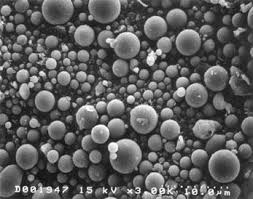



Which of the following is not a state of matter
Ice
Gas
Liquid
Solid

Latent Heat of Fusion: The amount of energy required to change the state of 1kg a substance from solid to liquid at fixed _____________
Quantity
Heat Energy
Temperature
Pressure

Which is not a change of state
Melting
Boiling
Sublimation
Frosting

Find the energy required to boil 0.250 kg of water away at 100ºC. The Latent Heat of Vapourisation of water is 2260 KJ/kg.
Lv of water = 2260 kJ per kg
565 000 J
565 J
9040 J
9.040 J

What is the graph called?
Melting and Boiling graph
Temperature Graph
Heating Curve of a substance
Graph of Temperature and heating up

At which point does the substance finish boiling
B
C
E
F
D

At Which point is the Kinetic Energy Store increasing?
B-C
C-D
D-E
All of the above

At stage is the Potential Energy Store increasing?
A-B
B-D
C-D
D-E

Which stage is a gas heating up?
F
A
D
B

Which is true of liquids?
Particles arranged in an ordered manner
Particles are not touching one another.
Particles are quite closely packed
Particles can vibrate but not move around
A cube of metal has side 2 cm. It weighs 10g. Find its density.
5 g / cm3
20 g / cm3
0.2 g / cm3
1.25 g / cm3

It's the SI unit for Heat
Watts
Celsius
Joules
Nm

This symbol represents latent heat
Q
c
ΔT
L

It's the amount of heat required to change the state (gas,liquid, solid) of a unit of material
Latent Heat
Specific Heat
Temperature
Q

Which element is a black shiny solid at room temperature but turns into a purple vapour when heated?
Bromine
Chlorine
Iodine
Fluorine
How many known elements are there?
52
106
201
118

Who is this?
Moana
Maui
Mike
The Rock
What does sonorous mean?
Clean
Shiny
Can make a sound
Sharp
What is the only letter NOT to appear in the periodic table?
A
N
O
J

How long does it take for light to travel from the Sun to Earth?
2 minutes
5 minutes
8 minutes
10 minutes
How many electrons can occupy the second shell?
One
Two
Five
Eight

Which of these alkali metals is the MOST reactive?
Lithium
Sodium
Cesium
Francium
Who is the richest music artist in the world?
Jay-Z
Madonna
Dr. Dre
Paul McCartney
Lola wants to measure her average speed when biking around her neighborhood. What information does Lola need to gather?
bike weight and total time traveled
distance traveled and direction
distance traveled and total time traveled
bike weight and direction
A ball travels at a constant speed of 6 meters per second along a frictionless surface. Which table correctly shows what a student may have measured and recorded if they watched this ball in motion over a 10-second time period?


Which of the following statements about the car's motion is true?
The total time for the car trip was 50 minutes.
The car returned to where it had started the trip at the end of the trip.
The car did not slow down during the trip.
The car did not travel at a constant speed during the entire trip.

Which statement BEST describes the motion of the cars?
Cars 1 and 3 have constant speeds, whereas Car 2 has a variable speed.
Cars 1 and 3 have variable speeds, whereas Car 2 has a constant speed.
All three of the cars have variable speeds.
All three of the cars have constant speeds

Which of the following correctly describes the object's motion?
The object is moving with increasing acceleration
The object is moving with constant acceleration.
The object is moving with increasing velocity.
The object is moving with constant velocity.
Taryn is playing with a bouncy ball. She notices that the ball seems to travel faster on its way back toward the ground than on its way up into the sky. Why would the ball go slower moving away from the ground?
because the ball must move against the force of Earth's gravitational field on the way up
because the ball must move against the force of Earth's magnetic field on the way up
because the ball moves with the friction force of air molecules on the way down
because the ball moves with the elastic force of air molecules on the way down
Kevin places a book on a desk. Why does the book stay still on the desk?
There are no upward forces on the book.
There are no downward forces on the book.
The forces acting on the book are balanced.
The forces acting on the book are unbalanced.
Which of the following explains why an apple would fall from a tree?
the gravitational attraction between the apple and Earth
the kinetic attraction between the apple and Earth
the potential attraction between the apple and Earth
the weak attraction between the apple and Earth
A teacher is demonstrating acceleration to his class by throwing two balls. He throws both balls using the same amount of force in the same direction. The first ball he throws has a mass of 0.1 kg and the second ball has a mass of 0.5 kg. Which statement BEST compares and describes the likely results of the demonstration?
The first ball has a smaller mass, so it will have less acceleration than the second ball.
The first ball has a smaller mass, so it will have greater acceleration than the second ball.
The balls will have equal acceleration because they are being thrown in the same direction.
The balls will have equal acceleration because they are being thrown with the same force.

Which argument is supported by the results of the investigation?
The acceleration of an object is proportional to the mass of the object but not the force applied to it.
The acceleration of an object is proportional to the force applied to the object but not the mass of it.
The acceleration of an object is proportional to both the mass of the object and the force applied to it.
The acceleration of an object is neither proportional to the force applied to the object nor the mass of it.

Which graph correctly shows the distance and time traveled by the race car?


An object that is traveling east at a constant rate has
velocity, but neither acceleration nor speed.
speed, but neither velocity nor acceleration.
speed and velocity, but no acceleration.
acceleration and speed, but no velocity.
Unlike acceleration and velocity, speed does NOT need to specify
direction.
distance.
mass.
time.
Which of the following can cause a moving object to change direction?
acceleration
velocity
inertia
force
A little girl pushes her toy car along the concrete sidewalk. Eventually, the toy car slows down and comes to a stop. What force played the greatest role in causing the toy car to slow down and stop?
frictional force
gravitational force
the force from the girl's push
the normal force from the ground

If the force of each team is balanced by the other, then
both teams will fall to the ground.
both teams will move to the right.
both teams will move to the left.
both teams will remain in place.

Which of the following describes what will happen when the ball hits the seesaw?
The box will move up against gravity
The box will stay in the same position.
The box will slide off the seesaw.
The box will move closer to the ground.

Which answer choice best explains why tractor trailers take more time to speed up and slow down than regular cars?
Tractor trailers have less mass and require less force to move.
Tractor trailers have more mass and require more force to move.
Tractor trailers have less mass and require more force to move.
Tractor trailers have more mass and require less force to move.
According to Newton's second law, which object requires the least amount of force to accelerate?
bike
skateboard
car
moving truck

The student claims that if she applies a force of 10 N to a block with a mass of 10 kg, it will accelerate faster than 2 m/s2. Which statement evaluates her claim correctly?
The claim is correct because heavier objects require more force to accelerate.
The claim is correct because heavier objects require less force to accelerate.
The claim is incorrect because heavier objects require more force to accelerate.
The claim is incorrect because heavier objects require less force to accelerate.
If two cars are travelling towards each other, which of these statements is true.
One has a negative time
One has a negative mass
One has a negative distance
One has a negative momentum
One has a negative kinetic energy
What is 30 km/h in m/s given to 1 decimal place? Do not type the units.
8.3
9.8
6.9
9.4
108
Which of these are measured in Joules? Tick all that apply (two answers).
Kinetic energy
Weight
Thrust
Power
Work done
Which of these does not affect the time taken for an object to fall from a height?
mass
initial speed
final speed
acceleration
distance
What are the two quantities needed to work out momentum and also kinetic energy?
mass
time
acceleration
velocity
distance
Which has the highest density? Do not guess, use your day to day knowledge of each substance.
water
oil
copper
gold
aluminium
Which of these is not an equation for energy?
21mv2
mgh
Pt
mv
Fd

What type of wave is this?
Transverse
Longitudinal
Which letter represents the wavelength?
A
B
C
D
Which letter represents the amplitude?
A
B
C
D
What type of wave is sound?
Transverse
Longitudinal

Longitudinal waves are made of areas of compression and ___________.
reflection
rarefaction
rectification
compassion
A period of a wave is the time taken to...
go around the Sun
complete 1 full wave
complete 1/2 a wave
travel 1 metre
What is frequency?
Number of waves per minute
Number of waves per metre
Number of waves per second
How loud a sound is
What is frequency measure in?
Joules (J)
Hertz (Hz)
Metres (m)
Watts (W)
What is the symbol for wavelength?
λ
π
β
Ω
What does ultrasound mean?
Sound that is too high for humans to hear
Sound that is too low for humans to hear
Light is part of the electromagnetic spectrum.
True
False
What type of wave is light?
Transverse
Longitudinal
Reverse
Morose
X-rays are ionising, so they can cause cancer.
True
False
What is the speed of light (in a vacuum)?
300 m/s
300,000 m/s
300,000,000 m/s
3 m/s
Which of these types of electromagnetic waves do not cause damage to human bodies
Radio waves
Ultraviolet light
X-rays
Gamma rays
Which type of waves are used to image bones inside the body?
Microwaves
Radio waves
Ultraviolet light
X-rays
What colour light has the longest wavelength?
Red
Yellow
Pink
Blue
Which of these materials will absorb the most infrared radiation?
Shiny black
Matt black
White
Shiny silver
Which of these materials will reflect the most infrared radiation?
Shiny black
Matt black
White
Shiny silver
What is the name of the radiation that is constantly bombarding us from space?
Hulk rays
Cosmic radiation
Background noise
Galactic noise
Where are magnets strongest?
At the poles
At the top of the magnet
At the bottom of the magnet
In the middle of the magnet
What is a magnetic field?
The area around a magnet where a force acts on magnets or other magnetic materials
The area around a magnet where a force acts on all materials
The area around an object with mass where a force acts
The area around charged materials where a force acts.
Which of the following are magnetic materials? (Choose all correct answers)
Cobalt
Nickel
Iron and steel
Copper
Which of the following are NOT magnetic materials?
Steel
Cobalt
Copper
Aluminium
What is a solenoid?
A coil of wire
A length of wire
A type of permanent magnet
A magnetic material
Where is the magnetic field strongest in a solenoid?
Inside the coil
At the ends of the coil
On top of the coil
Underneath the coil
Which TWO words describe the magnetic field of a solenoid?
Uniform
Concentrated
Large
Dispersed
Which THREE factors make up Flemming's left-hand rule?
Magnetic field
Current
Movement
Force
In Flemming's left-hand rule what does the thumb represent?
Force
Magnetic field
Current
Movement
Which of the following would NOT increase the force of an electric motor?
Increasing the number of coils
Increasing the strength of the magnet
Increasing the size of the magnet
Increasing the current
Which equation links current, force, length of wire and magnetic flux density?
force = magnetic flux density x current x length
magnetic flux density = force x current x length
current = magnetic flux density ÷ (length x force)
length = current ÷ (magnetic flux density x force)
What is the unit for magnetic flux density?
T
t
te
Te
Which TWO are key features of an electromagnet?
Can be switched on and off
Strength can be modified
They are permanent magnets
They attract and repel
Which of the following would NOT increase the force of an electric motor?
Increasing the number of coils
Increasing the strength of the magnet
Increasing the size of the magnet
Increasing the current

Look at the graph of the AC induced by a generator. Which graph below shows faster movement only?


Look at the graph of the AC induced by a generator. Which graph below shows stronger magnet and faster movement?

Use Flemming's left-hand rule to work out which way coil AB will turn.
Downward
Upward
Into the paper
Out of the paper

A vehicle travels on a straight road, starting at time t = 0
The graph shows how its velocity varies with time.
What is the distance of the vehicle from its start position when t = 40 s?
115m
190m
260m
370m

The acceleration of X is less than that of Y.
The acceleration of X is greater than that of Z.
The acceleration of X is the same as that of Y.
The acceleration of Y is less than that of Z.

A stationary ball is free to move. The ball is hit with a bat.
The graph shows how the force of the bat on the ball changes with time.
The ball has a mass of 0.044 kg.
What is the speed of the ball immediately after being hit?
13 m s−1
60 m s−1
80 m s−1
160 m s−1
A suitcase weighing 200 N is placed on a weighing scale in a lift.
The scale reads 180 N when the lift is moving.
The lift is
moving down at a constant velocity.
moving down with a decreasing velocity.
moving up at a constant velocity.
moving up with a decreasing velocity.
An object of mass m is accelerated from rest to a velocity v by a constant resultant force F.
What is the work done on the object during this acceleration?
2Fv
Fv
mv2
2mv2
What is true for an inelastic collision between two isolated objects?
Both total momentum and total kinetic energy are conserved
Neither total momentum nor total kinetic energy is conserved
Only total kinetic energy is conserved.
Only total momentum is conserved.
A parachutist descends to the ground at a constant speed with the parachute open.
Which force, together with the parachutist’s weight, makes a pair according to Newton’s third law of motion?
the drag force on the parachutist from the air
the tension in the strings of the parachute
the gravitational force of the parachutist on the Earth
the lift force on the parachute from the air
A tennis ball has a mass of 58 g.
The ball is dropped from rest from a height of 1.8 m above the ground and falls vertically.
The ball rebounds vertically to a height of 1.1 m.
The effect of air resistance is negligible.
What is the change in momentum of the ball during its collision with the ground?
0.040 N s
0.075 N s
0.215 N s
0.614 N s

A truck of mass 2.1 × 10³ kg tows a car of mass 1.3 × 10³ kg along a horizontal road.
The total resistive force on the car is 1100 N.
The acceleration of the car and truck is 2.3 m s−2.
What is the tension in the tow rope?
3000N
4100N
7800N
8900N
A ball is thrown vertically upwards and returns to its original position 2.4 s later. The effect of air resistance is negligible.
What is the total distance travelled by the ball?
5.9m
7.1m
14m
28m
A car travels at 100 km h−1 on a motorway.
What is an estimate of its kinetic energy?
104 J
106 J
108 J
1010 J

Which row is true for an elastic collision between two objects in an isolated system?
A
B
C
D

