
 Worksheets
Forensic Final Review
Total questions: 145
Worksheet time: 1hrs 20mins
Many studies have shown that 2 matching minutiae points mean the match is 100% reliable.
True
False
If a criminal destroys his fingerprints, what other prints is he still likely to leave behind?
Palm prints or other parts of the finger that have not been destroyed.
No prints at all.
Footprints only.
Lip prints only.
What conditions allow for fingerprints to stay usable the longest on a deceased body?
Cold conditions keep prints longer than hot conditions. A body in the water keeps prints the longest.
Hot and dry conditions preserve fingerprints the longest.
Fingerprints last longest in direct sunlight.
Fingerprints are best preserved in high humidity and heat.
Name two ways that having fingerprints help your everyday life.
Fingerprints help you grip objects, feel temperature, feel textures, coordinate fine motor skills, get into secure places (fingerprint scanners), enjoy tactile connection with other people.
Fingerprints help you see better in the dark and improve your hearing.
Fingerprints help you run faster and jump higher.
Fingerprints help you digest food and breathe underwater.
Name one animal that also has fingerprints, similar to humans.
Koala
Elephant
Dolphin
Penguin
What did Alphonse Bertillon contribute to fingerprint evidence?
He believed that every person had a unique set of anatomical measurements. He developed a system of cataloging convicted criminals based on their anatomical measurements.
He invented the first chemical method for visualizing latent fingerprints.
He was the first to use fingerprints as the sole means of identification in criminal cases.
He developed the modern method of fingerprint classification used by police forces worldwide.
What two things about fingerprints make them so valuable to forensic science?
They are unchanging - the ones you have today are the same all your life. Everyone has unique fingerprints - no two are alike - even twins!
They are visible to the naked eye and can be easily seen on any surface.
Fingerprints are the same for all members of a family.
Fingerprints can be changed by washing hands frequently.
What did Francis Galton contribute to forensic science?
He wrote a book all about fingerprints - titled 'Fingerprints'.
He invented the polygraph machine.
He developed the first DNA profiling technique.
He discovered blood spatter analysis.
How many deltas are in a LOOP fingerprint?
One
Two
Three
None
What is the most common type of fingerprint pattern?
The loop
The whorl
The arch
The tented arch
How many deltas are in a whorl fingerprint?
Two
One
Three
Zero
For which type of fingerprint pattern must you know if it is on your left or right hand to fully classify?
Loops - radial and ulnar classification depends on the hand they are on
Whorls - classification depends on the hand they are on
Arches - classification depends on the hand they are on
Tented arches - classification depends on the hand they are on
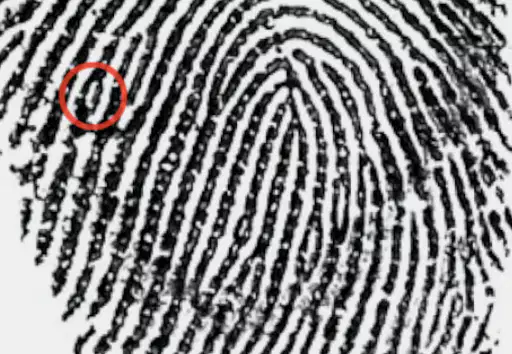
What type of minutiae point is this?
Lake
Bifurcation
Ridge Ending
Dot
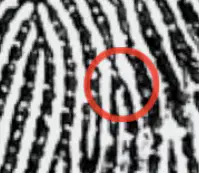
What type of minutiae point is this?
Fork / bifurcation
Ending ridge
Dot
Enclosure
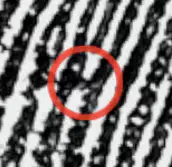
What type of minutiae point is this?
Crossover
Bifurcation
Ending Ridge
Island
What does IAFIS stand for? What does IAFIS do to contribute to forensic science?
IAFIS stands for Integrated Automated Fingerprint Identification System. IAFIS quickly provides a list of possible matches to an unknown print which can then be analyzed by examiners.
IAFIS stands for International Association of Forensic Investigation Services. IAFIS is responsible for DNA analysis in forensic science.
IAFIS stands for Integrated Automated Facial Identification System. IAFIS helps in matching facial features for criminal investigations.
IAFIS stands for International Automated Forensic Information System. IAFIS is used to store criminal case files and evidence.
Who runs and maintains IAFIS?
The FBI, though state and local investigators can also use it
The Department of Homeland Security
Interpol
The Central Intelligence Agency
You see a faint bloody fingerprint. What chemical will you apply to enhance the print for collection?
Amido Black
Ninhydrin
Cyanoacrylate
Iodine Fuming
You believe there may be latent prints on a styrofoam plate. What chemical will you use to develop the print?
Superglue! (cyanoacrylate)
Ninhydrin
Iodine crystals
Silver nitrate
What component of the fingerprint does super glue stick to?
Sweat / moisture
Oil / sebum
Protein residues
Dirt particles
You believe there are latent prints on a newspaper. What chemical will you apply to develop the prints?
Ninhydrin
Cyanoacrylate
Silver nitrate
Iodine fuming
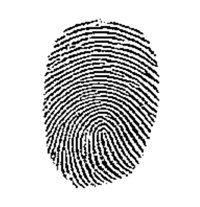
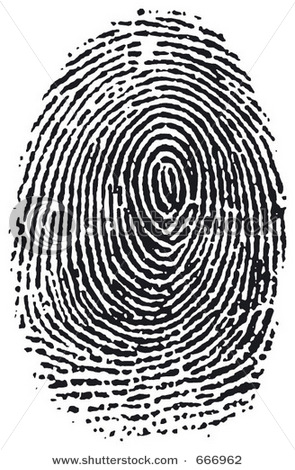


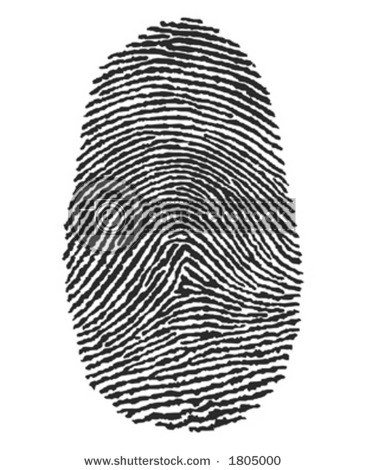

Arch


Name this minutiae type
Sludge
Island (dot)
Bifurcation (fork)
Pore

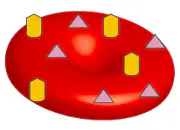

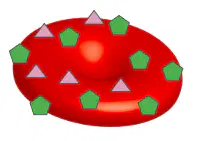

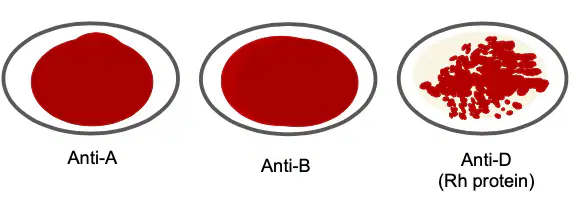


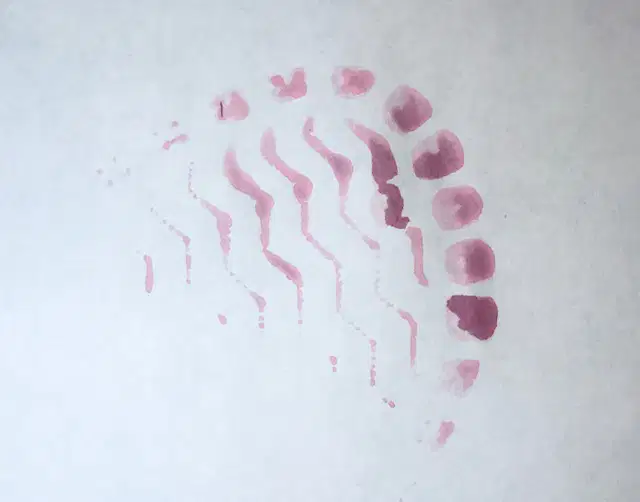


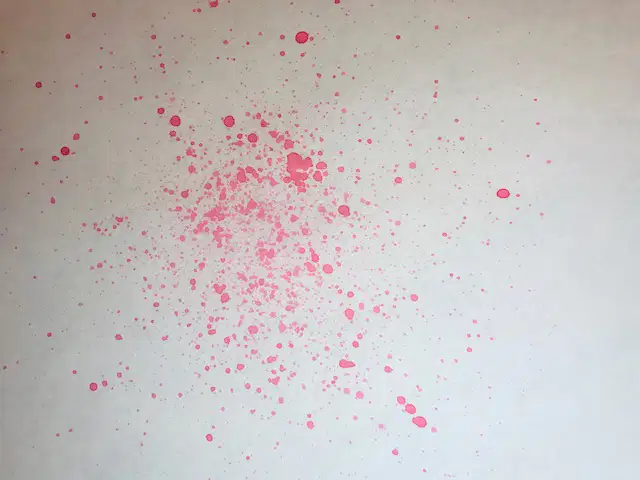
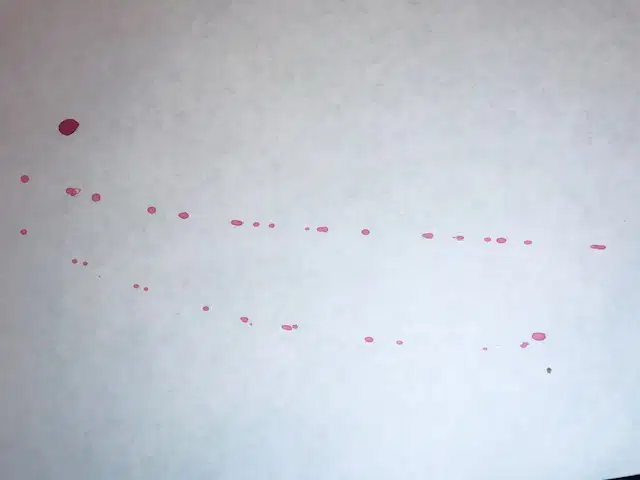


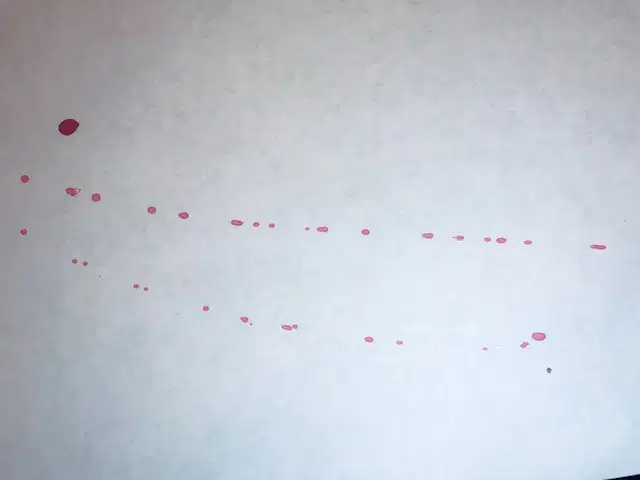
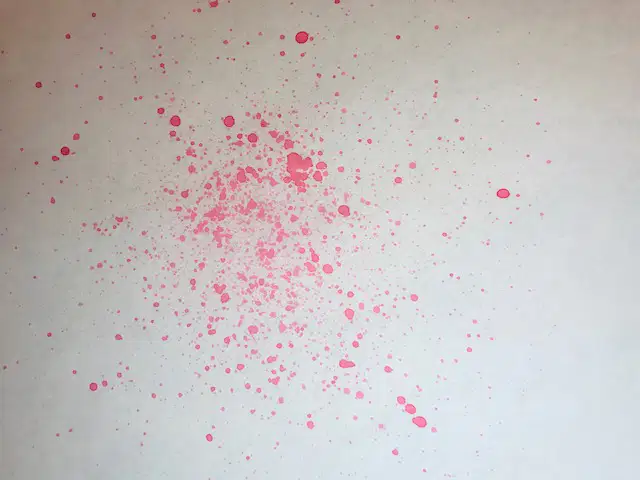
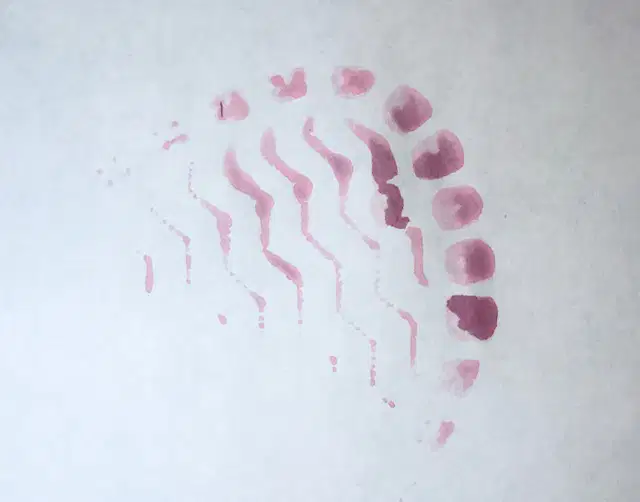




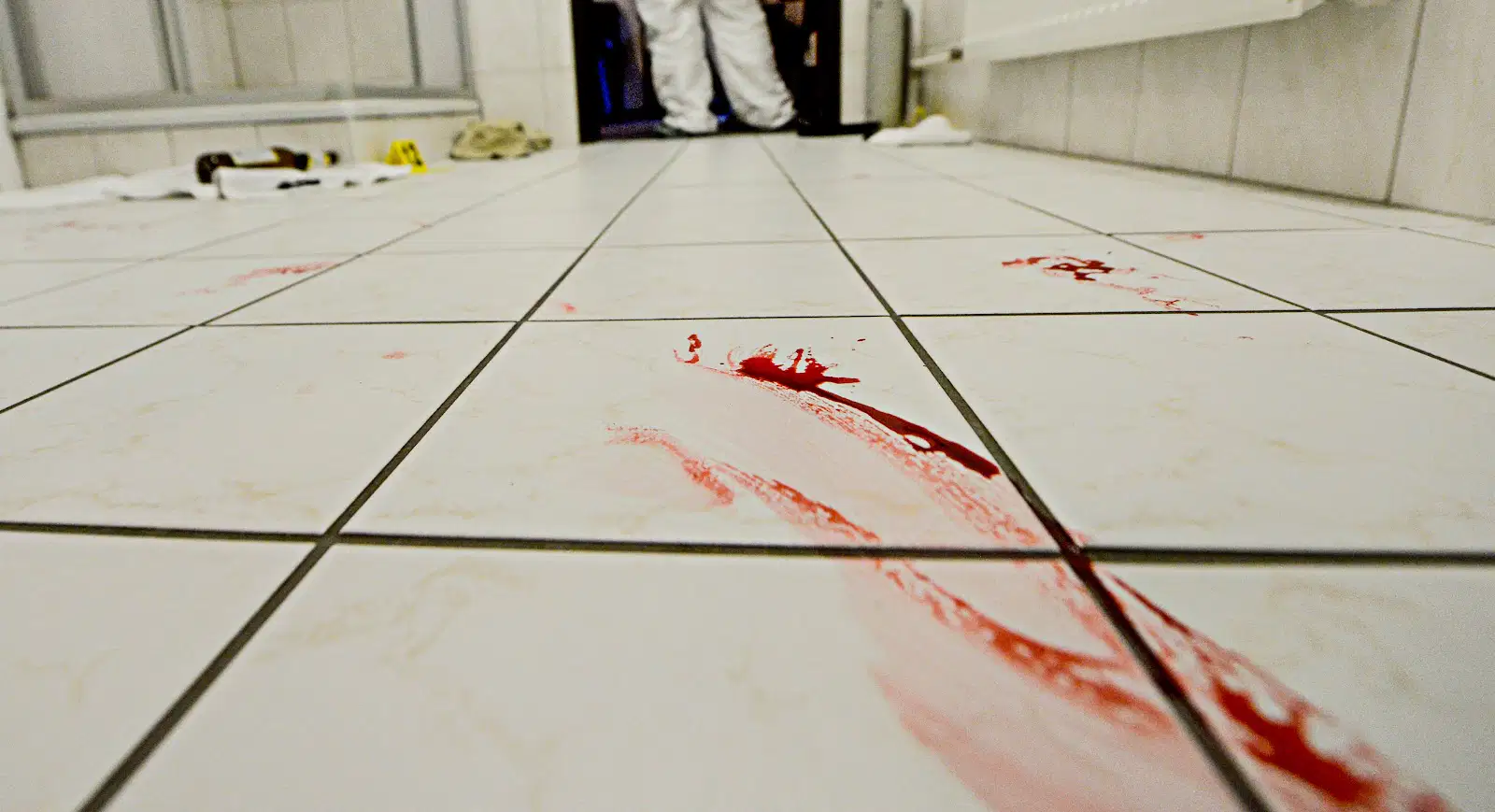

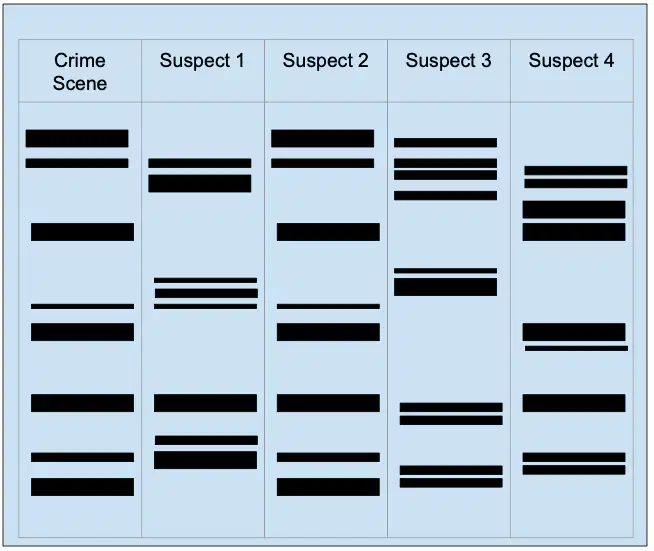


Which male is the father of the child?
Male 1
Male 2

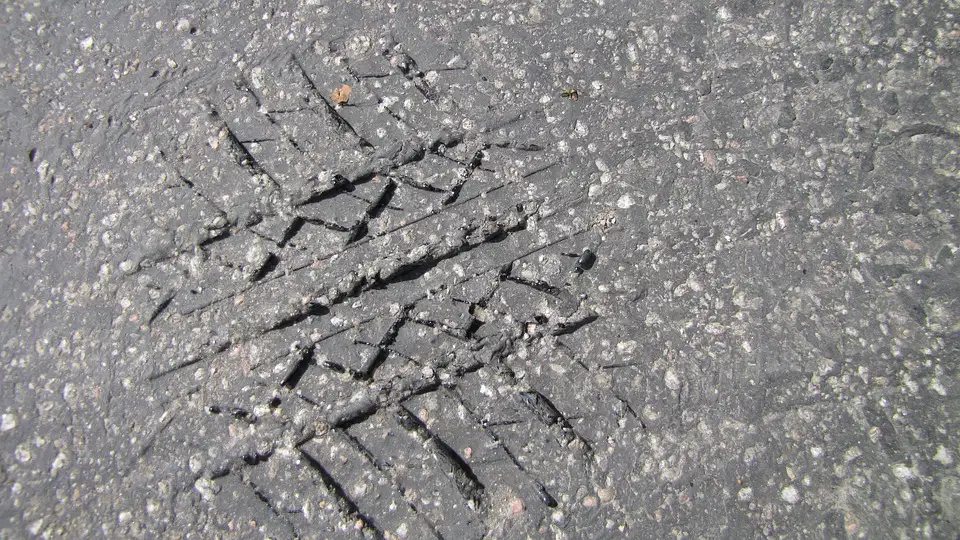



Which of the following is NOT a method used to collect footwear impression evidence?
Heating the impression to harden it
Lifting with adhesive tape
Casting with dental stone
Electrostatic dust lifting
What type of evidence is a tool mark that has unique microscopic scratches from use?
Individual evidence
Pattern evidence
Class evidence
Trace evidence
Which statement is TRUE about 2D footwear impressions?
They cannot be photographed
They are best collected with casting material
They can be enhanced using fingerprint powder
They are always visible to the naked eye
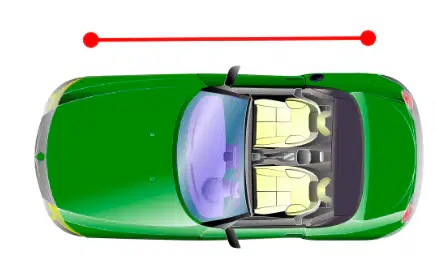
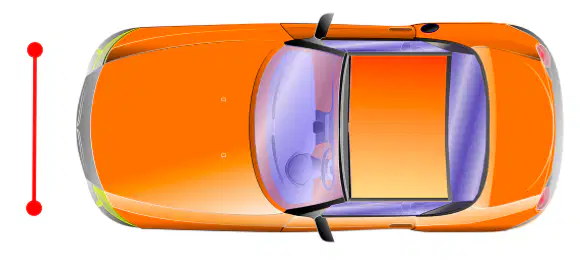
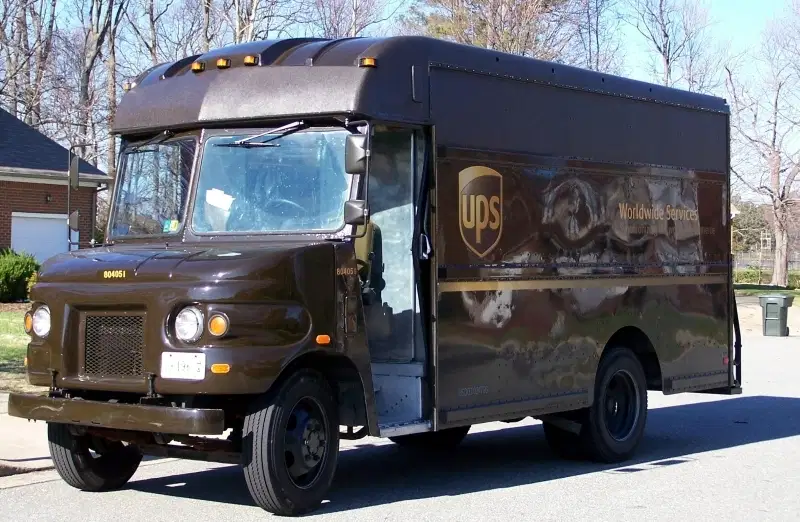
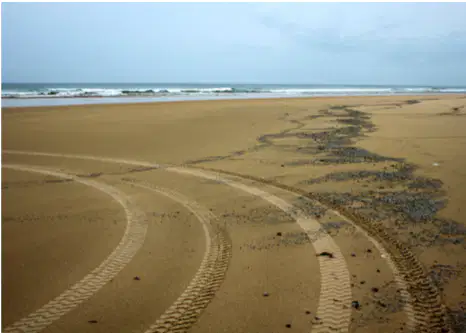
Which of the following are individual characteristics officers should check on tire treads?
type and model
wear and damage
size and color
Individual characteristics of shoe prints can be identified by:
the specific wear pattern, cuts, and nicks on the sole
the brand and model of the shoe
the size and color of the shoe
the type of material used in the shoe's construction
Human hair, animal hair, and fiber evidence are what type of evidence?
All class evidence
All individual evidence
Some are class, some are individual
Which of these statements BEST describes the Locard Principle?
Every contact leaves a trace.
Every piece of evidence is important, no matter how small.
It is a principle of relativity.
It is a rule of thermodynamics.
What is hair made of?
The protein Keratin
Calcium
Cellulose
Collagen
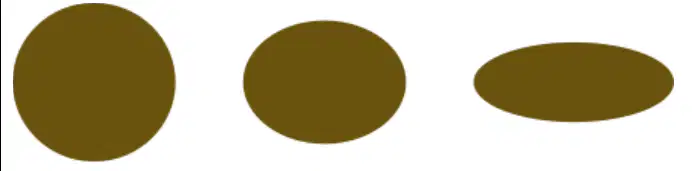
Which of these cross section shapes makes wavy hair?
The slight oval (in the middle).
The perfect circle (on the left).
The flat oval (on the right).
The triangle shape.
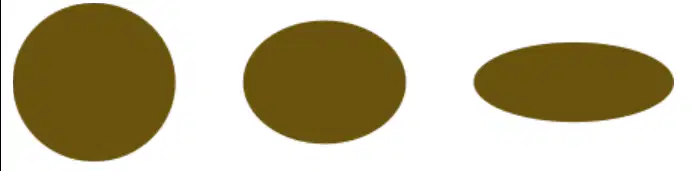
Describe the appearance of hair that is round (far left) and flat oval (far right)
Round will be straight hair, very flat will be very curly.
Round will be curly hair, very flat will be straight.
Round will be wavy hair, very flat will be frizzy.
Round will be thick hair, very flat will be thin.
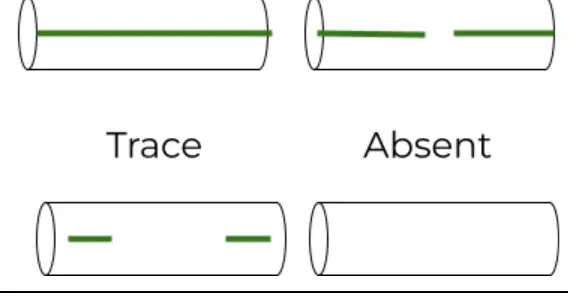
Draw the appearance of: Human hair with a CONTINUOUS medulla, Human hair with a TRACE medulla, Human hair with an ABSENT medulla. Refer to the diagram for Continuous, Fragmented, Trace, and Absent medulla.
Continuous: a solid line through the center; Trace: a few small segments; Absent: no medulla visible.
Continuous: no medulla visible; Trace: a solid line through the center; Absent: a few small segments.
Continuous: a few small segments; Trace: no medulla visible; Absent: a solid line through the center.
Continuous: a dotted line through the center; Trace: a thick band; Absent: a broken line.
DNA can be taken from hair evidence. True or false?
Always True; no matter how small the hair sample
False
True; only when cells are attached at the root
True: Only from hair with no root
What kind of microscope do CSI use to examine hairs and fibers?
Comparison Microscope
Electron Microscope
Confocal Microscope
Scanning Tunneling Microscope
Silk is made by which of the following processes?
Silkworms spin fibers to form cocoons, which are then unwound to obtain silk threads.
Cotton plants are harvested and spun into threads.
Wool is sheared from sheep and spun into yarn.
Synthetic fibers are produced from chemicals in factories.
When analyzing/comparing fiber samples, where does the 'known sample' come from?
Known samples come from the suspected source of the fibers that were found at the crime scene - for example: fibers taken from the suspect’s sweater.
Known samples are always collected from the crime scene itself, regardless of the suspect.
Known samples are obtained from random locations unrelated to the investigation.
Known samples are created synthetically in the laboratory for comparison purposes.
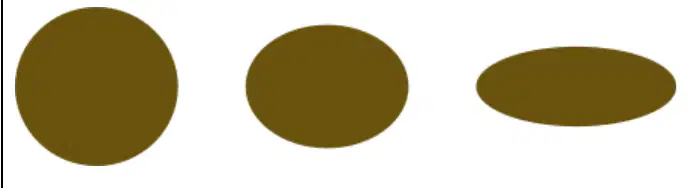
13. The typical hair cross-section for a person with Asian descent is:
Round
Oval
Flat
Elliptical
15. The fiber that looks flat and twisted under the microscope is most likely:
Cotton
Wool
Silk
Polyester
16. You are analyzing a fiber under the microscope. It seems to have a cuticle! This fiber is most likely ........
polyester
wool
acrylic
rayon
An anagen stage hair found at a crime scene can be identified by which of the following characteristics?
It has a clump of cells at the root and is likely stretched.
It is tapered at both ends and lacks a root sheath.
It is club-shaped and has no root sheath.
It is fragmented and shows signs of decomposition.
Jane Doe was at the salon dying her hair on Dec 31st. When her body was found, she had three months of hair growth. What day did she most likely die?
March 31st
January 31st
February 28th
April 30th
What can Toxicology test someone's hair for?
The presence of heavy metal poison (lead, arsenic)
The presence of viral infections such as influenza.
The presence of bone fractures.
The presence of genetic mutations causing blue eyes.
Hair pigment (what gives hair its color) is found in what part of the hair?
The cortex
The cuticle
The medulla
The follicle
What does it mean if there was a 'cross transfer' of fibers during a crime?
This means that some fibers from the victim were transferred to the suspect, and some fibers from the suspect were transferred to the victim.
This means that all fibers at the scene were destroyed during the crime.
This means that only the suspect's fibers were found at the scene, with none from the victim.
This means that fibers were transferred only from the crime scene to the victim, not involving the suspect.
You are seeking to identify a fiber, but you only have a very small sample. Which of the following tests would you perform LAST?
water retention test
microscopic observation
flame test
test for fluorescence (glowing)
Natural fibers can be made from all of these EXCEPT...
animal proteins
recycled plastic
fur
plant materials
Your suspect has a limited edition purple sweater. Only 100 of these sweaters were ever made. A fiber with identical characteristics to the purple sweater was found at a crime scene. Which of these statements is TRUE?
finding this fiber at the crime scene means that the suspect is guilty
the crime scene fiber is not helpful evidence
the crime scene fiber is individual evidence
the crime scene fiber is class evidence
Synthetic fibers are made by...
melting material and squeezing it through tiny holes
rolling material out into a flat sheet, the cutting it into thin fiber strips
molding a large, thick strand and then pulling it until the strand is thin
blowing hot air into melted material which causes it to puff up into thin fiber strands
Which of these are both synthetic fibers?
wool and nylon
cotton and wool
polyester and linen
nylon and polyester

You collect a fiber sample from the crime scene and examine it under the microscope. This fiber is MOST likely...
polyester
wool
nylon
cotton

You collect a fiber sample from the crime scene and examine it under the microscope. This fiber is MOST likely...
cotton
polyester
nylon
wool
Give one example of Direct Evidence.
Eye witness statement, photo or video of the crime being committed
Hearsay from a neighbor
Speculation by a bystander
Rumor spread on social media
Give one example of Individual Evidence.
DNA, fingerprint, striation marks on tool or bullet, tire tread impression, footwear impressions
Blood group, soil type, hair color, fiber type
Paint color, glass type, soil pH, pollen type
Shoe size, blood type, fiber color, soil texture
Give one example of Class Evidence.
Hair, fiber, soil, powder, blood type
Fingerprint pattern
DNA sequence
Serial number on a gun
Give one example of Circumstantial Evidence.
Hair or fiber left at the scene
A signed confession by the accused
A video recording of the crime being committed
An eyewitness account of the crime
Describe how to properly seal an evidence bag.
Place item in bag, seal bag closed with tape, sign your name and date across the bag and tape
Place item in bag, leave bag open for ventilation, sign your name on the bag only
Seal bag with a paperclip, write the date on a separate sheet, attach it to the bag
Place item in bag, seal with glue, and store without labeling
Why are evidence bags sealed this way?
To make it evident if the bag is opened and evidence tampered with.
To keep the evidence cool and dry.
To make the bag easier to carry.
To prevent the evidence from being seen by unauthorized personnel.
What is the job of the police officer who first arrives at a crime scene?
To secure the scene so that it is preserved - no evidence tampered with or destroyed.
To immediately arrest any suspects found at the scene.
To begin questioning all witnesses before backup arrives.
To collect all evidence personally before detectives arrive.
Describe two duties of the Medical Examiner.
to inform next of kin of the victim’s death, to determine the manner of death
To provide legal representation to suspects, to investigate financial crimes
To patrol neighborhoods, to issue traffic tickets
To conduct psychological evaluations, to provide therapy to victims
Describe the job of the Detective.
Interview witness, use the evidence and witness information to find a suspect.
Patrol the streets and issue parking tickets.
Manage the police department's budget and resources.
Direct traffic at busy intersections.
Besides the sketch itself, name three things included on the crime scene sketch.
Location of scene, case number, date and time, arrow indicating north, name of sketch artist, key that links evidence to the evidence numbers used in the sketch
Only the names of the suspects, the weather, and the type of crime committed
A list of police officers present, the color of the walls, and the time lunch was served
The judge's name, the type of pen used for the sketch, and the number of windows in the room
You are sketching a crime scene. Describe how evidence is recorded in the sketch.
Each item of evidence is given a number which is written into the sketch, measurements taken at right angles to the nearest walls.
Evidence is only described verbally and not marked on the sketch.
All evidence is drawn to scale but not labeled with numbers or measurements.
Evidence is recorded by drawing arrows to the general area without any numbering or measurements.
Why is film preferred over digital photographs when recording a crime scene?
Digital photographs can be manipulated
Film is less expensive than digital
Film cameras are easier to use than digital cameras
Film provides instant review of images
Name two possible items of evidence that would need to be collected in a paper/porous container.
Anything with bodily fluids (blood, saliva, semen)
Metal tools and weapons
Plastic bags and wrappers
Glass fragments
Why do body fluids need to be put into a porous container?
Body fluids need to dry, if in a plastic container the moisture would lead to bacterial growth which would destroy the evidence
Porous containers are easier to transport than plastic ones
Porous containers are less expensive than plastic containers
Porous containers prevent the evidence from being seen
Name one item of evidence that would need to be put into a paper bindle before being placed into an evidence bag.
Very small things: hair, fiber, paint chip, powder, soil
Large metal objects: crowbar, wrench
Wet clothing
Firearms
Name a type of evidence that has striations. (Multiple correct answers)
Tool marks and tools
Blood stains
Fingerprints
Fibers
bullets and bullet casings
What type of evidence would be collected using a cast/mold?
Tool mark impression
Tire impression
hair strand
Gunshot residue
DNA sample
What type of evidence would you collect with powder and tape?
Fingerprints
Blood samples
Hair fibers
Shoe prints
What type of evidence can reveal the possible ethnicity of a suspect?
Hair
Shoe size
Fingerprint pattern
Blood alcohol level
What is the Common Approach Path?
The path that the CSI take when investigating the scene
A route used by emergency vehicles to reach the scene quickly
A method for collecting evidence from multiple locations
A standard procedure for interviewing witnesses
Name four parts of the CSI outfit when processing a crime scene.
Full suit, foot coverings, gloves, face mask
Hat, closed toed shoes, sunglasses, gloves
Long sleeve shirt, long pants, gloves, face mask
lab coat, foot coverings, identifying name on coat, closed toed shoes
Explain the Chain of Custody.
A written record of each person who handled a piece of evidence.
A process of labeling evidence with barcodes for inventory purposes only.
A method of storing evidence in a secure locker without any documentation.
A verbal agreement between officers about who handled the evidence.
Explain why eye witness statements are not reliable.
Eye witnesses may believe what they see, but their memory could be warped.
Eye witnesses always have perfect recall of events
Eye witness statements are always supported by video evidence
Eye witnesses never are biased.
Eye witnesses always believe what they see.
What is the primary reason for wearing gloves when handling evidence at a crime scene?
To make it easier to carry heavy objects
To prevent contamination of the evidence
To keep hands warm
To avoid leaving fingerprints on paperwork
Which item should be packaged in a rigid container to prevent damage during transport?
Hair samples
Blood-soaked clothing
Broken glass fragments
Powdered drugs

