
Font size
 Worksheets
MP1 Final Quizziz
Total questions: 55
Worksheet time: 6hrs 50mins
Identify the chemical family name from the Periodic Table for each element in order...
1) Sodium
2) Chlorine
3) Xenon
4) Iron
5) Strontium
1) Alkaline Earth Metals
2) Halogens
3) Noble Gases
4) Transition Metals
5) Alkali Metals
1) Halogens
2) Alkali Metals
3) Noble Gases
4) Transition Metals
5) Alkaline Earth Metals
1) Alkali Metals
2) Halogens
3) Noble Gases
4) Transition Metals
5) Alkaline Earth Metals
1) Alkali Metals
2) Halogens
3) Noble Gases
4) Alkaline Earth Metals
5) Transition Metals
Select all of the physical properties indicated in the list below.
#1 Solid at 20 degrees Celsius
#2 Shiny
#3 Burns with Oxygen
#4 Melts at 800 degrees Celsius
#5 Rusting
#6 Nonreactive with water
1, 2, 4
1, 4, 6
2, 4, 6
1, 3, 4
A teacher breaks a bar of pure copper into two different–sized pieces. What is the MOST likely difference between the two pieces?
mass
texture
boiling point
melting point
Which one of the following properties is intensive and does not depend on the amount of material present?
weight of a bag of lead pellets
boiling point of a pot of water
volume of a cylinder of copper
heat required to melt an ice cube {the amount of heat in joules} NOT BOILING POINT
Which statement BEST describes a sample of liquid in a half filled, sealed container?
The liquid has the same shape and volume as the container.
The liquid has the same shape different volume.
The liquid has the same volume different shape..
The liquid has a defined shape and volume regardless of the container.
Choose two methods to best separate a sand and water mixture?
decanting - carefully pour out all of the water
allow the sand to completely dissolve in water
using chromatography
remove sand grains individually with a pair of tweezers
using a paper filtering system
A student investigates the properties of an unknown liquid substance in a beaker. The student finds the substance has a mass of 56.2 g and a volume of 42.3 mL. The liquid has a yellow, cloudy appearance. The liquid has a freezing point of 13°C and a boiling point of 105°C. When the liquid boils, a white powder residue is left in the beaker.
What conclusion can the student make based on the evidence collected?
The substance is a pure substance because it has a density that remains constant.
The substance is a mixture because it has a yellow and cloudy appearance.
The substance is a pure substance because it has a definite freezing point and boiling point.
The substance is a mixture because it left a white powder in the beaker when boiled.
After Mendeleev constructed the periodic table, he predicted the discovery of several elements that were not yet known. What prediction was Mendeleev able to make about these unknown elements, based on his table?
chemical and physical properties
electron structures of their atoms
likely geographic locations where they could be found
their relative abundance in various mineral deposits
Jaime is learning how elements are placed in the periodic table. He must find an element similar to calcium (Ca). Which element will be MOST similar in physical and chemical properties to calcium (Ca)?
carbon (C)
magnesium (Mg)
potassium (K)
selenium (Se)
Going from left to right in the periodic table, the atomic radius decreases. Which of the following explains the atomic radii trend of elements across a period from left to right?
The attraction increases between the nucleus and the outer electrons.
There is a decrease in the number of electron shells.
The attraction decreases between the nucleus and the outer electrons.
There is an increase in the number of electron shells.
The elements chromium (Cr) and zinc (Zn) are in period four of the periodic table. Which characteristic of zinc and chromium is correct based on their positions?
Zinc has a greater atomic radius than chromium.
Zinc loses electrons more easily than chromium.
Chromium has lower ionization energy than zinc.
Chromium has more valence electrons than zinc.
Which of the following elements has five valence dots drawn in its Lewis Dot?
Ne
Na
N
Nb
The alpha particles in Rutherford’s experiments were used to —
bombard sheets of gold
identify chemical properties
determine molecular mass
identify the melting point
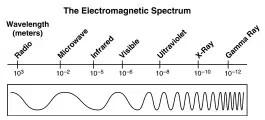
Which of these types of electromagnetic radiation has the lowest frequency?
Visible Light
X-Ray
Gamma Ray
Radio Wave
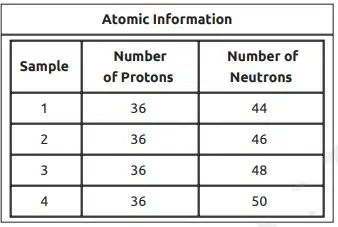
Use the information in the table to answer the question that follows.
Which statement BEST describes these samples?
The chemical properties are different for each element.
The atomic number is different for each element.
They are allotropes of the same element.
They are isotopes of the same element.
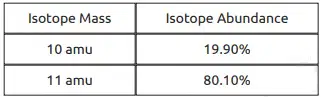
A scientist tests an unknown element sample using a mass spectrophotometer. They record the following data about two isotopes:
What is the average atomic mass of the element shown in the graph?
What element was most likely present in the scientist's sample?
100 amu
Ruthenium
10.80 amu
Boron
21 amu
Neon
108.0
Silver

The electron-dot symbol represents what family in the periodic table?
Which group contains elements that are inert {non-reactive}?
corrosiveness
malleable
density
Which of the following is an extensive property?
Hardness
Boiling Point
Density
Weight
Properties that DO depend on the amount of matter present.
Mass
Hardness
Extensive
Intensive
A property that does NOT depend on the amount of matter present is....
Mass
Hardness
Extensive
Intensive

Which of the following statements is true about solids?
Particles do not move around much, but vibrate
Particles have a lot of free space and spread out
Solids have fixed shape but not volume.
Particles are less closely packed than gas.
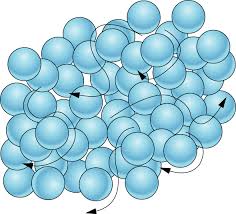
Which is not true about the liquid state of matter?
The liquid state has a definite (specific) volume and a definite (specific) shape.
The liquid state takes on the shape of its container.
The liquid state has a definite (specific) volume and an indefinite (not specific) shape.
The particles in a liquid can easily move past each other.
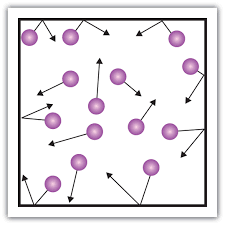
A gas typically consists of:
low energy particles that experience high attractive forces between them.
low energy particles that experience no attractive forces between them.
high energy particles that experience high attractive forces between them.
high energy particles that experience little attractive force between them
Which process could cause a material to change state from gas to liquid?
Adding heat
Adding energy
Removing particles
Removing energy
Students are given a solid sample and asked to determine whether the sample is an element, compound, or mixture. One student observes that the sample is made up of particles of different colors, sizes, and shapes. When the students break off a piece of the sample, they notice that some particles are softer than others and some shine while others appear dull. What can the students conclude about their sample?
It is an element.
It is a compound.
It is a homogeneous mixture.
It is a heterogeneous mixture.
Which of the following would not be classified as a pure substance?
Element
Molecule
Compound
Solution
Which of the following is a correct statement regarding mixtures?
Mixtures are composed of a single substance.
Mixtures are composed of more than one substance.
Mixtures have a fixed composition.
All substances in a mixture are visible at ALL times.
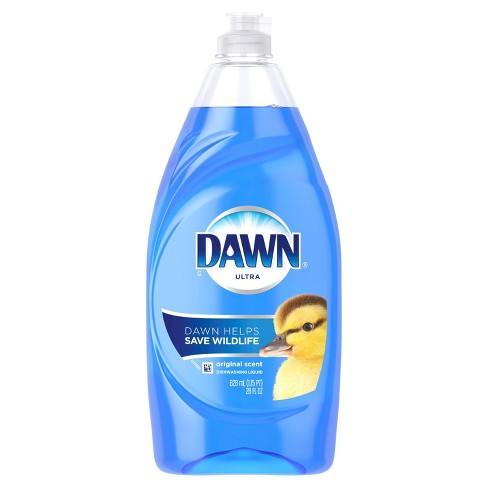
A bottle of dishwashing detergent contains a clear, viscous liquid. The label has a long list of ingredients, including water, sodium lauryl sulfate, fragrance, and Blue dye #5.
What can you infer about the material in the bottle from this label and the appearance of the liquid?
It is a pure substance.
It is a compound.
It is a heterogeneous mixture.
It is a homogeneous mixture.
Alkali metals react very readily with halogens and form ionic compounds such as table salt (NaCI) and many others. Which of the following explanations most completely describes why these two families of elements reacts readily?
Alkali metals are negative and halogens are positive, so they attract each other.
The alkali metals have one valence electron, and the halogens are one short from having 8 (full shell) .
Alkali metals and halogens can very easily share eight valence electrons between them.
The halogens very easily donate valence electrons to the alkali metals so that all have eight.
From which of the following atoms would it be the most difficult to remove an electron?
Sodium
Aluminum
Sulfur
Chlorine
Which of the following statements is TRUE?
elements within a period have similar properties
there are 7 periods on the periodic table
different elements can have the same atomic number
Flourine has similar chemical properties to . . .
Bromine
Calcium
Magnesium
Oxygen

Which element has the highest electronegativity?


This could be the dot diagram of
Mg
Cl
C
O


Is this correct way to draw the Lewis Dot Structure for Carbon?
Yes
No, too many electrons
No, not enough electrons
No, dots are in wrong places
Which ones are acceptable (choose all that are correct)?


Which of the following waves would have the lowest energy based on the electromagnetic spectrum?


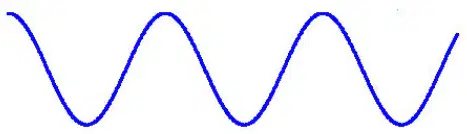
All three waves have the same energy.
Which of the following choices lists electromagnetic radiation in order from shortest wavelength to longest wavelength?
X-rays, microwaves, visible light, infrared
X-rays, visible light, infrared, microwaves
microwaves, infrared, visible light, X-rays
infrared, visible light, microwaves, X-rays
Select the correct order of waves on the EMS from low to high energy
Radio, Micro, Infra, Visible, Ultra, X-ray, Gamma
Gamma, X-ray, Ultra, Vis, Infra, Micro, Radio
Vis, Micro, Infra, Ultra, X-ray, Gamma, Radio
Micro, Radio, Vis, Infra, Ultra, X-ray, Gamma
Which has the LONGEST wavelength and, therefore, the LOWEST frequency/energy
Gamma Rays
Ultraviolet
Visible Light
Infrared rays
In a sample of elemental bromine, 55% of the atoms are Br-79, and 45% are Br-81. If this sample is typical of naturally occurring bromine, what is the average atomic mass of bromine?
79.9 amu
35.0 amu
45.0 amu
80.0 amu
The two most abundant isotopes of copper contain 34 and 36 neutrons. If the isotope with 34 neutrons comprises 72.5% of all copper and Cu-36 = 27.5%, what is the average atomic mass of copper?
50.0 amu
34.6 amu
29.0 amu
63.6 amu
Isotopes are atoms of the same element with different #’s of __________ & therefore different __________.
neutrons ; atomic numbers
protons ; atomic numbers
electrons ; mass numbers
neutrons ; mass number

In a stable atom, the amount of electrons is equal to the amount of...?

