
NEW
Font size
 Worksheets
Circuits
Total questions: 59
Worksheet time: 3hrs 36mins

A student builds a circuit made up of a battery, two light bulbs, and a switch. What will the student most likely observe in this circuit?
Light bulb 1 and light bulb 2 will both be on
Light bulb 1 will be off, but light bulb 2 will be on
Light bulb 1 and light bulb 2 will both be off
Light bulb 1 will be on, but light bulb 2 will be off

The diagram shows a series circuit with three lit bulbs. How many of the bulbs will remain lit if the wire is cut a the point shown by the arrow?
0
1
2
3


Rube Goldberg was an artist who drew cartoons that showed a very complicated way to do a simple task. The picture shows a cartoon like the ones Goldberg drew. Which form of energy is used to turn on the switch? (5.6A)
Light energy
Thermal energy
Electrical energy
Mechanical energy

Why does the following circuit not work?
The light bulb is broken
The switch is closed
The wood block is an insulator
The battery is dead

The circuit does not work, what could you do to allow the circuit to work?
Add another light
Add another battery
Open the switch
Remove the wood block and connect the wires

Which lights would turn on if your closed switches 1 and 2?
red, blue, and white
red and white
red and blue
blue, white, yellow

What forms of energy are you using if you close switch 1?
light and electrical
light, sound, and electrical
light
sound

In order to produce ONLY LIGHT energy, which switch(es) would you need to close?
switch 1 and switch 2
switch 1, 2, and 3
switch 2 and switch 3
switch 1 and 3

The light bulb does not turn on, which statement explains why it is not working?
The battery is dead
The light bulb is broken
The bell is taking all of the energy
The light bulb is not part of a complete circuit

Which wire would you need to cut in order for the circuit to be incomplete (not work)?
wire 1
Wire 3
wire 5
Does energy flow through an open or closed switch?
open switch
closed switch
both open and closed
neither
A material that does NOT let electricity pass through it is called ...
electrical conductor
Battery
electrical insulator
light bulb
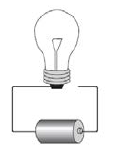


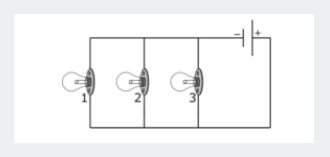
A student builds a circuit made up of a battery, two light bulbs, and a switch. What will the student most likely observe in this circuit?
Light bulb 1 and light bulb 2 will both be on
Light bulb 1 will be off, but light bulb 2 will be on
Light bulb 1 and light bulb 2 will both be off
Light bulb 1 will be on, but light bulb 2 will be off
The diagram shows a series circuit with three lit bulbs. How many of the bulbs will remain lit if the wire is cut a the point shown by the arrow?
0
1
2
3

Students constructed a circuit using different-colored lightbulbs. What will happen if Switch 3 is closed and the other switches are left open?
Only the white bulb will operate
None of the bulbs will operate
Only the white and yellow bulbs will operate
Only the red and blue bulbs will operate

The diagram shows an electric circuit with four bells that a student plans to build. When the student connects the wire as shown, which of the bells will ring?
Bell 1 only
Bells 1 and 4 only
Bells 3 and 4 only
Bells 1, 2, 3, and 4


To complete the circuit, a wire should be placed from —


What type of circuit is shown in the picture?
Series Circuit
Broken Circuit
Parallel Circuit
Open Circuit

Students constructed a circuit using different-colored lightbulbs. What will happen if Switch 3 is closed and the other switches are left open?
Only the white bulb will operate
None of the bulbs will operate
Only the white and yellow bulbs will operate
Only the red and blue bulbs will operate
The diagram shows a series circuit with three lit bulbs. How many of the bulbs will remain lit if the wire is cut a the point shown by the arrow?
0
1
2
3
A student builds a circuit made up of a battery, two light bulbs, and a switch. What will the student most likely observe in this circuit?
Light bulb 1 and light bulb 2 will both be on
Light bulb 1 will be off, but light bulb 2 will be on
Light bulb 1 and light bulb 2 will both be off
Light bulb 1 will be on, but light bulb 2 will be off
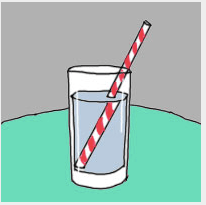
Why does the straw appear to be bent?
light is reflected
light is absorbed
light is turned
light is refracted
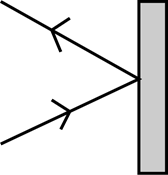
In the illustration, the light ray striking the object is-

What might explain why light travels in a straight line?
If there is nothing to interfere with light waves, they should travel in a straight line.
Light waves will always travel in a straight line, even if they come into contact with another object.
Light waves don't travel in a straight line.
Light waves travel in a straight line because sound waves travel in a straight line.
___________ travels in a straight line until something changes its path
Medium
Refract
Reflect
Light

What is happening in this picture?
Reflection
Refraction

What is happening in this picture?
Reflection
Refraction


What happens to light passing through a hand lens that makes the image of the penny appear larger? The light is-

Which object DOES NOT reflect light?
a black brick
a mirror
a lake
aluminum foil
Which is a situation that demonstrates light bending as it travels from one medium to another?
When light hits a shiny surface
When light passes through a prism
When light hits a black-colored surface
When light passes through empty space
What is the difference between refraction and reflection?
Light bends when it is reflected and bounces off when it is refracted.
Light bounces off when it is reflected and bends when it is refracted.
Light travels in curved lines when it is reflected and straight lines when it is refracted.
When light is refracted, it no longer travels.
What happens when light strikes a dark, heavy object?
Light is refracted.
The light moves quickly through the medium.
Light energy is absorbed.
light does not strike dark objects.

The diagram shows a fish being viewed from above the water. The fish appears to be closer to the surface than it really is. What causes this difference? (5.6C)
Light is reflected.
Light is refracted.
Light is focused.
Light is blocked.

The diagram shows a periscope used to see objects that are behind or under a barrier. What makes it possible to see an object when looking through a periscope? The periscope –
separates the light into different colors
absorbs the light rays passing through it
magnifies small objects so they can be seen
contains mirrors that reflect the object

The illustration shows light rays striking an object. Most of the light striking the object is –
transmitted
reflected
absorbed
refracted

Which answer describes what happens to the light beam as it interacts with each object?
1. reflected
2. absorbed
3. refracted
1. refracted
2. absorbed
3. reflected
1. absorbed
2. reflected
3. refracted
1. absorbed
2. reflected
3. scattered

Which of the following represents the material that allows light to pass through?
1. Transparent
2. Translucent
3. Opaque
1. Clear
2. Foggy
3. Translucent
1. Translucent
2. Transparent
3. Opaque
1. Opaque
2. Transparent
3. Translucent

When light travels through air into a prism, it bends and separates into many colors. Which term describes how the light bends?
The light is absorbed by the prism.
The light is reflected by the prism.
The light is transformed by the prism.
The light is refracted by the prism.

Which of the following explains they the swimmer's bodies appear to not line up with their heads?
Light travels in a straight line and is reflected off the surface.
Light travels through one medium into another and is refracted.
Light travels in a straight line and is refracted off the surface.
Light travels through one medium into another and is reflected.

What happens to light passing through a hand lens that makes the image of the penny appear larger? The light is-


Scientists use telescopes to make distant objects appear closer. Some parts of a telescope are shown below. Which of the following best describes how the objective lens of this telescope helps a scientist observe the moon?
The objective lens produces light.
The objective lens blocks light.
The objective lens reflects light.
The objective lens refracts light.

The picture shows how a light ray behaves with two different types of materials. Which table best describes the behavior of the light ray as it encounters the materials?
M1: The light ray is scattered in all directions.
M2: The light ray is refracted.
M1: The light ray is absorbed.
M2: The light ray is reflected.
M1: The light ray is transmitted.
M2: The light ray is refracted.
M1: The light ray is refracted.
M2: The light ray is reflected.

A student is looking directly at a lit nightlight through two different cardboard tubes as shown. Through which tube, if any, will the light be seen and why?
The bent tube only because the light bounces off the sides of the tube and travels through the tube to the student's eye.
The straight tube only because the light travels in a straight line directly to the student's eye.
Both tubes because light travels equally well along straight and curved paths.
Neither tube because both tubes absorb all of the light.

