wayground logo

Free Printable Worksheets

Font size

S
M
L
XL
Worksheets

Interim Review 1

Total questions: 141

Worksheet time: 5hrs 38mins
Name
Class
Date
1.
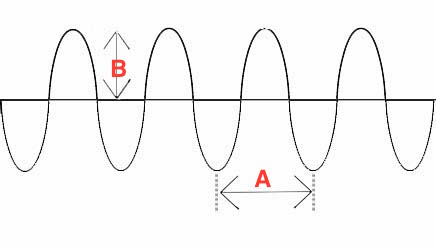
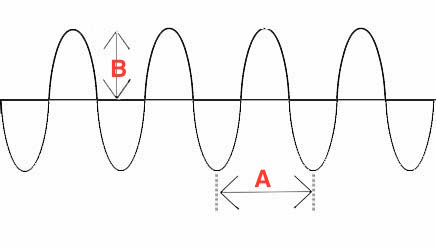
What property of this wave is represented by the letter "A"
a)
amplitude
b)
crest
c)
trough
d)
wavelength
2.
What property of the wave is represented by the letter "B"?
a)
amplitude
b)
crest
c)
trough
d)
wavelength
3.
The highest point on a wave is:
a)
the crest
b)
the trough
c)
the top
d)
the coast 
4.
The lowest point on a wave is the:
a)
Amplitude
b)
Crest
c)
Trough
d)
Wavelength
5.
The number of wavelengths that pass a point each per second is:
a)
frequency
b)
period
c)
longitudinal 
d)
transverse wave 
6.
The type of waves that require medium to pass:
a)
Mechanical Waves
b)
Electromagnetic Waves
7.
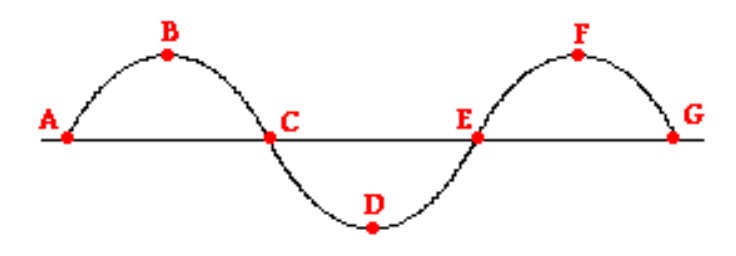
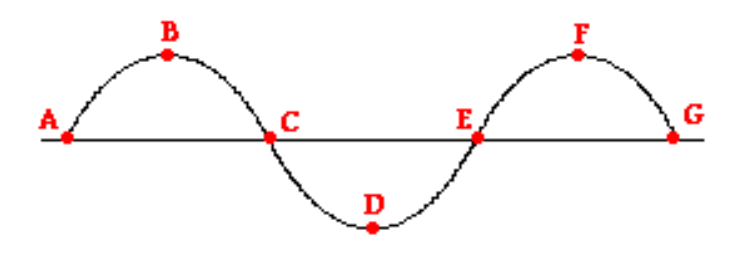
Which vocabulary term is used to identify the distance between points C & G?
a)
Amplitude
b)
Crest
c)
Frequency
d)
Wavelength
8.
When the frequency of a wave increases, what happens to the wavelength?
a)
The wavelength is not directly affected by the frequency of a wave.
b)
The wavelength increases.
c)
The wavelength decreases.
d)
More specific information is needed to form a conclusion about the wavelength.
9.
A mechanical wave cannot travel through...
a)
a vacuum(empty space).
b)
water.
c)
air. 
d)
glass.
10.
Which letter(s) represent the trough of the wave?
a)
A
b)
B & D
c)
D
d)
C & G
11.
Which letter(s) represent the crest of the wave?
a)
A
b)
B & D
c)
B & F
d)
F
12.
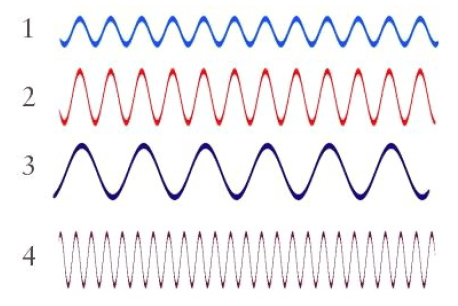
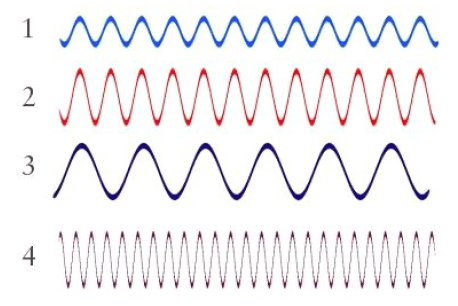
Which wave in the diagram has the greatest frequency?
a)
1
b)
2
c)
3
d)
4
13.
Which wave in the diagram has the greatest wavelength?
a)
1
b)
2
c)
3
d)
4
14.
Which of the following can sound travel through?
a)
solid
b)
liquid
c)
gas
d)
all of the above
15.
which material does sound travel the fastest?
a)
solid 
b)
liquid 
c)
gases
16.
When a wave strikes and object and bounces off. (example echo)
a)
medium
b)
refraction
c)
reflection
d)
interference
17.
When a wave bends as it passes through at an angle from one medium to another.(example: pencil in a glass of water-)
a)
medium
b)
refraction
c)
reflection
d)
interference
18.
A mechanical wave cannot travel through...
a)
a vacuum(empty space).
b)
water.
c)
air. 
d)
glass.
19.
Which type of wave is pictured here?
a)
Longitudinal
b)
Transverse
c)
Light 
d)
Electromagnetic
20.
What kind of wave is pictured below?
a)
compressional wave
b)
transverse wave
c)
sound wave
d)
mechanical wave
21.

It is the high pressure part of the wave where the particles are close together. It is part A on this picture.

a)

Compression

b)

Amplituide

c)

Rarefaction

d)

Wavelength

22.

Which type of wave moves parallel to the direction of the wave?

a)

transverse

b)

longitudinal

c)

surface

d)

electromagnetic

23.

High pitched waves would have wavelengths that are...

a)

at a rarefaction

b)

far apart

c)

close together

d)

at the trough

24.
When the sound source moves, the frequency changes
ex. police car siren sounding lower pitch after the car passes
a)
pitch
b)
frequency
c)
Doppler Effect
d)
medium
25.
What do waves carry from place to place?
a)
Energy, but not matter or particles
b)
Energy and matter or particles
c)
Matter or particles but not energy
d)
Neither energy nor matter or particles
26.
Sound needs a medium to travel through.  What is a medium?
a)
solid, liquid, gas
b)
open space
c)
waves
d)
nothing
27.
Waves are a transfer of what?
a)
Heat
b)
Light
c)
Energy
d)
Food
28.
Which wave in the diagram has the greatest wavelength?
a)
1
b)
2
c)
3
d)
4
29.
The lowest point on a wave is the:
a)
Amplitude
b)
Crest
c)
Trough
d)
Wavelength
30.
As the fire truck approached Mary, the pitch of the siren got higher. Once the fire truck passed and moved away, the siren's pitch got lower. This change in pitch is because of a change in the sound wave's
a)
concussion. 
b)
amplitude. 
c)
reflection.
d)
frequency. 
31.

Compared to wave A, which wave has the same wavelength but a smaller amplitude?

a)

only B

b)

only C

c)

only D

d)

both B & C

32.

If the wavelength of a wave increased, what would happen to the frequency?

a)

decrease

b)

increase

c)

stay the same

33.
What do you call bouncing back of a wave when it meets a surface or boundary that does not absorb the entire wave’s energy.
a)
Transmission
b)
Refraction
c)
Reflection
d)
Absorption
34.

What do you call the the bending of waves caused by a change in their speed as they pass from one medium to another. The bending of light as it moves from one material to another is ---

a)

refraction

b)

reflection

c)

translucent

d)

absorbed

35.

how does diffraction work

a)

it goes through water and air

b)

is a beam of light stopping at a wall

c)

it bounces off of light

d)

is the bending of light as it passes around the edge of an object

36.
What causes refraction?
a)
change in speed
b)
change in amplitude
c)
change in frequency
d)
change in wavelength
37.
This image is representing what wave interaction?
a)
Refraction
b)
Diffraction
c)
Reflection
d)
Interference
38.
When a wave moves around a barrier or though an opening it is known as what?
a)
Diffraction
b)
Refraction
c)
Rarefaction
d)
Destruction
39.

What is the main difference between refraction and diffraction?

a)

Refraction is a phenomenon that affects light; diffraction is a phenomenon that affects sound.

b)

Refraction involves the bending of light; diffraction involves the bending and spreading of light, usually around an obstacle.

c)

Refraction usually happens in the atmosphere; diffraction usually happens closer to the earth's surface.

d)

Refraction involves changes to the density of light; diffraction involves changes to the speed of light.

40.
Which of the following is the bending of a wave, which changes its speed.
a)
Reflection
b)
Diffraction
c)
Refraction
d)
Frequency
41.
When a wave bends or spreads past a medium, this is referred to as
a)
Reflection
b)
Refraction
c)
Radiation
d)
Diffraction
42.
The picture best represents
a)
Refraction
b)
Reflection
c)
Diffraction
d)
Interference
43.

When light bounces off a mirror it is ________.

a)

absorbed

b)

reflected

c)

corrected

d)

refracted

44.
What is reflection?
a)
Reflection is the bouncing  of light off the surface that it strikes on.
b)
Reflection is the absorbing of light off the surface that it strikes on.
c)
Reflection is the bending of light off the surface that it strikes on.
d)
Reflection is the scattering of light off the surface that it strikes on.
45.

What is the best explanation for Mickey seeing himself in the mirror?

a)

refraction

b)

absorbed

c)

reflection

d)

flipped

46.

When light hits an area and bounces back it is called:

a)

echo

b)

refraction

c)

reflection

d)

absorbing

47.
Light bending as it passes from one medium (object) to another is...
a)
Refraction
b)
Reflection
48.

Refraction is when light__________.

a)

Is bounced by an object or material.

b)

Changes speed as it travels in different materials which causes bending.

c)

When light speeds up to over 300,000 km/s

49.
Light changes speed as it travels through various mediums.  What are examples of mediums that light can travel through.
a)
snow and ice
b)
air and water
c)
cloth and wood
d)
glass and wood
50.
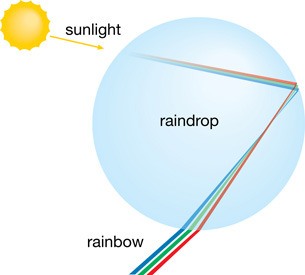
Light bending as it passes through a rain drop is an example of...
a)
Refraction
b)
Reflection
51.

when a wave is bent by traveling from one medium to another

a)

reflection

b)

refraction

c)

absorption

d)

propagation

52.

Sonar and echolocation use ----- to detect objects under water.

a)

Refraction

b)

Reflection

53.
The Ability to do work
a)
Soil 
b)
Energy 
c)
Matter
d)
Math
54.
Energy of moving particles of atoms that make up all  matter. 
a)
Thermal Energy 
b)
Chemical Energy 
c)
Electrical Energy 
d)
Electromagnetic Energy 
55.
Energy stored in atomic bonds that form molecules
a)
Thermal Energy
b)
Chemical Energy
c)
Electrical Energy
d)
Electromagnetic Energy
56.
Energy of electric charges moving through conductors
a)
Electrical Energy
b)
Electromagnetic Energy
c)
Thermal Energy
d)
Chemical Energy
57.
Energy that travels in waves( ex. microwaves, radio waves, energy from the sun)
a)
Chemical Energy
b)
Electrical Energy
c)
Electromagnetic Energy
d)
Thermal Energy
58.
Energy stored in the nucleus of an atom, released when protons or neutrons are added to or removed from the nucleus 
a)
Chemical Energy 
b)
Electrical Energy 
c)
Mechanical Energy 
d)
Nuclear Energy 
59.
Energy harnessed from the sun ( radiant light and heat)
a)
Wind Energy 
b)
Hydropower
c)
Solar Energy 
d)
Nuclear Energy
60.
The process by which carbon dioxide and water are converted into glucose(sugar) by plants, algae, and certain bacteria; uses sunlight energy to produce nutrients
a)
Respiration 
b)
Conservation 
c)
Photosynthesis 
61.
Energy of motion is which type of energy?
a)
Potential
b)
Kinetic
c)
Sound
d)
Gravitational
62.
What kind of energy is represented in this picture?
a)
Thermal
b)
Potential
c)
Nuclear
d)
Mechanical
63.
What kind of energy does this device use?
a)
Chemical
b)
Electrical
c)
Thermal
d)
Chemical
64.
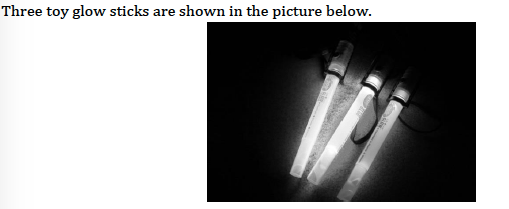
The glow sticks produce light for a short amount of time. The light from the glow stick is a conversion from what to what?
a)
thermal to light
b)
gravitational to potential
c)
radiant to electrical
d)
chemical to light
65.
On a roller coaster, where is maximum potential energy?
a)
At the bottom of a big hill
b)
When going around a corner
c)
When going upside down
d)
At the top of a big hill
66.
On a roller coaster, where is maximum kinetic energy?
a)
At the bottom of a big hill
b)
When going around a corner
c)
When going upside down
d)
At the top of a big hill
67.
Energy that is stored in bonds between atoms is:
a)
Mechanical energy
b)
Chemical energy
c)
Kinetic energy
d)
Nuclear energy
68.
According to which law of energy, energy can't be created or destroyed?
a)
First law of motion
b)
The law of tacos
c)
Laws of Energy
d)
law of conservation of energy
69.
Heat energy is also called
a)
electrical energy
b)
chemical energy
c)
light energy
d)
thermal energy
70.
Sound energy needs a
a)
medium
b)
vacuum
c)
chemical
d)
light
71.
What type of energy includes both kinetic and potential energy?
a)
mechanical energy
b)
chemical energy
c)
heat energy
d)
sound energy
72.
Stored energy is called ______ energy.
a)
Kinetic
b)
Potential
c)
Pacific
d)
Safe
73.

Steam is an example of _____________energy.

a)

light

b)

thermal

c)

sound

d)

electrical

74.

Potential energy depends on ____________ & ______________.

a)

mass, speed

b)

mass, position

c)

speed, position

d)

mass, weight

75.

Kinetic energy depends on _____________ & _____________.

a)

mass, speed

b)

mass, position

c)

mass, weight

d)

speed, distance

76.

A windmill is an example of ________________energy.

a)

thermal

b)

mechanical

c)

light

d)

electrical

77.
The faster an object moves, the ________ kinetic energy it has. 
a)
more
b)
less
c)
none of the above
d)
all of the above 
78.
What kind of energy is in a rock at the edge of a cliff?
a)
Potential
b)
Kinetic
79.

When does an object have NO kinetic energy?

a)

When it's at rest.

b)

When it's moving very slowly.

c)

When it has no electrical charge.

80.
I have the most potential energy if I am: 
a)
5 feet high
b)
10 feet high
c)
15 feet high
d)
20 feet high
81.
At which point is potential energy greatest?
a)
W
b)
X
c)
Y
d)
Z
82.
a)
Potential Energy
b)
Kinetic Energy
83.

The vibration of particles (matter, atoms) caused by the movement of energy through a substance.

a)

mechanical energy

b)

thermal energy

c)

sound energy

d)

gravitational energy

84.

The total potential and kenetic energy of the particles in an object

a)

thermal energy

b)

electromagnetic (radiant) energy

c)

kenetic energy

d)

chemical energy

85.

The form of energy associated with the position and motion of an object

(potential energy + kenetic energy = __________)

a)

mechanical energy

b)

gravitational energy

c)

Law of Conservation of Energy

d)

radiant energy

86.

A lamp that plugs into a wall socket draws energy, which flows through a thin wire in the bulb, causing it to heat up until it glows. What energy transformations are taking place?

a)

Chemical → light → electrical

b)

Mechanical → sound → light

c)

Thermal → solar → electrical

d)

Electrical → thermal → light

87.

An electric pencil sharpener uses electricity to make its motor spin. The pencil sharpener also makes noise and heats up. Which observation of the pencil sharpener demonstrates the law of conservation of energy?

a)

The amount of electrical energy used equals the total amount of mechanical, sound, and thermal energy produced.

b)

The amount of energy used by the electric pencil sharpener is greater than an electric lamp.

c)

The electric pencil sharpener only uses energy when it is being used to sharpen a pencil.

d)

The electric pencil sharpener is easier to use than the older version that was cranked by hand.

88.

Turning the handle makes a current that causes the light bulb to glow. What are the energy transformations that happen in this hand generator?

a)

Thermal → solar → light

b)

Mechanical → electrical → light

c)

Electrical → mechanical → light

d)

Solar → light → electrical

89.

When energy enters a system and then comes out of the system later, the law of conservation of energy states that–

a)

some of the energy that entered the system will remain in the system.

b)

the energy will always create a change in the properties of the parts of the system.

c)

the form of energy that comes out of the system must be the same form that entered.

d)

the amount of energy coming out of the system must equal the energy that entered the system.

90.

Which of the following is a form of potential energy?

a)

sound energy

b)

chemical energy

c)

mechanical energy

d)

thermal (heat) energy

91.

The law of conservation of energy states ___.

a)

electrical energy can be transformed into other forms

b)

energy can be created and destroyed

c)

energy is never created nor destroyed

d)

what goes up must come down

92.

During energy transformations, energy is never ___.

a)

released as heat

b)

used to increase an object's potential energy

c)

created or destroyed

d)

completely transformed

93.

A baseball is hit into the air with a bat. When does baseball have the greatest gravitational potential energy?

a)

when it hits the ground

b)

when it reaches its highest point

c)

when it leaves the bat

d)

when the mechanical and kinetic energies of the baseball are equal

94.

___ is energy stored by things that stretch or compress.

a)

Gravitational potential

b)

Elastic kinetic energy

c)

Chemical kinetic energy

d)

Elastic potential energy

95.

Calculate the gravitational potential energy of the object.

GPE = mgh

mass: 50

gravity: 10

height: 6

a)

5320J

b)

300J

c)

66J

d)

3000J

96.

Calculate the kinetic energy.

KE=12mv2KE=\frac{1}{2}mv^2  

mass: 200

velocity: 5

a)

2,500J

b)

250J

c)

500,000J

d)

none of the above

97.
A battery converts what type of energy to another?
a)
electrical to chemical
b)
electrical to thermal
c)
mechanical to electrical
d)
chemical to electrical
98.
Why does the roller coaster car have the greatest amount of potential energy at position A?
a)
The car is at the greatest height at position A.
b)
The car is moving with the greatest velocity at position A.
c)
The car has the greatest mass at position A.
d)
The car has the greatest acceleration at position A.
99.
The cyclist has the most kinetic energy at which point? 
a)
A
b)
B
c)
C
d)
NONE
100.
A what point does the water have the most gravitational potential?
a)
A
b)
B
c)
C
d)
There is no gravitational potential
101.
(6.8A) At which of these positions does the ball have both the greatest kinetic energy and the least potential energy?
a)
Position 1
b)
Position 2
c)
Position 3
d)
Position 4
102.

Think about a pan of water sitting on an electric stove. The stove is then turned on to high.

How is heat transferred from the stove to the pan?

a)

conduction

b)

convection

c)

radiation

d)

temperature

103.

Sam placed a glass of water in the refrigerator. After about an hour he took it out and found it to be colder.

What is the most likely thing that happened?

a)

the cold that was in the refrigerator transferred into the water

b)

the particles in the water started to move faster

c)

the cold from the refrigerator radiated into the glass

d)

the heat that was in the water transferred out into the refrigerator

104.

What is the scientific definition of temperature?

a)

Temperature is how hot or cold something is

b)

Temperature in Celsius

c)

Temperature in Fahrenheit

d)

Temperature is the speed of the molecules in an object

105.

Think about a pan of water sitting on an electric stove. The stove is then turned on to high.

What will happen to the movement of the particles in the pan?

a)

They will slow down

b)

They will stay the same speed

c)

They will stop moving

d)

They will speed up

106.

Freddie is drinking a cold glass of Kool-Aid in the sun on a hot day. He puts the glass down in the sun and the glass begins to warm.

What is happening to the small particles that make up Kool Aid? They. . .

a)

contract

b)

slow down

c)

move faster

d)

disappear

107.

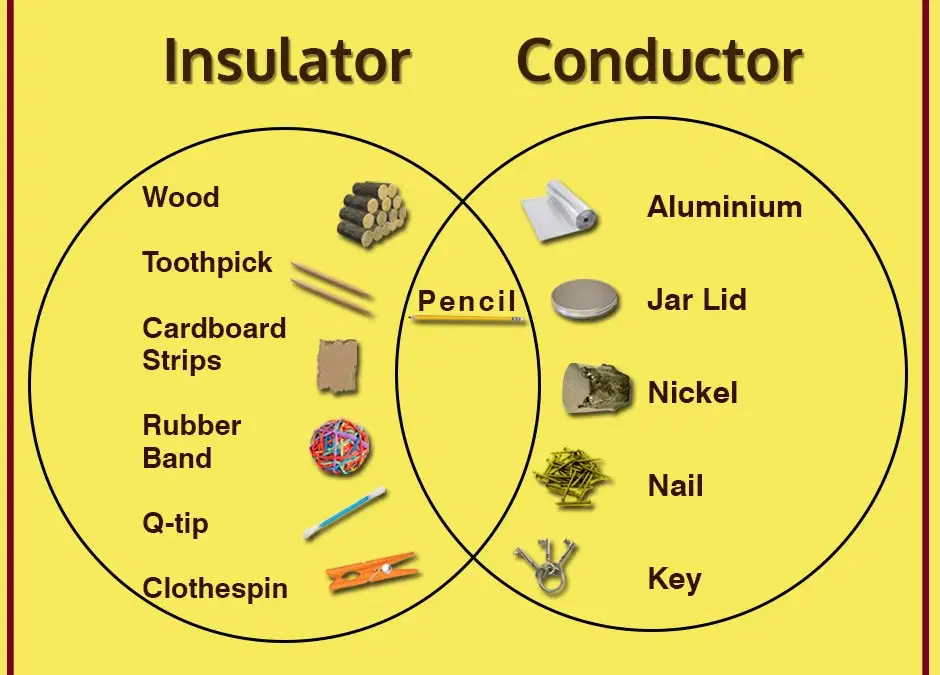
Which material would make the best insulator?

a)

rubber

b)

steel

c)

copper

d)

aluminum

108.

Suppose that you are at the beach.

Energy from the Sun reaches you mainly through

a)

conduction

b)

convection

c)

radiation

d)

temperature

109.

We know that wind is energy because wind. . .

a)

is able to work

b)

is a convection current

c)

is caused by uneven heating

d)

is caused by convection

110.

Water currents can transfer heat by

a)

conduction

b)

convection

c)

radiation

d)

temperature

111.

Two objects are touching.

How is heat transferred from one object to the other?

a)

conduction

b)

convection

c)

radiation

d)

reflection

112.

What type of energy is heat energy?

a)

potential

b)

kinectic

c)

chemical

d)

mechanical

113.

The Law of __________________ states that energy cannot be created or destroyed, but only changed from one form to another.

a)

Energy Production

b)

First Energy

c)

Conservation of Resources

d)

Conservation of Energy

114.

Heat energy moves from a __________________ object to a _________________ object.

a)

warmer, cooler

b)

cooler, warmer

c)

bigger, smaller

d)

smaller, bigger

115.
You're holding hands with your best friend.  Your friend's hands are REALLY warm and yours are really cold.  After a few minutes, this has changed.  How might you explain what happened?
a)
The cold energy from your hand transferred to your friend's hand through conduction.
b)
The heat energy from your friend's hand transferred to your hand through conduction. 
c)
The cold energy from your hand transferred to your friend's hand through convection.
d)
The heat energy from your friend's hand transferred to your hand through convection.
116.

If two objects have different temperatures, heat will flow from the warmer object to the cooler one UNTIL ____________

a)

one reaches a temperature of zero

b)

they both have an equal temperature

c)

one runs out of energy

117.

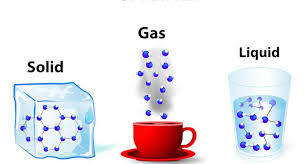
Which diagram correctly labels the phases of the molecules?

(Hint: SOLID on top or GAS on top?)

a)
b)
118.

Molecules with MORE heat energy are...

a)

spread further apart

b)

packed tightly together

119.

Molecules in a COLD substance are...

a)

moving quickly all around

b)

vibrating in place

120.

Which arrow correctly shows the direction of GAINING heat?

(Hint: up or down?)

a)
b)
121.

Which arrow correctly shows the direction of LOSING heat?

(Hint: up or down?)

a)
b)
122.
Sebastion and his brother have bunk beds in their bedrooms. Sometimes Sebastion, in the upper bunk, gets much warmer than his brother in the lower bunk. What type of energy transfer does this illustrate?
a)
Conduction
b)
Convection
c)
Radiation
d)
Thermal
123.

There are four cups of hot cocoa. The cup sizes are shown. The temperature of the cocoa in each cup is 25 degrees celsius. Which cup has the MOST thermal energy(HEAT)?

a)

Large cup (Trenta)

b)

Small cup (Tall)

c)

Venti

d)

All three are the same temperature so they have same thermal energy
124.

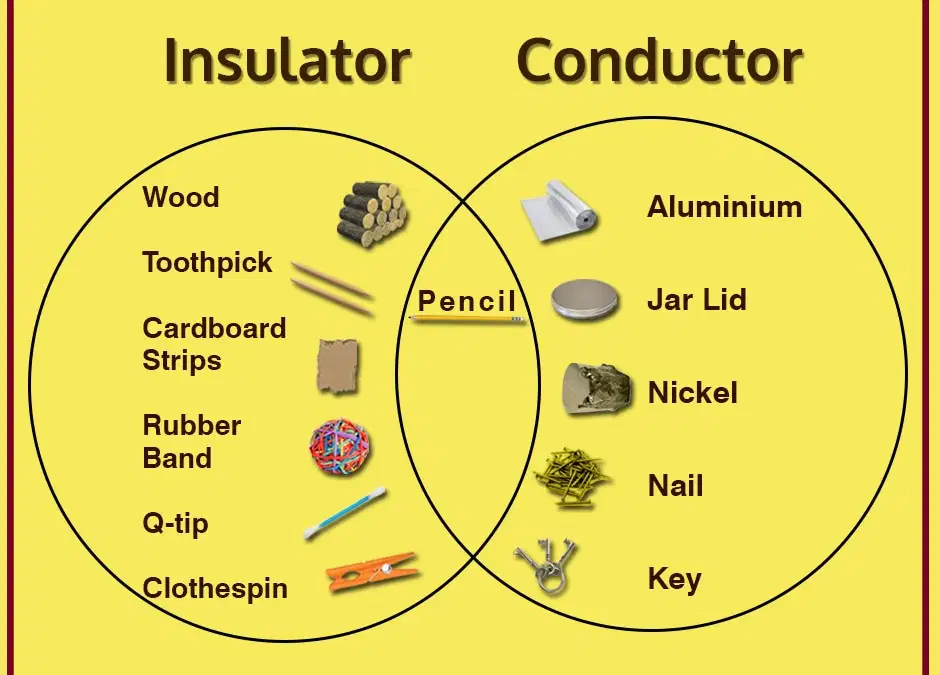
A type of matter that heat travels through easily

a)

insulator

b)

conductor

c)

mass

125.

A type of matter that slows down the transfer of thermal energy. Heat DOES NOT easily pass through

a)

insulator

b)

conductor

c)

molecule

126.

Transfer of heat through LIQUIDS or GASES

a)

radiation

b)

convection

c)

conduction

127.

This is heat …….

a)

Conduction

b)

Convection

c)

Radiation

128.

Which list correctly identifies the energy transfer between A, B and C

a)

A- Conduction, B-Convection, C-Ratiation

b)

A- Convection, B- Radiation, C- Conduction

c)

A- Convection, B- Conduction, C- Radiation

d)

A- Conduction, B- Radiation, C- Convection

129.

Cold Pack on Person

a)

Heat is transferred from the cold pack to the person.

b)

Heat is transferred from the person to the cold pack

c)

The cold pack is getting warmer. The person is getting colder.

d)

The cold pack is getting colder. The person is getting warmer.

130.

Hand Warmer in a Hand

a)

Heat is being transferred from the hand warmer to the hand.

b)

Heat is being transferred from the hand to the hand warmer.

c)

The hand is getting warmer. The hand warmer is getting cooler.

d)

The hand warmer is getting warmer. The hand is getting cooler.

131.

Objects with MORE MASS have______________

a)

lower potential energy

b)

lower number of atoms

c)

higher thermal energy

d)

higher temperature

132.

If an insulator is doing it's job well, the temperature of an object over time should...

a)

rise slowly

b)

lower quickly

c)

show very little change

d)

rise quickly

133.
Of these three states of matter, which one has the most kinetic energy? 
a)
Solid 
b)
Liquid 
c)
Gas
134.
What is the difference between heat and temperature?    
a)
a.  Temperature measures the motion of molecules, and heat is the energy of that motion
b)
b.  Temperature is measured by a thermometer, and heat is measured by a barometer
c)
c.  Heat is measured in calories, and temperature is measured in joules
d)
d.  Heat is caused by the sun, and temperature is caused by conditions in the atmosphere
135.

Temperature is the __________ _________ energy of moving particles

a)

average potential

b)

average kinetic

c)

total potential

d)

total kinetic

136.

How could you increase the object's gravitational potential energy (GPE) without changing its distance from the ground (height) and gravity?

a)

Decrease the object's mass

b)

Increase the object's height

c)

Increase the object's mass

d)

Decrease the object's height

137.

How could you increase the gravitational potential energy of an object without changing its mass and gravity?

a)

Make the object larger

b)

Lower the object towards the ground

c)

Raise the object farther off the ground

d)

Allow the object to roll on the ground

138.

At which position does the child on the swing have the most gravitational potential energy?

a)

W

b)

X

c)

Y

d)

Z

139.

What is the gravitational potential energy (GPE) of a 1 kilogram book that is 1 meter above the ground?

g = 9.8 m/s2

a)

9.8 Joules

b)

1.0 Joule

c)

0.10 Joule

d)

11.8 m/s2

140.

A leaf has fallen off a tree and hit the floor of the woods. Why is PEg = 0 J ?

a)

The leaf is no longer being acted upon by gravity.

b)

The leaf no longer has any height off the ground.

c)

The leaf no longer has any mass.

d)

The leaf does not have 0 J of PEg.

141.

A 50 kg jogger jumps 1.6 m off the ground. How much energy did they use to do this?

a)

80 J

b)

500 J

c)

160 J

d)

800 J