
 Worksheets
Final Review Spanish 1/Bio H
Total questions: 119
Worksheet time: 2hrs 37mins
Hola
hi
bye
see you
adios
Buenos dias
goodmorning
goodnight
goodafternoon
Buenas noches
good afternoon
goodmorning
goodnight
how would the sentence "Cómo estás" be used?
formally
informally
boss, co-workers, teachers, principals
sister, friend, person of your age
Más o menos
bad
so,so
good
Is the phrase "Y tú?" formal
yes
no
is the phrase "Y usted?" informal?
no
yes
Buenas noches
good afternoon
goodmorning
goodnight
¿De dónde eres?
Are you ok?
Where do you live?
Where are you from?
¿Como estas?
How are you?
How is your dog?
How old are you?
Complete the sentence with the correct form of the verb "ser:" Ella (a) mi amiga.
Complete the sentence with the correct form of the verb "ser:" Laura y yo (a) estudiantes.
Complete the sentence with the correct form of the verb "ser:" Yo (a) de Puerto Rico.
Complete the sentence with the correct form of the verb "ser:" Julia y Marta (a) chicas.
Complete the sentence with the correct form of the verb "ser:" Nosotros no (a) viejos.
Complete the sentence with the correct form of the verb "ser:" Usted (a) turista.
This macromolecule carries hereditary information and instructions for building molecules
carbohydrate
lipids
protein
nucleic acid
Which of the following statements is true about catalysts (enzymes)?
Catalysts slow down the rate of chemical reactions.
Enzymes help regulate pH.
Catalysts are used up during a chemical reaction.
Catalysts lower the activation energy of a chemical reaction.
This macromolecule carries hereditary information and instructions for building molecules
carbohydrate
lipids
protein
nucleic acid
Which of the following statements is true about catalysts (enzymes)?
Catalysts slow down the rate of chemical reactions.
Enzymes help regulate pH.
Catalysts are used up during a chemical reaction.
Catalysts lower the activation energy of a chemical reaction.
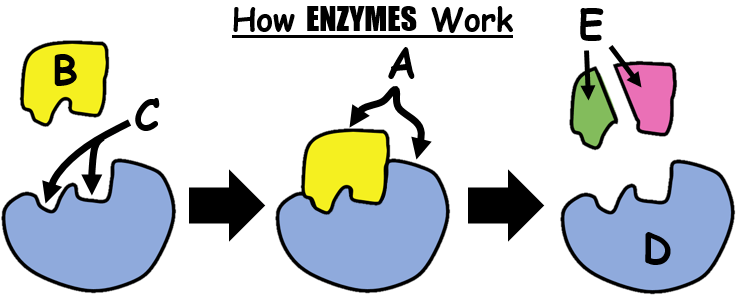
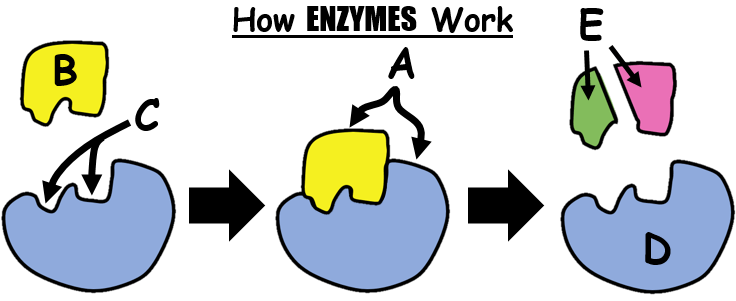
An enzyme and substrate can be compared to
lock and key
a faucet
a door hinge
light switch
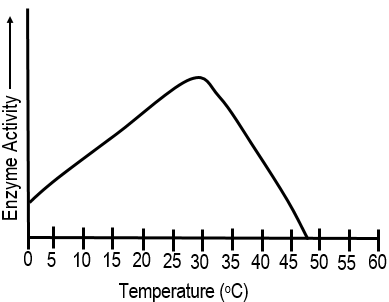
Changes in pH and temperature can ___________________ an enzyme which causes it to lose its shape and affects its function.
puncture
denature
double
delete
Which macromolecule is used as our main source of energy?
Lipids/Fats
Nucleic Acids
Proteins
Carbohydrates
Carbohydrates are used by the body as a source of quick energy, and are made up of
carbon, hydrogen, and oxygen.
oxygen, hydrogen, and protein.
potassium, oxygen, and carbon.
hydrogen, cholesterol, and oxygen.
Which is the primary energy source for most animals?
carbohydrates
proteins
fiber
fats
Approximately 20 amino acids are essential to living systems. How are amino acids linked together to form proteins?
genetic bonds
peptide bonds
acid-base bonds
hydrogen bonds
Which class of biomolecule includes monosaccharides such as the blood sugar glucose, and the fruit sugar, fructose, which is found in energy drinks?
lipids
proteins
nucleic acids
carbohydrates
Which statement about the function enzymes in living systems is MOST accurate?
Enzymes are proteins that raise the activation energy for chemical reactions.
Enzymes are proteins that lower the activation energy for chemical reactions.
Enzymes are nucleic acids that raise the activation energy of chemical reactions.
Enzymes are nucleic acids that lower the activation energy of chemical reactions.
Grizzly bears, such as the ones shown, gain 200 to 500 pounds of fat every summer, feasting on salmon, berries, and honey. In winter, almost all of this stored weight is lost during hibernation. What type of stored biomolecules allow the grizzly to hibernate this way, without starving to death?
carbohydrates
lipids
proteins
nucleic acids
What function do phospholipids perform in living organisms?
They are used for short-term energy storage.
They serve as the building blocks for proteins.
They make up the major component of cell membranes.
They store information in the nucleus of a cell.
Which statement regarding proteins is true?
Proteins are used to carry the genetic code in the nucleus of a cell.
Proteins make up most of the cell and tissue structures in animals.
Proteins are synthesized in the mitochondria of the cell.
Proteins are the building blocks of amino acids.
Which statement is correct, with regard to the catalase enzyme catalyzing the breakdown of hydrogen peroxide into water and oxygen?
Water is a substrate in this reaction.
Bonds in the hydrogen peroxide are weakened in catalase's active site, allowing the chemical reaction to occur.
Hydrogen peroxide is produced by the catalase enzyme.
The breakdown of hydrogen peroxide would still occur naturally, but occurs less rapidly with the catalase enzyme.
Edgar, a biochemist, claims to have found a new variety of a type of small biomolecule. Edgar notes that there are now 21 types of this biomolecule instead of the old known 20. The molecule can also be combined with others in its class to produce a wide variety of proteins, some liquid and others solid. What type of biomolecule did Edgar find?
a nucleic acid
a monosaccharide
an amino acid
a fatty acid

Identify the biological function of the biomolecule shown.
long-term energy storage
information coding
short-term energy storage
catalysis of chemical reactions in cells
The enzyme amylase is found in saliva and assists with the break down of starch into glucose. Explain how this occurs without affecting the chemical makeup of the amylase.
Amylase bonds to the starch to speed up the reaction and detaches itself when complete, without being affected.
Amylase does not take place in the starch reaction, but raises the temperature of the saliva to speed up the reaction.
Amylase changes starch into a vapor which increases the reaction rate, but is recreated by the glucose.
Amylase transfers all of its energy to the starch molecules to speed the reaction, but does not take place in the reaction.
Some insects can stand on the surface of water because water —
has a high specific heat.
has a high boiling point.
is a good evaporative coolant.
is cohesive and adhesive.
Which of the following macromolecules are a prominent part of animal tissues that function in insulation, helping animals conserve heat?
Carbohydrates
Lipids
Proteins
Nucleic acids
What characteristic do all living things share?
They contain DNA.
They are made up of many parts.
They reproduce by mitosis.
They need oxygen to survive.
Which of the following factors is MOST likely to affect the function of an enzyme?
catalysts
size of beaker
proteins
temperature
Cell membranes are made up partly of fats. What type of macromolecule are fats?
lipid
carbohydrates
proteins
nucleic acids
Which group of macromolecules includes enzymes?
carbohydrates
proteins
lipid
nucleic acids
Which of the following, BEST describes a function of an enzyme?
Enzymes are specialized proteins that serve as catalysts.
Enzymes are carbohydrates that serve as catalysts.
Enzymes are specialized proteins that slow down chemical reactions.
Enzymes are specialized nucleic acids that slow down chemical reactions.
Which type of macromolecules are common to both organisms and viruses?
proteins and nucleic acids
proteins and carbohydrates
nucleic acids and carbohydrates
lipids and proteins,
Glucose is formed by plants when they carry out photosynthesis. Glucose is an example of a
protein
carbohydrate
lipid
nucleic acid

The diagram shows a chain of amino acids...
Which type of organic compound is shown?
protein
carbohydrate
nucleic acid
lipid
In the cells of a living organism, enzymes control the rate of chemical reactions. Each enzyme has a specific three-dimensional shape that allows it to recognize and bind with it
substrate
coenzyme
product
active site


low to high uses energy/ATP


Concentration of substances is the same.
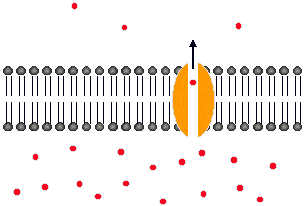
Need help from channel proteins. No energy required.

from high to low.

Uses energy.

Uses energy.

Doesn't need energy

What is replicated in S phase of Interphase?
Cytoplasm
Cell
DNA
Nucleus
DNA is replicated during which phase of Interphase?
M Phase
Cell Division
G2 Phase
S Phase
Interphase is preparing the cell for...
Cell division
cell fragmentation
cell deterioration
cell proliferation
During M phase, what is being divided?
Cell
DNA
RNA
Chromosomes

Which phase is demonstrated in the image?
Prophase
Metaphase
Anaphase
Telophase

Which phase is demonstrated in the image?
Prophase
Metaphase
Anaphase
Telophase

Which phase is demonstrated in the image?
Prophase
Metaphase
Anaphase
Telophase

Which phase is demonstrated in the image?
Prophase
Metaphase
Anaphase
Telophase
WHAT DOES MEIOSIS CREATE?
CHROMOSOMES
GAMETES
DNA
TRAITS
MEIOSIS IS NEEDED BECAUSE...
IT ACTUALLY ISN'T, BUT CAN BE HELPFUL IN SOME ORGANISMS
TO REDUCE THE CHROMOSOME NUMBER BY HALF
SO THAT EVERY CELL IS EXACTLY IDENTICAL
TO MAKE SURE EVERY HUMAN CELL HAS 92 CHROMOSOMES
THE END RESULT OF MEIOSIS IS...
FOUR UNIDENTICAL GAMETES
FOUR IDENTICAL GAMETES
TWO IDENTICAL GAMETES
TWO UNIDENTICAL GAMETES
THE GAMETES ARE CONSIDERED TO HAVE ONE HALF OF THE GENETIC INFO SO IT IS CALL
DIPLOID (2N)
DIPLOID (N)
HAPLOID (2N)
HAPLOID (N)
THE STRUCTURE THAT CONTAINS THE DNA IS CALLED (CHOOSE THE MOST SPECIFIC ANSWER)
CHROMOSOME
CELL BODY
CELL
NUCLEUS
MALE GAMETE IS KNOWN AS
EGG
SPERM
A FEMALE GAMETE IS KNOWN AS
EGG
SPERM
HOW MANY CHROMOSOMES DO HUMAN GAMETES HAVE?
46
23
47
22
CROSSING OVER ALLOWS FOR WHAT TO HAPPEN?
ALL CELLS TO STAY THE SAME
GENETIC VARIATION
REDUCTION OF CHROMOSOMES
CHROMOSOME NUMBER TO INCREASE
WHEN THE SPERM FERTILIZES THE EGG WHAT IS FORMED
ZYGOTE
EMBRYO
FETUS
FERTILIZATION
FERTILZATION IS ...
THE FUSION OF A HAPLOID EGG AND SPERM
THE FUSION OF A DIPLOID EGG AND SPERM
THE FUSION OF A HAPLOID EGG AND DIPLOID SPERM
THE FUSION OF TWO EGGS
WHY ARE THE CHROMOSOMES EVEN NUMBERED FOR ORGANISIMS?
JUST A COINCIDENCE
BECAUSE 75% OF THE INFO COMES FROM MOM AND 25% COMES FROM DAD
BECAUSE 51% OF THE INFO COMES FROM MOM AND 49% COMES FROM DAD
BECAUSE HALF OF THE GENTIC INFORMATION COMES FROM MOM AND HALF COMES FROM DAD

THIS IMAGE SHOWS WHAT IS HAPPENING WITH THE CHROMOSOMES?
NON- DISJUNCTION
METAPHASE
TELOPHASE
CROSSING OVER
The idea of non-disjunction of the 21st chromosome means the following:
complete seperation of chromosomes
complete seperation of genes
failure for chromosomes to seperate
failure for genes to seperate
To find out how much variation an organism with a diploid number of 20 chromosomes would have you would need to do the following
20^2
2^10
2^20
10^2
Chromosomes assort independantly, not genes because of the following
The chromosomes contain the genes, genes can't leave the chromosome
The genes contain the chromosomes
It depends on the sex of the offspring
In sexual selection of most organisms the genes will be directed by the DNA to assort independantly

Explain the karyotype of this individual
Male - no genetic defect
Male - Down's Syndrome
Female - no genetic defect
Female - Down's Syndrome

