wayground logo

Free Printable Worksheets

Font size

S
M
L
XL
Worksheets

8th 1st Semester Final Review

Total questions: 93

Worksheet time: 4hrs 31mins

Name
Class
Date
1.
I must follow all instructions, written and verbal, about the laboratory procedures given by the teacher.
a)
True
b)
False
2.
I will immediately notify the instructor only about major accidents.
a)
True
b)
False
3.

When should safety goggles be worn?

a)

at all times in the lab

b)

when you feel like it

c)

when liquids could splash into your eyes OR when using glassware

4.
You should never ______ chemicals in the lab. 
a)
taste
b)
touch
c)
smell
d)
all of the above
5.
When you are smelling a chemical, you should
a)
whiff
b)
waft
c)
take a deep breath
d)
smell it for as long as you can
6.
What is the volume of the liquid in this graduated cylinder?
a)
19 mL 
b)
35 mL 
c)
24 mL 
d)
1.9 mL
7.
What is the mass on the triple beam balance?
a)
345.5
b)
304.5
c)
700.5
8.
Calculate the Volume
a)
410 cm3
b)
420 cm3
c)
402 cm3
d)
401 cm3
9.

What is the length of the object in centimeters?

a)

3.4 cm

b)

4.3 cm

c)

3.5 cm

d)

1 1/4 inches

10.
The number of pages that Carolyn wrote in her journal each day from Monday to Friday is shown below: 
9, 8, 12, 6, 10
What is the mean number of pages she wrote per day?
a)
5
b)
6
c)
9
d)
11
11.
At Donald's Donuts the number of donut holes in a bag can vary. Help Donald find the mode of the number of donut holes per bag described in the sample below:
{12,10,10,10,13,12,11,13,10}
a)
13
b)
12
c)
11
d)
10
12.
A data set can have more than one _______
a)
Median
b)
Mode
c)
Mean
d)
Midrange
13.
Find the median, mode and range: 
3, 5, 7, 9, 11, 8, 3
a)
median:7  mode:3  range:10
b)
median:6  mode:3  range:7
c)
median:7  mode:3 range:8
14.

When conducting an experiment, you my change ---- variable.

a)

Two

b)

Four

c)

One

d)

None

15.

The --- variable is found on the y-axis.

a)

Dependent

b)

Independent

16.

The --- variable is located on the x-axis.

a)

Independent

b)

Dependent

17.

What is the independent variable on this graph?

a)

Number of push ups

b)

Days

18.

A student is studying the effect of studying on getting good grades. What is the independent variable?

a)

Whether or not the student studies

b)

The type of grades the student receives

19.

If your eat a lot of candy without properly brushing your teeth then you will develop cavities. What is the dependent variable?

a)

Eating a lot of candy without properly brushing your teeth

b)

The number of cavities developed

20.
all matter is made of what 
a)
energy 
b)
atoms 
c)
electrons 
d)
compounds 
21.
The positive particles of an atom are 
a)
electrons 
b)
positrons 
c)
neutrons 
d)
protons 
22.
the central region of an atom where its neutrons and protons are is its 
a)
nucleus 
b)
electron cloud
c)
core 
d)
center 
23.
an atom with atomic number 6 would have how many protons 
a)
6
b)
12
c)
3
d)
cannot be determined 
24.
Particles in an atom that are neutral and have no charge are 
a)
negatrons 
b)
electrons 
c)
neutrons 
d)
protons 
25.

What does the 1.00794 stand for?

a)

mass number

b)

atomic number

c)

average atomic mass

d)

number of protons

26.
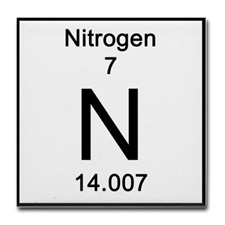
What is the number of protons that the element in this image contain?
a)
14
b)
7
c)
15
d)
18
27.

If an atom has 12 protons, which of the following must it also have to be considered a neutral atom?

a)

12 neutrons

b)

12 electrons

c)

12 protons

d)

24 protons and neutrons

28.
If an atom has 10 protons, 10 neutrons, and 10 electrons, what is the mass of the atom?
a)
10
b)
20
c)
30
29.

What charge does an atom have when it GAINS electrons?

a)

Positive

b)

Negative

c)

Neutral

30.

What two particles determine the mass number?

a)

Protons and electrons

b)

Electrons and neutrons

c)

Protons and neutrons

31.

When an atom loses an electron, it becomes a(n) _____________ ion.

a)

positive

b)

negative

c)

neutral

d)

polyatomic

32.

If the mass number of this chlorine atom is 36, how many neutrons does it have?

a)

17

b)

18

c)

19

d)

can't be determined

33.

What is the atomic number of this atom shown in the Bohr model?

a)

11

b)

12

c)

13

d)

can't be determined

34.

Is this atom an ion? If so what would it's charge be?

a)

Yes, 1-

b)

No it is neutral

c)

Yes, 1+

d)

Can't be determined

35.

Most of the mass of an atom is found in the ______.

a)

nucleus

b)

proton

c)

electron cloud

d)

isotope

36.

What are the three main groups of the periodic table?

a)

groups

b)

metal

c)

nonmetals

d)

metalloids

e)

periods

37.

What are the vertical columns on the periodic called?

a)

groups

b)

periods

c)

nonmetals

d)

metals

e)

metalloids

38.

What do the vertical columns on the periodic table tell us?

a)

The number of orbitals

b)

The number of valence electrons (electrons on the outer most shell)

39.

What are the horizontal rows on the periodic table called?

a)

periods

b)

groups

c)

metals

d)

nonmetals

e)

metalloids

40.

What do the horizontal rows on the periodic table tell us?

a)

The number of orbitals

b)

The number of valence electrons (the electrons on the outer most shell)

41.

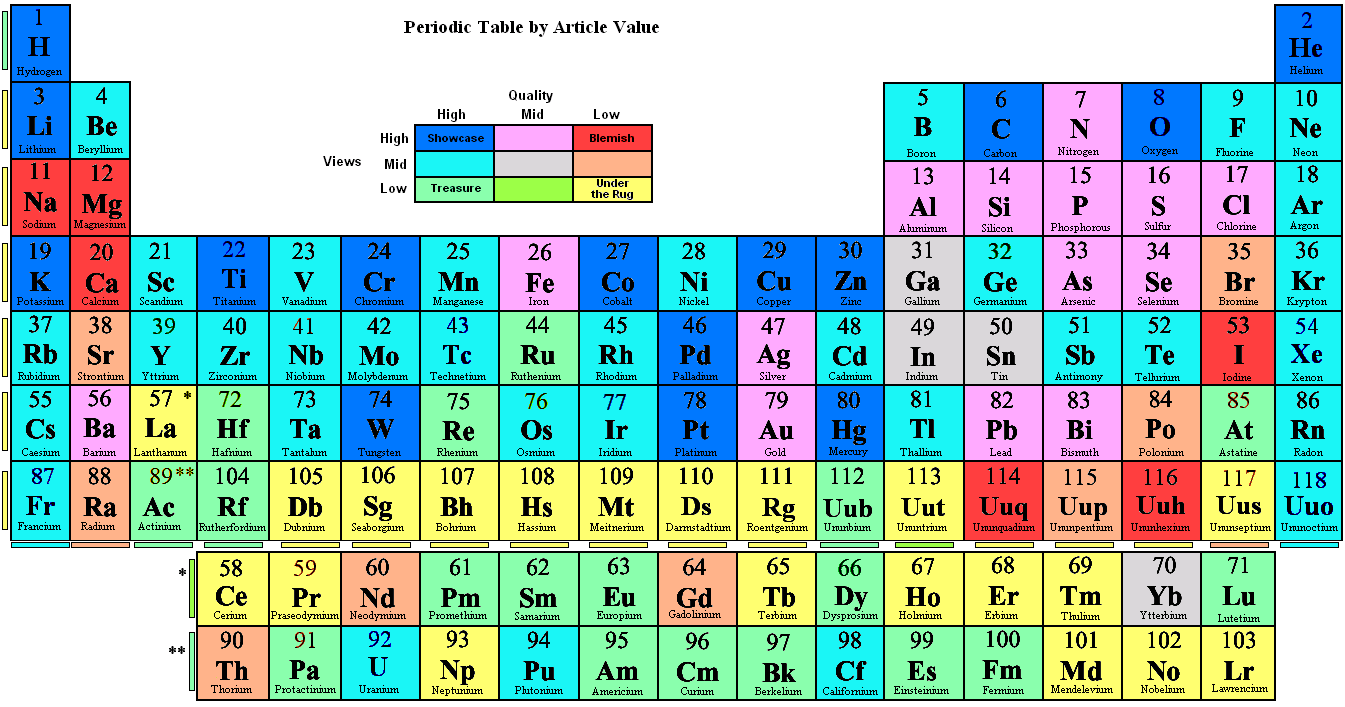
What group and period does this element belong in? *

a)

period 1 and group 3

b)

period 3 and group 1

c)

period 2 and group 3

d)

period 3 and group 2

42.

How many valence electrons does the element have?

a)

1

b)

2

c)

3

d)

4

43.
The Modern Periodic Table of Elements is arranged by
a)
atomic mass
b)
atomic number
c)
valence electrons
d)
number of isotopes
44.
Sodium (Na) is found in period 
a)
3
b)
2
c)
4
d)
1
45.
Most of the elements on the periodic table are classified as _____.
a)
Metals
b)
Nonmetals
c)
Metalloids
d)
Periods
46.
These are found on the Periodic Table.
a)
Compounds
b)
Elements
c)
Mixtures
47.
Which two groups on the Periodic Table are the MOST reactive?
a)
Group 1 and Group 17
b)
Group 2 and Group 16
c)
Group 13 and Group 15
d)
Group 17 and Group 18
48.
How many valence electrons are elements trying to reach in their outer shells?
a)
1
b)
2
c)
5
d)
8
49.
What determines the reactivity of an element?
a)
Size of its nucleus
b)
Number of total electrons
c)
Number of valence electrons
d)
Number of shells
50.
How do you determine the number of valence electrons an element has?
a)
Look at its period
b)
Look at its group
c)
Look at its atomic number
d)
Look at its atomic mass
51.

How many elements are in C6H12O6?

a)

1

b)

2

c)

3

d)

4

52.

How many atoms of carbon (C) are in C6H12O6?

a)

3

b)

6

c)

12

d)

24

53.

Element or Compound?

H2O

a)

Element

b)

Compound

54.

How many TOTAL atoms are in:

H2SO4

a)

6

b)

5

c)

7

d)

3

55.

How many atoms of Sodium (Na) are in 6NaCl?

a)

1

b)

12

c)

3

d)

6

56.

The substances at the beginning of a chemical equation are called the ______

a)

product

b)

yield

c)

chemical symbol

d)

reactants

57.

In this image, the symbol to the right of the arrow (in black) are called _______.

a)

Products

b)

Reactants

c)

Subscripts

d)

Coefficients

58.

All of the following are chemical changes except:

a)

Iron rusting

b)

Water evaporating

c)

Wood burning

d)

Food rotting

59.

How many nitrogen atoms are there?

a)

4

b)

8

c)

10

d)

20

60.

How many molecules of methane are there?

a)

0

b)

1

c)

2

d)

4

61.

CH4 is an example of a--

a)

chemical equation

b)

chemical formula

c)

chemical reaction

d)

chemical symbol

62.

The process by which one or more substances change to produce one or more different substances

a)

Chemical Process

b)

Reactant

c)

Chemical Reaction

63.

Determined whether the following equation is balanced or unbalanced. Ag + O2 ---> 2Ag2O

a)

Balanced

b)

Unbalanced

64.
The law of conservation of mass states that....
a)
Matter can be made
b)
Matter can be destroyed
c)
Matter can neither be made or destroyed
d)
Matter can evaporate
65.
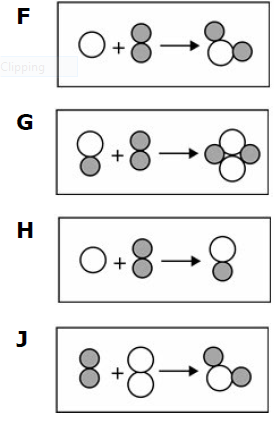
Which of the following models best demonstrates a balanced chemical equation?
a)
F
b)
G
c)
H
d)
J
66.
Coal contains carbon and other elements. Carbon dioxide forms when coal burns in the presence of oxygen. Which of these is the best evidence that a chemical reaction occurs when coal burns?
a)
The shape of the coal changes
b)
Oxygen is present
c)
A new substance is produced
d)
Coal is made up of more than one element
67.
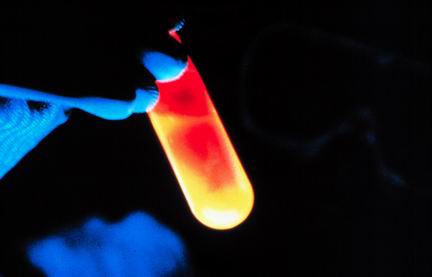
Which of the following is NOT evidence that that a chemical reaction has occurred?
a)
produces light/heat
b)
production of a gas
c)
formation of a precipitate
d)
melting
68.
___C3H8 +___O2 --> ___CO2 + ___H2O
a)
1,5,3,4
b)
2,10,6,8
c)
already balanced
d)
1,5,5,4
69.
__Al + __Fe3N2 -->__AlN + __Fe
a)
already balanced
b)
4,2,4,6
c)
2,1,2,3
d)
1,2,1,3
70.
Jacob ran a 5k in 24 minutes.
a)
Speed
b)
Velocity
c)
Acceleration
71.
A storm is traveling 25 km/hr eastward
a)
Speed
b)
Velocity
c)
Acceleration
72.
Macie walks in the door of the movie theater and then stops to look for an open seat.
a)
Speed
b)
Velocity
c)
Acceleration
73.

Velocity = _______________

a)

Speed – direction

b)

Speed + direction

c)

Speed x direction

d)

Speed / direction

74.
Avery likes to walk 30 feet in 10 seconds. What is her speed?
a)
3 feet/sec
b)
6 feet/sec
c)
10 feet/sec
d)
2 feet/sec
75.
A ____________ is a push or a pull on an object.
a)
friction
b)
force
c)
magnet
d)
gravity
76.
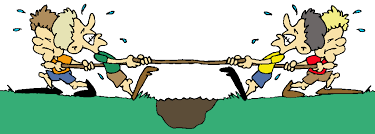
If these teams are pulling with the same amount of force what will happen?
a)
The boy in blue will win.
b)
They will not move at all.
c)
The boy in red will win.
d)
Both will fall down.
77.
What will cause an object to move?
a)
Applied forces
b)
Balanced forces
c)
Unbalanced forces
78.
What is your average speed if you take 0.5 h to jog 4,000 m?
a)
8000 m/h
b)
2000 m/h
c)
0.000125 m/h
d)
800 m/h
79.

Which of these blocks would result in motion?

a)

Block 1

b)

Block 2

c)

Block 1 and 2

d)

Blocks 2 and 3

80.

What is the net force on this object?

a)

to the right with a strength of 11 Newtons.

b)

to the left with a strength of 7 Newtons.

c)

to the right with a strength of 25 Newtons.

d)

to the left with a strength of 6 Newtons.

81.

The box is moving to the right. Are the forces balanced or unbalanced

a)

Balanced

b)

Unbalanced

82.
The sum of all forces acting on an object.
a)
Contact Force
b)
Balanced Force
c)
Unbalanced Force
d)
Net Force
83.
a)
Object not moving
b)
Object accelerating
c)
Object slowing down
d)
Object at a constant speed
84.
Slowing down is an example of...
a)
Constant speed
b)
Acceleration
85.

What is the average speed between 40 and 50 minutes?

a)

20 mi/min

b)

2 mi/min

c)

80 mi/min

d)

100 mi/min

86.

It took 2 hours for a car to drive 140 miles. How fast was the car traveling?

a)

240 mph

b)

75 mph

c)

70 mph

d)

50 mph

87.

Increasing the force on an object will _____ the speed of the object.

a)

decrease

b)

increase

c)

not change

d)

double

88.
How much force is needed to accelerate a 3kg skateboard at 5m/s2. 
a)
8N
b)
1.6N
c)
0.6N
d)
15N
89.
What are Newton's 3 Laws? 
a)
Law of Action-Reaction, Law of Inertia and Law of Velocity
b)
Law of Speed, Law of Action-Reaction, Law of Force and Acceleration
c)
Law of Inertia, Law of Force and Acceleration, and Law of Action-Reaction
d)
Law of Mass and Acceleration, Law of Action-Reaction, and Law of Inertia
90.
Look at this scenario, which law does this represent? 
a)
Law of Inertia
b)
Law of Force and Acceleration
c)
Law of Action-Reaction
91.
A magician pulls a tablecloth out from under dishes and glasses on a table without disturbing them.
a)
Newton's 1st Law
b)
Newton's 2nd Law
c)
Newton's 3rd Law
92.
A person not paying attention while skateboarding hits a rock. The skateboard stops...they don't.
a)
The Law of Inertia (1st law)
b)
The Law of Acceleration (2nd law)
c)
The Law of Conservation of Momentum
d)
Action Reaction Law (3rd law)
93.
You hit a wall with a stick.  The equal but opposite reaction is _____
a)
the wall pushes against you
b)
the stick pushes against you
c)
you push against the stick
d)
the wall pushes against the stick