wayground logo

Free Printable Worksheets

Font size

S
M
L
XL
Worksheets

Biology fall final review

Total questions: 95

Worksheet time: 2hrs 43mins

Name
Class
Date
1.
What is the name of the structure shown in the diagram where cellular respiration takes place?
a)
Chloroplast
b)
Mitochondrion
c)
Nucleus
d)
Vacuole
2.
Which of the following is found in eukaryotic cells but NOT prokaryotic cells?
a)
Cell membrane
b)
Mitochondria
c)
Ribosomes
d)
DNA
3.
I am a protein packaging and shipping machine! Who am I?
a)
vacuole
b)
ribosome
c)
endoplasmic reticulum
d)
golgi apparatus
4.
I store water in both plant and animal cells. What am I?
a)
cytoplasm
b)
ribosomes
c)
vacuole
d)
lysosomes
5.
What makes the endoplasmic reticulum rough?
a)
Vessicles
b)
Vacuoles
c)
Ribosomes
d)
Chromosomes
6.
The site of photosynthesis
a)
ribosome
b)
mitochondria
c)
chloroplast
d)
nucleus
7.
Main producer of ATP in all eukaryotes
a)
chloroplast
b)
mitochondria
c)
lysosome
d)
smooth er
8.
The thick jelly like material inside of a cell that holds the organelles and gives it shape.
a)
nucleus
b)
cytoplasm
c)
mitochondria
d)
cell membrane
9.
This cell would be classified as a(n) ________________ cell.
a)
prokaryotic
b)
eukaryotic 
c)
plant
d)
virus
10.
What is the name of the genetic material that is inside the nucleus?
a)
ER
b)
ATP
c)
YOLO
d)
DNA
11.
A rigid layer that lies outside the cell's  membrane is...
a)
Cytoskeleton
b)
Cilia
c)
Cell Wall
d)
Flagella
12.
The image is an example of ..... 
a)
Animal Cell
b)
Plant Cell 
13.
Name the organelle that makes food using energy from the sun.
a)
Chloroplast
b)
Mitochondria 
14.
Bacteria are ________________
a)
Eukaryotes
b)
Prokaryotes
15.
Animal cells are ________________
a)
Prokaryotic
b)
Eukaryotic
16.
Which group of organic compounds contains fatty acids?
a)
Carbohydrates
b)
Lipids
c)
Nucleic Acids
d)
Proteins
17.
Which of the following answers links a biomolecule with one of its proper functions?
a)
Lipids - Store genetic information
b)
Carbohydrates - short term energy storage
c)
Nucleic Acids - Catalyze reactions
d)
Proteins - long term energy storage
18.
The molecule in the diagram plays what role in the body?
a)
Releasing Energy
b)
Carrying genetic information
c)
Storing Fat
d)
Controlling blood glucose levels
19.
The monomers used to synthesize proteins are called ____________.
a)
Nucleotides
b)
Fatty Acids
c)
Amino Acids
d)
Sugars
20.
What are the monomers for the molecules shown in the diagram?
a)
Amino Acids
b)
Fatty Acids
c)
Nucleotides
d)
Monosaccharides
21.
What is the functions of lipids?
a)
Quick source of energy
b)
Builds muscles, skin, enzymes
c)
Stores genetic information
d)
Stores energy, insulation, protection
22.
Nucleotides are monomer for
a)
Nucleic Acids
b)
Proteins
c)
Carbohydrates
d)
Lipids
23.
Which biomolecule contains fats, oils, and waxes?
a)
Proteins
b)
Nucleic Acid
c)
Lipids
d)
Carbohydrate
24.
Which is true about active transport?
a)
It requires energy
b)
it does not require energy
c)
It moves substances down the concentration gradient
d)
it moves material from high to low concentration
25.
Osmosis is the movement of _____ across a membrane.
a)
food
b)
energy
c)
oxygen
d)
water
26.
What are two types of passive transport?
a)
endo and exocytosis 
b)
cookies and milk
c)
active and passive 
d)
Osmosis and diffusion
27.
What does it mean that a cell membrane is, "selectively or semi-permeable?"
a)
It allows all substances in
b)
It allows some substances in but not others
c)
It allows nothing in
28.
This cell organelle helps organisms maintain homeostasis by controlling what substances may enter or leave cells.
a)
vacuole
b)
nucleus
c)
cell membrane
d)
cell wall
29.
The cell below is in a _________ solution.
a)
Hypotonic
b)
Hypertonic
c)
Isotonic
30.
A cell in an isotonic solution will
a)
swell
b)
shrink
c)
stay the same size
d)
impossible to tell
31.
In passive transport, material moves from
a)
high to low concentration
b)
low to high concentration
c)
inside to outside of the cell
d)
outside to inside of the cell
32.
Cell membranes are made mostly from
a)
carbohydrate gates
b)
free moving proteins
c)
protein pumps
d)
phospholipids
33.
The picture shows 
a)
Diffusion
b)
phagocytosis
c)
facilitated diffusion
d)
pinocytosis
34.
Which type of cell?
a)
Prokaryote
b)
Eukaryote
35.
Prokaryotic does not have…….
a)
membrane bound organelles 
b)
cell membrane 
c)
DNA or RNA 
d)
life
36.
Which type of cell have membrane bound organelles?
a)
prokaryotes 
b)
eukaryotes
37.
______________ are the basic unit of living things.
a)
Kittens
b)
Organisms
c)
Cells
d)
Organelles
38.
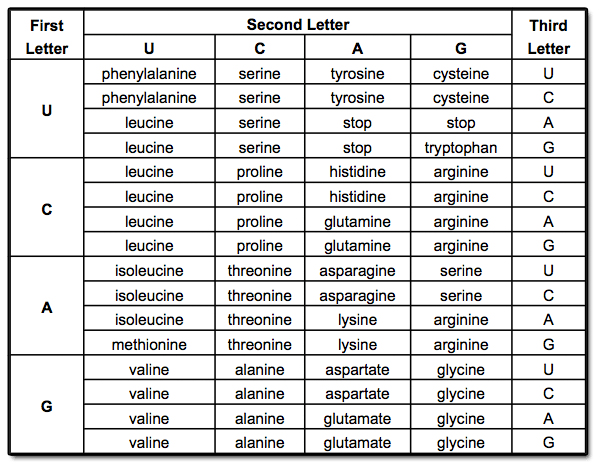
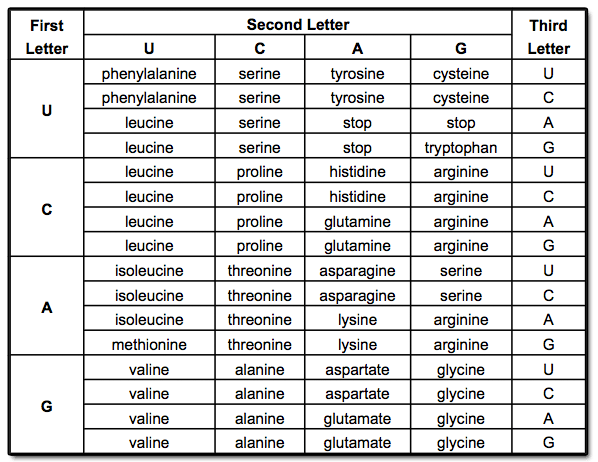
What amino acid is represented by the codon UUA?
a)
Phenylalanine
b)
Tyrosine
c)
Leucine
d)
Stop codon
39.
Which is Metaphase?
a)
A
b)
E
c)
C
d)
F
40.
Which process and type of resulting cells are represented?
a)
mitosis, gametes
b)
mitosis, body cells
c)
meiosis, gametes
d)
meiosis, body cells
41.
DNA molecule segment is : TTACGCAAG
The mutated DNA segment is TTCGCAAG. This is an example of ______ mutation.
a)
Substitution
b)
Deletion
c)
Insertion
d)
Inversion
42.
Which sequence of DNA bases would pair with this partial strand
ATG TGA CAG
a)
ATG TGA CAG
b)
TAC ACT GTC
c)
GTA AGT GAC
d)
CAT TCA CTG
43.
Which 2 molecules forms the sides (backbone) of the DNA ladder?
a)
deoxyribose and adenine
b)
deoxyribose and a hydrogen bond
c)
sugar and the nucleus
d)
deoxyribose (sugar) and phosphate
44.

When cells go through mitosis repeatedly without entering interphase, this results

a)

arthritis

b)

cancer

c)

mutation

d)

diabetes

45.

After mitosis, the cytoplasm and organelles are divided between the two new forming cells in a process called

a)

centriole

b)

chromatin

c)

cytokinesis

d)

centromere

46.

In telophase of mitosis, chromosomes

a)

form and the nuclear envelope disappears.

b)

are pulled toward opposite ends of the cell.

c)

chromosomes line up along the equator of the cell

d)

chromosomes begin to decondense and the two new nuclei begin to form.

47.

In metaphase of mitosis, chromosomes

a)

form and the nuclear envelope disappears.

b)

are pulled toward opposite ends of the cell.

c)

chromosomes line up along the equator of the cell

d)

chromosomes begin to decondense and the two new nuclei begin to form.

48.

In prophase of mitosis, chromosomes

a)

form and the nuclear envelope disappears.

b)

are pulled toward opposite ends of the cell.

c)

chromosomes line up along the equator of the cell

d)

chromosomes begin to decondense and the two new nuclei begin to form.

49.

During mitosis, DNA is found in the condensed form called a

a)

chromosome

b)

centromere

c)

centriole

d)

chromatin

50.
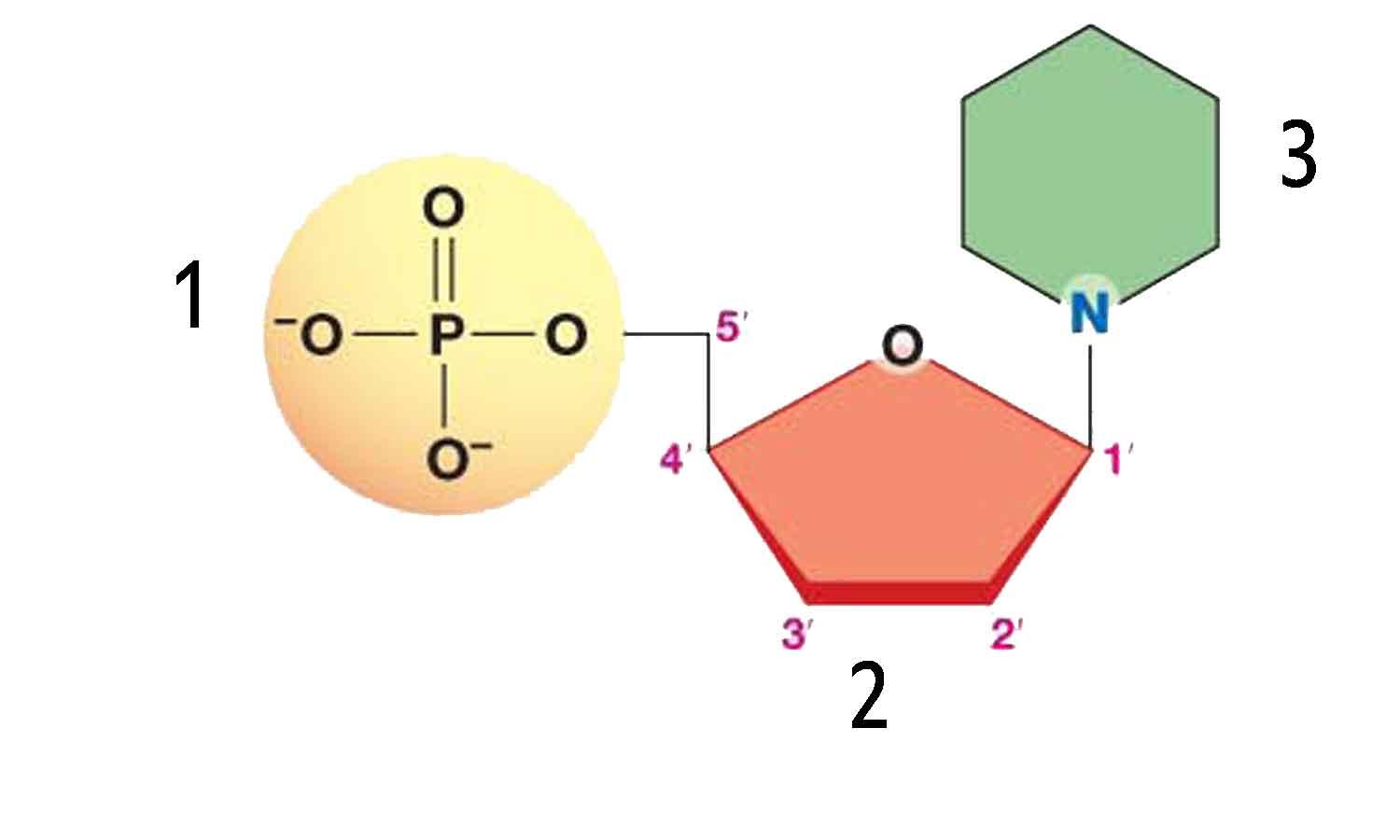
Identify the parts of the nucleotide shown:
a)
1) Ribose Sugar      2) Phosphate 
3)  Nitrogen Base
b)
1) Deoxyribose Sugar
2) Phosphate
3) Nitrogen Base
c)
1) Phosphate
2) Ribose Sugar
3) Nitrogen Base
d)
1)  Phosphate
2) Deoxyribose Sugar
3)  Nitrogen Base
51.
What is cytokinesis?
a)
This is when two cells merge together to make one giant cell.
b)
The stage where chromosomes migrate to the opposite ends of the cell. 
c)
The stage of the cell cycle where the rest of the cell divides after mitosis is complete.
d)
The stage in which DNA condenses into chromosomes.
52.

DNA is replicated during ______ of the cell cycle.

a)

Gap 1

b)

Synthesis (S phase)

c)

Gap 2

d)

Gap 0

53.

Cells of organisms must go through cell division for?

a)

growth

b)

repair of damaged cells

c)

replacement of dying cells.

d)

All of these

54.
Cells spend the majority of their lives in
a)
Interphase
b)
Mitosis
c)
Synthesis 
d)
Gap 2
55.
What does NOT happen during interphase?
a)
growth
b)
DNA replication 
c)
obtaining nutrients
d)
cell divison
56.

Reorder the following

a)

Prophase

b)

Metaphase

c)

Anaphase

d)

Telephase

e)

cytokenises

1)
2)
3)
4)
5)
57.

What phase is anaphase?

a)

b)

c)

d)

58.

What phase is metaphase?

a)
b)
c)
d)
59.

What phase is Telephase?

a)
b)
c)
d)
60.

What phase is Prophase?

a)
b)
c)
d)
61.

The goal of mitosis is to

a)

make a new parent cell

b)

make two new daughter cells with the same DNA

c)

make two new daughter cells with different DNA

d)

to grow a larger toe

62.
The stages of mitosis in order
a)
Metaphase, Anaphase, Prophase, Telophase
b)
Prophase, Anaphase, Metaphase, Telophase
c)
Prophase, Metaphase, Anaphase, Telophase
d)
Anaphase, Prophase, Telophase, Metaphase
63.
DNA will condense into...
a)
Centromeres
b)
Chromosomes
c)
Nuclei
d)
Spindle fibers
64.
What are the three components of a nucleotide in DNA & RNA? 
a)
sugar, hydrogen, nitrogen base
b)
sugar, oxygen, nitrogen base
c)
sugar, phosphate, nitrogen base
d)
sugar, phosphate, protein
65.
What is the process called of turning DNA into RNA?
a)
Central Dogma Order
b)
Transcription
c)
Translation
d)
Replication
66.
What is the process called of turning RNA to proteins? 
a)
Central Dogma Order
b)
Transcription
c)
Translation
d)
Replication 
67.
Which of the following statements is true?
a)
DNA is single-stranded
b)
RNA is single-stranded
c)
DNA contains uracil
d)
RNA contains deoxyribose
68.
How many letters or nitrogen bases make a codon in RNA?
a)
1
b)
2
c)
3
d)
6
69.
What is the Central Dogma Order of Molecular Biology or Life? 
a)
RNA-protein-DNA
b)
RNA-DNA-protein
c)
DNA-protein-RNA
d)
DNA-RNA-protein
70.
What does mRNA do?
a)
carries copies of DNA's instructions 
b)
transfers amino acids to ribosomes
c)
helps with RNA splicing
d)
makes ribosomes
71.
What does tRNA do?
a)
carries copies of DNA's instructions
b)
transfers amino acids to ribosomes
c)
helps with RNA splicing
d)
makes ribosomes
72.
Which amino acid is made from the RNA codon GUA?
a)
Phenylalanine
b)
Leucine
c)
Serine
d)
Valine
73.
DNA molecule segment is : TTACGCAAG
The mutated DNA segment is TTCGCAAG. This is an example of ___ mutation.
a)
Substitution
b)
Deletion
c)
Insertion
d)
Inversion
74.
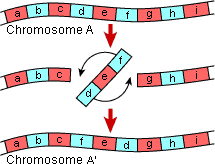
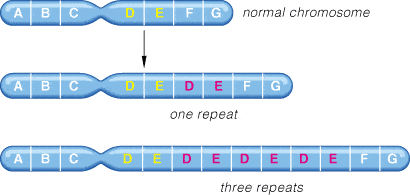
Identify the mutation in the picture.
a)
Inversion
b)
Duplication
c)
Deletion
d)
Translocation
75.
What type of chromosomal mutation is this?
a)
Translocation
b)
Inversion
c)
Deletion
d)
Duplication
76.
What is occurring in this picture?
a)
Translation
b)
Replication
c)
Translocation
d)
Transcription
77.
What type of gene mutation has occurred here? Normal-
AGA-TTC-ATA-GCG
Mutant-
AGA-TTC-AAT-AGC-G
a)
deletion frameshift
b)
insertion frameshift
c)
substitution
d)
nonsense
78.
What are the building blocks of proteins called?
a)
DNA
b)
RNA
c)
Ribosomes
d)
Amino Acids
79.
What is the correct amino acid sequence for the mRNA code AUGCCAGUAUGA
a)
Met-Pro-Ala-Val
b)
Met-Pro-Val
c)
Tyr-Gly-His
d)
Tyr-Gly-Arg-His
80.

What is the correct amino acid sequence for the mRNA code AUGCCAGUAUGA

a)

Met-Pro-Ala-Val

b)

Met-Pro-Val

c)

Tyr-Gly-His

d)

Tyr-Gly-Arg-His

81.
The codon CCU codes for what amino acid?
a)
Isoleucine
b)
Stop
c)
Methionine
d)
Proline
82.
Which amino acid pairs with the codon AGA
a)
Thr
b)
Arg
c)
Ala
d)
Glu
83.

Methionine

a)

AUG

b)

AGG

c)

ACU

d)

CUG

e)

UAG

84.

The two components of a virus are nucleic acid and __________.

a)

protein

b)

carbohydrates

c)

lipids

d)

glucose

85.

A virus is

a)

living

b)

non living

c)

dead

86.

Which cycle kills the host cell immediately?

a)

Lytic

b)

Lysogenic

87.

A virus that goes through the ______ cycle will allow you to feel symptoms immediately due to the cells lysing.

a)

Lytic

b)

Lysogenic

88.

A virus that hides within the host cell for up to years is going through the _______ cycle.

a)

Lytic

b)

Lysogenic

89.

Vaccines are a preventative measure.

a)

True

b)

False

90.
Which statement regarding viruses is true?
a)
a virus can only reproduce inside of a living cell
b)
viruses do not contain DNA
c)
viruses are unicellular
d)
viruses are generally larger than cells
91.
A(n) _____ is a virus that enters a bacterial cell.
a)
endospore
b)
decomposer
c)
plasmid
d)
bacteriophage
92.
What is the 1st step of virus infection?
a)
Entry
b)
Attachment
c)
Replication
d)
Assembly
93.

Which biomolecule helps LARGE molecules cross the membrane?

a)

phospholipids

b)

carbohydrates

c)

nucleic acids

d)

proteins

94.

Passive transport ​ (a)   require energy because it moves ​ (b)   the concentration gradient, from ​ (c)   .

Choose from the below words
does NOT
does
with
against
high to low
low to high
95.

Active transport ​ (a)   require energy because it moves ​ (b)   the concentration gradient, from ​ (c)   .

Choose from the below words
does NOT
does
with
against
high to low
low to high