Wayground logo

Free Printable Worksheets

Font size

S
M
L
XL
Worksheets

Fall 2023 REVIEW - Chemistry 1 H

Total questions: 112

Worksheet time: 1hrs 28mins

Name
Class
Date
1.
What group on the Periodic Table contains the elements of the alkaline earth family?
a)
1
b)
2
c)
17
d)
18
2.

The elements in this family are soft, silvery, and very reactive with water.

a)

Alkaline Earth Metals

b)

Alkali Metals

c)

Transition Metals

d)

Lanthanides

3.
Gold (Au)
a)
Transition Metal
b)
Alkali Metal
c)
Alkaline Earth Metal
d)
Heavy Metal
4.
Which element is not in the Alkali metal family?
a)
Li
b)
H
c)
Fr
d)
Cs 
5.
Argon (Ar)
a)
alkali metal
b)
alkaline earth metal
c)
halogen
d)
noble gas
6.
Which of the following is the most reactive group of non-metals? 
a)
Alkali
b)
Alkali Earth
c)
Halogen
d)
Noble Gas
7.

The is family has properties of both metals and nonmetals.

a)

Alkali

b)

Halogens

c)

Nonmetals

d)

Metalloids

8.

This type of element is dull, brittle solids and gases, insulators, poor conductors of heat and electricity, as well as having low melting points.

a)

metals

b)

metalloids

c)

nonmetals

9.

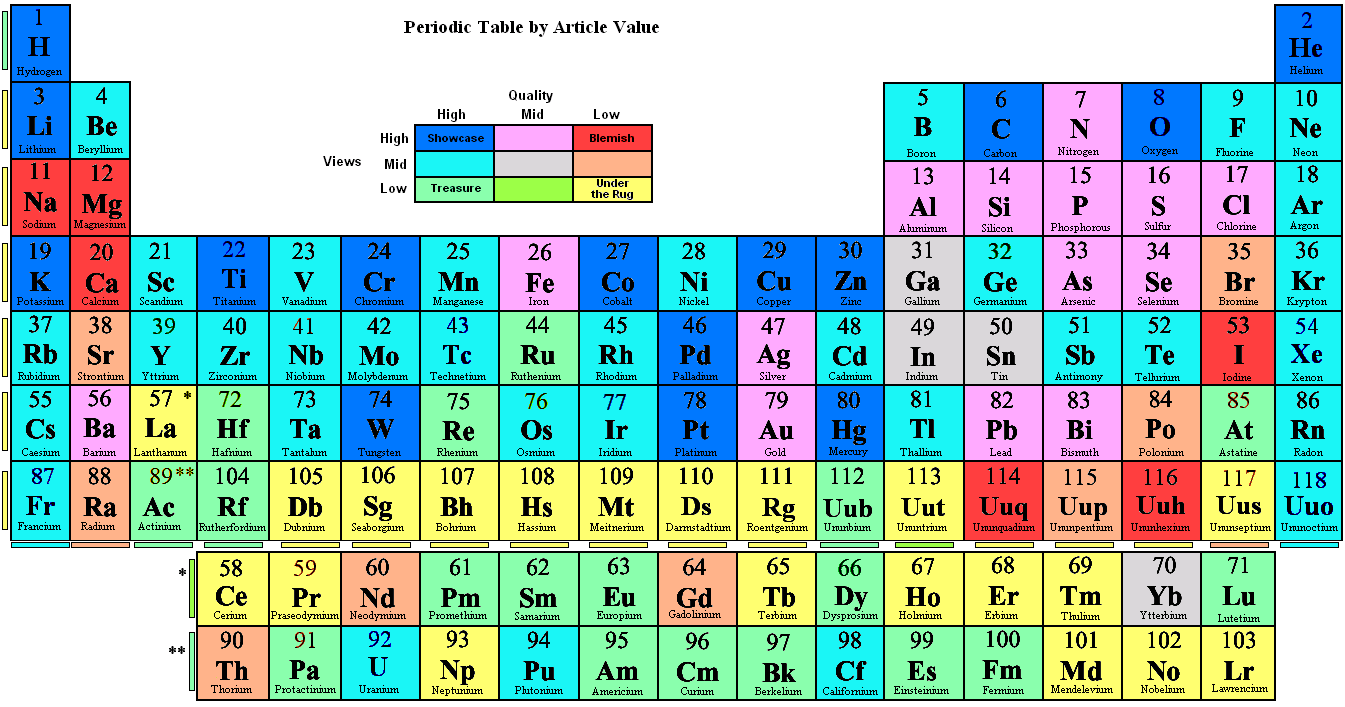
Which color on the image of the periodic table corresponds with the halogens.

a)

red

b)

black

c)

blue

d)

orange

10.

Which color on the image of the periodic table corresponds with the noble gases.

a)

red

b)

black

c)

blue

d)

orange

11.

Which color on the image of the periodic table corresponds with the transition metals.

a)

red

b)

black

c)

blue

d)

orange

12.

Which color on the image of the periodic table corresponds with the alkaline earth metals.

a)

yellow

b)

dark yellow

c)

bright aqua

d)

teal

13.

Horizontal rows on the periodic table are called ___?

a)

groups

b)

periods

c)

rows

d)

families

14.

what is the name of group number 1

a)

halogens

b)

noble gases

c)

alkali

d)

alkaline earth

15.
The Modern Periodic Table of Elements is arranged by
a)
atomic mass
b)
atomic number
c)
valence electrons
d)
number of isotopes
16.
Sodium (Na) is found in period 
a)
3
b)
2
c)
4
d)
1
17.
Which of the following is an Alkali Metal? 
a)
Magnesium
b)
Chromium
c)
Sodium
d)
Fluorine 
18.
Which of the following is an Alkaline Earth Metal? 
a)
Calcium
b)
Lithium
c)
Phosphorus
d)
Copper 
19.
Which of the following is a transition metal? 
a)
Iron
b)
Oxygen
c)
Neon
d)
Barium
20.
Which of the following is a Halogen? 
a)
Bromine
b)
Rubidium
c)
Argon
d)
Beryllium
21.
Which of the following is a Noble Gas? 
a)
Krypton
b)
Chlorine
c)
Radium
d)
Gallium
22.
Which of the following is the most reactive group of metals? 
a)
Alkali
b)
Alkaline Earth
c)
Halogen
d)
Transition Metals
23.

Which family of elements does not combine with other elements unless under special conditions in a laboratory?

a)

Noble gases

b)

Halogens

c)

Metalloids

d)

Alkaline earth metals

e)

Actinides

24.

What element is so unique it doesn't belong to any family?

a)

He

b)

H

c)

F

d)

O

25.

What is the element symbol for the element found in the 3rd period, group 15?

(a)  

26.

What is the element symbol for the element found in the period 6, group 5?

(a)  

27.

What is the element symbol for the element found in the period 4, group 2?

(a)  

28.

What is the element symbol for the element found in the period 4, group 14?

(a)  

29.

What is the element symbol for the last element in the Lanthanide series?

(a)  

30.

What Noble gas is found in the 4th period?

(a)  

31.

What alkaline earth is found in the 5th period?

(a)  

32.

What halogen is found in the 2nd period?

(a)  

33.

What semi-metal is found in the 3rd period?

(a)  

34.

What Nobel gas is found in the 3rd period?

(a)  

35.

What alkali metal is found in the 5th period?

(a)  

36.

Which has the greater electronegativity? 

a)

Cr

b)

Cd

c)

Cl

d)

C

37.

Which has the greater ionization energy? 

a)
C
b)
N
c)

P

d)

Si

38.

Which has the greater electronegativity?

a)

S

b)

Sc

c)

Se

d)

Sb

39.
Which of the following will have a larger radius than Zinc?
a)
Gallium
b)
Aluminum
c)
Magnesium
d)
Strontium
40.
Which of the following will have a higher electronegativity than arsenic (As)?
a)
Carbon (C)
b)
Neon (Ne)
c)
Antimony (Sb)
d)
Germanium (Ge)
41.
Which of the following will have a lower ionization energy than Scandium (Sc)?
a)
Helium (He)
b)
Titanium (Ti)
c)
Calcium (Ca)
d)
Magnesium (Mg)
42.

Which has the greater ionization energy? 

a)

Cr

b)

Cd

c)

Cl

d)

C

43.
As atoms of elements in group 16 are considered in order from top to bottom, the electronegativity of each successive element....
a)
decreases
b)
increases
c)
remains the same
d)
none of the above
44.
Which atom has the largest atomic radius?
a)
potassium
b)
rubidium 
c)
francium
d)
cesium
45.
As you move down the periodic table atoms get bigger.  This is because ____________.
a)
The atoms have more mass.
b)
The atoms have more protons.
c)
The atoms have more energy levels
d)
The atoms have more nuetrons
46.
As you move across the periodic table atoms tend to get smaller because, ______________.
a)
the atoms have more mass.
b)
the atoms have less mass
c)
the atoms have more protons.
d)
the atoms have less electrons.
47.
Atoms that have a high electronegativity, _______________.
a)
give up their electrons more easily.
b)
hold on to their electrons more tightly.
c)
have more electron shells.
48.
Electronegativity is...
a)
how good an atom is at attracting electrons
b)
the ability of an atom to lose electrons
c)
the energy required to remove an electron from a specific atom
d)
how easy it is to make friends. 
49.
Ionization energy is...
a)
the energy required to add an electron to a specific atom
b)
how much energy it takes to remove an electron from an atom
c)
the energy required to shield the outer electrons from the nucleus
d)
a measure of the ability of an atom to attract electrons
50.
The atom with the largest atomic radius in Group 18 is - 
a)
Ar
b)
He
c)
Kr
d)
Rn
51.

Which has the greater electronegativity? 

a)
C
b)
N
c)

P

d)

Si

52.
Which statement correctly and completely identifies a trend?
a)
Atomic radius decreases across a period and increases down a group.
b)
Electronegativity decreases across a period and decreases down a group.
c)
Ionization energy increases across a period and increases down a group.
d)
Ionic radius increases across a period and increases down a group.
53.
The element with the largest electronegativity in the halogens is - 
a)
At
b)
F
c)
Cl
d)
Br
54.

The element with the lowest electronegativity in Period 3 is -

a)

Na

b)

Cl

c)

Ar

d)

Mg

55.
Which periodic group has the smallest atomic radius?
a)
Alkali metals
b)
Halogens
c)
Noble Gases
d)
Transition metals
56.

Atomic radius generally increases as we move __________.  

a)
down a group and from right to left across a period 
b)
up a group and from left to right across a period 
c)
down a group and from left to right across a period 
d)
up a group and from right to left across a period 
57.

Ionization energy generally increases as we move __________.  

a)
down a group and from right to left across a period 
b)
up a group and from left to right across a period 
c)
down a group and from left to right across a period 
d)
up a group and from right to left across a period 
58.

Electronegativity __________ from left to right within a period and __________ from top to bottom within a group.

a)
decreases, increases 
b)
increases, increases
c)
increases, decreases 
d)
stays the same, increases
59.

Which has the greater ionization energy?

a)

S

b)

Sc

c)

Se

d)

Sb

60.

Which has the lower electron affinity?

a)

S

b)

Sc

c)

Se

d)

Sb

61.

Isotopes of an element have a different number of...

a)

Protons

b)

Neutrons

c)

Electrons

d)

Mass

62.

Potassium-39 has how many neutrons?

a)

19

b)

18

c)

20

d)

21

63.

Nickel-59 has how many neutrons?

a)

30

b)

31

c)

32

d)

33

64.

Bromine-80 has how many neutrons?

a)

41

b)

42

c)

44

d)

45

65.

What isotope has 76 protons and 114 neutrons

a)

Osmium-114

b)

Osmium-190

c)

Flerovium-190

d)

Flerovium-114

66.

What isotope has 12 protons and 13 neutrons?

a)

Mg-12

b)

Mg-13

c)

Mg-25

d)

Mg-24.305

67.

Rubidium has two common isotopes, 85Rb and 87Rb. If the abundance of 85Rb is 72.2% and the abundance of 87Rb is 27.8%, what is the average atomic mass of rubidium?

a)

85.468 amu

b)

37 amu

c)

85.6 amu

d)

86.4 amu

68.

There are two primary isotopes found in any sample of copper: copper-63 and copper-65. The isotope 65Cu composes 69.2% of the sample and 63Cu comprises the other 30.8%. Based on this data, what is the atomic mass of copper?

a)

29 amu

b)

63.546 amu

c)

64.4 amu

d)

63.6 amu

69.

How do you calculate mass number?

a)

Mass x percent

b)

Protons + Electrons

c)

Protons + Neutrons

d)

Neutrons + Protons + Electrons

70.

Which is a quantitative observation?

a)

It has hairy legs

b)

It has a lot of legs

c)

It has 8 legs

d)

Legs are black

71.

The baboon is making noise

a)

Prediction

b)

Inference

72.

The baboon will bite anyone who comes near it.

a)

Prediction

b)

Inference

73.

This diagram represents...

a)

An element

b)

A molecule

c)

A compound

d)

A mixture of elements and compounds

74.
a)
element
b)
compound
c)
mixture of elements
d)
mixture of compounds
75.
a)
element
b)
compound
c)
mixture of elements
d)
mixture of compounds
76.
What is a mixture?
a)
elements chemically combined
b)
a combination of different things
c)
it is found on the Periodic Table 
d)
it is made of chemical
77.
What type of mixture is this?
a)
heterogeneous 
b)
homogeneous
78.
Which of the following is not a chemical property? 
a)
rusting 
b)
boiling 
c)
rotting 
d)
burning 
79.
Which one of these is a chemical property?
a)
melting point
b)
boiling point
c)
color
d)
flammability
80.
Ability to rust is this type of property:
a)
Physical property
b)
Chemical property
81.
What kind of properties can only be observed when a substance changes into a different substance?
a)
physical properties
b)
chemical properties
c)
liquid properties
d)
real properties
82.
Which of the following is a chemical change?
a)
human digestion
b)
cutting a tree down
c)
melting a chocolate bar
d)
Has a density of 1 gm/mL
83.
What atom matches this electron configuration?
1s22s22p63s23p64s23d10
a)
Zinc
b)
Copper
c)
Nickel
d)
Germanium
84.
What electron configuration matches an oxygen atom?
a)
1s22s22p63s2, 3p64s23d104p5
b)
1s22s22p4
c)
1s22s22p6
d)
1s22s22p63s23p64s23d1
85.
How many electrons can the d sublevel hold?
a)
14
b)
10
c)
2
d)
6
86.
How many electrons can the s sublevel hold?
a)
14
b)
10
c)
2
d)
6
87.

Each row on the periodic table represents:

a)

an energy level

b)

a sublevel

c)

an electron

d)

an orbital

88.
There are 4 different types of subshells (orbitals) s,p,d,f.
a)
true
b)
false
89.

How many valence electrons does Nitrogen Have?

a)

1 Valence electron

b)

2 Valence electron

c)

3 Valence electron

d)

4 Valence electron

e)

5 Valence electron

90.

How many valence electrons does Aluminum Have?

a)

1 Valence electron

b)

2 Valence electron

c)

3 Valence electron

d)

4 Valence electron

e)

5 Valence electron

91.

How many valence electrons does Potassium Have?

a)

1 Valence electron

b)

2 Valence electron

c)

3 Valence electron

d)

4 Valence electron

e)

5 Valence electron

92.

How many valence electrons does Silicon Have?

a)

1 Valence electron

b)

2 Valence electron

c)

3 Valence electron

d)

4 Valence electron

e)

5 Valence electron

93.

How many valence electrons does Neon Have?

a)

4 Valence electron

b)

5 Valence electron

c)

6 Valence electron

d)

7 Valence electron

e)

8 Valence electron

94.
Ions are: 
a)
atoms with a positive or negative charge
b)
atoms with no charge
c)
atoms with ONLY a positive charge
d)
atoms with ONLY a negative charge
95.
When an atom loses a valence electron, it becomes a(n) _____________ ion.
a)
positive
b)
negative
c)
neutral
d)
polyatomic
96.
When an atom gains a valence electron, it becomes a(n) _____________ ion.
a)
positive
b)
negative
c)
neutral
d)
polyatomic
97.

If an element has 3 valence electrons, what charge will its most probable ion have?

a)
+3
b)
+5
c)
-3
d)
-5
98.
Nitrogen will ____ valence electrons when forming an ionic bond.
a)
gain 1
b)
lose 1
c)
gain 3
d)
lose 3
99.

Atoms are most stable when their outer shell has ___ electrons.

a)

8

b)

2

c)

6

d)

10

100.
The chemical formula for an ionic compound of potassium and oxygen is
a)
KO.
b)
K2O.
c)
K2O2.
d)
KO2.
101.
K +  and  N-3
a)
KN
b)
KN3
c)
K3N3
d)
K3N
102.
Na +  and  S -2
a)
Na2S
b)
NaS2
c)
Na2S2
d)
NaS
103.
Which of the following will form an ion with a 2- charge?
a)
Ca
b)
Se
c)
Ge
d)
N
104.
How do the following two elements bond together?
Al3+  O2-         
a)
AlO
b)
Al2O3
c)
Al3O6
d)
Al3O2
105.
What are the electrons in the highest energy level of an atom called?
a)
orbital electrons
b)
valence electrons
c)
anions
d)
cations
106.
A phosphorus atom needs to gain ___ electrons to achieve a full octet.
a)
3
b)
4
c)
6
d)
5
107.
Name this compound: 
KF
a)
Potassium fluoride
b)
Potassium fluorite
c)
Fluorine potasside 
d)
Potassium fluorate
108.
Which of these compounds is ionic? 
a)
Carbon dioxide
b)
Dinitrogen Trioxide
c)
Silicon tetrachloride
d)
Lithium bromide
109.
Which of these combinations is an ionic compound made of?
a)
Metal and Metal
b)
Nonmetal and Nonmetal
c)
Metal and Nonmetal
d)
Cation and Cation
110.
Al2S3
a)
Dialuminum Trisulfide
b)
Aluminum sulfide
111.

During a chemistry experiment in the school lab, Jane realized her long hair should be ____________.

a)

tied back

b)

cut

c)

down

d)

curled

112.

Click on the picture to zoom in: Imagine you are in a chemistry lab. You see a group of students performing experiments. Which student is following all lab safety rules?

a)

H

b)

A

c)

E

d)

G

e)

D