wayground logo

Free Printable Worksheets

Font size

S
M
L
XL
Worksheets

Sloan's-Heredity Review

Total questions: 112

Worksheet time: 3hrs 53mins

Name
Class
Date
1.
T - tall and t = short
In the punnett square below, what belongs in the missing square
a)
tt
b)
Tt
c)
Bb
d)
TT
2.
What you see, or the physical appearance.
a)
Genotype
b)
Phenotype
c)
Homozygous
d)
Heterozygous
3.
What is the probability of heterozygous offspring?
a)
25%
b)
50%
c)
0%
d)
100%
4.
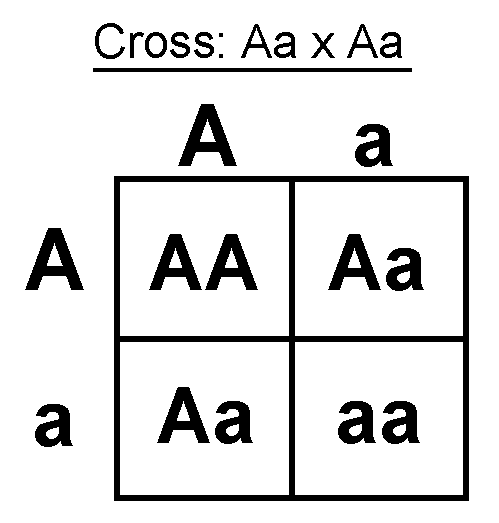
What allele combination should go in the missing box?
a)
AA
b)
Aa
c)
aa
d)
none of these
5.
Each one of the boxes on the Punnett Square represents what probability of an offsprings' genotype?
a)
25%
b)
1%
c)
10%
d)
0%
6.
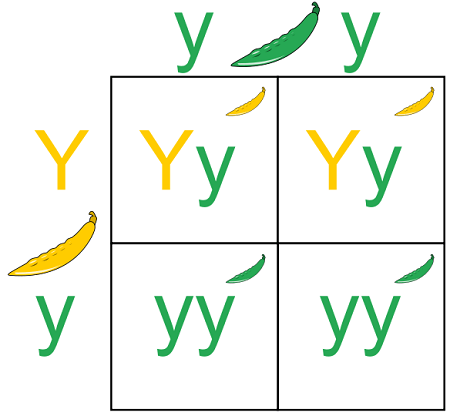
Which choice best represents the genotype of this cross?
a)
1 Yy: 2 yy: 0 YY
b)
2 Yy: 2 yy: 0 YY
c)
3 Yy: 1 yy: 0 YY
d)
1 Yy: 3 yy: 0 YY
7.
What is the phenotype of the offspring? (A-Brown hair; a-blond hair) 
a)
50 % Brown Hair and 50% Blond Hair 
b)
25 % Brown Hair and 75% Blond Hair 
c)
75 % Brown Hair and 25% Blond Hair 
d)
0% Brown Hair and 100% Blond Hair 
8.
Which of the following genotypes is homozygous dominant?
a)
A
b)
Aa
c)
AA
d)
aa
9.
Which of the following genotypes is heterozygous?
a)
Bb
b)
BB
c)
bb
d)
B
10.
Which of the following is homozygous recessive?
a)
Tt
b)
tt
c)
TT
d)
T
11.
Which of the following is an example of phenotype?
a)
bb
b)
blue eyes
12.
Which of the following genotypes are purebred?
a)
Pf
b)
Pp
c)
PP
d)
pP
13.
If you are purebred dominant for a trait, your genotype would be...
a)
Tt
b)
TT
c)
tt
d)
tall
14.
Which of these is homozygous recessive?
a)
Rr
b)
rR
c)
RR
d)
rr
15.

This trait is hidden whenever the dominant allele is present

a)

dominant allele

b)

codominance

c)

recessive allele

d)

Punnett Square

16.

This trait always shows up in an organism when the allele is present

a)

dominant allele

b)

codominance

c)

probability

d)

recessive allele

17.

A chart that shows all the possible combinations of alleles that can result from a genetic cross

a)

dominant allele

b)

codominance

c)

probability

d)

Punnett Square

18.

An organism's physical appearance or visible traits. (what it looks like)

a)

phenotype

b)

genotype

19.

An organism's genetic makeup, or allele combination. The letters we use to show the allele combination.

a)

phenotype

b)

genotype

20.

B = brown fur b = white fur

In the Punnett square, what is the probability for white fur?

a)

0%

b)

25%

c)

50%

d)

75%

21.

An alternative form of a gene.

a)

Allele

b)

DNA

c)

Dominant

d)

Recessive

22.

The scientific study of heredity

a)

alleles

b)

genetics

c)

chromosomes

d)

DNA

23.

a threadlike structure of nucleic acids and protein found in the nucleus of most living cells, carrying DNA (genetic information) in the form of genes

a)

DNA

b)

Deoxyribonucleic Acid

c)

heredity

d)

chromosome

24.

Homozygous

a)

an organism that has two identical alleles for a trait

b)

genetic makeup

c)

dominant

d)

heredity

25.

A segment of DNA on a chromosome that codes for a specific trait

a)

allele

b)

genotype

c)

gene

d)

homozygous

26.

Dominant

a)

Describes a trait that covers over, or dominates, another form of that trait

b)

genetic makeup

c)

weak

d)

An organism that has two identical alleles for a trait

27.

DNA

a)

alternative form of a gene

b)

A segment of a chromosome that codes for a trait

c)

a complex molecule containing the genetic information that makes up the chromosomes

d)

passing of traits from parents to offspring

28.

An organism that has two different alleles for a trait

a)

homozygous

b)

genetic makeup

c)

dominant

d)

heterozygous

29.

Passing of traits from parents to offspring

a)

Genes

b)

DNA

c)

Heredity

d)

Homozygous

30.

Genotype

a)

variation

b)

an organism's genetic makeup, or allele combinations

c)

recessive

d)

an organisms physical appearance, or visible traits

31.

Variation

a)

any similarity between individuals

b)

any difference between individuals of the same species

c)

phenotype

d)

hybrid

32.

Traits

a)

phenotype

b)

purebred

c)

Characteristics that are inherited

d)

Control center

33.

An organism that always produces offspring with the same form of a trait as the parent

a)

purebred

b)

hybrid

c)

variation

d)

recessive

34.

Recessive

a)

trait of an organism that cannot be masked

b)

trait of an organism that can be masked by the dominant form of a trait

c)

physical appearance, visible traits

d)

any difference between individuals of the same species

35.

Offspring of crosses between parents with different traits

a)

variation

b)

phenotype

c)

hybrid

d)

dominant

36.

Phenotype

a)

An organism's physical appearance, or visible traits

b)

trait that cannot be masked

c)

recessive

d)

trait that can be masked

37.

Male sex cell

a)

egg

b)

sperm

c)

zygote

d)

male cell

38.

Which one of the following are examples of phenotypes?

a)

eye color, hair texture, widow's peak

b)

genotypes

c)

Gg, GG or GG

39.

The different forms genes takes, a gene pair that determines a trait.

a)

homozygous

b)

chromosome

c)

gene

d)

alleles

40.

Process in which 2 parents contribute genes to form a new individual

a)

asexual reporduction

b)

sexual reproduction

c)

cloning

d)

binary fission

41.

A version of a gene is called a(n)

a)

allele

b)

characteristic

c)

specific gene

d)

trait

42.

A trait that is expressed if one copy of the allele is present is a(n)

a)

characteristic

b)

dominant trait

c)

gene

d)

recessive trait

43.

An organism’s genetic makeup; the pair of alleles for a trait is called a(n)

a)

dominant trait

b)

genotype

c)

phenotype

d)

recessive trait

44.

An organism’s physical expression of a trait is called a(n)

a)

dominant trait

b)

genotype

c)

phenotype

d)

recessive trait

45.

What is it called when both alleles in a genotype are the same?

a)

Dominance

b)

Heterozygous

c)

Homozygous

d)

Recessiveness

46.

What is it called when the alleles in a genotype are different?

a)

Dominance

b)

Heterozygous

c)

Homozygous

d)

Recessiveness

47.

Which pair of alleles is an example of homozygous recessive?

a)

bb

b)

BB

c)

Bb

48.

Which pair of alleles is an example of homozygous dominant?

a)

tt

b)

TT

c)

Tt

49.

Which pair of alleles is an example of heterozygous alleles?

a)

ll

b)

LL

c)

Ll

50.

What are physical characteristics of an organism?

a)

Alleles

b)

Genotypes

c)

Genes

d)

Traits

51.

In a Punnett square, a lower case letter stands for a ____________ allele.

a)

dominant

b)

recessive

c)

homozygous

d)

heterozygous

52.

Hair color, height, eye color and freckles are examples of human traits. What do we call the physical expression of the genetic material of an organism?

a)

genetics

b)

heredity

c)

genotype

d)

phenotype

53.
Which of the following alleles is homozygous (purebred) recessive?
a)
Tt
b)
tt
c)
TT
d)
t
54.

Which of the following genotypes is homozygous dominant?

a)

A

b)

Aa

c)

AA

d)

aa

55.

Bb is a ______.

a)

genotype

b)

phenotype

56.

A calico cat shows both the traits for orange fur and black fur. What kind of allele expression is this?

a)

Incomplete dominance

b)

Codominance

c)

Complete dominance

d)

Mendelian inheritance

57.
What goes in box 3
a)

Aabb

b)

Abab

c)

AAbb

d)

aaBb

58.
This type of inheritance pattern is a MIXTURE of both traits, like the old theory of blending
a)

incomplete dominance

b)

co-dominance

c)

complete dominance

d)

recessive pattern

59.

Match the following combinations of alleles:

a)

Homozygous dominant

1.

DD

b)

Homozygous recessive

2.

dd

c)

Heterozygous

3.

Dd

60.
What is the genotype for a pea plant heterozygous for round seeds (R), and homozygous recessive for green seeds (y)?
a)

Ry

b)

RRyy

c)

RrYy

d)

Rryy

61.
The genotypic percentage resulting from this this cross would be _____________________.
a)
25% blue eye 75 % brown eye 
b)
BB = 25% Bb = 50% bb = 25%
c)
BB= 50 % bb = 50%
d)
All brown eye
62.
What term describes what you see, or the physical appearance.
a)
Genotype
b)
Phenotype
c)
Homozygous
d)
Heterozygous
63.
Two heterozygous parents produce offspring. What is the probability of the HOMOZYGOUS DOMINANT GENOTYPE appearing in the offspring generation?
a)
75%
b)
25%
c)
50%
d)
100%
64.

A male beetle has the genotype Ttbb. If this beetle mates with a female with genotype TTBb, what is the chance their offspring will have the genotype TtBb?

a)

0%

b)

25%

c)

50%

d)

75%

65.

What would be the gametes for the YyRr plant?

a)

YR, YR, yR, yR

b)

YR, Yr, yR, yr

c)

Yy, Rr, YY, RR

d)

yy, rr, yy, rr

e)

YR, Yr, yR, yr, Rr, Yy

66.

Jim has type AB blood. His dad could be type O.

a)

True

b)

False

67.

Blood type is determined by the antigens present on the surface of RBCs.

a)

True

b)

False

68.

If one of your parents is blood type A and the other is type B, which of the following blood types could you be?

a)

O

b)

AB

c)

A or B

d)

Any of these

69.
Universal blood donors have type ______ blood.
a)
A
b)
AB
c)
B
d)
O
70.
If this pedigree shows an autosomal recessive disorder, what MUST the genotype of individual II-3 be?
a)
HH
b)
Hh
c)
hh
d)
None of the above
71.
What is the genotype of the mother?
a)
BB
b)
bb
c)
Bb
d)
BB or Bb
72.

What is the mode of inheritance shown here?

a)

Autosomal Recessive because it "skips" a generation

b)

Autosomal Dominant because it shows up in every generation

c)

X linked because it affects females more than males

73.

What type of disorder does this pedigree chart reflect?

a)

autosomal dominant

b)

autosomal reccessive

c)

sex-linked recessive

d)

Y-linked dominant

74.
Who is considered to be the Father of genetics?
a)
Mendel
b)
Watson & Crick
c)
Flemming
d)
Darwin
75.
What word is used to describe different versions of the same gene?
a)
Chromosomes
b)
Phenotype
c)
Alleles
d)
Genotype
76.
What word describes the inheritance of two alleles that are the same?
a)
Homozygous
b)
Heterozygous
c)
Homologous
d)
Heterotrophic
77.
What word describes the inheritance of two different alleles?
a)
Homozygous
b)
Heterozygous
c)
Heterotrophic
d)
Homologous
78.
What word is used to describe the characteristics (physical) that an individual inherits?
a)
Genotype
b)
Phenotype
c)
Homozygous
d)
Heterozygous
79.
What organism did Mendel do his famous studies of genetics with? 
a)
bees
b)
carrots 
c)
peas 
d)
mice
80.
What is a factor that is covered up by another trait?
a)
Recessive
b)
Dominant
81.
What is a hybrid?
a)
Crossing two organisms with different traits
b)
A cool car
c)
A parent
82.
What is the passing of traits from parents to offspring known as?
a)
Heredity
b)
Genetics
c)
Punnett Square
83.
The scientific study of heredity is ____.
a)
Genetics
b)
Punnett squares
c)
Inheritance
d)
Biology
84.
Which generation in Mendel's experiments showed a 3:1 ratio of traits?
a)
The second generation offspring
b)
The first generation offspring
c)
The original parents
d)
None of the above
85.
All offspring in this generation (Mendel's experiment) exhibit the dominant trait.
a)
The first parent plants
b)
The first generation offspring
c)
The second generation offspring
d)
Generation X
86.
Dominant alleles are represented by a:
a)
Male gene
b)
lowercase letter
c)
recessive trait
d)
capital letter
87.
AA and Aa always show up as
a)
dominant
b)
recessive
88.
Aa is
a)
homozygous
b)
heterozygous
89.
The passing of genetic traits from parent to offspring is called
a)
cross-pollination
b)
cross-breeding
c)
heredity
d)
genetics
90.
Which is the correct phenotype for this organism?
a)
BB
b)
blue
c)
green
d)
bb
91.
When is a recessive allele expressed in offspring?
a)
when two copies are present
b)
when parents have no dominant alleles
c)
when the offspring is heterozygous
d)
when one copy is present
92.
Mendel's law of segregation states that during meiosis, the alleles that control each trait separate, and only _________________ from each pair is/are passed to the offspring
a)
one allele
b)
the dominant trait
c)
two alleles
d)
the recessive trait
93.
Which of the following genotypes is homozygous recessive?
a)
RR
b)
Rr
c)
rr
d)
None of the Above
94.
Brown (B) is dominant over white (b). Which genotype is a purebred for brown fur?
a)
BB
b)
Bb
c)
bb
d)
All of the above
95.
Another word for homozygous is...
a)
purebred
b)
hybrid
c)
heterozygous
d)
dominant
96.
What is the genotype for this organism?
(E= 3 eyes, e= 1 eye)
a)
EE
b)
Ee
c)
ee
d)
EE or Ee
97.
What law states that in Tt the person will only show the dominant allele
a)
law of segregation
b)
law of independent assortment
c)
law of dominance
d)
law of punnett squares
98.
What is a phenotype
a)
The genetic make up (code)
b)
The physical trait
99.
An organism's _______ describes its genetic composition. An organism's _______ describes its appearance or observable characteristics.
a)
phenotype; genotype
b)
species; heredity
c)
heredity; species
d)
genotype; phenotype
100.

Which is not an idea of Mendel?

a)

Segregation

b)

Independent Assortment

c)

Dominance

d)

Polygenic Inheritance

101.

In the Punnett Square shown, which of the following is true about the offspring resulting from the cross?

a)

About half are expected to be short.

b)

All are expected to be short.

c)

About half are expected to be tall.

d)

All are expected to be tall.

102.

How many different allele combinations would be found in the gametes produced by a pea plant whose genotype is RrYY?

a)

2

b)

4

c)

8

d)

16

103.

If a pea plant that is heterozygous for round, yellow peas (RrYy) is crossed with a pea plant that is homozygous for round peas but is heterozygous for yellow peas (RRYy) how many different phenotypes are their offspring expected to show?

a)

2

b)

4

c)

8

d)

16

104.
What are the possible phenotypes in this punnett square?
a)
Bb, bb, BB
b)
purple, white
c)
Bb, bb
d)
light purple
105.
What is a gene?
a)
An entire chromosome that  codes for a trait
b)
a piece of clothing
c)
a piece of a DNA on chromosome that codes for a trait
d)
Chemical messengers in your brain that code for a trait
106.
The mathematical chance that something will happen is known as...
a)
chance
b)
luck
c)
probability
107.
What would the ratio for genotypes be for this Punnett Square?
a)
2Bb:2bb
b)
2BB:2Bb
c)
1BB:2Bb:1bb
d)
4Bb
108.
T - tall and t = short
In the punnett square below, what belongs in the missing square
a)
tt
b)
Tt
c)
Bb
d)
TT
109.
A ________________________ is used to predict the possible genotype from certain parents
a)
Mendel Grid
b)
Genetic Tic Tac Toe
c)
Punnett Square
d)
Pedigree Plot
110.
Heredity is the passing of traits from _____________________ to _____________________
a)
predators to prey
b)
water to rain
c)
parents to offspring
d)
fungi to protists
111.
___________________________ is the field of science that studies of how traits are passed on, or inherited.
a)
dominant traits
b)
ratio
c)
phenotype
d)
genetics
112.
Which is a true statements about this picture?
a)
Brown is recessive
b)
Brown is dominant
c)
Blue is dominant
d)
Blue is codominant