Wayground logo

Free Printable Worksheets

Font size

S
M
L
XL
Worksheets

Test 5 10.3A

Total questions: 122

Worksheet time: 2hrs 44mins

Name
Class
Date
1.
How many Valance electrons does Iodine Have?
a)
6
b)
16
c)
7
d)
17
2.

When at atom loses electrons, it becomes a(n)

a)

cation

b)

anion

c)

isotope

3.

When at atom gains electrons, it becomes a(n)

a)

cation

b)

anion

c)

isotope

4.
Valence electrons are: 
a)
Electrons farthest away from the nucleus
b)
Electrons closest to the nucleus
c)
Electrons that just come and go - they don't stay with the atom
d)
Electrons in the second shell
5.
How is helium different from the other noble gases?
a)
It will react with other elements.
b)
It has 10 valence electrons.
c)
It has 2 valence electrons.
d)
It is heavier than the other noble gases.
6.
A(n) _________ is an ion with a positive (+) charge.
a)
anion
b)
cation
c)
ion
d)
solute
7.
A(n) _________ is an ion with a Negative (-) charge.
a)
anion
b)
cation
c)
ion
d)
solute
8.
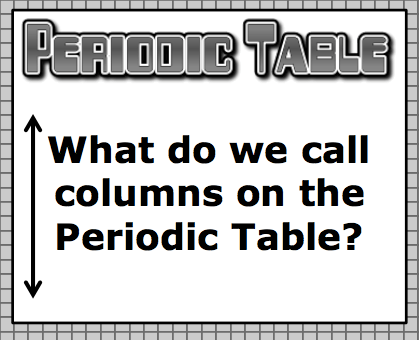
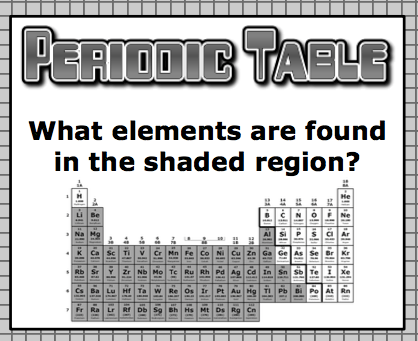
a)
Periods
b)
Groups
9.
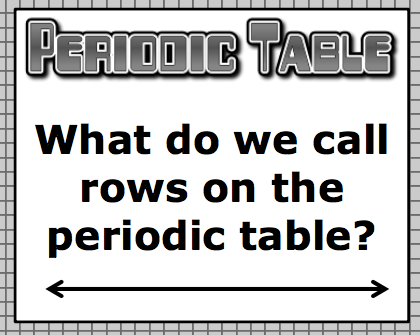
a)
Periods
b)
Groups
10.
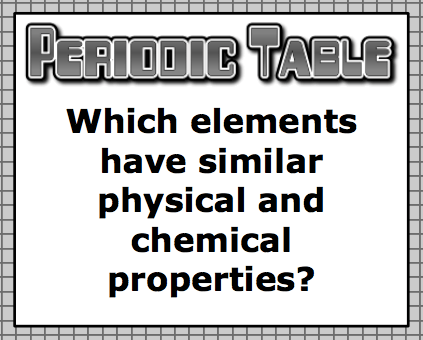
a)
energy levels
b)
valence electrons
c)
protons
d)
neutrons
11.
a)
energy levels
b)
valence electrons
c)
protons
d)
neutrons
12.
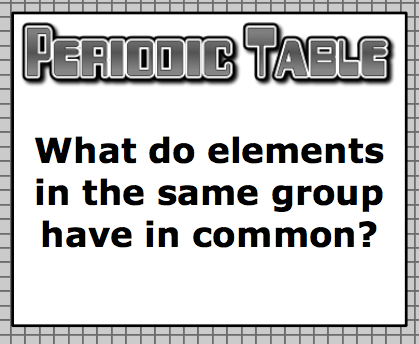
a)
Same group
b)
Same period
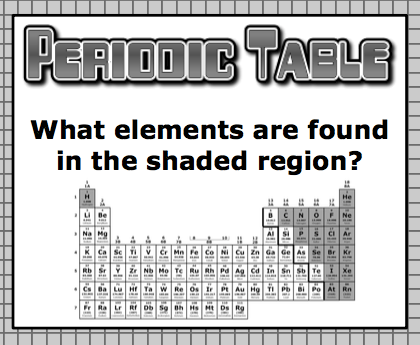
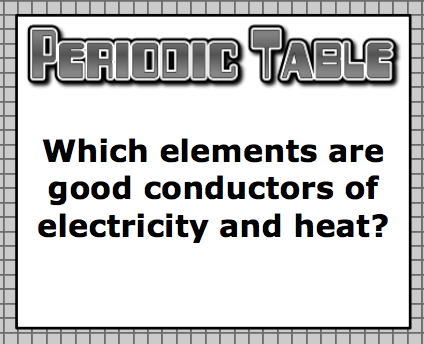
13.
a)
Metals
b)
Nonmetals
c)
Metalloids
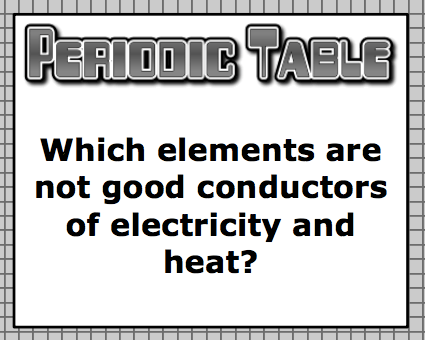
14.
a)
Metals
b)
Nonmetals
c)
Metalloids
15.
a)
Metals
b)
Nonmetals
c)
Metalloids
16.
Is Na a metal or nonmetal
a)
metal
b)
nonmetal
17.
Is Hydrogen a metal or nonmetal?
a)
Metal
b)
Nonmetal
18.
Is Al a metal or nonmetal
a)
metal
b)
nonmetal
19.
Is C a metal or nonmetal
a)
metal
b)
nonmetal
20.
Is Ag a metal or nonmetal
a)
metal
b)
nonmetal
21.
Is S a metal or nonmetal
a)
metal
b)
nonmetal
22.
What element is special in that it is on the left but is not a metal?
a)
H
b)
Mg
c)
Na
d)
Sr
23.
An atom becomes _________ when it gains electrons.
a)
Positive
b)
Negative
c)
Neutral
d)
Invinsible
24.
Elements on the LEFT side of the periodic table will most likely form:
a)
Positive ions
b)
Negative ions
c)
Neutral Ions
d)
None of these
25.
An atom becomes _______ when it loses electrons.
a)
Positive
b)
Negative
c)
Neutral
d)
Invinsible
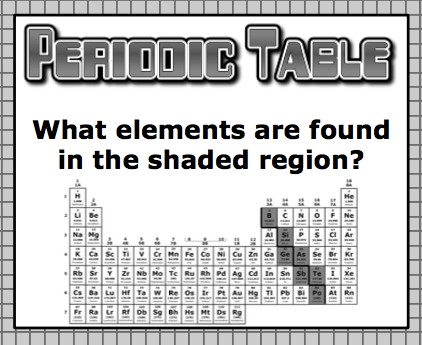
26.
a)
Metals
b)
Nonmetals
c)
Metalloids
27.
a)
Metals
b)
Nonmetals
c)
Metalloids
28.
a)
Metals
b)
Nonmetals
c)
Metalloids
29.
Elements which are shiny, conduct electricity and heat are called
a)
metal
b)
nonmetal
c)
metalloid
d)
nonexistent
30.
If an atom gains 3 electrons, what charge will it have as an ion?
a)
+3
b)
-3
c)
+5
d)
-5
31.
If an atom loses 2 valence electrons, what charge will it have as an ion?
a)
+2
b)
-2
c)
0
d)
+8
32.

What is the ion that has 12 protons and 10 electrons?

a)

Mg+2

b)

Mg-2

c)

Ne+2

d)

Ne-2

33.
How many electrons are in a Li+ ion?
a)
1
b)
2
c)
3
d)
4
34.
What type of bond forms when electrons are transferred from one atom to another?
a)
ionic bond
b)
atomic bond
c)
covalent bond
d)
metallic bond
35.

The electrons in a polar covalent molecule are shared...

a)

Evenly

b)

Unevenly

c)

Electrons are not shared

d)

None of the Above

36.

The electrons in a nonpolar covalent molecule are shared...

a)

Evenly

b)

Unevenly

c)

Electrons are not shared

d)

None of the Above

37.

The electrons in an ionic molecule are shared...

a)

Evenly

b)

Unevenly

c)

Electrons are not shared

d)

None of the Above

38.

In a polar covalent bond, the electrons gather around...

a)

The atom with the Greatest Electronegativity

b)

The atom with the Lowest Electronegativity

c)

Each atom Equally

d)

None of the Above

39.

In a nonpolar covalent bond, the electrons gather around...

a)

The atom with the Greatest Electronegativity

b)

The atom with the Lowest Electronegativity

c)

Each atom Equally

d)

None of the Above

40.

Partial charges are present in which type of bond?

a)

Ionic

b)

Nonpolar Covalent

c)

Polar Covalent

d)

Both Polar Covalent and Ionic

41.

A diatomic molecule like O2 is always _____ because electrons are shared _____

a)

nonpolar; unequally

b)

polar; equally

c)

nonpolar; equally

d)

polar; unequally

42.

What must the difference in electronegativity between two atoms be in order for the bond between them to be nonpolar covalent?

a)

less than 0.4

b)

greater than 1.7

c)

between 0.4 and 1.7

d)

exactly 0

43.
The most electronegative atom in the periodic table is:
a)
Fluorine
b)
Helium
c)
Neon
d)
Francium
44.
In this Lewis structure, the symbol above F means...
a)
electrons are being transferred to Fluorine
b)
electrons are less attracted to F than H
c)
electrons are more attracted to F than H
d)
Fluorine has formed a cation
45.

Use your knowledge and electronegativity sheet to predict what type of bond would form between calcium and bromine.

a)

non-polar covalent

b)

polar covalent

c)

ionic

d)

metallic

46.

Use your knowledge and electronegativity sheet to predict what type of bond would form between phosphorus and fluorine.

a)

non-polar covalent

b)

polar covalent

c)

ionic

d)

metallic

47.

What is the charge of an ionic compound?

a)

positive

b)

negative

c)

neutral

d)

covalent

48.

Select the anions.

a)

S 2−^{2-}

b)

Be 2+^{2+}

c)

P

d)

F −^-

e)

Li +^+

49.

Select the cations.

a)

Ca

b)

Be 2+^{2+}

c)

Ca 2+^{2+}

d)

F −^-

e)

Li +^+

50.

The chemical bond between a non-metal and another non-metal will be a ________ bond.

a)

metal

b)

ionic

c)

covalent

d)

polar

51.

The chemical bond between a metal and a non-metal will be a _____ bond.

a)

metal

b)

ionic

c)

covalent

d)

polar

52.

Beryllium and sulfur will form a ______ bond

a)

ionic

b)

covalent

c)

metalloid

53.

Sodium and Bromine will make a _____ bond.

a)

ionic

b)

covalent

c)

metallic

54.

Carbon and Oxygen will make a ___________ bond.

a)

ionic

b)

covalent

c)

metallic

55.

Nitrogen and Oxygen will make a ____________ bond

a)

ionic

b)

covalent

c)

metallic

56.

Which of these element pairs would bond covalently?

a)

Fr and K

b)

Sc and O

c)

F and Cl

d)

He and Pt

57.
Ionic compounds are formed when one or more valence electrons are transferred from _____
a)
a nonmetal atom to a metal atom
b)
a nonmetal atom to a nonmetal atom
c)
a metal atom to a nonmetal atom
d)
a metal atom to a metal atom
58.

What charge will a Neon ion have?

a)

+1

b)

-1

c)

-8

d)

Neon does not form ions.

59.

What charge will this atom have if it gains/loses electron(s)?

N (nitrogen)

a)

+2

b)

+3

c)

-2

d)

-3

60.

What charge will this atom have if it gains/loses electron(s)?

Sr(strontium)

a)

0

b)

+1

c)

-1

d)

+2

61.

What charge will this atom have if it gains/loses electron(s)?

Cl (chlorine)

a)

0

b)

+1

c)

-1

d)

+2

62.

What charge will this atom have if it gains/loses electron(s)?

Be(Beryllium)

a)

0

b)

+1

c)

-1

d)

+2

63.

What charge will this atom have if it gains/loses electron(s)?

Al (aluminum)

a)

+2

b)

+3

c)

-2

d)

-3

64.

What charge will this atom have if it gains/loses electron(s)?

Te (Tellurium)

a)

-2

b)

-1

c)

+1

d)

+2

65.

What charge will this atom have if it gains/loses electron(s)?

K (potassium)

a)

-2

b)

-1

c)

+1

d)

+2

66.

What charge will this atom have if it gains/loses electron(s)?

I (iodine)

a)

-2

b)

-1

c)

+1

d)

+2

67.

What charge will this atom have if it gains/loses electron(s)?

Se (selenium)

a)

-2

b)

-1

c)

+1

d)

+2

68.
In the chemical formula for an ionic compound, which item is written first?
a)
positive ion
b)
negative ion
c)
subscript
d)
the female
69.

What properties does an ionic compound have?

a)

A low boiling point and it conducts electricity when dissolved in water

b)

A high melting point and it conducts electricity when molten or dissolved

c)

A high boiling point and it conducts electricity when solid

70.
If an element has 3 valence electrons, what charge will likely form on its ion ?
a)
+3
b)
+5
c)
-3
d)
-5
71.
What is the correct chemical name for the ionic compound:  Na2O
a)
Sodium oxide
b)
Sodium (II) oxide
c)
Disodium monoxide
d)
Disodium oxide
72.
Which is the correct name for CaBr2?
a)
Calcium Bromine
b)
Bromine Calcium
c)
Calcium Bromide
73.
Magnesium bromide is an ionic compound with the chemical formula MgBr₂.  What does the "2" tell you?
a)
There are 2 bromide ions for every magnesium ion
b)
Bromide has a 2- charge
c)
Bromide has a 2+ charge
d)
There are 2 magnesium ions to every bromide ion
74.
1. Which statement best describes 'Electronegativity'?
a)
a) The ability of an atom to attract electrons.
b)
b) The ability of an atom to lose electrons.
c)
c) The ability of an atom to bond with metals.
d)
d) The ability of an atom to attract other atoms.
75.

NaNO3: How many atoms of Nitrogen?

a)

1

b)

2

c)

3

d)

5

76.
What is the correct formula for Sodium Oxide?
a)
NaO
b)
NaO2
c)
Na2O
d)
Na2O2
77.

The formula for Magnesium phosphide is:

a)

Mg3(PO4)2

b)

MgP

c)

MgPO4

d)

Mg3P2

78.

What is the correct formula for potassium oxide?

a)

KO2

b)

KO

c)

K2O

d)

OK2

79.
What is the ionic compound formed between Ca and Br?
a)
CaBr
b)
CaBr2
c)
Ca2Br
d)
Ca2Br
80.
In what form can an ionic compound conduct electricity?
a)
when dissolved in water
b)
as a solid
c)
as a crystal
d)
when warmed slightly
81.
What is the formula of Sodium oxide?
a)
Na2O
b)
NaO2
c)
Na2O2
d)
Na2O
82.
What is the formula for aluminum fluoride?
a)
AlF
b)
Al2F3
c)
AlF3
d)
Al3F2
83.
How many valence electrons are in Phosphorus?
a)
15
b)
4
c)
5
d)
31
84.
What two types of atoms make a covalent bond?
a)
2 Nonmetals
b)
1 Nonmetal and 1 Metal
c)
2 Metals
d)
2 Noble Gases
85.
Is Hydrogen considered a metal or a non-metal?
a)
Metal
b)
Non-metal
86.
With the ________ you must have 8 electrons on the outside ring.
a)
anions
b)
ionic bonds
c)
cations
d)
octet rule
87.
Which of the following gives the correct chemical formula for the compound Magnesium Phosphide?
a)
Mg2P3
b)
MgP
c)
Mg3P2
d)
MgP2
88.
What is the correct chemical name for the ionic compound:  Na2O
a)
Sodium oxide
b)
Sodium (II) oxide
c)
Disodium monoxide
d)
Disodium oxide
89.
Hydrogen needs _____ electrons in its valence shell to be stable.
a)
4
b)
6
c)
8
d)
2
90.
Ionic compounds have ___________ melting points.
a)
high
b)
low
c)
no
d)
invisible
91.
What type of compounds form crystal lattice, are generally soluble and conduct electricity when dissolved in water?
a)
Ionic Compounds
b)
Covalent Compounds
c)
Sucrose
92.
The element with the lowest electronegativity in Period 3 is - 
a)
Na
b)
Cl
c)
Ar
d)
Mg
93.
Which of the following is the least electronegative element?
a)
oxygen
b)
potassium
c)
fluorine
d)
nitrogen
94.
Which of the following is the most electronegative element?
a)
nitrogen
b)
phosphorus
c)
arsenic
d)
lithium
95.

Why do all bonds form?

a)

so the number of protons equals the number of electrons

b)

so an atom can become unstable

c)

to fill the outermost energy level

96.

When naming ionic compounds, the metal is always named first and the nonmetal is always named second.

a)

True

b)

False

97.

Mg3N2

a)

Magnesium nitride

b)

Magnesium (II) nitride

c)

Trimagnesium dinitrogen

98.

What is the proper name for CH4?

a)

Monocarbon hydride

b)

Carbon tetrahydride

c)

Monocarbon tetrahydride

99.

What is the proper name for S2O2?

a)

Sulfur oxide

b)

Sulfur dioxide

c)

Sulfur (II) oxide

d)

Disulfur dioxide

100.
What's my name? MgS
a)
magnesium monosulfide
b)
magnesium sulfide
c)
magnesium sulfate
d)
monomagnesium monosulfide
101.
What is the correct formula for Sodium Oxide?
a)
NaO
b)
NaO2
c)
Na2O
d)
Na2O2
102.

What's my name? BeCl2

a)

monoberyllium dichloride

b)

beryllium(II) chloride

c)

beryllium chloride

d)

beryllium dichloride

103.
The formula for phosphorous trichloride is...
a)
PCl3
b)
P3Cl
c)
P3Cl3
d)
PCL
104.
The name of this covalent compound N2O5 is...
a)
nitrogen oxide.
b)
dinitrogen oxide.
c)
nitrogen pentoxide.
d)
dinitrogen pentoxide.
105.

What is the correct formula of Nitrogen Trichloride?

a)

N2Cl4

b)

N3Cl3

c)

NCl3

d)

NCl5

106.
Name the compound Na2O
a)
Sodium Oxide
b)
Sodium Dioxide
c)
Sodium Oxygen
d)
Natride Oxide
107.

What is the chemical formula for disulfur decafluoride?

a)

SF

b)

S2F10

c)

S10F2

d)

None of these

108.

LiBr is called

a)

lithium bromine

b)

lithium (I) bromine

c)

lithium bromide

d)

lithuim (I) bromide

109.

Cs2O

a)

Dicaesium oxide

b)

Caesium oxide

c)

Caesium dioxide

d)

Dicaesium monoxide

110.

Na2S

a)

Disodium sulfide

b)

Sodium sulfide

c)

Sodium monosulfide

d)

Disodium monosulfide

111.
What is the chemical formula for Tetrasulfur pentoxide?
a)
SO
b)
S4O
c)
S4O5
d)
S5O4
112.

What is the name of N2O?

a)

nitrogen oxide

b)

dinitrogen monoxide

c)

nitrogen monoxide

d)

dinitrogen oxide

113.

What is the name of the following compound?

MgBr2

a)

magnesium bromide

b)

magnesium bromine

c)

magnesium dibromide

d)

bromine magnesium

114.

Which element has a +2 charge?

a)

sodium

b)

magnesium

c)

potassium

d)

aluminum

115.

What is the correct formula for the compound: strontium nitride

a)

Sr2N3

b)

SrN

c)

Sr3N2

116.

What is the correct formula for the compound: copper (I) oxide

a)

CuO

b)

CuO2

c)

Cu2O

117.

What is the correct formula for the compound: lead (IV) oxide

(Remember to reduce)

a)

PbO

b)

Pb2O4

c)

PbO2

d)

Pb2O

118.
diphosphorus pentoxide
a)
P2O5
b)
PO5
c)
P5O2
d)
P2O6
119.

Name N2O3

a)

Nitrogen Oxide

b)

Dinitrogen Trioxide

c)

Nitrogen Trioxide

120.

Name the following covalent compound.

NO

a)

Mononitrogen Oxide

b)

Nitrogen monoxide

c)

Nitrogen Oxide

121.
Nitrogen will form which of the following ions?
a)
N
b)
N-3
c)
N-5
d)
N+5
122.
What is the formula for tin (II) nitride?
a)
Sn3N2
b)
SnN2
c)
Sn3N
d)
SnN