
 Worksheets
U6 APB Review
Total questions: 164
Worksheet time: 4hrs 31mins
What is the term for making an RNA copy of DNA?
Transcription
Translation
Folding
Coding
How can a person's muscle cells have the same exact DNA sequences as their nerve cells even though they look and perform completely different?
The two different cells become mutated
The proteins expressed in each cell are different
They actually have different DNA in the two types of cells.
The genome of the different cells changes
Which of the following best describes the significance of the TATA box in eukaryotic promoters?
it is the recognition site for a specific transcription factor
it sets the reading frame of the mRNA
it is the recognition site for ribosomal binding
it signals the end of the nucleotide sequence of the gene
RNA polymerase moves in which direction along the DNA?
5' to 3'
3' to 5' along the template strand
3' to 5' along nontemplate (coding) strand
5' to 3' along the template strand
The parts of a gene that do not code for amino acids in a protein are called
introns
exons
codons
anticodons
The production of mature mRNA in eukaryotes involves
cutting introns out and splicing exons together
adding the 5' cap
adding the 3' poly A tail
all of these are correct
What is the function of the poly-A tail in mRNA?
to add modified guanine to the 3' end of the mRNA
to indicate the site of translational termination
to code for the binding of RNA polymerase to the DNA
to help protect the mRNA from degradation by hydrolytic enzymes
Which of the following events in translation is the first to occur in eukaryotes?
elongation of the polypeptide
base pairing of activated methionine-tRNA to AUG of the messenger RNA
binding of the larger ribosomal subunit to smaller ribosomal subunits
the small subunit of the ribosome recognizing and attaching to the 5' cap
What must happen to a newly made polypeptide before it can be secreted from a cell?
It must be translated by a ribosome that remains free of attachment to the ER
Its signal sequence must target it to the ER, after which it goes to the Golgi
Its signal sequence must be cleaved off
Its signal sequence must target it to the plasma membrane

What amino acid sequence will be produced based on the mRNA codon sequence 5'-AUG-UCU-UCG-UUA-UCC-UUG-3'
met-ser-leu-ser-leu-ser
met-ser-ser-leu-ser-leu
met-leu-phe-arg-glu-glu
met-glu-arg-arg-glu-leu
What is the correct description of eukaryotic chromosomes?
many linear pieces of DNA in the cytoplasm
many linear pieces of DNA in the nucleus
one circular piece of DNA in the cytoplasm
many circular pieces of DNA in the nucleus

Which process is shown?
diffusion
respiration
recombination
translation
Which site of the ribosome receives incoming tRNA during translation?
A site
P site
E site
C site

What does the inducer molecule do in an inducible operon?
It binds to the repressor protein allowing transcription to occur
It binds to the promoter allowing transcription to occur
It binds to the operator and stops transcription
It binds to the repressor and stops transcription


Operons are found in the cells of which of the following types of organisms?
prokaryotes (bacteria)
eukaryotes (plants and animals)
animals only
viruses

What is an operon?
A part of the promoter region of a gene
A part of RNA polymerase
A unit made up of linked genes that code for proteins needed to do a specific task
A protein needed for DNA replication

In a repressible operon, what turns on transcription?
the presence of the corepressor
the absence of the corepressor
the presence of RNA polymerase
the absence of RNA polymerase


What type of operon is the lac (lactose) operon?
inducible
repressible
positive control
promotable

What type of operon is the trp (tryptophan) operon?
inducible
repressible
positive control
repressible
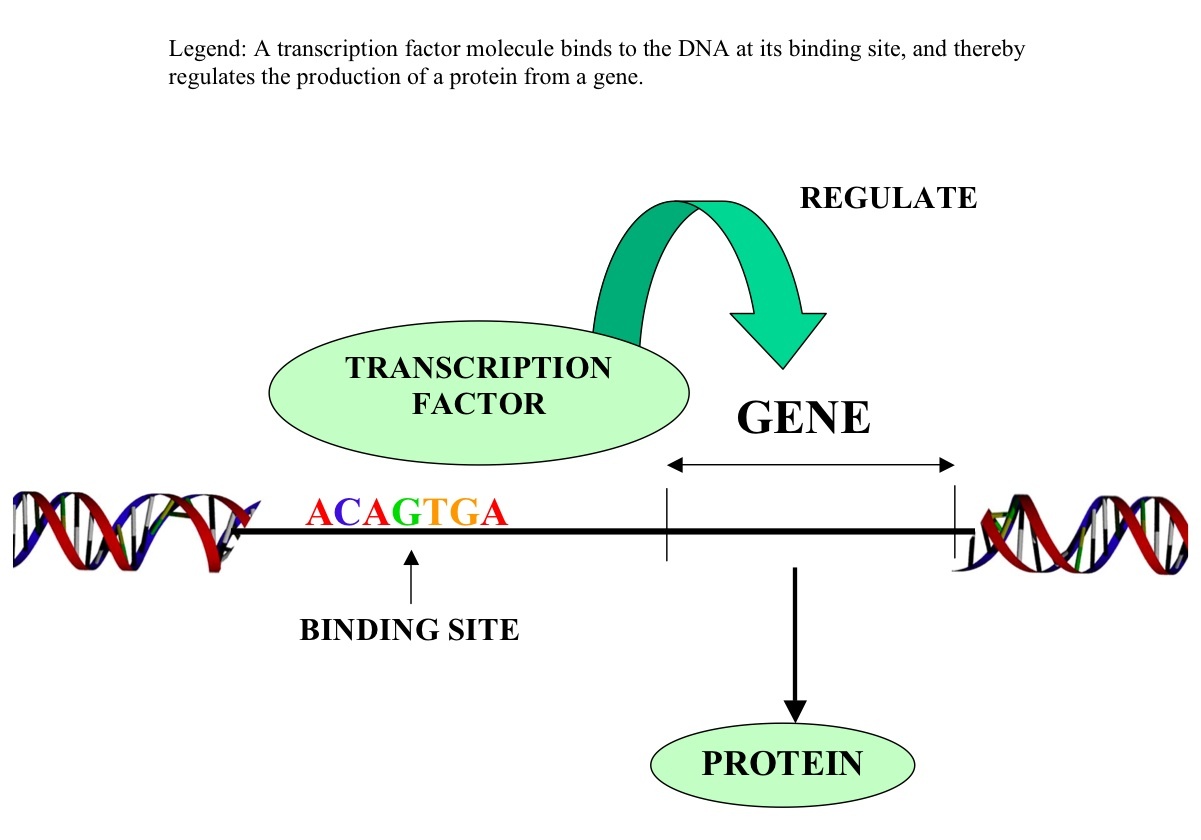
How can a person's muscle cells have the same exact DNA sequences as their nerve cells even though they look and perform completely differently?
The two different cells become mutated
The proteins expressed in each cell are different
They actually have different DNA in the two types of cells.
The genome of the different cells changes
All of the following are true about histone acetylation EXCEPT
takes place on the histone
enzymes add an acetyl group
when it occurs, transcription is more likely to occur
chromatin becomes more tightly packed
A distal control region that activators bind to is bent to contact mediator proteins and form the transcription initiation complex
enhancers
promoters
repressors
transcription factors

The mutated DNA segment is TTATCGCAAG. This is an example of ___ mutation.


Which of the following polypeptides is coded for by the mRNA sequence 5' AUGGUUAAA 3'?
Val, Lys, Phe, Gly
Met, Asp, Phe
Met, Val, Phe
Ile, Gln, Leu, Ser

DNA consists of two strands of nucleotides held together by ____ bonds between complimentary bases.
Covalent
Hydrogen
Ionic
Hydrophobic
This enzyme is capable of breaking Hydrogen bonds found between the bases of DNA
Topoisomerase
DNA Helicase
DNA Polymerase
Exonuclease
This enzyme helps helicase unzip DNA by relieving supercoiling
Topoisomerase
Exonuclease
DNA Primase
DNA Polymerase
Operons are only found in
prokaryotes
eukaryotes
Transcribes genes.
DNA polymerase
RNA polymerase
How can a person's muscle cells have the same exact DNA sequences as their nerve cells even though they look and perform completely different?
The two different cells become mutated
The proteins expressed in each cell are different
They actually have different DNA in the two types of cells.
The genome of the different cells changes
In eukaryotes, DNA is tightly coiled around ____ in chromatin
Histones
Whey
Casein
Hemoglobin
In eukaryotic cells, transcription cannot begin until
the two DNA strands have completely separated and exposed the promoter.
transcription factors have bound to the promoter.
the 5' caps are removed from the mRNA.
the DNA introns are removed from the template.
5'-AUG-UCU-UCG-UUA-UCC-UUG-3'
What is the correct description of eukaryotic chromosomes?
many linear pieces of DNA in the cytoplasm
many linear pieces of DNA in the nucleus
one circular piece of DNA in the cytoplasm
many circular pieces of DNA in the nucleus
Group of structural and regulating genes that function as a single unit.
operon
promoter
activator
inducer
In an operon, a sequence of DNA where RNA polymerase binds prior to transcription.
operator
promoter
initiator
repressor
In an operon, the sequence of DNA that serves as a binding site for a repressor, and thereby regulates the expression of structural genes.
promoter
inducer
operator
repressor
In an operon, protein molecule that binds to an operator, preventing transcription of structural genes.
operator
inducer
promoter
repressor
Gene that codes for an enzyme in a metabolic pathway.
regulator gene
structural gene
operon
intron
In an operon, a gene that codes for a protein that regulates the expression of other genes.
structural gene
regulator gene
intron
exon
Operon that is normally active because the repressor is normally inactive.
Intron
Exon
repressible operon
expressible operon
Molecule that binds to a repressor, allowing the repressor to bind to an operator in a repressible operon.
inducer
corepressor
intron
exon
Molecule that brings about activity of an operon by joining with a repressor and preventing it from binding with the operator.
promoter
operator
inducer
intron
In a catabolic pathway, an operon causes transcription of the genes controlling a group of enzymes.
inducible operon
repressible operon
intron
exon
An inheritance pattern in which a nuclear gene has been modified but the changed expression of the gene is not permanent over many generations.
dominance
recessiveness
polygenic
epigenetic inheritance
In eukaryotes , protein required for the initiation of transcription by RNA polymerase.
promoter
transcription activator
transcription factors
Altered gene whose sequence of bases differs from the previous sequence.
exon
intron
mutation
transcription error
Mutation that arises as a result of anomalies in normal biological processes, such as mistakes made during DNA replication.
Induced mutation
spontaneous mutation
Environmental agent that causes mutations leading to the development of cancer.
carcinogens
activators
mutagens
Change of one base only in the sequence of bases in a gene.
substitution
point mutation
frameshift mutation
deletion
Insertion or deletion of at least one base so that the reading frame of the corresponding mRNA changes.
substitution
point mutation
deletion
frameshift mutation
How do the leading and the lagging strands differ?
The leading strand is synthesized in the same direction as the movement of the replication fork, and the lagging strand is synthesized in the opposite direction.
The leading strand is synthesized at twice the rate of the lagging strand.
The leading strand is synthesized in short fragments that are ultimately stitched together, whereas the lagging strand is synthesized continuously.
The leading strand is synthesized by adding nucleotides to the 3' end of the growing strand, and the lagging strand is synthesized by adding nucleotides to the 5? end.
Which process is responsible for the removal of introns and joining of exons in a pre-mRNA molecule?
Translation
Transcription
RNA processing
DNA replication
What is the role of ribosomes in protein synthesis?
They replicate DNA.
They synthesize lipids.
They modify proteins.
They facilitate the assembly of amino acids into protein chains.
Which of the following best describes the function of messenger RNA (mRNA) in the cell?
Carries amino acids to the ribosome
Forms the structure of ribosomes
Transfers genetic information from DNA to the ribosome
Acts as a catalyst in biochemical reactions

