wayground logo

Free Printable Worksheets

Font size

S
M
L
XL
Worksheets

BIOMES REVIEW

Total questions: 156

Worksheet time: 4hrs 14mins

Name
Class
Date
1.

Biomes are mainly determined by _____ and ____.

a)

temperature

b)

weather

c)

precipitation

d)

soil

e)

rocks

2.

What are some characteristics of a temperate grassland/prairie?

a)

lots of trees

b)

grassland

c)

flat

d)

high temperatures year round

3.

What are some characteristics of a tropical grassland/savanna?

a)

warm temperatures

b)

seasonal rainfall

c)

lots of trees

d)

grassland

e)

low average temperature

4.

Terrestrial biomes are defined by their...

a)

climate, plants & animals

b)

climate only

c)

animals & plants only

d)

none of these

5.

Which biome contains large populations of grazing herbivores, few species of birds, and deep, rich soil?

a)

Boreal Forest

b)

Tundra

c)

Deciduous Forest

d)

Grassland

6.

Which type of biome is it?

a)

Temperate grassland

b)

Taiga

c)

Desert

d)

Savanna grassland

7.

A new species is discovered in a moderately warm climate. Its diet is primarily small vegetarian. Large carnivorous birds are its main predators. The creature has sharp claws to dig tunnels to escape from carnivores. In which biome will this new species thrive?

a)

savanna

b)

desert

c)

rainforest

d)

taiga

8.

Grasslands are characterized by low amounts of rainfall, few trees, and lots of grass. Which of the following would be the primary inhabitants of the grasslands?

a)

Tree-dwelling primates

b)

Thick-furred mammals

c)

Large herbivores

d)

Water-conserving plants

9.

This biome is found in S. America and Africa. It has warm temperatures year-round with a rainy season in the winters. It is similar to a grassland but with a few more trees and shrubs.

a)

Tundra

b)

Taiga

c)

Chaparral

d)

Savanna

10.

This biome is found across the Midwest of the United States. Temperatures vary from extreme warm summers to cold winters and there is little precipitation. Soil is nutrient rich; good for agriculture. The main vegetation type is tall grasses.

a)
taiga
b)
tundra
c)
deciduous forest
d)
grassland
11.

Which of the following is true of the taiga but NOT the tundra?

a)

The tundra has many species of reptiles.

b)

Elk and caribou often migrate to the tundra at different times of the year.

c)

It is often called the coniferous forest because of the conical trees there.

d)

The subsoil is referred to as permafrost because it is frozen solid all year.

12.

A tree called the Creosote has a taste and smell that animals find unpleasant. It has leaves that close in the day to keep in water and open at night to absorb moisture. Its leaves also grow close to the stem to reduce water evaporation. This plant also has dual root systems that tap deep into the underground water and radial roots that collect surface water. Which of the following statements is true based on the paragraph above?

a)

The Creosote tree is well adapted for the desert biome and its lack of rainfall.

b)

Due to the type of leaves found on the Creosote tree, this tree most likely thrives in the savanna.

c)

The dual root systems of the Creosote tree would help it to survive in the tundra.

d)

The Creosote tree is most likely found in the rainforest because it has adapted to conserve water.

13.
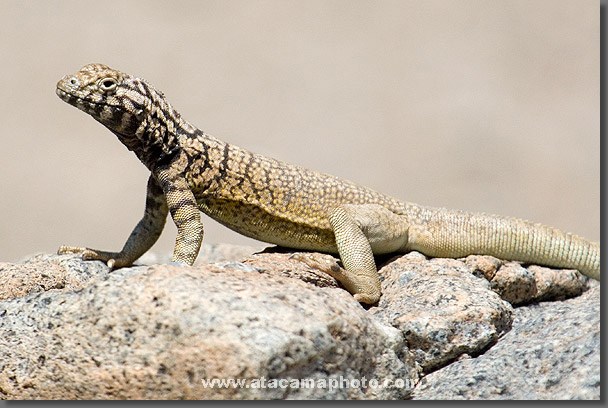
In which biome would you MOST LIKELY find this organism?
a)
tropical rainforest
b)
tundra
c)
desert
d)
temperate deciduous forest
14.

Animals in the chaparral biome are not especially vulnerable to drought.

a)

True

b)

False

15.

What kind of vegetation would you most likely expect to find in the chaparral biome?

a)

deciduous trees

b)

tall grasses

c)

hardy shrubs

d)

tall pine trees

16.

The chaparral biome is best characterized by _______.

a)

heavy snowfall

b)

woody scrub plants

c)

flat terrain

d)

mountainside terrain

17.

Chaparral biomes are generally _______.

a)

found near coasts

b)

found in mountainous regions

c)

nutrient rich

d)

cool during the summer months

18.

What can you infer about animals that live in the desert?

a)

Most of them are quite large

b)

Most of them are warm-blooded

c)

Most are unable to withstand temperatures below 90 degrees Fahrenheit

d)

Most can survive on very little water

19.
The biome pictured is
a)
temperate grassland
b)
temperate deciduous forest
c)
desert
d)
tundra
20.
The tropical rain forest & tropical savanna biomes are similar in ___________, but ________________________________.
a)
temperature / the savannah doesn't receive enough rainfall to be a forest
b)
precipitation / the rain forest is hotter
c)
precipitation / the savanna is cooler
d)
temperature / the rain forest doesn't receive enough sunlight to be a savanna
21.
The biome pictured is
a)
tundra
b)
desert
c)
tropical savanna
d)
temperate grassland
22.

Which of these plant(s) will be found in the Tundra?

a)

Bromeliads

b)

reindeer lichen

c)

artic willow

d)

Saguaro

23.
Which biome in the Midwestern USA features animals and plants adapted to frequent fires?
a)
chaparral
b)
desert
c)
temperate grassland
d)
temperate deciduous forest
24.
Some desert animals in the desert estivate, or sleep through ____ times.
a)
cold
b)
rainy
c)
dry
d)
hot
25.
Spines, waxy leaves, and wide root systems are all adaptations to _____.
a)
water shortages
b)
floods
c)
fires
d)
human development
26.
In which biome can you find permafrost?
a)
taiga
b)
tundra
c)
desert
d)
chaparral
27.
Animals living underground and dwarf trees are BOTH adaptations to _____ in the tundra.
a)
cold
b)
heat 
c)
wind
d)
predation
28.
What is a savanna?
a)
a tropical grassland
b)
a desert
c)
a rock garden
d)
a frozen grassland
29.
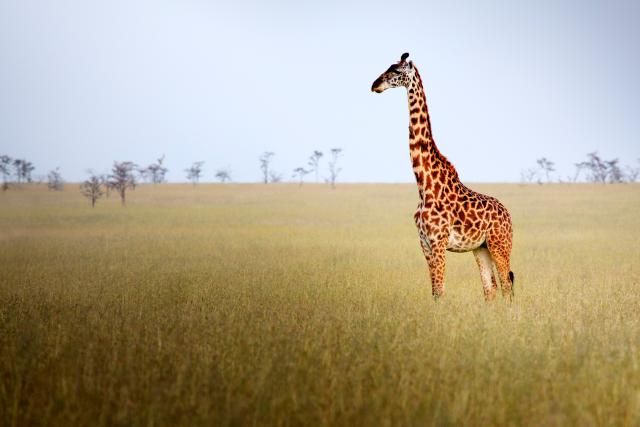
What kind of animal would probably not live in a grassland?
a)
horse
b)
cow
c)
sheep
d)
polar bear
30.
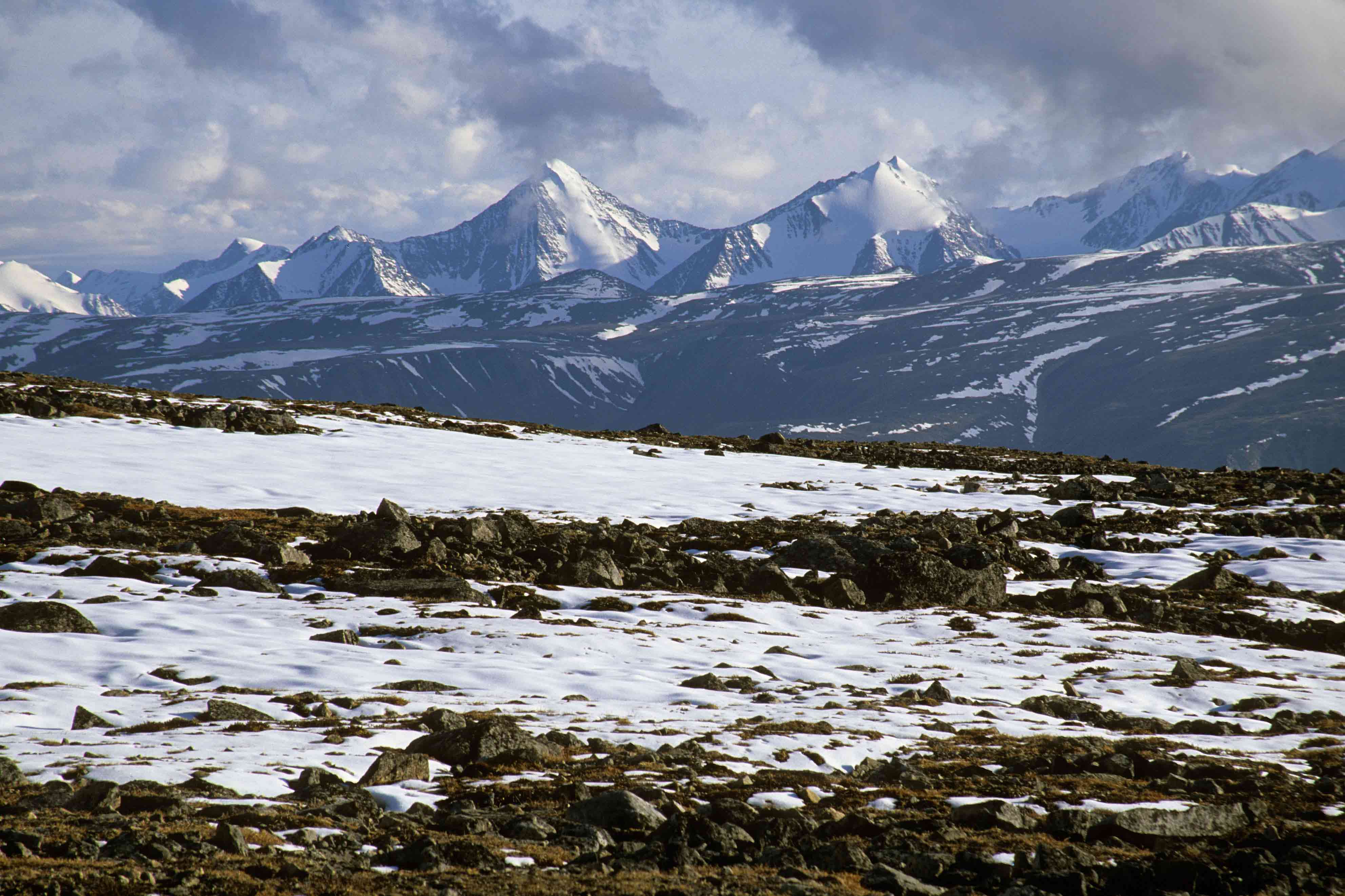
The biome pictured is
a)
desert
b)
tundra
c)
temperate grassland
d)
boreal forest
31.
Abiotic factors: warm temperatures; seasonal rainfall; compact soil; frequent fires set by lightning • Dominant plants: tall, perennial grasses; sometimes drought-tolerant and fireresistant trees or shrubs    
a)
temperate grasslands
b)
Prairies
c)
savanna grass lands
d)
chapparal
32.
Abiotic factors: low precipitation, variable temperatures; soils rich in minerals but poor in organic material • Dominant plants: cacti and other succulents; creosote bush and other plants with short growth cycles
a)
Desert
b)
Tundra
c)
Tropical grassland
d)
Temperate grassland
33.

Kangaroo rats and Joshua trees live here.

a)

grassland

b)

tropical rain forest

c)

taiga

d)

desert

34.

Which of the following is an example of a desert biome plant?

a)

cactus

b)

sunflower

c)

pine tree

d)

fig tree

35.

The weather in a tundra is...

a)

wet

b)

cold/dry

c)

humid

d)

hot/dry

36.

The air in the desert has ______ humidity while the air in the tropical rainforest has _______ humidity.

a)

high / low

b)

low / high

c)

low / low

d)

high / high

37.

Which one of the following best describes Salinity?

a)

bodies of surface water that flow downhill

b)

the area between high and low tides

c)

the amount of dissolved salt present in water

38.

Antarctica is the largest desert.

a)

True

b)

False

39.
Which biome is home to lions, zebras, wildebeests, giraffes, and elephants?
a)
Grasslands
b)
Tundra
c)
Rainforest
d)
Temperate Forest
40.
Which biome is home to cacti, scorpions, coyotes, kangaroo rats, and lizards?
a)
Desert
b)
Grasslands
c)
Temperate Forest
d)
Taiga
41.
The polar bear's white fur allows it to hide in the cold arctic. This adaptation is called________________.
a)
White on white
b)
Camouflage
c)
Color matching
d)
behavioral adaptation 
42.
Define Adaptation.
a)
How an organism has NOT changed and continues to live in an environment 
b)
All animals can live in any environment 
c)
How an organism grows over time
d)
Special features or behaviors that allow an animal to survive in an environment.
43.
The closer a biome is to the equator, the more we would expect it to be
a)
warmer & wetter
b)
warmer & drier
c)
cooler & wetter
d)
cooler & drier
44.
The farther a biome is from the equator, the more we would expect it to be 
a)
warmer & wetter
b)
warmer & drier
c)
cooler & wetter
d)
cooler & drier
45.
The tropical rain forest & tropical savanna biomes are similar in ___________, but ________________________________.
a)
temperature / the savannah doesn't receive enough rainfall to be a forest
b)
precipitation / the rain forest is hotter
c)
precipitation / the savanna is cooler
d)
temperature / the rain forest doesn't receive enough sunlight to be a savanna
46.
The tundra biome & the desert biome are both very dry, but
a)
the desert is always hot
b)
the desert has a wider temperature range
c)
the tundra has a wider temperature range
d)
they are also similar in temperature
47.
Terrestrial biomes are defined mainly by their
a)
climate & plants
b)
climate & animals
c)
animals & plants
d)
climate only
48.
The biome pictured is
a)
desert
b)
tropical savanna
c)
tropical seasonal forest
d)
boreal forest
49.
The biome pictured is
a)
temperate grassland
b)
temperate deciduous forest
c)
desert
d)
tundra
50.
The biome pictured is
a)
desert
b)
tundra
c)
temperate grassland
d)
boreal forest
51.
The biome pictured is
a)
shrubland/chaparral
b)
tropical savanna
c)
temperate deciduous forest
d)
desert
52.
The most biodiverse biome is: 
a)
Taiga
b)
Chaparral
c)
Savanna
d)
Tropical Rainforest
53.
Abiotic factors: hot and wet year-round; thin, nutrient-poor soils • Dominant plants: broad-leaved evergreen trees; ferns; large woody vines and climbing plants;  orchids and bromeliads
a)
Taiga 
b)
Temperate Rain Forest
c)
Temperate Deciduous Forest
d)
Tropical Rain forest
54.
Abiotic factors: warm temperatures; seasonal rainfall; compact soil; frequent fires set by lightning • Dominant plants: tall, perennial grasses; sometimes drought-tolerant and fireresistant trees or shrubs    
a)
temperate grasslands
b)
Prairies
c)
savanna grass lands
d)
chapparal
55.
Abiotic factors: low precipitation, variable temperatures; soils rich in minerals but poor in organic material • Dominant plants: cacti and other succulents; creosote bush and other plants with short growth cycles
a)
Desert
b)
Tundra
c)
Tropical grassland
d)
Temperate grassland
56.
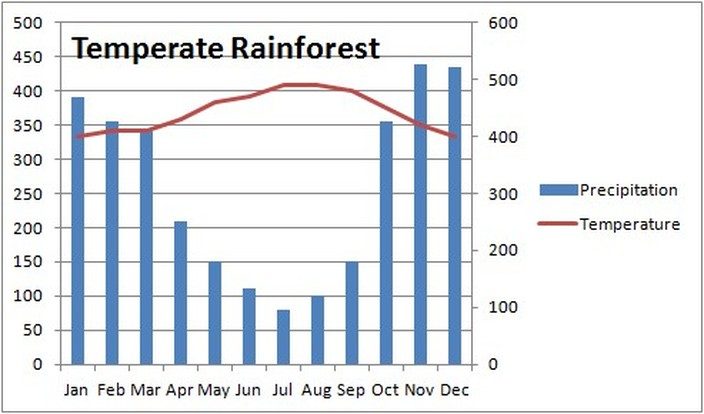
Look at the following graph to determine biome
a)
Savanna Grassland
b)
Chapparal
c)
Desert
d)
Tundra
57.

Kangaroo rats and Joshua trees live here.

a)

grassland

b)

tropical rain forest

c)

taiga

d)

desert

58.
Earth’s biomes are divided into _________ biomes, and __________biomes
a)
terrestrial, aquatic
b)
hot, cold
c)
north, south
d)
east, west
59.
The most important abiotic factors when studying biomes are...
a)
Food and Water
b)
Water and Sunlight
c)
Temperature and Oxygen
d)
Precipitation and Temperature 
60.
 What type of biome is pictured?
a)
Tundra
b)
Temperate Rainforest
c)
Grassland
d)
Desert
61.
 What type of biome is pictured?
a)
Tundra
b)
Temperate Rainforest
c)
Grassland
d)
Desert
62.
The biome known for trees with broad leaves that fall off the trees in the winter.
a)
Coniferous Forests
b)
Temperate Deciduous Forests
c)
Deserts
d)
Tundra
63.
Which biome covers most of the land mass near the Earth's equator?
a)
tundra
b)
desert
c)
grassland
d)
tropical rainforest
64.
Which biome receives between 0 to 25 centimeters of rain per year, has a temperature range of 0 to 50 degrees Celsius, has poor soil, and is home to lizards, scorpions, and snakes?
a)
desert
b)
mountain
c)
taiga
d)
tundra
65.
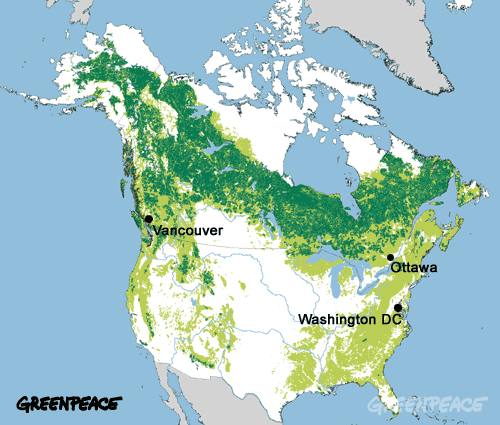
Which biome is Canada in?
a)
Tundra
b)
Taiga
c)
Temperate Forest
d)
Desert
66.
Which of the following in an ecosystem is classified as BIOTIC?
a)
Rock
b)
Sand
c)
Wind
d)
Tree
67.
One characteristic feature of tundra is that only the surface thaws in the summer and refreezes in the winter, leaving a layer of permanently frozen subsoil.  This characteristic is known as
a)
glaciation
b)
permafrost
c)
crystallization
d)
soilfrost
68.
Deciduous trees ___________ their leaves in the fall.
a)
shed
b)
grow
c)
restore
d)
increase
69.
Which of the following biomes covers much of the eastern half of the United States?
a)
grassland
b)
desert
c)
temperate deciduous forest
d)
coniferous forest
70.
Which of the following trees are part of the deciduous forest biome?
a)
white pine
b)
cedar
c)
hickory
d)
conifers
71.
Coniferous forests are made up primarily of trees that _______________.
a)
change color in the fall
b)
bear cones
c)
shed their leaves
d)
have thin bark
72.
Another name for a coniferous forest is . . . .
a)
the tundra
b)
the taiga
c)
the rainforest
d)
the arctic
73.
Question Image

Match the following

a)

emergent layer

1.

bright light

b)

canopy

2.

filtered light

c)

understory

3.

dense shade

d)

tropical rain forest

4.

near the equator

e)

taiga

5.

arctic

74.

You are walking through a forest that gets large amounts of rain, has

high humidity, and has moderate temperatures year-round. Where is

this forest located?

a)

somewhere near the equator

b)

somewhere near the arctic circle

c)

in a forest with the greatest species diversity

d)

the pacific northwest

75.
________________________ have needle shaped leaves.
a)
Snow Cone Trees
b)
Coniferous Forests
c)
Tepee Trees
d)
Needle Forests
76.
What type of forest has the greatest biodiversity?
a)
Taiga forest
b)
Temperate deciduous forest
c)
Temperate rain forest
d)
Tropical rain forest
77.
Which of the following would you expect to see in the emergent layer of a tropical rain forest?
a)
grasses, insects, and small succulents
b)
eagles, bats, and snakes
c)
lichens, mosses, and dwarf woody plants
d)
epiphytes, small burrowing mammals, and burrowing toads
78.
Adaptations demonstrated by plants in tropical rain forests include
a)
trees with above ground roots called buttresses, which   increase stability.
b)
orchids and vines that use tall tree trunks for support.
c)
herbs with large flat leaves located in the understory.
d)
All choices are correct.
79.
In general, tropical rain forests are located 
a)
near the equator.
b)
near the coast line.
c)
between a forest and a desert.
d)
between a desert and a mountain.
80.
Which of the following is the layers of treetops that shade the forest floor & is considered to be the primary layer of the rain forest.
a)
Emergent layer
b)
Canopy
c)
Understudy
d)
Epiphytes
81.
Belem, Brazil would most like be considered a ________ biome. 
a)
tundra 
b)
grassland
c)
tropical rain forest
d)
desert
82.
Spitzbergen, Norway would most like be considered a ________ biome.
a)
deciduous Forest
b)
grassland
c)
taiga
d)
tundra
83.
What type of leaf is best for absorbing light in a rainforest?
a)
needle-like
b)
broad, flat
c)
small, narrow
d)
falls off for winter
84.
If soil in the rainforest is poor, how are so many plants able to grow there?
a)
Decomposition is fast so they are able to get the nutrients before they are washed away.
b)
They are able to get the nutrients from the oxygen in the air.
c)
Decomposition is slow so they don't need the nutrients.
d)
The soil is actually very rich in nutirients.
85.
In which type of forest would you see this plant adaptation: leaves that fall off for winter
a)
rainforest
b)
deciduous forest
c)
coniferous forest
d)
Forest Lane
86.
In which type of forest would you see this plant adaptation: evergreen, needle-like leaves
a)
rainforest
b)
deciduous forest
c)
coniferous forest
d)
Forest Green
87.
Which biome is characterized by low temperatures and low amounts of rainfall?
a)
tundra
b)
desert
c)
temperate deciduous forest
d)
tropical rain forest
88.
The most important abiotic factors when studying biomes are...
a)
Food and Water
b)
Water and Sunlight
c)
Temperature and Oxygen
d)
Water and Temperature 
89.

What limiting factor influences how many plants grow on the forest floor?

a)

temperature

b)

rainfall

c)

biodiversity

d)

sunlight

90.
The closer a biome is to the equator, the more we would expect it to be
a)
warmer & wetter
b)
warmer & drier
c)
cooler & wetter
d)
cooler & drier
91.
Terrestrial biomes are defined mainly by their
a)
climate & plants
b)
climate & animals
c)
animals & plants
d)
climate only
92.
Abiotic factors: hot and wet year-round; thin, nutrient-poor soils • Dominant plants: broad-leaved evergreen trees; ferns; large woody vines and climbing plants;  orchids and bromeliads
a)
Taiga 
b)
Temperate Rain Forest
c)
Temperate Deciduous Forest
d)
Tropical Rain forest
93.
Which biome covers most of the land mass near the Earth's equator?
a)
tundra
b)
desert
c)
grassland
d)
tropical rainforest
94.
Which biome is Canada in?
a)
Tundra
b)
Taiga
c)
Temperate Forest
d)
Desert
95.
Which biome could an animal who hibernates in the winter to survive the cold live in?
a)
Grasslands
b)
Taiga
c)
Desert
d)
Rainforest
96.

Why does the Earth have different climate zones? Pick the best answer.

a)

The Moon is at different distances from the Earth at different times of the year.

b)

The Earth is tilted on its axis and spins around the sun so some areas are closer to the sun depending on the time of year.

c)

Some areas are close to oceans and others are not.

d)

Earth's gravity and magnetic field affect the climate of the Earth.

97.

Why does the Earth have different climate zones? Pick the best answer.

a)

The Moon is at different distances from the Earth at different times of the year.

b)

The Earth is tilted on its axis and spins around the sun so some areas are closer to the sun depending on the time of year.

c)

Some areas are close to oceans and others are not.

d)

Earth's gravity and magnetic field affect the climate of the Earth.

98.
In which biome would you MOST LIKELY find this organism?
a)
taiga/coniferous forest
b)
temperate deciduous forest
c)
tropical rainforest
d)
desert
99.

Rainforest layers:

a)

3 : emergent, understory, and floor

b)

2: canopy and floor

c)

5: emergent, canopy, understory, floor, and underground

d)

4: emergent, canopy, understory, and floor

100.

The distance north or south from the equator.

a)

Climate

b)

Tundra

c)

Latitude

d)

Altitude

101.

A plant that uses another plant for support, but not for nourishment.

a)

Canopy

b)

understory

c)

taiga

d)

Epiphyte

102.

Why are organisms so well-adapted to the conditions of the biomes in which they live? Choose the best answer.

a)

They have migrated to biomes that suit their biological needs

b)

They have slowly evolved to adapt to their environments

c)

They have killed off other, better-adapted species

d)

They have quickly changed their biological makeup to suit their environments

103.

In a tropical rain forest, the layer which forms an umbrella effect with trees is called the ____________ and the layer of shorter trees and vines underneath that layer is called the ____________.

a)

canopy; understory

b)

understory; canopy

c)

top; middle

d)

green; brown

104.
Which best explains why there are fewer plants on the forest floor than in the canopy of the tropical rain forest?
a)
more precipitation 
b)
less protection from animals
c)
more human interference 
d)
less sunlight
105.
The biome pictured is
a)
boreal forest
b)
temperate deciduous forest
c)
tropical rain forest
d)
temperate rain forest
106.

Which of these animals may be found in the tropical rainforest?

a)
b)
c)
d)
e)
107.

The hardwood trees are the main producer in

a)

deciduous forest

b)

coniferious forest

c)

tropical rainforest

d)

tundra

108.

Which plant(s) belong in the Taiga?

a)
b)
c)
d)
e)
109.

Which of these animal(s) can be found in the taiga forest ?

a)

bald eagle

b)

scorpion

c)

Reindeer

d)

kangaroo rat

e)

chimpanzee

110.

Which biome is highlighted in the picture?

a)

Desert

b)

Taiga

c)

Temperate Forest

d)

Tropical Rainforest

111.

The three-toed sloth is adapted to living in a hot, humid climate with lush vegetation and no seasons. What biome would you most liked find this organism?

a)

Temperate Deciduous Forest

b)

Tropical Rainforest

c)

Grasslands

d)

Taiga (Boreal Forest)

112.
Question Image

Match the following

a)

when a plant or animal changes physical or behavioral characteristics over many generations to better survive in their environment

1.

adaptation

b)

animals or birds that move depending on the season

2.

migratory

c)

the long-term temperature, humidity, precipitation, wind, etc in an area

3.

climate

d)

have similar ecosystems, climates, vegetation, and wildlife

4.

biome

113.

The biome where we live in Georgia (pictured) is

a)

tropical rain forest

b)

temperate deciduous forest

c)

temperate rain forest

d)

tropical seasonal forest

114.
Abiotic factors are parts of the environment that are...
a)

Nonliving 

b)

Living

c)

Populations

d)

Vegetation

115.

Biomes are mainly determined by _____ and ____.

a)

temperature

b)

weather

c)

precipitation

d)

soil

e)

rocks

116.

What are some characteristics of a temperate grassland/prairie?

a)

lots of trees

b)

grassland

c)

flat

d)

high temperatures year round

117.

What are some characteristics of a tropical grassland/savanna?

a)

warm temperatures

b)

seasonal rainfall

c)

lots of trees

d)

grassland

e)

low average temperature

118.

Terrestrial biomes are defined by their...

a)

climate, plants & animals

b)

climate only

c)

animals & plants only

d)

none of these

119.

Which biome contains large populations of grazing herbivores, few species of birds, and deep, rich soil?

a)

Boreal Forest

b)

Tundra

c)

Deciduous Forest

d)

Grassland

120.

Which type of biome is it?

a)

Temperate grassland

b)

Taiga

c)

Desert

d)

Savanna grassland

121.

A new species is discovered in a moderately warm climate. Its diet is primarily small vegetarian. Large carnivorous birds are its main predators. The creature has sharp claws to dig tunnels to escape from carnivores. In which biome will this new species thrive?

a)

savanna

b)

desert

c)

rainforest

d)

taiga

122.

Grasslands are characterized by low amounts of rainfall, few trees, and lots of grass. Which of the following would be the primary inhabitants of the grasslands?

a)

Tree-dwelling primates

b)

Thick-furred mammals

c)

Large herbivores

d)

Water-conserving plants

123.

This biome is found in S. America and Africa. It has warm temperatures year-round with a rainy season in the winters. It is similar to a grassland but with a few more trees and shrubs.

a)

Tundra

b)

Taiga

c)

Chaparral

d)

Savanna

124.

This biome is found across the Midwest of the United States. Temperatures vary from extreme warm summers to cold winters and there is little precipitation. Soil is nutrient rich; good for agriculture. The main vegetation type is tall grasses.

a)
taiga
b)
tundra
c)
deciduous forest
d)
grassland
125.

Which of the following is true of the taiga but NOT the tundra?

a)

The tundra has many species of reptiles.

b)

Elk and caribou often migrate to the tundra at different times of the year.

c)

It is often called the coniferous forest because of the conical trees there.

d)

The subsoil is referred to as permafrost because it is frozen solid all year.

126.

A tree called the Creosote has a taste and smell that animals find unpleasant. It has leaves that close in the day to keep in water and open at night to absorb moisture. Its leaves also grow close to the stem to reduce water evaporation. This plant also has dual root systems that tap deep into the underground water and radial roots that collect surface water. Which of the following statements is true based on the paragraph above?

a)

The Creosote tree is well adapted for the desert biome and its lack of rainfall.

b)

Due to the type of leaves found on the Creosote tree, this tree most likely thrives in the savanna.

c)

The dual root systems of the Creosote tree would help it to survive in the tundra.

d)

The Creosote tree is most likely found in the rainforest because it has adapted to conserve water.

127.
In which biome would you MOST LIKELY find this organism?
a)
tropical rainforest
b)
tundra
c)
desert
d)
temperate deciduous forest
128.

Animals in the chaparral biome are not especially vulnerable to drought.

a)

True

b)

False

129.

What kind of vegetation would you most likely expect to find in the chaparral biome?

a)

deciduous trees

b)

tall grasses

c)

hardy shrubs

d)

tall pine trees

130.

The chaparral biome is best characterized by _______.

a)

heavy snowfall

b)

woody scrub plants

c)

flat terrain

d)

mountainside terrain

131.

Chaparral biomes are generally _______.

a)

found near coasts

b)

found in mountainous regions

c)

nutrient rich

d)

cool during the summer months

132.

What can you infer about animals that live in the desert?

a)

Most of them are quite large

b)

Most of them are warm-blooded

c)

Most are unable to withstand temperatures below 90 degrees Fahrenheit

d)

Most can survive on very little water

133.
The biome pictured is
a)
temperate grassland
b)
temperate deciduous forest
c)
desert
d)
tundra
134.
The tropical rain forest & tropical savanna biomes are similar in ___________, but ________________________________.
a)
temperature / the savannah doesn't receive enough rainfall to be a forest
b)
precipitation / the rain forest is hotter
c)
precipitation / the savanna is cooler
d)
temperature / the rain forest doesn't receive enough sunlight to be a savanna
135.
The biome pictured is
a)
tundra
b)
desert
c)
tropical savanna
d)
temperate grassland
136.

Which of these plant(s) will be found in the Tundra?

a)

Bromeliads

b)

reindeer lichen

c)

artic willow

d)

Saguaro

137.
Which biome in the Midwestern USA features animals and plants adapted to frequent fires?
a)
chaparral
b)
desert
c)
temperate grassland
d)
temperate deciduous forest
138.
Some desert animals in the desert estivate, or sleep through ____ times.
a)
cold
b)
rainy
c)
dry
d)
hot
139.
Spines, waxy leaves, and wide root systems are all adaptations to _____.
a)
water shortages
b)
floods
c)
fires
d)
human development
140.
In which biome can you find permafrost?
a)
taiga
b)
tundra
c)
desert
d)
chaparral
141.
Animals living underground and dwarf trees are BOTH adaptations to _____ in the tundra.
a)
cold
b)
heat 
c)
wind
d)
predation
142.
What is a savanna?
a)
a tropical grassland
b)
a desert
c)
a rock garden
d)
a frozen grassland
143.
What kind of animal would probably not live in a grassland?
a)
horse
b)
cow
c)
sheep
d)
polar bear
144.
The biome pictured is
a)
desert
b)
tundra
c)
temperate grassland
d)
boreal forest
145.
Abiotic factors: warm temperatures; seasonal rainfall; compact soil; frequent fires set by lightning • Dominant plants: tall, perennial grasses; sometimes drought-tolerant and fireresistant trees or shrubs    
a)
temperate grasslands
b)
Prairies
c)
savanna grass lands
d)
chapparal
146.
Abiotic factors: low precipitation, variable temperatures; soils rich in minerals but poor in organic material • Dominant plants: cacti and other succulents; creosote bush and other plants with short growth cycles
a)
Desert
b)
Tundra
c)
Tropical grassland
d)
Temperate grassland
147.

Kangaroo rats and Joshua trees live here.

a)

grassland

b)

tropical rain forest

c)

taiga

d)

desert

148.

Which of the following is an example of a desert biome plant?

a)

cactus

b)

sunflower

c)

pine tree

d)

fig tree

149.

The weather in a tundra is...

a)

wet

b)

cold/dry

c)

humid

d)

hot/dry

150.

The air in the desert has ______ humidity while the air in the tropical rainforest has _______ humidity.

a)

high / low

b)

low / high

c)

low / low

d)

high / high

151.

Which one of the following best describes Salinity?

a)

bodies of surface water that flow downhill

b)

the area between high and low tides

c)

the amount of dissolved salt present in water

152.

Antarctica is the largest desert.

a)

True

b)

False

153.
Which biome is home to lions, zebras, wildebeests, giraffes, and elephants?
a)
Grasslands
b)
Tundra
c)
Rainforest
d)
Temperate Forest
154.
Which biome is home to cacti, scorpions, coyotes, kangaroo rats, and lizards?
a)
Desert
b)
Grasslands
c)
Temperate Forest
d)
Taiga
155.
The polar bear's white fur allows it to hide in the cold arctic. This adaptation is called________________.
a)
White on white
b)
Camouflage
c)
Color matching
d)
behavioral adaptation 
156.
Define Adaptation.
a)
How an organism has NOT changed and continues to live in an environment 
b)
All animals can live in any environment 
c)
How an organism grows over time
d)
Special features or behaviors that allow an animal to survive in an environment.