
 Worksheets
Marine Midterm #1
Total questions: 100
Worksheet time: 54mins
What features do a clam, sea slug, and squid share in common? (select all right answers)
They are all in the "Mollusca" Group
They all have a brain
They all have gills
The all have a mantle
Which Invertebrates have bilateral symmetry (select all that apply)
Sponges
Echinoderms
Arthropods
Mollusks
This appendage of the mollusc is used for movement and grasping.
Foot
Mantle
Radula
Ctenidia
Limpet

What class of molluscs does the nautilus belong to?
Bivalvia
Gastropoda
Cephalopoda
Cnidaria
These molluscs have a head and a modified foot that are now arms or tentacles.
Cephalopods
Nudibranches
Gastropods
Bivalves
Ctenidia
How do bivalves eat?
Filter feeders
Radula
Tentacles
The Latin term for stomach-foot is ____.
Mollusca
Gastropod
Cephalopod
Gustoflagella
Limpepodia
The shell of a mollusc is made out of what compound?
Calcium Carbonate
Calcium Phosphate
Calcium
Iron Phosphate
Strontium Chloride

Which cephalopod is shown?
Nautilus
Cuttlefish
Squid
Octopus

What is the meaning of Gastropod?
Soft-bodied
Stomach-footed
Head-footed
Two-shelled

Which specie of mollusc does not have a shell?
snail
limpet
conch
slug
Which of the following is NOT a characteristic of arthropods?
Open circulatory system
Jointed appendages
Segmented body
Endoskeleton
The exoskeleton of an arthropod is made of which of the following?
chitin
protin
nacre
spongin
Which of the following is NOT a function of the exoskeleton.
Protection
Prevents water loss
Attachment of muscles
Flexibility of movement
Since the exoskeleton limits the growth of arthropods, they have to shed their exoskeletons and form a new one. This is called ____.
defecating
molting
morphing
excreting
Which of the following crayfish structures is used for gas exchange?
Malpighian tubules
Green glands
Gills
Book lungs
The carapace is the part of a crayfish's exoskeleton to covers and protects the
head
thorax
abdomen
cephalothorax
Why do arthropods molt?
It happens for no reason
The females don't like the one that they had
The exoskeleton doesn't grow with the arthropod
They are done hibernating
Molting is dangerous business since:
it has to occur at the right time
at that time they are vulnerable to predators
it takes a very long time to occur
it releases scents to the water predators can follow easily

An organism is an invertebrate if it is an
animal that lacks a backbone
animal that has a backbone

We have 10 legs and a pair of antenna, we are
insects
arachnids
myriapods
crustaceans

Animal with a hard outer skeleton, a segmented body, and paired, jointed limbs
mollusk
arthropod
echinoderm
cnidarian

Echinodermata
"Rough skin"
Water vascular system
all of these answers are correct
5-part body plan
What are the characteristics of Phylum Echinoderm?
Have soft bodies divided into segments and bilateral symmetry
Parasites with long and slim bodies and bilateral symmetry
Soft fleshy body covered by hard shells, most have a thick foot to open or close shell.
Have a spiny exterior and a water vascular system used to eat, breath and move.

An animal without a backbone
chirdate
vertebrate
spina corda
invertebrate
An animal with a backbone
invertebrate
vertebrate
spina corda
cephalopod
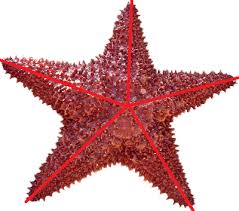

Animals with a hard, spiny, outer body covering, and radial symmetry, that live in marine environments are part of which phylum?
echinoderms
cnidarians
annelids
arthropods
Starfish have the ability to regenerate.
True
False
What does the word echinoderm mean?
Striped skin
Spiny skin
Spiky skin
Soft skin

I look like a star and live in the oceans. I am not a fish.
I am an arthropod
I am an echinoderm
I am a mollusk
I am a sponge

I am a sea cucumber
I am an arthropod
I am an echinoderm
I am a mollusk
I am a sponge
An organism is an invertebrate if it is an
animal that lacks a backbone
animal that has a backbone
Most sponges are ________________, but some live in freshwater.
marine
yellow
square
good cooks
Sponges can grow back missing parts through __________________.
a heal potion
regeneration
vapor rub
As adults sponges are _____________, meaning they remain in one place.
wrinkly
slow
sessile
Sponges get food by ________________________.
filter-feeding
hunting
going to the Crusty Crab
The outer layer of the cells in a sponge is made up of _______________cells.
covering
outer
skin
What type of symmetry do sponges (Porifera) have?
asymmetrical
radial
bilateral
medial

Do sponges have an organ system?
no
yes

I have no mouth but many pores and am asymmetric. I don't move very much but I am a marine animal.
I am an arthropod
I am a mollusk
I am a sponge
I am a cnidarian

Which of these invertebrates have asymmetric bodies?
worms
sponges
cnidarians
echinoderms
An organism that lives attached to a surface or the bottom of the ocean is __________.
motile
sessile
planktonic
hydrophilic

Sponges "eat" by moving water through the small pores and out the larger pore at the top while the "food" is transported by collar cells. This is an example of what feeding strategy?
carnivore
filter-feeding
suspension feeding
omnivore

What are these organisms?
Sea anemone
Sea star
Sea sponge
Sea urchin

What type of body symmetry do these organisms have?
asymmetry
radial
bilateral
all of the answer choices are correct

Annelida
segmented worms
flatworms
round worms
peanut worms
Flatworms
Platyhelminthes
Nematoda
Annelida
Arthropoda
Platyhelminthes
Flatworms
Round Worms
Segmented Worms
Tube Worms

This worms body is very flat. What phylum does it belong to?
Porifera
Cnidaria
Mollusca
Platyhelminthes

This sandcastle worm uses its feeding tentacles to catch food particles suspended in the water. What is the name of this feeding strategy?
detrivore
filter-feeding
suspension feeding
omnivore
What does it mean when an organism is hermaphroditic?
They produce female gametes
They produce both male and female gametes
They produce male gametes
They produce no gametes
Which of these animal phyla have complete digestive systems? (you can choose more than one)
Porifera
Annelida
Arthropoda
Mollusca

Annelida
segmented worms
flatworms
round worms
peanut worms
Flatworms
Platyhelminthes
Nematoda
Annelida
Arthropoda
Platyhelminthes
Flatworms
Round Worms
Segmented Worms
Tube Worms
This worms body is very flat. What phylum does it belong to?
Porifera
Cnidaria
Mollusca
Platyhelminthes
This sandcastle worm uses its feeding tentacles to catch food particles suspended in the water. What is the name of this feeding strategy?
detrivore
filter-feeding
suspension feeding
omnivore
What does it mean when an organism is hermaphroditic?
They produce female gametes
They produce both male and female gametes
They produce male gametes
They produce no gametes
Which of these animal phyla have complete digestive systems? (you can choose more than one)
Porifera
Annelida
Arthropoda
Mollusca

Which phylum does an octopus belong in?
Porifer
Cnidaria
Mollusca
Arthropoda

Which phylum does this anemone belong in?
Porifer
Cnidaria
Mollusca
Arthropoda

Which phylum does this crab belong to?
Porifera
Cnidaria
Platyhelminthes
Arthropoda

This person is holding a very small worm on their finger. This worms body is very flat. What phylum does it belong to?
Porifera
Cnidaria
Mollusca
Platyhelminthes

Which phylum does this sea star belong to?
Echinoderm
Arthropoda
Nematoda
Platyhelminthes
Arthropoda
Shrimp
Clam
Snail
Jellyfish
Shrimp, Crabs, Lobsters, Sea spiders, (bugs)
Arthropoda
Annelida
Anthozoa
Arthurea
Starfish (Sea stars), Sea urchins, Sea cucumbers
Echinodermata
Annelida
Arthropoda
Ikidnaea
Mollusca
Snails
Jellyfish
Lobsters
Crabs

