
 Worksheets
Unit 6&7: Genetics Exam
Total questions: 125
Worksheet time: 2hrs 57mins
The genotype for a yellow plant is...


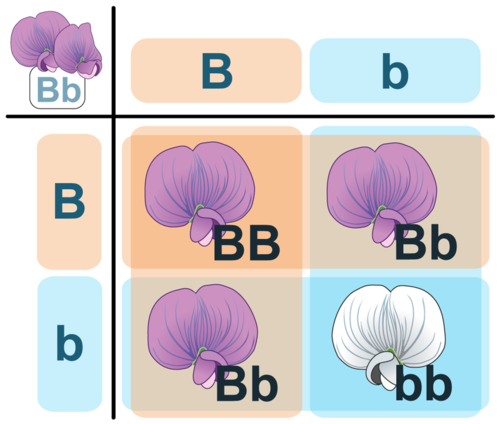
The B stands for bud.

In the punnett square, what is the probability for white fur?
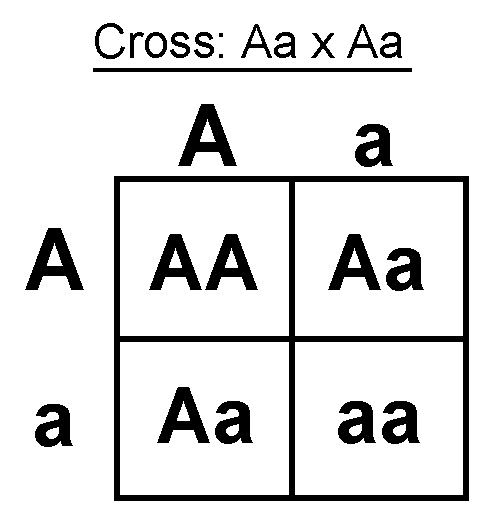
The allele for tall pea plants is dominant over the allele for short pea plants. In a cross between a homozygous tall pea plant and a short pea plant, what are the possible phenotypes of the offspring? (a)
Tay-Sachs is a recessive disorder and is written as a t. If 2 people who are heterozygous for Tay-Sachs have 4 children, how many of their offspring will most likely inherit and develop Tay-Sachs disease?
1 because only one child will be homozygous recessive
None because none of the children will be homozygous dominant
3 because three of the children will inherit a dominant allele
4 because all students will inherit one recessive allele
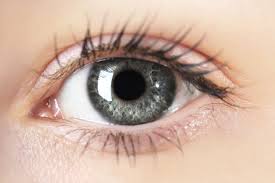
Samantha and her daughter have blue eyes but her husband has brown eyes. Samantha is currently pregnant with their second child and wants to predict the possible chance of that child also having blue eyes. If having blue eyes is a recessive trait, what is the probability of the second child being born with blue eyes?
1/1
2/5
4/3
1/2
How do the the gametes produced through meiosis compare to the original cell?
The gametes are identical to the parent cell and to each other
The gametes have double the amount of chromosomes as the parent cell
The gametes have half the number of chromosomes as the parent cell but are identical to each other
The gametes have half the number of chromosomes as the parent cell and are genetically different
What is it called when certain traits, such as hair color and eye color, are controlled by two or more genes?
Codominance
Recessive trait inheritance
Polygenic Inheritance
Monohybrid
Environmental factors can increase the cause of mutations in DNA. These factors damage cells by preventing the DNA from...
dissolving
transforming into RNA
expressing certain genes
moving into the mitochondria
How does meiosis affect genetics?
It allows offspring to receive only the good genes
It allows offspring to be identical to the parent cells
It prevents mutations from being passed down
It allows offspring to receive the correct number of chromosomes which is half from each parent
Who is most affected by a deadly trait passed down in recessive alleles?
homozygous dominant
homozygous recessive
heterozygous dominant
heterozygous recessive
A rat eats a piece of food contaminated in radiation. The radiation causes a mutation to occur in the eyes of the rat. The mutation...
will get passed down to offspring because it happened in a body cell
will not get passed down to offspring because it did not happen in a sex cell
will spread to rats in the community because it is a recessive trait
If a heterozygous parent and a homozygous recessive parent mate, what percentage of their offspring will be dominant?
25%
50%
75%
100%
In flies, red eyes (R) are dominant to brown eyes (r). A heterozygote fly is crossed with a homozygous recessive fly. What percentage of offspring will have brown eyes?
25%
50%
75%
100%
In plants, being short (t) is recessive to the tall allele (T).
A heterozygous plant is crossed with a short plant. What fraction of offspring will be homozygous recessive?
1/4
2/4
1/2
3/4
In flies, small wings (w) are recessive to large wings (W). A
homozygous dominant fly is mated with a homozygous recessive fly. What percentage of offspring will have a Ww genotype?
25%
50%
75%
100%


A blue flower is crossed with a red flower and you get a purple flower. Which pattern of inheritance is this?
Incomplete Dominance
Codominance
Multiple Alleles
Polygenic Inheritance
If both traits are fully and equally expressed, one trait is __________ to the other.
Dominant
Codominant
Incompletely Dominant
Recessive
Chickens with black feathers are crossed with chickens with white feathers. Their offspring have black and white feathers. Which pattern of inheritance is this?
Codominance
Incomplete Dominance
Multiple Alleles
Polygenic Inheritance

This is an example of ___________?
Incomplete dominance
Codominance
Multiple Alleles
Polygenic Inheritance

This is an example of ___________.
Incomplete Dominance
Codominance
Multiple Alleles
Polygenic Inheritance

Both traits expressed TOGETHER (not blended)
Codominance
Incomplete Dominance
Mendelian trait
Sex-linked

Neither allele is dominant. Heterozygote has a blended phenotype.
incomplete dominance
codominance
multiple alleles
sex linked
A male and female have a child that has three copies of chromosome 18. Although both parents are unaffected, their doctor claims that the disorder associated with having an extra chromosome 18 is the result of a chromosomal mutation in cells that carry inherited material. Which argument supports this claim?
A mutation occurred when crossing over caused chromosome 18 to be replicated twice during meiosis, allowing one parent to donate two copies of chromosome 18 to the child.
A nondisjunction mutation was caused by the improper separation of the genetic material during meiosis, allowing the gamete of one parent to donate two copies of chromosome 18 to the child.
A substitution mutation during replication allowed the genetic material of chromosome 18 to replace the genetic material of a nearby chromosome, causing the child to have three copies of chromosome 18.
An insertion mutation during replication allowed the genetic material of chromosome 18 to be inserted into the genetic material of another chromosome, causing three copies of chromosome 18 to be made.

The scientist claims that genetic variation has occurred in the process. Is the scientist correct? Why or why not?
The scientist is incorrect. The process shown in the diagram is a deletion mutation, in which one nucleotide sequence joins another, causing genetic information to be maintained.
The scientist is incorrect. The process shown in the diagram is nondisjunction, in which a mutated chromosome does not duplicate normally, causing genetic information to be maintained.
The scientist is correct. The process shown in the diagram is nondisjunction, in which chromosomes fail to separate normally, causing an incorrect amount of genetic information to be inherited.
The scientist is correct. The process shown in the diagram is a deletion mutation, in which a nucleotide sequence has been omitted, causing an incorrect amount of genetic information to be inherited.
A cell with a diploid number of twelve chromosomes undergoes meiosis. What will be the product at the end of meiosis?
two cells each with twelve chromosomes
four cells each with six chromosomes
two cells each with six chromosomes
four cells each with twelve chromosomes
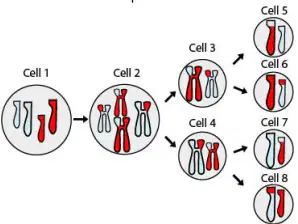
Use the model to describe how genetic continuity is preserved through meiosis.
Cell 7 shows different colored chromosomes than Cell 8. When meiosis is a part of reproduction, none of the offspring will have similar DNA.
Cell 2 shows twice as many chromosomes as Cell 3. When meiosis is a part of reproduction, the offspring inherits twice as much DNA as its parent.
Cell 6 shows different colored chromatids than Cell 1. When meiosis is a part of reproduction, the offspring's DNA will be entirely different from the parent's DNA.
Cell 5 shows half the number of chromatids present in Cell 1. When meiosis is a part of reproduction, half of the offspring's DNA will come from each parent.
Which statement correctly describes the end products of meiosis?
The end products of meiosis are four gametes, each of which has the same number of chromosomes as the parent cell.
The end products of meiosis are four gametes, each of which has half the number of chromosomes as the parent cell.
The end products of meiosis are two gametes, each of which has half the number of chromosomes as the parent cell.
The end products of meiosis are two gametes, each of which has the same number of chromosomes as the parent cell.
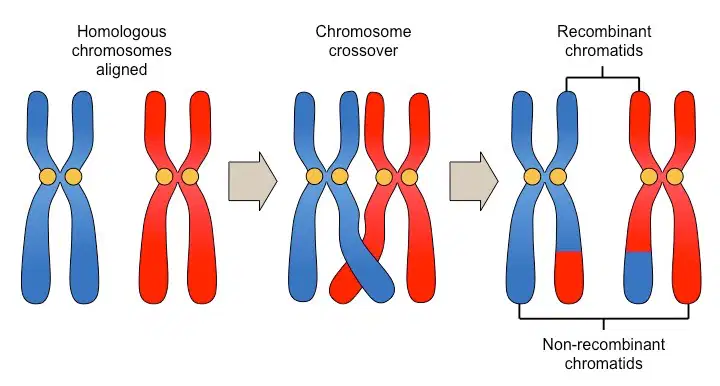
Which claim about crossing over in chromosomes is best supported by the diagram?
Crossing over increases genetic diversity through deletion.
Crossing over decreases genetic diversity through mutation.
Crossing over increases genetic diversity by creating new combinations of genes.
Crossing over decreases genetic diversity by inserting nucleotides into gene sequences.

The chromosomal mutation shown in the image is a (a)

The chromosomal mutation shown in the image is a (a)

The chromosomal mutation shown in the image is a (a)

The chromosomal mutation shown in the image is a (a)
Which of the following displays the levels of organization INCORRECTLY from smallest to largest?
Atom, Molecule, Organelle, Cell
Organelle, Cell, Tissue, Organ
Community, Ecosystem, Biome, Biosphere
Organ System, Organ, Organism, Population
Match the following functions to the biomolecule
Act as hormones
Lipid
Build muscle
Protein
Carry genetic information
Nucleic acid
Energy source (cellular respiration)
Carbohydrate
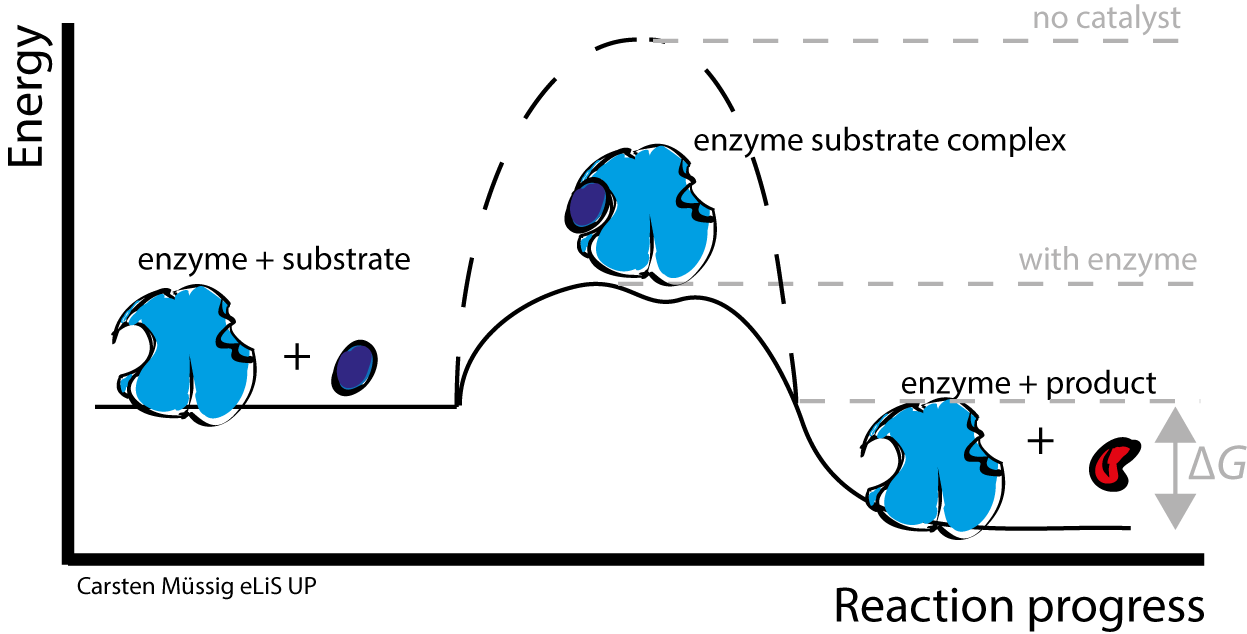
Label the parts of the enzyme model
Click on the temperature that this enzyme is having optimum activity.
Match the following Macromolecules to its structure

Carbohydrate

Lipid

Nucleic Acids

Protein
As a result of diffusion, the concentration of substances...
will eventually become balanced on both sides of a membrane
become imbalanced on both sides of a membrane
always remain greater inside the membrane
always remain greater outside the membrane
Which of the following is a difference between prokaryotic and eukaryotic cells?
Prokaryotes lack cytoplasm
Prokaryotes do not undergo cell division
Prokaryotes do not produce proteins
Prokaryotes do not have membrane-bound organelles

Which process is being used by the cell to move the molecules through the membrane?
osmosis
facilitated diffusion
active transport
endocytosis
In passive transport, materials move from an area of _____________ concentration to an area of ___________ concentration through a cell membrane.
higher, lower
lower, higher
negative, positive
positive, negative


The process by which cells use oxygen to produce energy from glucose is called?
photosynthesis
transpiration
cellular respiration
germination
Which of the following organisms use cellular respiration to make ATP.
Plants only
Animals only
Plant and animals
Glucose
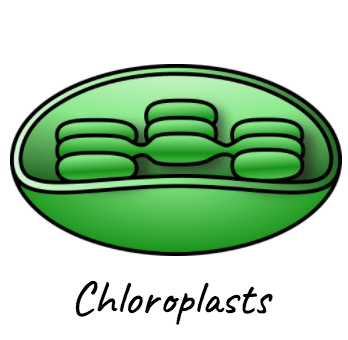
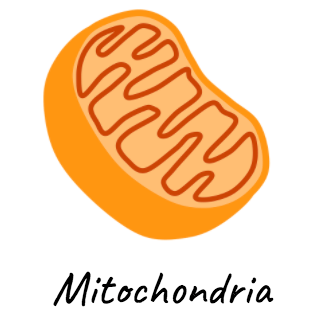
Mitochondria are (a) .
Match the NAME of the chemical to its chemical formula
O2
Oxygen
CO2
Carbon Dioxide
H2O
Water
C6H12O6
Glucose

Process X represents (a) which occurs in the (b) . Process Y represents (c) which occurs in the (d) . Do both plant and animals cells complete cellular respiration? (e)
Match the following:
active transport
requires ATP
passive transport
does not require ATP
diffusion
molecules move from high to low
endocytosis
molecules move from low to high
Organize the levels into the least complex to the most complex:
organelle
cell
tissue
organ
organ system
Match the following
Nucleus
Contains DNA
Mitochondria
Does cellular Respiration; energy
Cell Membrane
Controls what enters and leaves cell
Ribosomes
Synthesize (build) proteins
Chloroplast
Carries out photosynthesis
Which set of notecards most accurately compares Eukaryotic and Prokaryotic cells?
Label the images below
Active Transport
Simple Diffusion
Reorder the following
Organ System
Organism
Population
Community
Ecosystem
Product of Photosynthesis
Glucose(sugar)
+
Oxygen (stomata)

Photosynthesis
Product of Respiration
Carbon Dioxide
+
Water
+
ATP

Respiration
Xylem = (a)
Phloem = (b)
Self Pollination = pollen is transferred from the (a) to the (b) of the (c) flower
bacteria
ribosomes
cytoplasm
cell membrane
genetic material
NO nucleus
Nuclear membrane
Have Nucleus
Have membrane bound organelles
Match the biomolecule to its function.
Carbohydrate
Quick Energy
Protein
Builds Structures
Lipid
Stored Energy
Nucleic Acid
Genetic Information
Fill in the table for the cellular processes listed.
Match the plant organ to its function.
Photosynthesis
Leaf
Transport of water and nutrients
Stem
Absorption of water
Root
Reproduction
Flower
Match the plant response to its description.
Turning or bending of a plant in response to contact with an object
Thigmotropism
Growth of a plant toward a light source
Phototropism
Growth of a plant toward water
Hydrotropism
Plant stems grow upward, against gravity, and roots grow toward the gravitational pull
Gravitotropism

Proteins and carbohydrates have many functions in the body of an organism. Specific proteins and carbohydrates perform specific tasks. Information about a protein and a carbohydrate is given below.
How are ferritin and glycogen similar in their primary functions for an organism?
Both store materials needed by the organism.
Both store energy used by the organism.
Both support the structure of the organism.
Both store information for the organism.
Photosynthesis and cellular respiration both involve the use and release of gases. Which statement correctly identifies the role of gases in the two processes?
Photosynthesis and cellular respiration both use carbon dioxide and release oxygen.
Photosynthesis and cellular respiration both use oxygen and release carbon dioxide.
Cellular respiration uses oxygen and releases carbon dioxide, while photosynthesis uses carbon dioxide and releases oxygen.
Cellular respiration uses carbon dioxide and releases oxygen, while photosynthesis uses oxygen and releases carbon dioxide.

A model of two structures that perform cellular processes is shown.
What are the products of the cellular processes in these organelles?
I: glucose and carbon dioxide
II: oxygen and water
I: carbon dioxide and oxygen
II: glucose and water
I: oxygen and glucose
II: water and carbon dioxide
I: carbon dioxide and water
II: glucose and oxygen
The relationship between two cellular processes is shown in the diagram.
What is the relationship between the site of photosynthesis and the site of cellular respiration?
Move the answers to the correct boxes. Each box may require ONE or TWO answers.

Some foods that are rich in complex carbohydrates can be difficult to digest. Gas often forms as the foods are slowly digested by bacteria in the large intestine. The advertisement is for a nutritional supplement that prevents intestinal gas.
Which of the following represents evidence that could be used to support the claims about this product?
Complex carbohydrates are found in vegetables and grains, which are good sources of fiber, vitamins, antioxidants, and minerals. Vegetables and grains are known to reduce the risk of heart disease.
Some nutritional supplements provide vitamins and minerals that are missing from a person's diet. These types of nutritional supplements contain important nutrients that reduce the risk of malnutrition.
Consuming enzymes specific for carbohydrate digestion helps the body digest complex carbohydrates more quickly in the stomach and small intestine.
Some nutritional supplements add beneficial bacteria to a person's diet. These bacteria populate the stomach and prevent carbohydrate digestion.
Fruits grown in hot climates are usually less sweet than those grown in cooler temperatures. The high temperatures increase the rate of respiration in the plant, thus reducing the sugar content in some fruits.
Chloroplasts move from the fruits to the leaves and stems to provide energy for respiration.
The flow of nutrients shifts from the phloem to the xylem, moving nutrients away from the fruits.
Sugars are moved from the fruits to the roots for storage.
Sugars produced in the leaves are used as an energy source instead of being stored in fruits.
Cytokinins are a class of plant hormones that help regulate growth by promoting cell division. Cytokinins are produced mainly in meristematic tissue, where most plant growth occurs. Which system carries cytokinins produced in the roots to the rest of the plant?
Vascular system
Dermal system
Reproductive system
None of these

A flower that has both male and female reproductive structures is shown.
Which statement best describes an interaction that will allow a flowering plant to reproduce by self-pollination?
An anther is transferred from a filament to another filament within the same flower.
An ovule is transferred from the ovary to a petal on a different flower.
A pollen grain is transferred from an anther to the stigma of the same flower.
An ovary is transferred from a flower on one plant to a flower on a different plant.
Which plant structures are DIRECTLY involved in the production and transport of glucose?
Select TWO correct answers.
Label the table.
Label the plasma membrane
Label the plasma membrane
Which cells are Prokaryotic?

Nerve cells need a specific balance of potassium ions (K+) in order to function. Two membrane proteins are involved in maintaining this balance. The proteins and the directions that they move potassium ions are shown in the image.
Which statement correctly describes the actions of the two membrane proteins?
Protein 1: Active Transport
Protein 2: Passive Transport
Protein 1: Passive Transport
Protein 2: Active Transport
Both Proteins use Active Transport
Both Proteins use Passive Transport

