
 Worksheets
Water Cycle, Pollution, & Quality
Total questions: 85
Worksheet time: 1hrs 25mins


Which of the following are types of freshwater that can be used by people?
Select all that are true.
groundwater
ice caps and glaciers
oceans
rivers
lakes
Why does groundwater usually require less treatment than surface water?
The layers of Earth protect groundwater from pollutants.
As groundwater sinks into the ground, the layers of rock act like a natural filter and remove pollutants from the water.
Surface water has more exposure to pollutants in runoff and the atmosphere.
all of the above

The image shows various stages in the water cycle. During which stage does water flow back towards the sea as runoff?
W
X
Y
Z
Rain and snow are two different forms of precipitation that fall on Earth's surface. Which factor is responsible for there being different forms of precipitation?
Evaporation
Run-off
Temperature
Transpiration
Plants using water, carbon dioxide, and energy to make food.
evaporation
photosynthesis
water cycle
transpiration
Can be traced back to the point of origin.
Point Source Pollution
Non-point source pollution
Cannot easily be traced to the source of the pollution.
Point Source Pollution
Non-point source pollution

Pollution that comes from a single source
Point
Non-Point

Pollution that comes from MANY different places and is hard to identify its source.
Point
Non-Point

A ship carrying gasoline runs into shore and spills large amount of gasoline.
Point
Non-Point

Containers at a food processing plant leaking fat and animal juices
Point
Non-Point

Disposing of paint and other household hazardous materials down the drain
Point
Non-Point

Acid Rain
Point
Non-Point

Power plants cool hot water pipes in a local river
Point
Non-Point
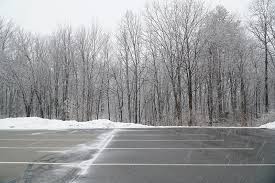
Snow melts in parking lots and carries oils into nearby waterways
Point
Non-Point
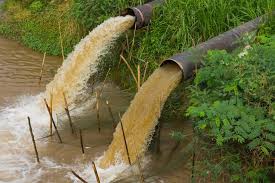
Chemicals released from an Industrial Plant directly into a river
Point
Non-Point

Washing your car in your driveway
Point
Non-Point

Cattle ranches allow livestock to feed along streams
Point
Non-Point

Construction sites sediments wash away into a stream.
Point
Non-Point

Litter on city streets washes away during a storm
Point
Non-Point
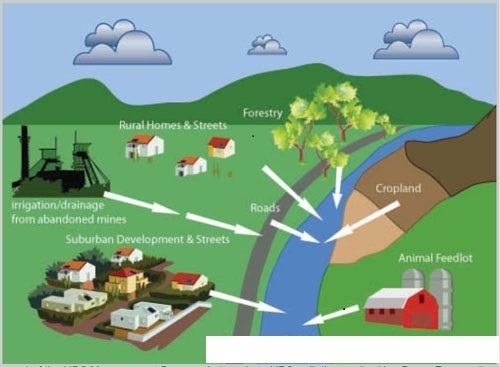
______________________ is water pollution/waste that comes from many different sources.
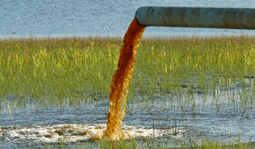
______________________ is water waste/pollution discharge from a single source.
What can happen to fish when there is not enough oxygen in the water?
They can suffocate
They can't float
They can't see.
Nothing. Fish don't need oxygen.
Accumulation of pollutants at successive levels of the food chain.
water pollution
thermal pollution
biomagnification
artificial eutrophication
What is the main characteristic of wetlands?
Arid conditions
Excessive precipitation
High temperatures
Saturated or flooded soil
What poses a threat to wetlands?
Conservation efforts
Urbanization and development
Protected status
Natural climate change
How can humans help conserve wetlands?
Encourage draining wetlands for agricultural purposes
Dispose of waste in wetland areas
Support wetland restoration and protection efforts
Promote overfishing in wetland regions
Which mammal is commonly associated with wetlands?
Giraffe
Beaver
Elephant
Koala
Why are wetlands important for migratory birds?
They provide a stable climate
They offer abundant food sources
They are free from predators
They have tall trees for nesting
How do wetlands support biodiversity?
By reducing habitat variety
By isolating species
By providing diverse habitats
By supporting monoculture
How do wetlands help control floods?
By releasing excess water
By generating strong winds
By increasing precipitation
By absorbing excess water
What is one recreational activity that wetlands support?
Limiting outdoor activities
Enhancing biodiversity
Providing spaces for boating and bird watching
Discouraging tourism
What type of plant is commonly found in wetlands?
Cactus
Sunflower
Water lily
Pine tree
What is a wetland ecosystem service?
Soil erosion
Air pollution
Water purification
Desertification
How do wetlands contribute to water purification?
They release pollutants
They filter and purify water
They promote pollution
They absorb toxins
How do wetlands help in climate change mitigation?
By releasing greenhouse gases
By promoting deforestation
By sequestering carbon
By reducing precipitation
Why are wetlands significant for fish populations?
They hinder fish migration
They provide breeding grounds and nurseries
They decrease water quality
They have no impact on fish habitats
Which of the following is a type of wetland?
Desert
Grassland
Marsh
Mountain
Which animal is likely to be found in a wetland habitat?
Polar bear
Camel
Alligator
Kangaroo
How have estuaries been affected by humans?
dredged to make harbors
filled in for development
polluted by industrial parks
all answers are correct
These estuaries have been formed by higher sea levels that resulted from the melting of ice at the end of the last ice age:
tectonic
coastal plain (drowned river valley)
saline
brackish
Glaciers that have cut through granite rock form these type of estuaries:
bar built
fjords
salt marshes
mangroves
Passive margins are characterized by
little tectonic activity
gently sloping coastlines
broad estuaries
all answers are correct
What type of tide has two high tides and two low tides but the highs and lows differ in height?
diurnal tide
semidiurnal tide
mixed semidiurnal tide
What type of tide produces four shifts in salinity in an estuary in a 24 hour cycle?
diurnal tide
semidiurnal tide
mixed semidiurnal tide
both semidiurnal and mixed semidiurnal
A salt wedge forms in an estuary because
fresh water is more dense than seawater and sinks down
fresh water is less dense than seawater and sinks down
fresh water is more dense than seawater and floats on top
fresh water is less dense than seawater and floats on top
The Coriolis effect causes fresh water flowing out of the estuaries in the Northern Hemisphere to:
flow out towards the right and allows marine animals to invade farther up the right side
flow out towards the right and allows marine animals to invade farther up the left side
flow out toward the left and allows marine animals to invade farther up the left side
flow out toward the left and allows marine animals to invade farther up the right side
Anadromous fish spend their lives in ________________ and then breed in ___________________.
ocean / fresh water
fresh water / ocean
ocean / estuary
estuary / fresh water
Euryhaline species are able to handle salinity levels
that vary widely
that vary narrowly
that remain at an intermediate
that are very high
The hydrologic compartment that contains the greatest amount of fresh water is
Groundwater
The Great Lakes
Ice and snow
Clouds in the atmosphere
In the twentieth century, half of the new dams that were built are in
China
Pakistan
Russia
The United States
One of the major reasons for the removal of dams in the United States is
To satisfy conservation groups
Danger of earthquakes beneath the reservoir
To restore fish populations
To make the region look more natural
Subsidence and sinkholes
Can, with difficulty, be reversed and the ground surface raised again
Are probably a permanent loss of an aquifer
Are a consequence of saltwater intrusion
Leave gaps in the bedrock that then fill up with salt water
Removal of excessive amounts of groundwater in coastal areas may result in
permeability damage
saltwater intrusion
subsidence
aquifer recharge
Which of the following is not an impact of dams?
Greater flooding below the dam
Impeded breeding in anadromous fishes
Reduced sediment flow downstream
Lowered dissolved oxygen in the water downstream
Sinkholes result from
saltwater intrusion
raising the water table
increased evaporation of groundwater
excessive removal of groundwater
The Ogallala Aquifer
has a fast recharge rate
is being used eight time faster than it is being recharged
will be completely depleted by 2025 if current withdrawal rates continue
is a minor aquifer in North America
The United States' Ogallala Aquifer supplies water to ___________ and once held more water than the surface water __________
California's Central Valley; of the world
the Rocky Mountain states; of the United States
the Central Plains states; of the world
most of New England; of the United States
Causes of the Aral Sea disaster include
I. Overdrawing for agriculture
II. Overdrawing for domestic use
III. Evaporation
I only
I and II only
I and III only
I, II, and III

Potable water is water that is ______________.
polluted
safe to drink
biological
The pH of healthy water is _______________.
0-5
6.5-8.5
9-14
Sewage is a source of which pollutant?
nitrates
phosphates
algae
Cleaning and industrial waste are sources of which pollutant?
nitrates
phosphates
salinity
High concentrations of salinity can cause vegetation to become unhealthy or die and can lead to a/an ___________ in biodiversity
decrease
increase
_______________ water quality is indicated by a few number of bio-indicator organisms in one place
Poor
Good
In 1972, the _______________ established the regulations on putting pollutants into the water
Environmental Protection Agency (EPA)
Clean Water Act
The health of a water system is determined by the balance between what variables (choose all that apply)?
physical
physiological
biological
chemical
Temperature, turbidity, and water movement are the _____________ factors used to determine water quality.
physical
chemical
biological
Dissolved oxygen, pH, nitrates, and salinity are _____________ factors used to determine water quality.
physical
chemical
biological
Fish, algae, insects, and plants are _________________ factors used to determine water quality.
physical
chemical
biological

