
 Worksheets
G5_Human_System_1
Total questions: 100
Worksheet time: 56mins
The main purpose of the respiratory system is to helps us breathe.
True
False
The respiratory system brings in _______from the air.
carbon dioxide 二氧化碳
fresh air新鲜空气
oxygen氧气
The respiratory system removes_______from our body.
carbon dioxide二氧化碳
oxygen 氧气
fresh air 新鲜空气
The_______protects your lungs.
bone
rib cage
heart
Inhale means to__________
breathe in
breathe out
Exhale means to _________
breathe in
breathe out
The left lung is a little bit smaller than the right lung, because_______________________________.
The right lung is more important.
The left lung has other jobs.
The left lung needs to make space for the heart.

What's the other name for trachea?
pipe
windpipe
foodpipe
trachea
气管
食管
管道
diaphragm
膈肌
肚子
肺
larynx
膈肌
喉口
气管
bronchi
膈肌
喉口
支气管
lung
气管
膈肌
肺
bloodstream
人体血液
呼吸系统
血管
two organs inside your chest which fill with air when you breathe in.
trachea
lung
nose
the layer of muscle between the lungs and the stomach, used to control breathing.
trachea
lung
diaphram
the two air passages of the lungs which diverge from the windpipe.
trachea
bronchi
diaphram
a tube by which air passes to and from the lungs.
trachea
bronchi
diaphram
Respiration is the ________ between the body and the outside world.
breathing in O2
breathing out CO2
gas exchange

What is the name for this system?
Skeletal system
Digestive system
Respiratory system
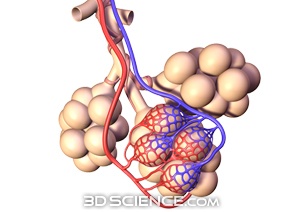
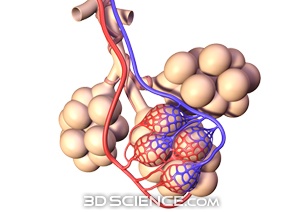

Flap of tissue that covers the opening to the windpipe during swallowing
Pharynx
Trachea
Epiglottis
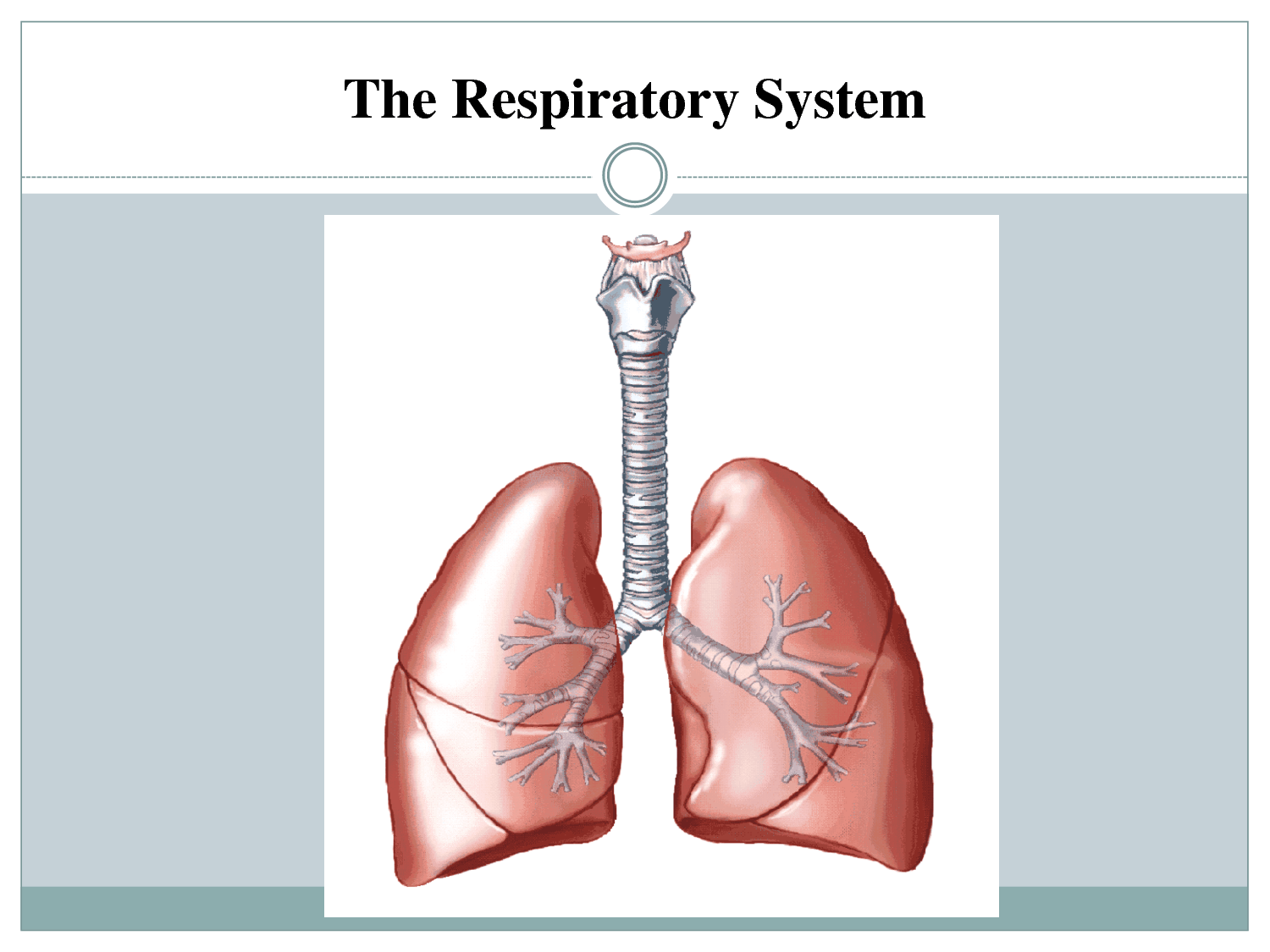
1. larynx
2. nasal cavity
3. pharynx
4. trachea
Which of the following is the correct order that air would flow during inhalation.
The drawing in of breath; inhalation.
Inspiration
Expiration
Breathing out; exhalation of breath.
Inspiration
Expiration
What is the site of gas exchange?
alveoli
nose
lung
bronchi
The process of exchanging oxygen and carbon dioxide in the lungs.
inspiration
expiration
internal respiration
external respiration
The only externally visible part of the respiratory system
Eyes
Nose
Pharynx
Larynx
The division of the trachea forms
nose
main bronchi
lungs
alveoli
Which part of the Respiratory System plays a major role in speech?
nose
pharynx
larynx
trachea
the windpipe; a passage through which air moves in the respiratory system.
trachea
lungs
larynx
bronchi
What does the respiratory system release?
oxygen
glucose
carbon dioxide
ATP
A small flap of tissue that covers the trachea is called the
bronchi
larynx
pharynx
epiglottis
When you exhale, the diaphragm
moves upwards
moves downwards
flattens
none of the above
Which is known as the voice box?
pharynx
larynx
trachea
bronchi
The normal oxygen content of inhaled air is approximately
0.04%
21%
79%
100%

This part of the neuron receives chemical messages from the neurotransmitters of other neurons. It is labeled A in the diagram.
Dendrite
Axon
Axon Terminal
Cell Body
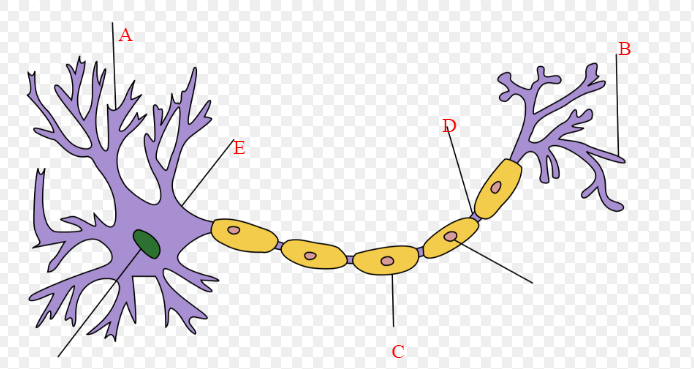
Which part sends nerve impulse to the next cell?
Dendrite
Axon
Axon Terminal
Cell Body

The long, fiber like part of a neuron which the cell sends information to receiving neurons. Labelled D in diagram.
Synapse
Axon
Axon Terminal
Dendrite

What is this? It coordinates muscle movements.
Cerebrum
Cerebellum
Brain Stem
Diencephalon
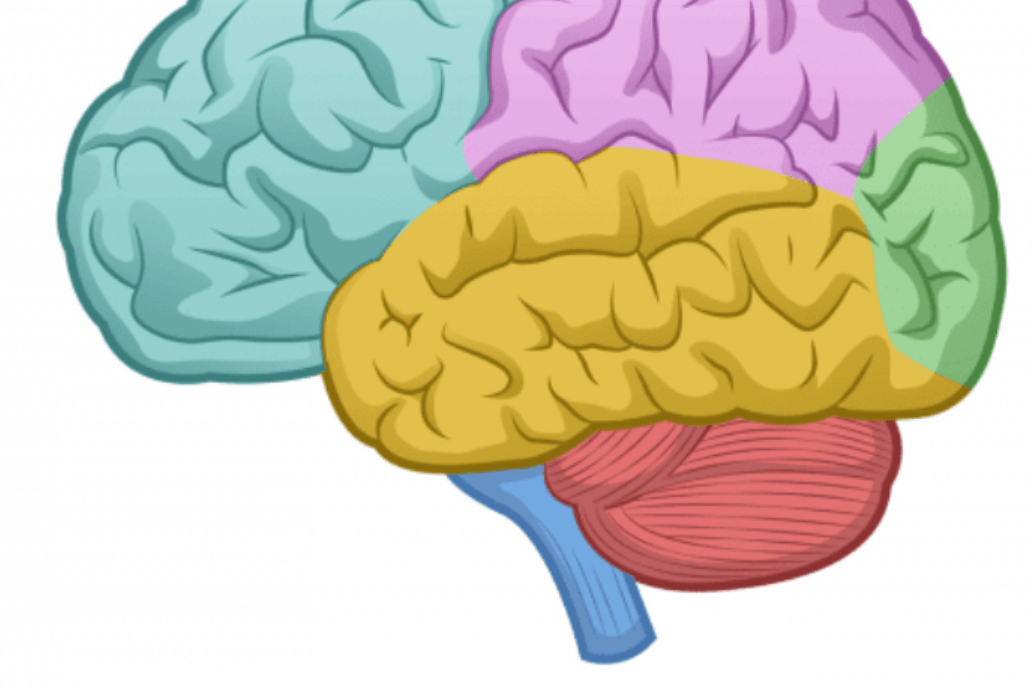
What structure is bright blue and located at bottom of the brain and controls the information sent between brain and rest of the body?
Cerebrum
Cerebellum
Brain Stem
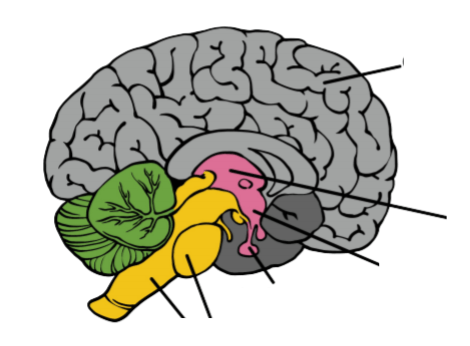
What structure is grey in this picture. It controls conscious thought and memory?
Cerebrum
Cerebellum
Brain Stem

Which part of the brain controls your blood pressure and heart rate?
brain stem
cerebrum
cerebellum
adrenal gland
What is the gap between two neurons called?
Impulse
Synapse
CNS
Inter neuron
Which statement best describes a reflex arc?
Slow response that you have to think about
Rapid response to protect body from harm

Where would the nerve impulse start in this reflex arc?
A
C
D
E

_____ neurons carry messages away from the central nervous system and out to muscles or glands. The RED neuron in diagram.
sensory
motor
inter
central
Which way does an impulse travel
From dendrite to axon and out axon terminal
From axon to axon and out dendrite terminal
From axon to dendrite and out axon terminal
From cell body to dendrite and out axon terminal

How is a message delivered from the "sending" neuron to the "receiving" axon?
sympathetic nerves
hormones
medulla oblongata
neurotransmitters
__________ carry messages between sensory neurons and motor neurons.
Active Neurons
Interneurons
Refraction Neurons
Flower Neurons
These type of cells are responsible for transmitting electrical signals from nervous system to various parts of the body.
Neuron
Nerve
Villi
Somatic
What structure is yellow in this picture. It controls movement of information from brain to rest of body.
Cerebrum
Cerebellum
Brain Stem
What are the three parts of the nervous system?
brain, spinal cord, neurons
brain, lungs, spinal cord
heart, brain, nerves
brain, nerves, neurons
What is the function of the nervous system?
sensory inputs, process information, motor output
to protect the body from harm.
Sensory input and motor output
Make decisions and process information

Identify the stimulus
Thirsty
drinking water
blinking
eating

Identify the response
hunger
thirst
drinking water
smelling
What part of your body carries signals from your brain to your muscles (you can choose more than one)
Motor neurons
Spinal cord
Sensory neurons
Blood vessels
How many sense do humans have?
4
5
6
more than 6
What kind of neuron carries information from our eyes to our brain?
Motor neuron
Sensory neuron
Nerve
Spinal neuron
Which has more potential energy helicopter hovering high in the air or a helicopter falling quickly
Hovering helicopter
Fast falling helicopter

What type of energy does a soccer ball rolling on the ground have?
Kinetic Energy
Potential Energy
Just plain energy
No Energy

What type of energy does a person standing at the top of a ladder have?
Kinetic Energy
Gravitational Potential
Elastic Potential
Chemical Potential
No Energy
Conservation of energy means that
energy can be created but not destroyed
energy can be destroyed but not created
energy can be both created and destroyed
energy can be neither created nor destroyed
Kinetic energy can be described as
energy in motion
stored energy
a chemical reaction
connected energy
As a boulder rolls from the top of a hill to the bottom, how does its potential and kinetic energy change?
Potential and kinetic energy both increase.
Potential energy increases and kinetic energy decreases.
Potential energy decreases and kinetic energy increases.
Potential and kinetic energy both increase.
What is it called when one type of energy changes to another type of energy?
Energy transfer
a Joule
energy transformation
total energy
What is it called when one type of energy moves from one object to another ?
Energy transfer
a Joule
energy transformation
total energy
Potential energy can be described as
energy in motion
stored energy
a chemical reaction
connected energy
The food that provides us with the necessary substances is known as ____________
Protein food
Carbohydrate food
Liver
Large intestine
Nutritious food
Carbohydrates , fats and proteins are called ___________
Ingestion
Macronutrients
Micronutrients
Egestion
The food we eat passes through the
Food Canal
Alimentary Canal
Digestive Glands
None of them
The food is taken through the mouth . This is called ____________
Egestion
Digestion
Ingestion
Assimilation
The Gastric Glands secrete Gastric Juice .
True
False
_____________ is a long coiled tube of about 7 metres .
Large Intestine
Small Intestine
Liver
Stomach
Bile is stored in the (a)
( All in CAPITAL or small only and plz leave space if it is two words )

Which ' Process ' is this ?
Digestion
Respiration
Circulation
Assimilation
The digestive and respiratory systems pair together to ...
bring carbon dioxide and wastes to cells for diffusion.
bring oxygen and wastes to cells for diffusion.
bring oxygen and nutrients to cells for cellular respiration.
bring carbon dioxide and nutrients to cells for cellular respiration.
The digestive and respiratory rely on the ___ systems to transport needed materials to the cells.
circlatory and excretory
circulatory and muscular
nervous and digestive
nervous and skeletal

