
Font size
 Worksheets
F5C5 Bio
Total questions: 108
Worksheet time: 1hrs 4mins
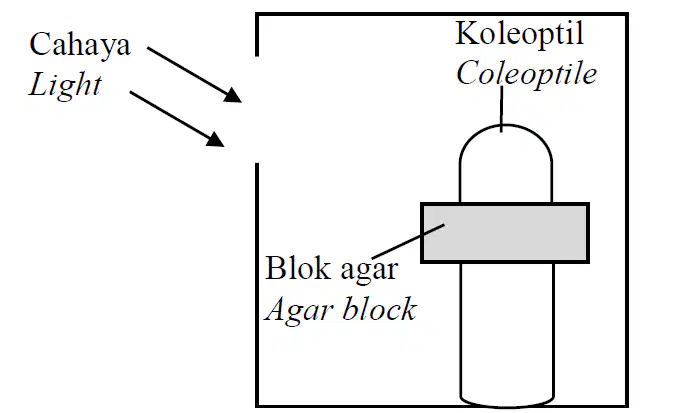
Diagram shows a coleoptile tip is cut and placed on agar block.
Then, it is placed inside a box with a hole and exposed to the light source.
What is the observation of this experiment after a week?


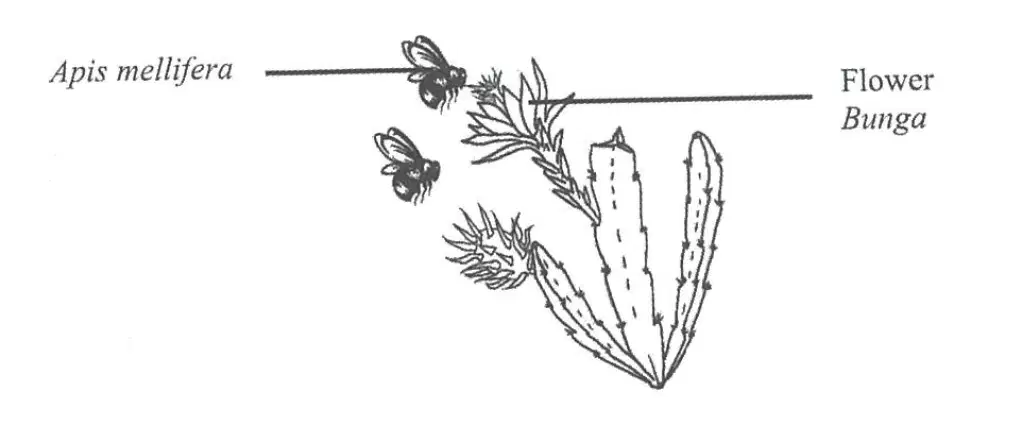
Diagram shows Apis mellifera bees on a flower of dragon fruit plant. Due to a forest fire event, the population of bee vanished from dragon fruit farm. Which of the following is the most suitable method to ensure the continuity if fruit production?
Rebreed the bees
Spray auxin on the stigma
Spray cytokinin on the flower bud
Replant the cuttings of succulent-like branches
A farmer wants to stimulate the growth of adventitious roots from a stem cutting. Which hormone should he apply to the part of the stem where the stem is cut?
Auxin
Ethylene
Cytokinin
Gibberellin
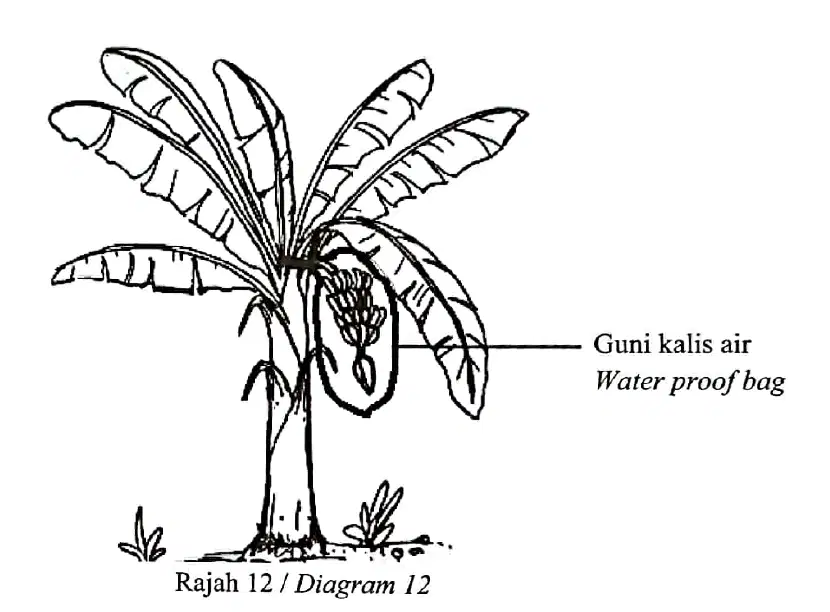
Diagram shows a method to speed up the ripening of fruit.
Phytohormone X is trapped in the water proof bag.
What is X?
Auxin
Ethylene
Cytokinin
Gibberellin
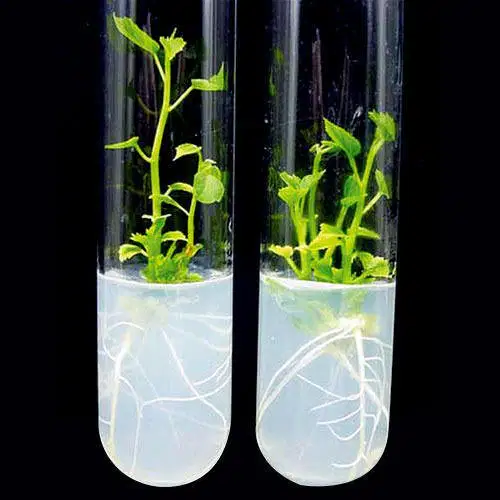
Which of the following phytohormones commonly used in tissue culture technique?
Auxin
Ethylene
Cytokinin
Gibberellin
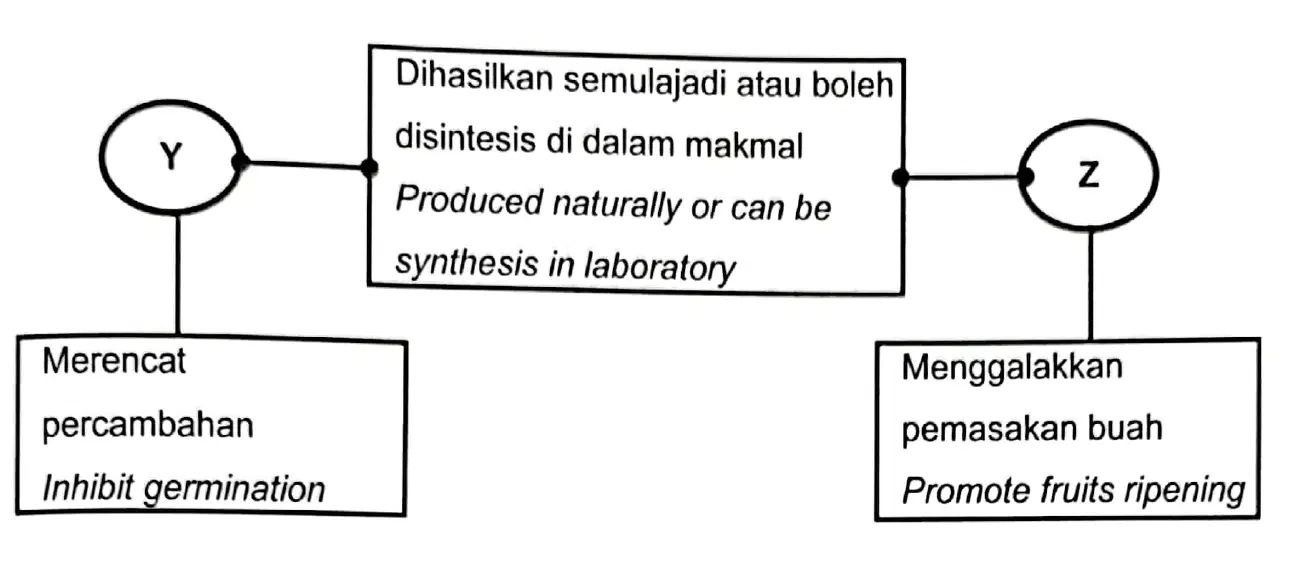
Y and Z are phytohormone.
What is Y?
Auxin
Ethylene
Cytokinin
Abscisic acid

Diagram shows a type of responses that takes place in a plant. Which of the following stimulus cause the plant to response?
Due to circadian rhythm when the surrounding becomes dark (Nycatinasty)
Due to sudden mechanical stimulus (Seismonasty)
Due to stimulus that cause vibration (Thigmonasty)
Thigmotropism
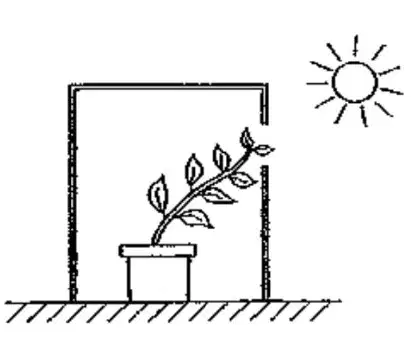
Diagram shows shoot of a plant grow towards light.
What is the cause of the reaction?
The shoot needs light for photosynthesis
The shoot needs to grow longer to avoid competition for light
Cells shaded from the light elongate faster
The concentration of auxin is higher in cells exposed to light

The roots and stem of this plant are demonstrating?
How temperature affects plants.
How gravity affects plants.
How air affects plants.
How leaves affect plants.
What are the three stimuli’s plants respond to?
Sun, flowers, pumpkins
Light, Gravity, Grass
Light, Gravity, Stimuli
Light Gravity, Temperature
Plants tend to grow towards where the ________ is.
Dark
Cold
Light
Heat
The roots of a plant grow down because of what stimuli?
Gravity
Light
Temperature
All of the above
How do stems respond to light?
It grows away from the light
It grows towards the trees
It grows towards the roots
It grows towards the light
In photosynthesis, plants use
water, carbon dioxide, and ______ to release oxygen into the air.
Roots
Temperature
Light
Gravity
Sunlight + Water + Air = Food
What is this process called?
Response to Stimuli
Stimuli
Photosynthesis
Temperature

What is stimuli?
changes in an organism’s environment that cause a response.
plant’s response to the number of hours of darkness in its environment.
substances that act as chemical messengers within plants.
growth toward a stimulus.

What is an example of a stimulus for plants?
Touch
Light
Gravity
Water
all of the above

what type of tropism is occurring here?
Phototropism
Thigmotropism
Gravitropism
Hydrotropism

Mimosa sp. responds to touch by folding its leaves inwards when touched. The responds occurs rapidly.
Thigmotropism
Phototropism
Geotropism
Nastic movement
Changes in an organism's environment that cause a response
Tropism
Stimuli
Hormone
Response

When the plant grows toward the light.
Negative hydrotropism
Positive geotropism
Negative phototropism
Positive phototropism

What type of tropism response to water?
(a)

A vine plant brushes against a fence and wraps itself around the fence. What type of tropism is occurring here?
(a)

Plant’s roots grow down, anchoring it into the soil. To what stimulus is the plant responding?
(a)
Which movement is due to growth of plant?
Nastic movements
Tropic movement
Both
None
Marlo planned to give Katrina sunflowers so he planted one hundred (100) flowering plants of sunflower, he noticed that every day the young sunflower changes its flower direction from east to west. What type of plant movement is this?
Nastic movements
tropic movement
Both
None
What type movement is shown by the closing of "Ngirum-kirum" (Mimosa pudica) leaves when touched?
A. Photonastic
B. Thigmotropism
C. Thigmonastic
D. thermotropism
Photonastic Movement
Thigmotropism
Thigmonastic
Thermotropism
Auxin is added to fertilizers used in agriculture; what effect does auxin have on plants stem?
Inhibits elongation
Inhibits cell division
Promotes cell division
Promotes elongation
Marvil is a Florist who uses metal scaffolds for the plants to cling making it a nice ornamental plant. Which of the following tropism is exhibited by the plant?
Phototropism
Thigmotropism
Gravitropism
Hydrotropism
The movement of a plant part, usually flower petals, in response to light is called
photonasty
thigmonasty
Dandelion and moonflower are examples of
photonasty
thigmonasty
The movement of a plant part in response to the touch of an object is called
photonasty
thigmonasty
The sensitive plant mimosa pudica which is also known as touch-me-not is an example of
photonasty
thigmonasty
The stimulus for thigmonasty is
touch
light
When the direction of response in a plant is not determined by the direction of stimulus, it is called (a) movement.
(a) hormone promotes cells division in plants and breaks dormancy in seeds and buds.
(a) hormone inhibits the growth of a plant.
The winding movement of a climbing plant is called
thigmotropism
hydrotropism
geotropism
chemotropism
There are two types of response in Plants. Tropism and ...
(a)
Tropisms is. . .
a directional response of plants to stimuli
Moment of plant towards light
Response of roots with water
Response to gravity
Part of plants which grows towards stimulus is known as
Response in plant
Nastic movement
Negative tropisms
Positive tropisms
Part of plants that give response towards light
(a)
Which part of plant give response in phototropism
(a)
Name of tropisms that roots give negative tropisms
(a)
Roots give response in
Phototropism
Geotropism
Hydrotropism
Nastic movement
Thigmotropisms is the response towards
(a)
Parts in plants that gives positive thigmotropisms
Leaves
Tendrils
Twining stems
Sensory organs
Between thigmotropisms and nastic movement, which give rapid response towards stimuli
Thigmotropisms
Nastic movement
A type of plant will grow tendrils and wind round a support. Name this type of reaction.
Tropism.
Nastic response.
Reflex action.
Taxis response.
What is the role of auxin that causes a plant to bend towards light?
The concentration of auxin in the plant increases when there is light.
Auxin causes uniform growth on every stem.
Auxin causes cells that are on the dark side to grow faster.
Auxin causes the increase in the number of plant cells.

What is the reaction that is shown by the plant in the figure above?
Positive hydrotropism.
Negative phototropism.
Positive thigmotropism.
Negative geotropism.
Chemical substance that stimulate and coordinate responses in plants, at low concentrations
Phytohormones
Tropism response
Auxin influences ___________ growth
The root
The fruit
The stem
The shoot
Roots grow __________ following the pull of gravity and exhibiting ____________________.
downwards, positive geotropism
upwards , negative geotropism
Hormones that used to inhibits germination and growth
Abscicic acid
Auxin
Stimulates cell division
abscisic acid
auxin
cytokinins
gibberellin
ethylene
Phototropism is
The plant response to water
The plant response to light
The plant response to gravity
The plant response to soil
My plant is losing a lot of water because it is hot today. Which hormone should I give it so that it will stop losing water?
Auxins
Cytokinins
Ethylene
Abscisic acid
Gibberellins
Kaedah menghasilkan buah tanpa biji dikenali sebagai..
The method to produces seedless fruits is known as...
Propagasi
Propagation
Fertigasi
Fertigation
Partenokarpi
Parthenocarpy
Kultur tisu
Tissue culture
Fitohormon yang digunakan untuk penghasilan buah tanpa biji ialah...
Phytohormone which is used to produce seedless fruits is..
Giberelin
Gibbereline
Sitokinin
Cytokinin
Auksin
Auxin
Etilena
Ethylene
Fitohormon yang digunakan untuk penghasilan buah anggur yang lebih besar ialah...
The phytohormone used for the production of larger grapes is ...
Giberelin
Gibbereline
Sitokinin
Cytokinin
Auksin
Auxin
Etilena
Ethylene
Fitohormon yang digunakan dalam teknik kultur tisu ialah...
Phytohormone used in tissue culture techniques are ...
Giberelin
Gibbereline
Sitokinin
Cytokinin
Auksin
Auxin
Etilena
Ethylene
Fitohormon yang digunakan sebagai racun rumpai ialah...
Phytohormones used as herbicides is...
Giberelin
Gibbereline
Sitokinin
Cytokinin
Auksin
Auxin
Etilena
Ethylene
Fitohormon yang digunakan untuk merawat tumbuhan kerdil akibat mutasi ialah...
Phytohormone used to treat dwarf plants due to mutations is. ...
Giberelin
Gibbereline
Sitokinin
Cytokinin
Auksin
Auxin
Etilena
Ethylene
Fitohormon yang digunakan untuk merangsang pemasakan buah secara sekata dan cepat ialah..
The phytohormone used to stimulate fruit ripening evenly and quickly is ..
Giberelin
Gibbereline
Sitokinin
Cytokinin
Auksin
Auxin
Etilena
Ethylene
Fitohormon yang merencatkan proses percambahan dan pertumbuhan ialah..
Phytohormone that inhibit the process of germination and growth is..
Giberelin
Gibbereline
Sitokinin
Cytokinin
Asid absisik
Abscisic acid
Etilena
Ethylene
Seorang pekedai mempercepatkan kematangan pisang hijau di dalam kotak yang mengandungi...
A shopkeeper speeds up the ripening of green bananas in a box containing ...
Giberelin
Gibbereline
Sitokinin
Cytokinin
Asid absisik
Abscisic acid
Etilena
Ethylene
Fitohormone yang melambatkan penuaan daun ialah..
Phytohormones that slow down leaf aging are ..
Giberelin
Gibbereline
Sitokinin
Cytokinin
Asid absisik
Abscisic acid
Etilena
Ethylene
A type of plant will grow tendrils and wind round a support. Name this type of reaction.
Tropism.
Nastic response.
Reflex action.
Taxis response.
What is the role of auxin that causes a plant to bend towards light?
The concentration of auxin in the plant increases when there is light.
Auxin causes uniform growth on every stem.
Auxin causes cells that are on the dark side to grow faster.
Auxin causes the increase in the number of plant cells.
The growth hormone that is used to speed up the ripening of fruits for export is
giberellin.
ethylene.
cytokinin.
auxin.
What is the reaction that is shown by the plant in the figure above?
Positive hydrotropism.
Negative phototropism.
Positive thigmotropism.
Negative geotropism.

The figure above shows a mimosa plant. What is the conclusion that can be derived based on the reaction in the figure.
The mimosa plant shows a seismonastic reaction.
The leaf of the mimosa becomes sturgid when touched.
The osmotic pressure in the mimosa cell increases when touched.
The temperature of the glass rod becomes very high until the leaf fades when touched.

The figure above shows the reaction of a plants to a stimulus. What is the reaction shown by the plants?
Thermonasty.
Thigmonasty.
Photonasty.
Seismonasty.
In the story 'Jack and the beanstalk', Jack grew a beanstalk that grew way into the clouds. If I wanted to try and grow one myself, which plant hormone would I give my beanstalk?
Auxin
Gibbrellin
Cytokinin
Ethylene

The figure above shows four coleoptiles P, Q, R and S that are exposed to unilateral light. After two days, which coleoptile will move towards the light?
P only.
R only.
P and R only.
P, Q and S only.

The figure above shows an experiment
that is done on two plants of the same species. Both plants are left in the open.
What will happen to the two plants after two weeks
I Plant B bends towards the opening of
the box.
II The auxin in stem A is distributed
uniformly.
III The auxin in stem B is not distributed
uniformly.
IV Plant A bends to the right.
I, II and III only.
I, II and IV only.
I, III and IV only.
II, III and IV only.

The figure below above shows an experiment to study the effect of auxin towards the growth of the coleoptiles. Which of the following conclusions are true about the experiment?
I Auxin is produced at the tip of the
coleoptiles and diffuses to the bottom to stimulate
growth.
II The supply of auxin is cut off in the
dark.
III Auxin cannot penetrate a mica plate.
IV Auxin can diffuse through a block of
agar-agar.
I, II and III only.
I, III and IV only.
II, III and IV only.
I, II, III and IV.
What is the response of certain parts of plant such as roots and shoots that respond or away from a stimulus?
Nastic response
Phototropism response
Tropism response
Geotropism response
Characteristics of tropism
The response is slow
Not a growth response
Permanent response
The response is more apparent
Plant shows positive tropism by coiling or wrapping around an object
Geotropism
Tropism
Thigmotropism
Plant response
Roots show_________when they grow away from poison
Chemotropism
Positive chemotropism
Negative chemotropism
Tropism
Characteristics of nastic response
The response is quicker
It is growth response
The response is influenced by plant hormones
Japanese roses petals engage in ________ as a response to light
Seismonasty
Photonasty
Nyctinasty
Thermonasty
Response that can be seen in carnivorous plant
Nyctinasty
Thermonasty
Thigmonasty
Seismonasty
Chemical substance that stimulate and coordinate responses in plants, at low concentrations
Phytohormones
Tropism response
Auxin influences ___________ growth
The root
The fruit
The stem
The shoot
Roots grow __________ following the pull of gravity and exhibiting ____________________.
downwards, positive geotropism
upwards , negative geotropism
Produces fruit without seeds
Phytohormones
Parthenocarpy
Promotes germination of seeds using
Cytokinin
Auxin
Gibberillin
Hormones that used to inhibits germination and growth
Abscicic acid
Auxin
Used to delay leaf senescence in newly cut flowers
Ethylene
Cytokinin
Auxin
Gibberellin
Stimulates cell division
abscisic acid
auxin
cytokinins
gibberellin
ethylene
What happens when you place an over ripe banana in a fruit bowl with other fruit?
Nothing will happen
The other fruit will grow in size
Ethylene gas will cause the fruit to grow mold
Ethylene gas will cause the other fruit to ripen
Phototropism is
The plant response to water
The plant response to light
The plant response to gravity
The plant response to soil
Causes apical dominance
abscisic acid
auxin
cytokinins
gibberellin
ethylene
Hydrotropism is
The plant response to water
The plant response to light
The plant response to gravity
The plant response to soil

Promotes seed dormancy
abscisic acid
auxin
cytokinins
gibberellin
ethylene

Stimulates dramatic stem growth
abscisic acid
auxin
cytokinins
gibberellin
ethylene

Causes the enlargement of fruits
abscisic acid
auxin
cytokinins
gibberellin
ethylene

I want to stop my plant from growing so tall. I want it to grow from the sides. Which hormone should I STOP using?
Auxins
Cytokinins
Ethylene
Abscisic acid
Gibberellins
My plant is losing a lot of water because it is hot today. Which hormone should I give it so that it will stop losing water?
Auxins
Cytokinins
Ethylene
Abscisic acid
Gibberellins
When creating seedless fruit, what type of flowers are sprayed with ethylene gas?
pollinated
unpollinated
older
small

This example for
Internal stimuli
Light stimuli
Thigmotropism
Temperature

This example for
Internal stimuli
Seismonastic movement
Phototropism
Thigmotropism
Ethylene causes the ripen fruit become soft because
cell wall is broken down by cellulase
chlorophyll is broken down
carbohydrate is hydrolysed into sugar

