Font size
 Worksheets
Mr. Mitchells Collection of Science Trivia
Total questions: 100
Worksheet time: 55mins
How many teeth does an adult human have?
28
32
19
38
What is the rarest blood type?
AB+
AB-
B+
O-
Lightning is hotter than the sun?
True
False
What hormone does the pancreas produce?
Insulin
estrogen
adrenaline
Aldosterone
How many bones do sharks have in total?
45
3
112
None of the above
Your hair and nails are made from the same material?
True
False
Where is the world’s most active volcano located?
Alaska
Oregon
Hawaii
Japan
What is the nearest planet to the sun?
Saturn
Mercury
Venus
Mars
Why do bubbles pop shortly after they are blown?
Wind
Surface tension
Loss of pressure
Dirt from the air
Animals that eat both plants and meat are called what?
Herbivores
Carnivores
Omnivores
None of the above
What are tsunamis caused by?
water currents
wind storms
earthquakes
What is the name of the saltiest body of water on Earth?
Black Sea
Great Salt Lake
Indian Ocean
Dead Sea
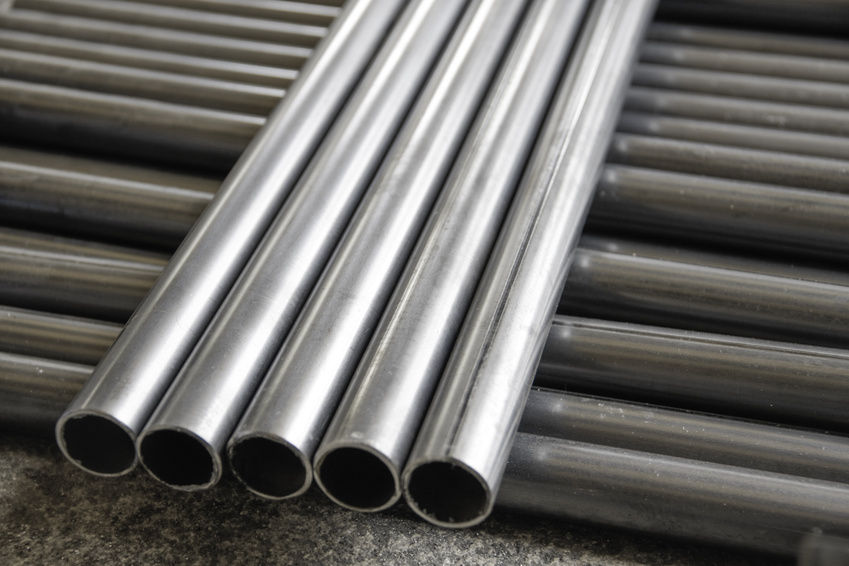
Which is the most abundant metal in the earth's crust?
Bronze
Aluminum
Copper
Lead
How many legs does a spider have?
6
8
10
12
What is the colored part of the eye called?
iris
pupil
cornea
retina
What do we call the energy of motion?
potential
kinetic
chemical
nuclear
What tube connects the mouth and the stomach?
trachea
throat
esophagus
diaphragm
If a temperature is 32 degrees Farenheit, what is the Celsius temperature?
0
32
64
100
What are animals without backbones called?
vertebrates
invertebrates
reptiles
mammals
Which of the following is a mammal?
chicken
owl
ostrich
bat
What is the largest planet in our solar system?
Saturn
Jupiter
Earth
Venus
What is the hardest natural substance called?
wood
granite
diamond
gold
For most people, what is the normal Farenheit body temperature?
96.8
98.6
99.2
99.8
Light is:
A particle
A wave
Both a particle and a wave
Neither a particle nor a wave
Who invented gravity?
Isaac Newton
Galileo
Stephen Hawking
Nobody. Gravity’s always been here.
Which is the longest length/distance?
Parsec
Light year
Kilometer
Ångstrom
Which Law states that an object in motion tends to stay in motion unless acted upon by an outside force?
Newton's First Law
Newton's Second Law
Newton's Third Law
Cole's Law

What is the term for energy an object has due to its position?
Thermal Energy
Kinetic Energy
Potential Energy
Nuclear Energy

Which of the following is the most common source of energy for brain cells in humans?
Glucose
Nucleic Acids
Pectin
Proteins

What environmental factor most directly involved in phototropism?
Water
Sunlight
Heat
pH

What is this lab equipment used to measure?
Volume
Length
Mass
Voltage

White light is ...
The absence of light
All colors of light combined
The first color in the rainbow
The last color in the rainbow

What is the name for the land form at the mouth of a river?
Canyon
Plateau
Oxbow
Delta

What type of charge does an electron have?
Positive
Negative
Neutral
No charge
Which of the following objects is a conductor of electricity?
Wooden Toothpick
Penny
Plastic Spoon

Where is DNA located inside of cells?
Nucleus
Cytoplasm
Ribosomes
Cell wall
What is the human body's largest organ?
Lungs
Skin
Liver
Kidneys
Which of the following goes through photosynthesis?
Humans
Lions
Grass
Water
At what temperature does water boil?
32ºF
300ºF
200ºF
212ºF
Who was the scientist to propose the three laws of motion?
Charles Darwin
Isaac Newton
Albert Einstein
Marie Curie
How many elements are in the Periodic Table?
134
217
118
466
Where can you find the smallest bone in the human body?
Middle ear
Hand
Foot
Hips
Scientists believe that the continents of the earth were all one large landmass 280 million years ago. The moving of tectonic plates caused this mass to break off into different pieces, making up the continents as we know them today. What was this landmass called?
Paraguay
Earth 1.0
Panem
Pangea
What type of tree do acorns grow on?
Acorn trees
Oak trees
Apple trees
Fruit trees
Dolly was the first ever living creature to be cloned. What type of animal was she?
Dog
Sheep
Monkey
Bird
What is the tallest mountain in Africa?
Mount Everest
K2
Mount Kilimanjaro
Mount Rushmore
What are the 3 states of matter?
Solid, water, smoke
Igneous, sedimentary, metamorphic
Gas, solid, liquid
Ridge, Basin, Mesa
What is the only metal that is liquid at room temperature
Iron
Mercury
Nickel
Water
What is the rarest blood type in the world today?
B-
O-
O+
AB-
Which part of the plant performs photosynthesis?
The stem
The roots
The leaf
The pot

Earth's atmosphere contains __________% oxygen.
20
78
5
10

What is the layer of mixed gases around the Earth called?
Hemisphere
Atmosphere
Asthenosphere
Lithosphere
In which part of a plant cell does photosynthesis take place?
Cell Wall
Vacuole
Chloroplast
Mitochondria

Where is the Mariana Trench located?
Indian Ocean
Atlantic Ocean
Pacific Ocean
Artic Ocean

What are the building blocks of all matter?
Proteins
Polymers
Atoms
Molecules

What is molten rock underneath the Earth's surface called?
Lava
Magma
Pahoehoe
Aa Lava

What is a nucleotide composed of?
sugar and base
base and phosphate
sugar, base and phosphate
DNA base and gene

In the Periodic Table, Pb stands for what chemical element?
Iron
Silver
Mercury
Lead

What is a calorie used to measure?
Energy
Force
Power
Work

Salt dissolved in water is considered a(n) what?
Compound
Slurry
Emulsion
Mixture

What is a rock formation called that rises from the bottom of a cave?
Escarpment
Stalactites
Stalagmites
Flowstone
What is the law of conservation of mass in chemical reactions?
Mass is converted into energy in a chemical reaction.
Mass is created in a chemical reaction.
Mass is neither created nor destroyed in a chemical reaction.
Mass is destroyed in a chemical reaction.
What are the properties of solids?
Solids have no shape or volume.
Solids have definite shape and volume.
Solids have only volume and no shape.
Solids have indefinite shape and volume.
What are the main components to enable photosynthesis to start?
chlorophyll, water, and nitrogen
heat, glucose, and oxygen
sunlight, oxygen, and carbon dioxide
sunlight, water, and carbon dioxide
The tallest place on Earth is
Mt. Everest
Cadillac Mountain
The Alps
Grand Tetons
What will you find at 0 degrees latitude?
The Prime Meridian
The Tropic of Cancer
The Tropic of Capricorn
The Equator
What do you call the study of the weather and climate?
Geology
Metrology
Meteorology
Climatology
What physical layer is found at the center of Earth?
Inner Core
Outer Core
Crust
Mantle
Which of the following is the largest?
Galaxy
Planet
Universe
Black hole

What does a barometer measure?
Humidity levels in the atmosphere
Temperature
Atmospheric pressure
The air pressure in your tire
How many chromosomes does each cell in a human body have?
(a)
Air is mostly (78%) made up of which chemical element?
Nitrogen
Oxygen
Carbon
Helium
Hydrogen


Why does it tend to be cool at the Earth's poles?
They are farthest from the sun
They have no humidity (water vapor) to hold the heat
They are always covered in clouds
Sunlight strikes them at extreme angles
In the United States, weather generally moves from:
West to East
East to West
North to South
South to North