Font size
 Worksheets
Life Science Final Exam
Total questions: 90
Worksheet time: 3hrs 43mins
All the following are characteristics of living things, Except...
Can Reproduce
Made of Cells
Can Grow
Needs Energy
Can Move
An organism that makes its own food.
Carbohydrate
Producer
Consumer
Decomposer
An organism that receives its nutrients by breaking down dead organisms and waste.
Lipid
Consumer
Protein
Decomposer
What does a virus need in order to survive?
Watery environment
A host cell
Energy from the sun
to be able to move from cell to cell
What is the main difference between viruses and bacteria?
Viruses are nonliving and bacteria are living cells
Viruses are less serious than bacteria
Nothing, they are pretty much the same
Bacteria are good and viruses are bad
A substance used to trigger the body to produce a resistance to certain viruses is called a:
Pathogen
Parasite
Vaccine
Vitamin

Plants make their own energy molecules (food) using photosynthesis. What do we call this type of organism?
Prokaryote
Eukaryote
Autotroph
Heterotroph

The most specific level of biological classification is...
kingdom
genus
phylum
species

The order of the levels of classification is:
Domain, kingdom, phylum, class, order, genus, family, species
Domain, class, kingdom, phylum, order, genus, family, species
Domain, class, kingdom, phylum, order, genus, species, family
Domain, kingdom, phylum, class, order, family, genus, species

Which kingdoms make up the domain Eukarya?
Protista, Fungi, Plantae, Animalia
Archaebacteria, Eubacteria, Protista, Fungi
Plantae, Animalia, Archaebacteria
Eubacteria, Archaebacteria
What do you need to be able to see bacteria?
Microscope
Telescope
Sunglasses
3D Glasses
The cell membrane is a flexible covering that...
creates structure and support for plant cells
protects the cell from the environment outside of the cell
directs the cells activities
How is a cell membrane like a mesh screen?
it is metal and has holes in it
it allows big things to come through but keeps small things out
it allows small things to come through but keeps big things out

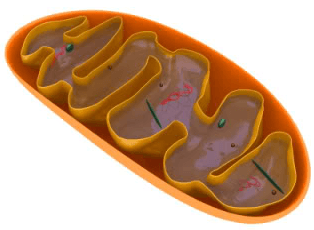
What structure is number 10?
mitochondria
nucleus
chloroplast



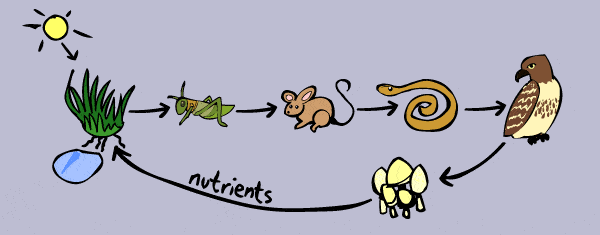
Where does the food chain START?
with consumers that eat grass
with the sun giving energy to producers
with the sun giving energy to consumers
with consumers eating other consumers
Which statement was NOT included in cell theory?
All living things are composed of cells.
Living cells come only from other living cells.
Each cell contains a cell membrane, cytoplasm, nucleus, mitochondria, and endoplasmic reticulum.
Cells are the smallest structure of living things that can perform the functions necessary for life.
Who discovered and named cells while looking at cork?
Captain Hook
Robert Hooke
Matthais Schleiden
Rudolf Virchow

Robert Hooke, Anton van Leeuwenhoek, Theodor Schwann, Rudolf Virchow, and Matthias Schliden were all responsible for what theory?
The Theory of Gravity
The Theory of Relativity
The Cell Theory
The Theory of Continental Drift
The process by which plants, some Bacteria, and some Protists make their own food is called __________.
Phototropism
Cellular Respiration
Mitosis
Photosynthesis
Human body system responsible for cleaning your blood and removing liquid waste?
Excretory System
Nervous System
Digestive System
Respiratory System
Human body system is responsible for circulating oxygen, carbon dioxide, nutrients and blood around the body?
Respiratory System
Nervous System
Circulatory System
Digestive System
Human body system is responsible for helping us breathe in oxygen and exhale carbon dioxide?
Nervous System
Circulatory System
Respiratory System
Excretory System
Human body system is responsible for communicating with the body by sending electrical signals?
Circulatory System
Digestive System
Muscular System
Nervous System
Human body system responsible for breaking down food into nutrients?
Digestive System
Nervous System
Excretory System
Circulatory System
What is the organ that leads from your mouth to your stomach?
Small Intestines
Spine
Tongue
Esophagus
What organ controls all activities in our body?
Heart
Brain
Lungs
Liver
Which two body systems work together to support the body and allow the body to move?
circulatory and respiratory
digestive and nervous
skeletal and muscular
circulatory and digestive
What body system takes oxygen into the body and gives off carbon dioxide?
Circulatory System
Digestive System
Respiratory System
Nervous System
The respiratory system consists of what organs?
Mouth, stomach, small intestine, large intestine
Heart, cells, lungs
Brain, spinal cord, nerves
Nose, trachea, bronchi, lungs, alveoli


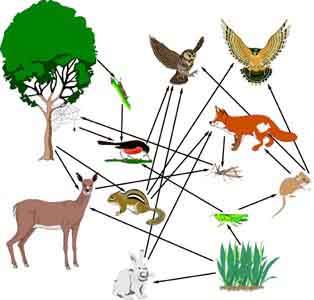
Acorn → Squirrel → Fox → Mountain Lion
What will most likely happen if squirrels are removed from the food chain?

What percentage of energy is passed from one trophic level to the next trophic level?
About 25% of the energy is passed to the next trophic level.
Only about 10% of the energy at one level is passed to the next.
About 50% of the energy is passed
50% of energy is passed from one trophic level to the next
All the nonliving things in an environment are called the ________ factors.
abiotic
biotic
ecological
inorganic
What is an example of a biotic factor?
water
grass
soil

Which trait does a puppy inherit from its parents?
obediance to commands
fur pattern and color
affection for a specific home
food brand preference

Eye color, hair color, having freckles, etc. are examples of:
DNA
Chromosomes
Genes
Traits
How many alleles for the same gene do offspring get?
1
2
23
100's to 1000's
The observable expression of a trait is its
phenotype
genotype
chromosome
allele

The passing of traits from parents to offspring is known as....
hierarchy
heredity
traits
genetics
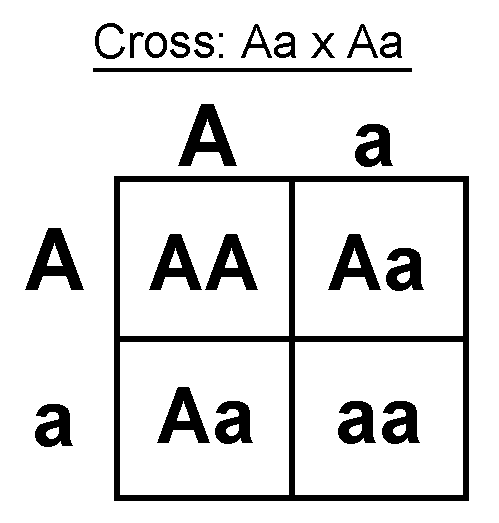

Look at the punnett square shown. What allele pair would replace the "?"
WW
Ww
ww
In rabbits, black fur is dominant and white fur is recessive. If two white rabbits mate, what is the chance that they will produce an offspring with black fur?
0%
25%
50%
75%
100%
What is a Punnett Square used for in Mendelian Genetics?
A tool used in genetics to draw squares.
A mathematical equation used to identify whether offspring resulted from mitosis or meiosis.
A Punnett Square allows the prediction of the percentages or probability of phenotypes in the offspring from known genotypes.
A square used to organize all the genes in a numerical sequence from the lower number to the highest number.
Traits that help an organism survive in a specific environment.
Variation
Adaptation
Behavior
Environment
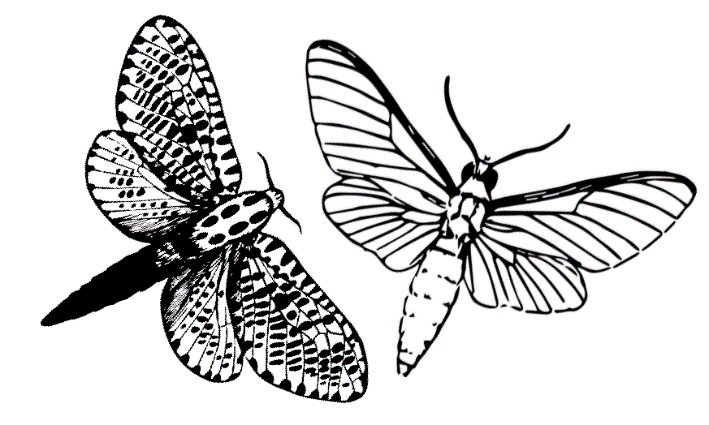
According to natural selection, light colored tree trunks would favor
light colored moths
dark colored moths
red colored moths
red and light colored moths
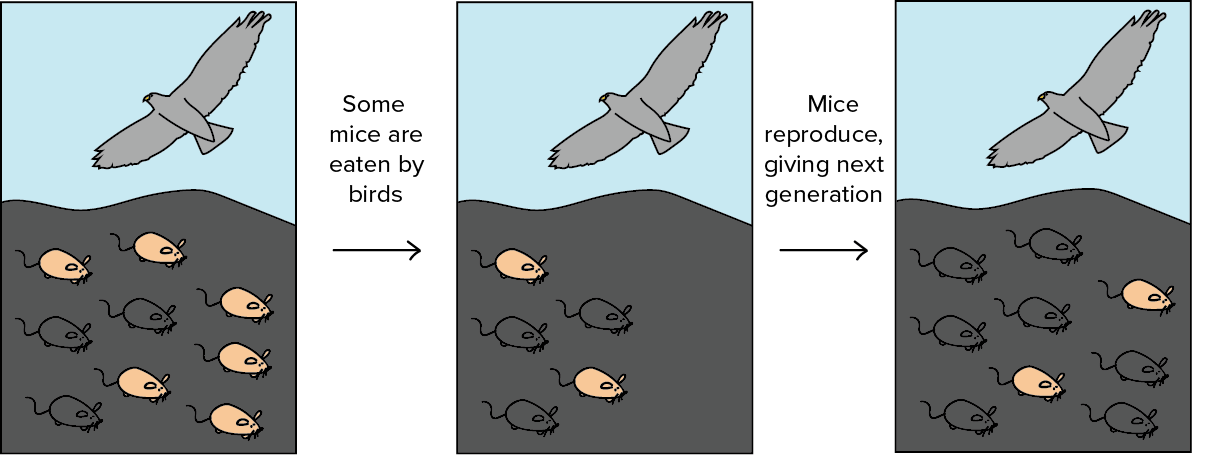
Why is the mouse population changing over time? (You can enlarge the picture by placing your cursor on it.)
The light mice can reproduce more successfully than the dark mice
The hawks eat more dark mice than light mice because the dark mice taste better
The hawks eat more light mice than dark mice because they can see the light mice more easily
The hawks eat more dark mice than light mice because they can see the dark mice more easily
tt
An organism that hunts other animals is a _______.
Predator
Prey


I am a bat that lives in caves. At night, I fly around and locate moths to eat for nutrition.
Commensalism
Predation
Mutualism
Parasitism

Cleaner wrasse live in “cleaning stations” in a reef. They remove and eat parasites, dead tissue and mucous from reef fish, which helps reef fish stay healthy.
Commensalism
Mutualism
Predation
Parasitism