wayground logo

Free Printable Worksheets

Font size

S
M
L
XL
Worksheets

Year 9 Science Chemical reactions

Total questions: 184

Worksheet time: 4hrs 57mins

Name
Class
Date
1.

A substance that is formed as the result of a chemical reaction is a __________________

a)

Product

b)

Reactant

c)

Starters

d)

Enders

2.

A change in the shape of an object is an example of _________________.

a)

a chemical change

b)

energy

c)

an endothermic change

d)

a physical change

3.

Which one shows that a chemical reaction has occurred?

a)

dissolving

b)

melting

c)

formation of a gas

d)

bending

4.
In a ___________change, a substance changes into a different substance.
a)
Physical
b)
Chemical
5.

What is the BEST definition of a chemical reaction?

a)

A change in matter that produces one or more NEW substances

b)

When two things combine and EXPLODE.

6.
the starting materials in a chemical reaction
a)
Products
b)
Reactants
c)
Starters
d)
Enders
7.

In the equation 2Mg+O2  2MgO2Mg+O_2\ \rightarrow\ 2MgO   which are the reactants?

a)
Mg and O
b)
MgO
c)
Mg and MgO
d)
O and MgO
8.
Coal contains carbon and other elements. Carbon dioxide forms when coal burns in the presence of oxygen. Which of these is the best evidence that a chemical reaction occurs when coal burns?
a)
The shape of the coal changes
b)
Oxygen is present
c)
A new substance is produced
d)
Coal is made up of more than one element
9.
A teacher is demonstrating physical and chemical changes to her class. Which action should she use to demonstrate a chemical change?
a)
cutting a piece of paper
b)
folding a piece of paper
c)
tearing a piece of paper
d)
burning a piece of paper
10.

NaHCO3 is an example of

a)
an abbreviation
b)
a compound
c)
a mixture
d)
an element
11.
What is an example of an element?
a)
Oxygen
b)
Pure water
c)
Air
d)
Table salt
12.

What are the products of the chemical reaction pictured?

a)

CH4 and CO2

b)

CH4 and O2

c)

CO2 and 2 H2O

d)

O2 and H2O

13.
Consider the chemical equation CH4 + 2 O2 → CO2 + 2 H2O. In this equation, CH4 is a
a)
product
b)
reactant
c)
displacement
14.
In a chemical reaction, bonds are broken and new bonds are formed that create new substances. The bonds that are broken are called what?
a)
Reactants
b)
Products
c)
Atoms
d)
Catalysts
15.
This is used to represent the number of each atom being represented. 
a)
A Exponent
b)
The Coefficient
c)
A Molecule
d)
The Subscript
16.
How many TOTAL atoms are on the REACTANT side of this equation?
CH4 + 2O2 → CO2 + 2H2
a)
5
b)
7
c)
9
d)
11
17.

Which of these taste sour?

a)

acids

b)

bases

c)

salts

18.

Which of these feel slippery?

a)

bases

b)

acids

c)

salts

19.

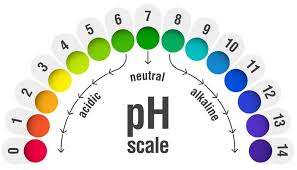
The pH scale is used to determine the strength of

a)

acids and bases

b)

chemical bonds

c)

electrical charges

d)

particles in a solution

20.

Which of these taste sour?

a)

acids

b)

bases

c)

salts

21.

Which of these feel slippery?

a)

bases

b)

acids

c)

salts

22.

The pH scale is used to determine the strength of

a)

acids and bases

b)

chemical bonds

c)

electrical charges

d)

particles in a solution

23.

Anything with a pH of 7 is a(n)

a)

neutral substance

b)

acid

c)

base

d)

chemical salt

24.

A very strong acid will have a pH of

a)

0

b)

14

c)

5

d)

9

25.
Which is the stronger acid?
a)
pH 1
b)
pH 4
c)
pH 8
d)
pH 13
26.
An extremely strong base would have a pH of:
a)
1
b)
7
c)
9
d)
14
27.
Which one of the following is an example of a base?
a)
orange juice
b)
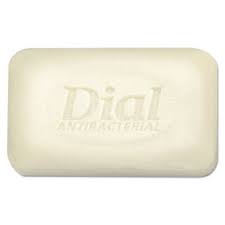
dish soap
c)
vinegar
d)
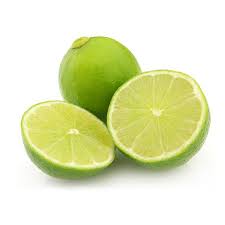
lemons
28.
A substance that changes color when mixed with an acid or base is a(n) ___.
a)
indicator
b)
neutralizer
c)
corrosive
d)
electricity
29.
Which of the following is NOT a characteristic of an acid?
a)
sour taste
b)
corrosive
c)
it feels slippery
d)
it can burn the skin
30.
What property do all three of these common household substances have in common?
a)
they are all basic
b)
they taste sour
c)
they have a pH below 7
d)
they all turn litmus paper red
31.
Which of the following is a base?
a)
orange juice
b)
water
c)
vinegar
d)
dishwashing detergent
32.
 Which of the following is an acid?
a)
shampoo
b)
baking soda
c)
orange juice
d)
water
33.
Tastes bitter.
a)
Acids
b)
Bases
c)
Salts
d)
All
34.

Which pH level indicates a strong alkali?

a)

1-3

b)

4-6

c)

8-11

d)

12-14

35.
All solutions that fall between 0 and 6.9 are
a)
Acids
b)
Bases
c)
Neutral
d)
Phytoplankton
36.

The table shows the pH of several solutions. Which solution has the greatest concentration (amount) of H+ ions?

a)

vinegar

b)

milk

c)

water

d)

bleach

37.

Pollution causes the pH of rain water fall below 6. What is such type of rain called?

a)

Acid Rain

b)

Basic Rain

c)

High pH Rain

d)

Purple Rain

38.

Match

a)

H+

1.

Acid

b)

OH-

2.

Base

c)

NaCl

3.

Salt

39.

Match the following

a)

higher than 7

1.

base

b)

lower than 7

2.

acid

c)

7

3.

neutral

40.

Match these

a)

strongly acidic

1.

3.3 mountain dew

b)

slightly acidic

2.

6.7 milk

c)

strongly basic (alkaline)

3.

13 ammonia

d)

slightly basic (alkaline)

4.

7.35 human blood

41.

pH 25

a)

acid

b)

base

c)

neutral

d)

doesn't exist

42.

The table shows the pH of several solutions. Which solution has the greatest concentration (amount) of OH- ions?

a)

vinegar

b)

milk

c)

water

d)

bleach

43.

Bases, also known as ​ (a)   will turn litmus paper ​ (b)   . This is because they have a pH ​ (c)   . They taste ​ (d)   .

Choose from the below words
alkali and OH-
blue
above 7
bitter
below 7
H+
red
sour
44.

Acids, also known as ​ (a)   , will turn litmus paper ​ (b)   . This is because they have a pH ​ (c)   . They taste ​ (d)   .

Choose from the below words
H+
red
below 7
sour
bitter
above 7
blue
45.

Match the following

a)

10

1.

base

b)

5

2.

acid

c)

salt

3.

neutral

46.

Which is the stronger acids ?

a)

pH 1

b)

pH 8

c)

pH 13

d)

pH 7

47.

Which of the following is an acid ?

a)

Shampoo

b)

Baking soda

c)

Orange juice

d)

Water

48.

Turns litmus red

a)

Acids

b)

Bases

c)

All

49.

Which has a pH below 7?

a)

Acid

b)

Base

50.

What colour does a base turn red litmus paper?

a)

Red

b)

Blue

51.

If the substance is neutral, what would the pH be?

a)

3

b)

5

c)

7

d)

9

e)

11

52.

The strongest bases have pH values close to

a)

0

b)

14

c)

7

d)

5

53.

If an acid is combined with a base of equal strength, the result will most likely be

a)

a neutral solution.

b)

a stronger acid.

c)

impossible to tell without testing the pH.

d)

a stronger base

54.
Holly has an unknown substance in a beaker. She wants to determine the relative pH of the unknown substance. She places a piece of blue litmus paper into the substance, and the litmus paper stays blue.
The substance in the beaker
a)
is a base.
b)
has a neutral pH.
c)
is an acid.
d)
does not have a pH.
55.
Which of the following is a base?
a)
orange juice
b)
water
c)
vinegar
d)
dishwashing detergent
56.
The pH of a solution is tested, and it is found to be a basic solution. Of the following choices, what could the pH have been?
a)
3
b)
9
c)
7
d)
5
57.
Ammonia has a pH of 12.  Ammonia is __________.
a)
an acid
b)
a base
c)
an element
d)
a metal
58.

What forms when an acid reacts with a base?

a)

Salt and water

b)

Hydrogen and water

c)

Salt and oxygen

d)

Water and carbon dioxide

59.
An atom is made up
a)
little particles
b)
protons, neutrons and electrons
c)
protons, nucleus and electrodes
d)
positive, neutral and negative
60.
Which of the following is not an example of a chemical reaction
a)
burning of wood
b)
freezing of water
c)
rotting of fruit
d)
explosion of dynamite
61.
What two products are usually produced from a combustion reaction?
a)
a chemical salt and hydrogen gas
b)
oxygen gas and a cloudy liquid
c)
water vapour and carbon dioxide gas
d)
carbon dioxide and smoke
62.
What is not an indication of a chemical change?
a)
smell produced
b)
heat produced
c)
solid produced
d)
melting
63.
Name the elements in
NaHCO3
a)
sodium, hydrogen, carbon, oxygen
b)
sulfur, hydrogen, cobolt
c)
sodium, hydrogen, cobolt
d)
sulfur, hydrogen, carbon trioxide
64.
The chemical formula for sulfuric acid is H2SO
How many atoms are present?
a)
3
b)
6
c)
7
d)
10
65.
The atomic number of an element tells you
a)
how many protons and neutrons it has
b)
how many protons and electrons it has
c)
its place on the periodic table
d)
the mass of the nucleus
66.
The mass of an atoms nucleus is the sum of 
a)
protons + neutrons
b)
electrons + neutrons
c)
electrons + protons
67.
The attraction forces between atoms are called
a)
particles
b)
joins
c)
shells
d)
bonds
68.
Methane burning in oxygen is an example of
a)
photosynthesis
b)
combustion
c)
decomposition
d)
neutralisation
69.
The amount of reactants should equal the amount of products.  This is the rule for
a)
chemical reactions
b)
acid base reactions
c)
conservation of mass
d)
neutralisation reactions
70.
pH stands for
a)
power of hydrogen
b)
percent of hydrogen
c)
possible hydrogen
d)
precipitation of hydrogen
71.
Acids have a high pH
a)
True
b)
False
72.
When you vomit it tastes sour because
a)
your stomach contains an acid
b)
your stomach contains an alkali
73.
Exothermic reactions
a)
happen on the outside
b)
take in heat
c)
give off heat
d)
happen on the inside
74.
A weak acid has
a)
produces lots of hydrogen gas 
b)
produces a small amount of hydrogen gas
c)
has lots of water
d)
has little water
75.
Dilute acids and bases have
a)
lots of water mixed with them
b)
not very much water mixed with them
c)
lots of bubbles when metals are added
d)
strong acid
76.
Rainwater is naturally acidic because
a)
rain dissolves with carbon dioxide
b)
rain dissolves with oxygen
c)
rain dissolves with nitrogen
d)
rain dissolves with alkalis
77.
An alkali is
a)
An acid dissolve in water
b)
A base dissolved in water
c)
An example of stomach acid
d)
An example of cleaning products
78.
A catalyst
a)
Increases the activation energy
b)
Lowers the activation energy
c)
Makes a reaction more difficult
d)
Slows a reaction down
79.
A universal indicator measures ___________.
a)
Acidity
b)
pH
c)
Ions
Ions
d)
Alkali levels
80.
A chemical reaction that produces energy is a /an
a)
endothermic reaction
b)
exothermic reaction 
c)
energy
d)
chemical reaction 
81.
What is the law of Conservation of Mass?
a)
A measure of how much mass is created or destroyed. 
b)
Mass can neither be created nor destroyed during a chemical reaction. 
82.
The compounds or elements present at the end of a reaction 
a)
reactants
b)
catalyst
c)
products
d)
energy 
83.
The compounds and elements that are present at the beginning of a reaction:
a)
reactants
b)
catalyst
c)
products
d)
energy 
84.
A chemical change happens when...
a)
a substance is changed at the atomic level 
b)
bonds are broken and formed 
c)
a new substance is made
d)
all of the above! 
85.
What kind of change is a change of state?
a)
Physical
b)
Chemical 
86.
The element symbol for Potassium is ...
a)
P
b)
Po
c)
Pt
d)
K
87.
Sodium's chemical symbol is...
a)
S
b)
So
c)
Na
d)
K
88.
One example of a chemical change is
a)
filtering a mixture
b)
burning wood
c)
boiling water
d)
crushing a can
89.
What is the general word equation for a metal and acid reaction?
a)
metal + acid --> salt
b)
metal + acid --> salt + hydrogen
c)
metal + acid --> oxygen + hydrogen
d)
metal + acid --> oxygen + water
90.
An alkali is
a)
An acid dissolve in water
b)
A base dissolved in water
c)
An example of stomach acid
d)
An example of cleaning products
91.
The attraction forces between atoms are called
a)
particles
b)
joins
c)
shells
d)
bonds
92.
The atomic number of an element tells you
a)
how many protons and neutrons it has
b)
how many protons and electrons it has
c)
its place on the periodic table
d)
the mass of the nucleus
93.
Name the elements in
NaHCO3
a)
sodium, hydrogen, carbon, oxygen
b)
sulfur, hydrogen, cobolt
c)
sodium, hydrogen, cobolt
d)
sulfur, hydrogen, carbon trioxide
94.

Is this equation balanced? (a)  

Choose from the below words
no
yes
95.

Is this equation balanced? (a)  

Choose from the below words
yes
no
96.

Is the equation balanced?: 2H2O + O2 --> 4OH + O3 (a)  

Choose from the below words
Yes
No
97.

Balance this equation_N2 + _H2 --> _NH3 (a)  

Choose from the below words
1,2,3
1,3,2
1,1,2
2,1,1
98.
What does the Law of Conservation of Mass state?
a)

Matter cannot be gained or lost in a chemical reaction.

b)

Matter can only be lost in a chemical reaction.

c)

Matter can only be gained in a chemical reaction.

d)

Matter can be gained and lost in a chemical reaction. 

99.

What is the little number after an element in a chemical equation called.Example: H2 (a)  

Choose from the below words
CoefficientSubscript
Atom
Equation
100.

What is the arrow in a chemical equation (a)   H2 + O --> H2O

Choose from the below words
Reactants
Products 
Yields (produces)
Chemical Equation 
101.
At the end of chemical reactions, what is the total mass of the reactants compared to the total mass of the products?
a)
the product is doubled
b)
the product is half the mass of the reactants
c)
the mass is the same
d)
the mass changes depending on the reaction
102.

What is a coefficient? 2H2O

a)

The small number on the right of the chemical symbol.

b)

The large number to the left of a formula.

103.

How many atoms of aluminum are on each side of the following equation: 4Al + 3O--> 2AlO3

a)

2

b)

6

c)

1

d)

4

104.

Looking at just the subscripts, how many carbon atoms are there?

C12H22O11

a)

11

b)

22

c)

12

d)

1

105.

How many bromine atoms are in this compound? 12NaBr

a)

1

b)

0

c)

12

d)

24

106.

How many oxygen atoms are on this compound?

3CO2

a)

3

b)

2

c)

6

d)

1

107.
What coefficient should be used to make the following equation balanced?
N2+O2--> _NO 
a)
1
b)
2
c)
3
d)
4
108.
How many HCl molecules do you need to balance this equation? 
Mg +  __HCl --->  MgCl2 + H2
a)
1
b)
2
c)
3
d)
4
109.

Is the following equation balanced?4Fe + 3O2 --> 2Fe2O3 (a)  

Choose from the below words
yes
no
110.

Is this balanced?Al + O2 → 2Al2O3 (a)  

Choose from the below words
Yes
No
111.
Balance this equation:
MgCl2 --> Mg4+ Cl2
a)
It's already balanced.
b)
4MgCl2 --> Mg4+ 4Cl2
c)
4MgCl2 --> Mg4+ 5Cl2
112.
Balance this equation:
 2Li + Cl2 -> LiCl
a)
2Li + Cl2 -> 4LiCl2
b)
2Li + Cl2 -> LiCl2
c)
2Li + Cl2 -> 2LiCl
113.
The substances listed on the left side of a chemical equation are the
a)
Products
b)
Coefficients
c)
Precipitates
d)
Reactants
114.
In chemical reactions, what does the principle of conservation of mass mean?
a)
Matter is not created or destroyed.
b)
The total mass of the reactants is greater than the total mass of the products.
c)
The total mass of the reactants is less than the total mass of the products.
d)
Matter is not changed.
115.
How many Hydrogen (H) atoms are in NH3O5
a)
3
b)
4
c)
5
d)
1
116.
Name the part in red:

H2 + O2 -> H2O
a)
Coefficient
b)
Product
c)
Yield
d)
Subscript
117.
Name the part in red:

_2_H+ _1_O2 -> _2_H2O
a)
Coefficient
b)
Product
c)
Yield
d)
Subscript
118.
Name the part in red:

H+ O2 -> H2O
a)
Coefficient
b)
Product
c)
Reactant
d)
Subscript
119.
Name the part in red:

H+ O-> H2O
a)
Coefficient
b)
Product
c)
Reactant
d)
Subscript
120.
How many phosphorus atoms are in PO4?
a)
1
b)
2
c)
3
d)
4
121.
Which number should go in the blank?
_ H2 + O2 -> 2 H2O
a)
1
b)
2
c)
3
d)
0
122.
Is the following equation balanced or unbalanced ? 
Al + O2 --> Al2O3
a)
Balanced
b)
Unbalanced
123.
Is the following equation balanced or unbalanced ? 
N2 +3 H2 --> 2NH3
a)
Balanced
b)
Unbalanced
124.
How many hydrogens are in 4H2O?
a)
6
b)
8
c)
2
d)
4
125.
Read the following chemical formula: C6H12O6. How many hydrogen atoms are in the formula?
a)
12
b)
6
c)
4
126.
How many atoms of aluminum are on each side of the following equation: 4Al + 3O--> 2AlO3
a)
2
b)
6
c)
1
d)
4
127.
What are the coefficient used to balance the equation below?
__Ag2O →__ Ag +___O2
a)
2,4,1
b)
1,1,1
c)
2,1,2
d)
2,2,2
128.
How many Oxygen atoms are in 4H2O?
a)
4
b)
1
c)
0
d)
8
129.
 Balance this equation:

__ Al + __ HCl → __ H
2 + __ AlCl3
a)
2, 6, 3, 2
b)
it is already balanced
c)
4, 12, 3, 4
d)
2, 1, 4, 5
130.
Is this balanced?
Al + O2 → 2Al2O3
a)
Yes
b)
No
131.

Complete the word equation below:

Acid + alkali --> ............... + water

a)

water

b)

salt

c)

gold

d)

metal

132.

.............................. + sodium hydroxide --> sodium chloride + water

a)

Nitric acid

b)

Sulphuric acid

c)

Hydrochloric acid

d)

Ethanoic acid

133.

Toothpaste contain .................. that neutralize acid formed by bacteria.

a)

alkali

b)

acid

c)

antacid

d)

slaked lime

134.

Conditioners contain ........................ that neutralize shampoo on hairs.

a)

acid

b)

alkali

c)

vinegar

d)

natrium hydroxide

135.

Bee sting contain ............................ and can be neutralize using bicarbonate soda.

a)

alkali

b)

acid

c)

vinegar

d)

soda

136.

Excess acids in stomach can be neutralized using ............

a)

antacid

b)

vinegar

c)

slaked lime

d)

hydrochloric acid

137.

..................................... is used to treat water to reduce the acidity of water.

a)

alkali

b)

slaked lime

c)

antacid

d)

vinegar

138.

The reaction between an acid and an alkali

produces salt and water. This reaction is called

a)

acidication

b)

neutralisation

c)

alkalisation

139.
What method is used to study the neutralisation reaction between an acid and an alkali?
a)
Evaporation
b)
Titration
c)
Sublimation
d)
Electrolisis
140.
In a neutralisation reaction, what is the function of the indicator?
a)
To indicate that the mixture is neutral
b)
To indicate that hot water should be added
c)
To indicate that the flask should be shaken
d)
To indicate that a precipitate is formed
141.
products of a neutralisation reaction are always
a)
an acid and a base
b)
an acid and a salt
c)
salt and water
d)
salt and base
142.

How to neutralise bacteria in the teeth?

a)

Rinse

b)

Using fertiliser

c)

Using face cleanser

d)

Using toothpaste

143.

The reaction between an acid and alkali produces ____________

a)

salt

b)

acidic solution

c)

water

d)

alkaline solution

144.

Which of the following alkaline is used to neutralise acidic soil?

a)

Soap solution

b)

Potassium hydroxide

c)

Sodium hydroxide

d)

Calcium hydroxide

145.
Pure water has a pH of 7. Pure water _______.
a)
is a base
b)
is a neutral substance
c)
could be either an acid or a base
d)
is an acid
146.

What colour is Universal indicator when the solution is neutral?

a)

Red

b)

Green

c)

Blue

d)

Purple

147.
In a neutralisation reaction, dilute hydrochloric acid is slowly added to a sodium hydroxide solution. What is the colour change at the end point if the indicator used is phenolphthalein?
a)
From colourless to pink
b)
From blue to green
c)
From pink to colourless
d)
From green to blue
148.

What type of reaction occurs when you react an acid with an alkali?

a)

combustion

b)

decomposition

c)

no reaction

d)

neutralisation

149.

Where does the acid in you mouth come from?

a)

From stomach

b)

From stomach acid

c)

From the millions of

bacteria of mouth

d)

From the teeth

150.

What colour is litmus in solution of pH 4?

a)

green

b)

red

c)

blue

d)

dark blue

151.

The reaction between an acid and an alkali

produces salt and water. This reaction is called

a)

acidication

b)

neutralisation

c)

alkalisation

152.

Hydrochloric acid reacts with Sodium hydroxide and forms water and

a)

sodium Hydrokside

b)

sodium chloride

153.

Soft drinks could contain

a)

Acetic acid

b)

Carbonic acid

154.

Complete the word equation below:

Acid + alkali --> ............... + water

a)

water

b)

salt

c)

gold

d)

metal

155.

Sulphuric acid + potassium hydroxide --> ........................ + water

a)

potassium sulphate

b)

potassium sulphurate

c)

potassium nitrate

d)

magnesium hydroxide

156.

Toothpaste contain .................. that neutralize acid formed by bacteria.

a)

alkali

b)

acid

c)

antacid

d)

slaked lime

157.
What method is used to study the neutralisation reaction between an acid and an alkali?
a)
Evaporation
b)
Titration
c)
Sublimation
d)
Electrolisis
158.
In a neutralisation reaction, what is the function of the indicator?
a)
To indicate that the mixture is neutral
b)
To indicate that hot water should be added
c)
To indicate that the flask should be shaken
d)
To indicate that a precipitate is formed
159.
In a neutralisation reaction, dilute hydrochloric acid is slowly added to a sodium hydroxide solution. What is the colour change at the end point if the indicator used is phenolphthalein?
a)
From colourless to pink
b)
From blue to green
c)
From pink to colourless
d)
From green to blue
160.
What is the salt formed when nitric acid is added to potassium hydroxide?
a)
Sodium chloride
b)
Potassium nitrate
c)
Sodium nitrate
d)
Potassium chloride
161.
products of a neutralisation reaction are always
a)
an acid and a base
b)
an acid and a salt
c)
salt and water
d)
salt and base
162.

If this product is detergent, most probably it is

a)

acid

b)

neutral

c)

Alkali

163.

The table shows the pH of several solutions. Which solution has the greatest concentration (amount) of H+ ions?

a)

vinegar

b)

milk

c)

water

d)

bleach

164.

Pollution causes the pH of rain water fall below 6. What is such type of rain called?

a)

Acid Rain

b)

Basic Rain

c)

High pH Rain

d)

Purple Rain

165.

Match

a)

H+

1.

Acid

b)

OH-

2.

Base

c)

NaCl

3.

Salt

166.

Match the following

a)

higher than 7

1.

base

b)

lower than 7

2.

acid

c)

7

3.

neutral

167.

Match these

a)

strongly acidic

1.

3.3 mountain dew

b)

slightly acidic

2.

6.7 milk

c)

strongly basic (alkaline)

3.

13 ammonia

d)

slightly basic (alkaline)

4.

7.35 human blood

168.

pH 25

a)

acid

b)

base

c)

neutral

d)

doesn't exist

169.

The table shows the pH of several solutions. Which solution has the greatest concentration (amount) of OH- ions?

a)

vinegar

b)

milk

c)

water

d)

bleach

170.

Bases, also known as ​ (a)   will turn litmus paper ​ (b)   . This is because they have a pH ​ (c)   . They taste ​ (d)   .

Choose from the below words
alkali and OH-
blue
above 7
bitter
below 7
H+
red
sour
171.

Acids, also known as ​ (a)   , will turn litmus paper ​ (b)   . This is because they have a pH ​ (c)   . They taste ​ (d)   .

Choose from the below words
H+
red
below 7
sour
bitter
above 7
blue
172.

Match the following

a)

10

1.

base

b)

5

2.

acid

c)

salt

3.

neutral

173.

Which of these taste sour?

a)

acids

b)

bases

c)

salts

174.

Which of these feel slippery?

a)

bases

b)

acids

c)

salts

175.

Which of these turn red litmus paper blue?

a)

acids

b)

bases

c)

salts

176.

Which type of ions are produced by bases when they are in a water solution?

a)

OH-

b)

H+

c)

H2O

d)

HCl

177.

The pH scale is used to determine the strength of

a)

acids and bases

b)

chemical bonds

c)

electrical charges

d)

particles in a solution

178.

Anything with a pH of 7 is a(n)

a)

neutral substance

b)

acid

c)

base

d)

chemical salt

179.

Chemicals formed when an acid and a base combine.

a)

salts

b)

noble gases

c)

metalloids

d)

hydroxides

180.

A weak base will have a pH close to

a)

8

b)

6

c)

0

d)

14

181.

A very strong acid will have a pH of

a)

0

b)

14

c)

5

d)

9

182.

Litmus paper works because it has been treated with

a)

natural dyes

b)

radioactive isotopes

c)

halogens

d)

organic inhibitors

183.

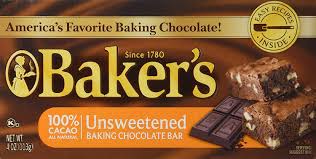
Unsweetened chocolate tastes bitter because chocolate contains a

a)

base

b)

acid

c)

chemical salt

184.

How would you best describe your science class this year?

a)

awesome

b)

very strange

c)

dull