
 Worksheets
Grade 7 L3: Energy change and temp and pressure change Q6 2025
Total questions: 136
Worksheet time: 5hrs 3mins
If the energy required to break the bonds is greater than the energy released by making new bonds the reaction is _______.
exothermic
endothermic


Baking pizza in the oven is an example of an _______ reaction.
endothermic
exothermic
If a chemical reaction is EXOTHERMIC, a thermometer in the beaker with the reaction would show ________ in temperature.
no change
an increase
a decrease
Calcium chloride (CaCl2) reacts with water, and the temperature changes from 18°C to 39°C.
Which statement is correct?
The reaction is a physical change.
The reaction is dangerous.
The reaction is exothermic.
The reaction is endothermic.
During an exothermic reaction, the heat energy _________ as chemical bonds __________ is greater.
released, form
absorbed, break
released, break
absorbed, form
During an endothermic reaction, the heat energy ________ as chemical bonds _______ is greater.
released, form
absorbed, break
released, break
absorbed, form
What tool would you use to detect an endothermic or exothermic reaction?
triple beam balance
ruler
thermometer
graduated cylinder
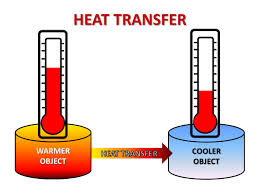
Heat always moves:
from an area of higher temperature to an area of lower temperature.
from an area of lower temperature to an area of higher temperature.
wherever it wants.
away from areas of cold.

What type of reaction does this picture represent?
endothermic
exothermic

What type of reaction does this picture represent?
endothermic
exothermic
In endothermic reactions, the bonds that contain more energy are in the _________.
reactants
products
reactants and products
Formation of chemical bonds requires energy.
True
False
Energy is required to break the chemical bonds.
True
False
Forming a chemical bond __________
absorbs energy from the surroundings
releases energy into the surroundings
creates energy that did not previously exist
uses up energy that then no longer exists
Endothermic reactions ______.
release more energy than they absorb
absorb more energy than they release
release and absorb exactly the same amount of energy
can either release more energy than they absorb or absorb more energy than
they release, depending on the reaction
A chemical bond __________energy when it breaks.
increases
decreases
absorbs
releases
Energy is _________ when bonds form.
released
absorbed
destroyed
created
Energy is _________ when bonds break.
absorbed
created
destoryed
released
A chemical reaction in which more energy is absorbed than is released is endothermic
True
False
A change in _____ is a sign of energy being used in a chemical reaction.
temperature (hot or cold)
texture
color
smell/odor
Running?

Energy can not be created nor destroyed.
Newton's Laws of Motion
Big Bang Theory
The Law of Conservation of Momentum
The Law of Conservation of Energy

What is the image demonstrating?
heating the system causes the particles to push further apart
adding more particles to the system causes the balloon to expand
volume increases as temperature decreases
heat slows the particles allowing the balloon to get bigger

Why is the balloon deflated?
the particles slowed down
the particles got faster
the particles became smaller
the particles escaped the balloon
Thermal contraction is...
a decrease in volume as temperature decreases
an increase in volume as temperature decreases
a decrease in volume as temperature increases
an increase in volume as temperature increases

Which graph shows the relationship between temperature and volume?
Graph A
Graph B
Graph C
Graph D
How does heat flow?
from hotter objects to colder objects
from colder objects to hotter objects
in both directions (hot to cold AND cold to hot)

The amount of force per unit area applied to an object's surface...
pressure
temperature
heat
Star Wars

What is this process called?
vaporization
condensation
evaporation
melting
Vaporization is the change of state from....
liquid to gas
solid to liquid
gas to liquid
liquid to solid
The temperature at which a solid turns into a liquid...
melting point
thermometer data point
melting number
particle accelerator

Which model correctly shows heat flow in a system?
Model A
Model B
Model C
Model D
During freezing, the particles...
slow down and form an organized structure
stop moving and lock in place
slow down and repel each other
randomly connect with each other into a solid

Why is there water on the outside of this cold drink?
water vapor in the air around the glass became a liquid
small water particles went through the glass
pressure from the atmosphere pushed the water out
thermal contraction caused the glass to shrink, spilling the water
What occurs during vaporization (check all that apply):
kinetic energy increases
particles slow down
temperature remains constant
liquid becomes a gas
The temperature at which a gas becomes a liquid is the _____________________ point.
boiling
condensation
melting
freezing
During a hot shower, the warm water vapor fogs up on the cooler mirror when it turns back into water. This is an example of-
freezing
condensation
vaporization
sublimation
Which two variables must be held constant for Charles's Law to apply?
pressure & volume
volume & temperature
pressure & amount of gas
volume & amount of gas
Who formulated the Charle's Law?
Edward Charles
Jacque Charles
Charles Darwin
Robert Charles
In Charle's Law, ___________ should always be constant
Pressure
Temperature
Volume
Mass
What remains constant according to Charles’ Law?
Length
Pressure
Temperature
Volume
In BOYLE'S LAW, when Pressure increases then the Volume must...
Increase
Decrease
In BOYLE'S LAW, what type of relationship do pressure and volume have?
Direct
Inverse
No relationship
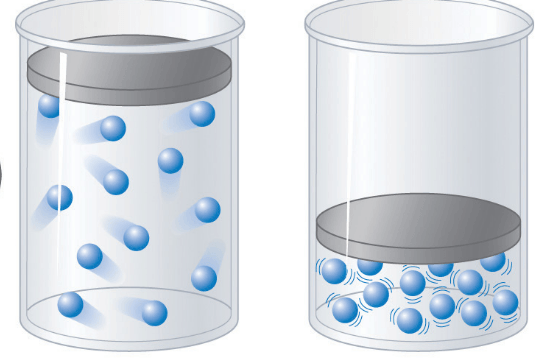
Which container will have a lower pressure?
left
right
they both have the same pressure
In CHARLES'S LAW, volume and temperature have a ______ proportionality.
direct
inverse
linear
exponential

Hot air balloons work because air volume expands as the air temperature increases, while density decreases.
True
False

When water is cooler than air, the air in swim floats shrinks because of a decrease in temperature of the air inside floats, causing them to sink more than float.
True
False

Tires of untouched vehicles get inflated during freezing winter days while get deflated in hot summer days.
True
False

If you take a balloon out in a snowy day, it inflates. When the same balloon is brought back to a warm room, it deflates.
True
False

Certain breads and cakes get that spongy texture because the carbon dioxide released by yeast reacting with the sugars expand when baked.
True
False
When the temperature of matter increases the particles...
speed up and move closer
speed up and move farther a
slow down and move closer together
slow down and move farther apart
How do gas molecules move?
In an orderly fashion
in straight line paths
constantly and randomly
in a circular motion
In Charles' Law the pressure remains constant.
True
False
What type of relationship is Charles' Law?
Inverse
Direct
Not enough information
True or False: Gases can be compressed.
True
False
When Pressure increases then the Volume must...
Increase
Decrease
When Volume increases then Pressure must...
Increase
Decrease
What type of relationship to pressure and volume have?
direct
inverse
no relationship
What does Boyle's law relate to?
Temperature and
Volume and Pressure
Temperature and Pressure
Amount and Volume
What causes pressure?
The walls of the container
The vacuum in the container
The collisions of the particles
Atmospheric pressure acting on the outside walls
The relationship of which two variables are compared in Boyle's Law?
pressure and volume
volume and temperature
temperature and pressure
amount and volume
TRUE/ FALSE: Science is a continually ongoing process.
True
False
Gas Laws involve what three factors?
solid, liquid, gas
speed, velocity, acceleration
elements, compunds, mixtures
pressure, temperature, volume
Directly proportional means that as one value increases ...
the other stays the same
the other increases as well
the other decreases
the other goes to zero
Inversely proportional means as one value increases the other...
increases
decreases
stays the same
does to zero
The word inverse means.......
the same
opposite
Temperature describes the ______________ of particles.
volume
mass
motion
conductivity
If the temperature of a gas increase, the pressure... (volume is constant)
decreases
increases
does not change
If a balloon is cooled what will happen to the volume?
Volume will increase
Volume will decrease
Volume will not change
A student inflates a balloon with helium then places it in the freezer. The student should expect
The balloon's volume to increase
The balloons volume to decrease
If a hairspray can is heated, what can be expected of the pressure of the gas inside the can?
The pressure will increase
The pressure will decrease
The pressure will remain constant
The pressure will equalize


A pressure cooker with a lid on it to keep in the steam is what type of system?
Closed System
Open System

An unopened can of vegetables is an example of which type of system?
Open System
Closed System
Isolated System
Broken System
The change of one state of matter to another is called
Osmosis
Phase Change
Matter
Energy
Transition from a liquid to a gas
Condensation
Freezing
Evaporation
Melting
Gas condenses to a liquid
Evaporation
Melting
Freezing
Condensation
What happens to molecules when their kinetic energy increases?
The molecules move slower
The molecules move faster
The molecules get heavier
It depends on the type of molecule

Three containers with the same amount of the same material are shown below. Which container has the substance with the highest amount of energy?
The container on the left
The middle container
The container on the right
All have an equal amount of energy
Three containers with the same amount of the same material are shown below. Which container has the substance with the lowest amount of energy?
The container on the left
The middle container
The container on the right
All have an equal amount of energy
The slower the particles in a substance move,
the colder it is.
the warmer it is.
the more energy it has.
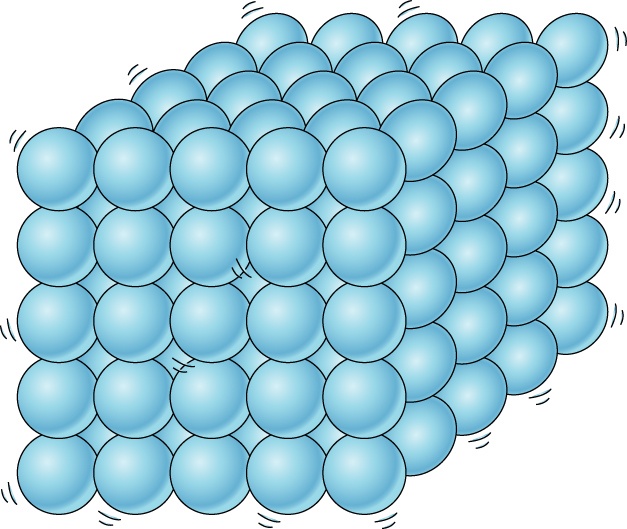
What state of matter?
Solid
Liquid
Gas
Plasma!!!
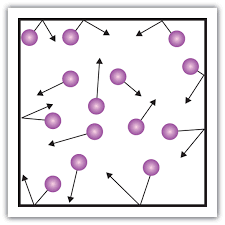
What state of matter?
Solid
Liquid
Gas

TRUE/FALSE: Matter can change from one phase to the other just as water can evaporate.
True
False

Based on this photo, when liquid turning to gas is which of the following down below?
Consensation
Freezing
Evaporation
Melting
In which state of matter are molecules always moving?
Liquid
Solid
Gas
Molecules are ALWAYS moving in all three states!
How are molecules moving in a LIQUID?
Moving in place
Moving around each other
Moving away from each other
Not moving
How are molecules moving in a SOLID?
Moving in place.
Moving around each other.
Moving away from each other.
Not moving at all.
How are molecules moving in a GAS.
Moving in place.
Moving around each other.
Moving away from each other.
Not moving at all.
Water molecules were moving IN PLACE and then after energy was transferred into it they were moving AROUND EACH OTHER. What phase change occured?
Freezing
Melting
Evaporation
Condensation
If you transfer energy INTO a substance, how will the movement of the molecules change?
They will move SLOWER.
They will move FASTER.
They will not change speed.
Not enough information is provided.
If you transfer energy OUT OF a substance, how will the movement of the molecules change?
They will move SLOWER.
They will move FASTER.
They will not change speed.
Not enough information is provided.
If you transfer energy INTO a liquid, which state of matter will it be in?
Solid
Gas
Plasma
Water
If you transfer energy OUT OF a liquid, which state of matter will it be in?
Solid
Gas
Plasma
Water
If you transfer energy into two substances, which will EVAPORATE faster?
The one with WEAK attraction.
The one with STRONG attraction.
Neither will evaporate.
Both will evaporate.
What happens to the speed of the molecules as the temperature increases?
The speed increases.
The speed decreases.
The speed remains the same.
The speed doubles.
What happens to the speed of the molecules as the temperature decreases?
The speed increases.
The speed decreases.
The speed remains the same.
The speed doubles.

The energy that an object has because it is moving
Molecule
Refute
Density
Kinetic Energy
What remains constant according to Charles’ Law?
Length
Pressure
Temperature
Volume
In CHARLES'S LAW, volume and temperature have a ______ proportionality.
direct
inverse
linear
exponential
In BOYLE'S LAW, when Pressure increases then the Volume must...
Increase
Decrease
In BOYLE'S LAW, what type of relationship do pressure and volume have?
Direct
Inverse
No relationship
Which container will have a lower pressure?
left
right
they both have the same pressure

The relationship of which two variables are compared in Boyle's Law?
pressure & volume
volume & temperature
temperature & pressure
volume & moles (amount of gas)

What type of relationship is Charles' Law?
Inverse
Direct
Not enough information
#goals
In CHARLES' LAW, at constant pressure, what happens to temperature of a gas when the volume doubles?
The temperature also doubles.
The temperature decreases to half of its original volume.
The temperature doesn't change.
The temperature quadruples.

Pressure in gases is a measure of:
the number of collisions per second of the particles with the side of the container.
the force of the collisions of the particles with the side of the container.
the amount of space taken up by the particles in the container.
None of the above

The reason gases can be compressed is because:
The particles are very close together.
The particles are merely vibrating.
The particles are unable to move.
The particles are very far apart.

The amount of force that is exerted on a balloon by the gas inside the balloon is _____.
temperature
Pressure
volume
heat

As long as the temperature does not change, as the volume _____ the pressure _____.
increases, increases
increases, decreases
decreases, decreases
decreases, stays the same

As the space in a container gets smaller, the _____ decreases.
pressure
temperature
heat
volume
When a liquid freezes, its particles get ____.
become bigger
closer together
farther apart
Nothing change

How would the pressure of the gas in an air tank change if more gas particles are added?
pressure stays the same
pressure increases
pressure decreases
pressure is minimal
One goes up, one goes down is which of the following: PICK TWO
Inverse proportion
Charles' Law
Direct Proportion
Boyles' Law
BOTH goes up, BOTH goes down is which of the following: PICK TWO
Inverse proportion
Charles' Law
Direct Proportion
Boyles' Law

What type of relationship to pressure and volume have?
direct
no relationship
inverse
I don't know

