
Font size
 Worksheets
Final Review
Total questions: 100
Worksheet time: 59mins


What type of energy is being shown here?
nuclear
chemical
electric
elastic

What types of energy are being shown here?
light and sound
sound and mechanical
mechanical and light
nuclear and sound

What types of energy are being shown here?
thermal, light, electric
nuclear, light, electric
chemical, light, sound
chemical, electric, light

What types of energy are being shown here?
sound, light, elastic, mechanical
electric, light, chemical, mechanical
light, mechanical, sound, nuclear
chemical, mechanical, sound, thermal

What types of energy are being shown here?
electric, thermal, mechanical
sound, mechanical, light
chemical, light, thermal
nuclear, light, chemical

What types of energy are being shown here?
chemical, electric
electric, thermal
elastic, chemical
light, mechanical

What types of energy are being shown here?
gravitational potential, mechanical
light, gravitation potential
sound, mechanical
chemical, elastic

What types of energy are being shown here?
electric, thermal, nuclear, light
mechanical, electric, chemical, light
thermal, sound, light, mechanical
thermal, light, electric, nuclear

What types of energy are being shown here?
mechanical, gravitational potential, sound, chemical
chemical, light, thermal
elastic, electricity, nuclear, sound
heat, chemical, gravitational potential

What type of energy is being shown here?
thermal
light
chemical
elastic

What types of energy are being shown here?
chemical, light, nuclear
electric, thermal, light
thermal, sound, nuclear
thermal, nuclear, gravitational potential

What types of energy are being shown here?
chemical, light
chemical, thermal
elastic, mechanical
mechanical, electric
When someone eats food, what does the chemical energy turn into when they run?
(a)
What types of energy are present in a tv?
electric
sound
light
thermal
elastic
What word describes a transfer of energy?
moving
changing
What word describes a transformation of energy?
moving
changing
Give an example of a transformation of energy.
Sentence stem: __________ ---> ____________
What type of energy is present in a car?
chemical
elastic
nuclear
What other type of energy is present in a car?
nuclear
mechanical
elastic
What type of energy is present in your microwave?
sound
elastic
chemical
nuclear


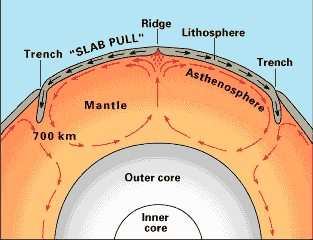
What is the source of energy that drives plate movement?
the subducton of the sea floor
the different densities of the oceanic and crustal plates
convection currents in the asthenosphere
the friction force between the plates that move past each other
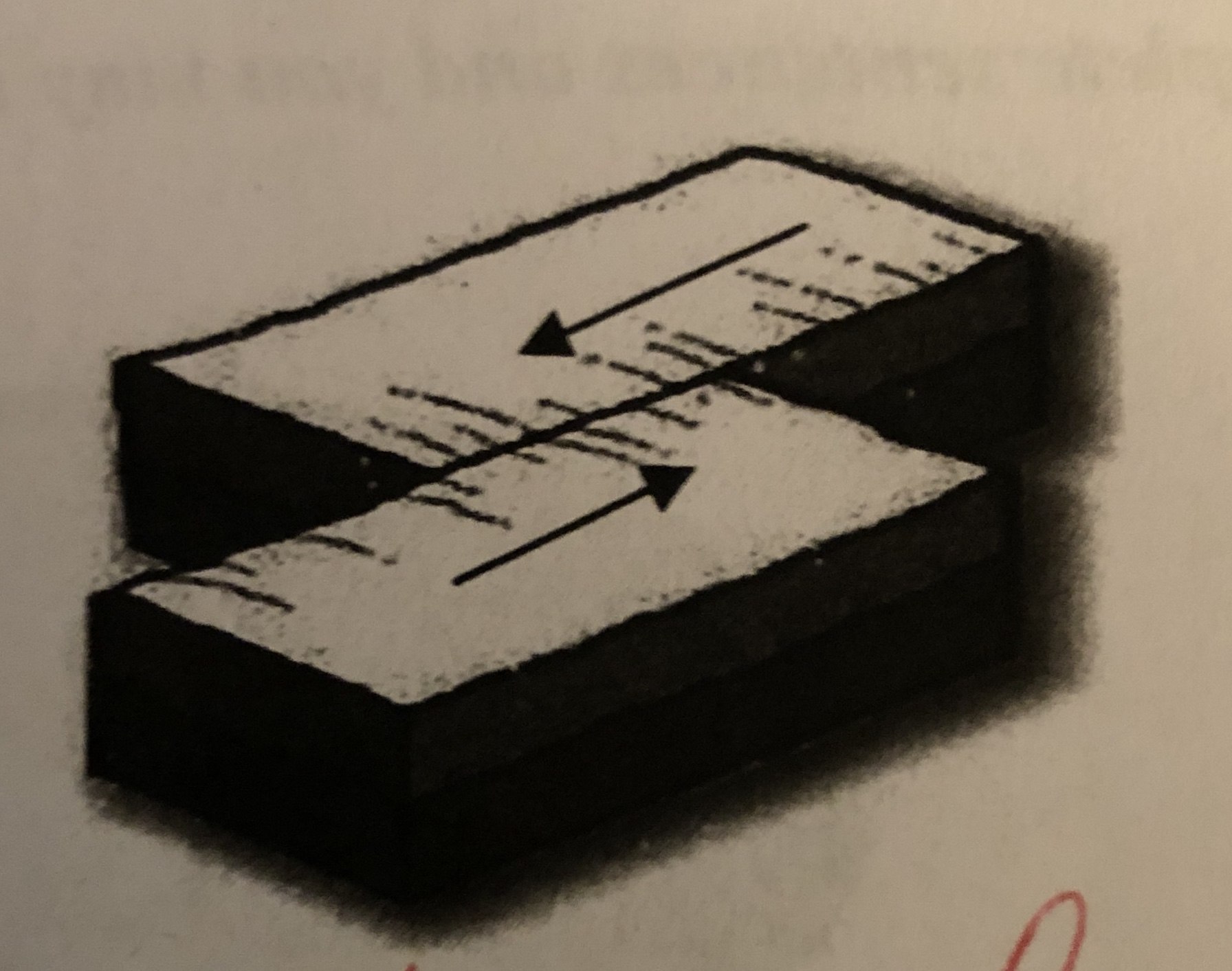
What type of boundary is this?
convergent
divergent
transform


Homologous structures


Change in species over time
(a)

No evolution - species is well adapted to its environment
fossil
homologous structures
stasis

Similar DNA sequences
Embryological Homologies
Homologous Structures
Analogous Structures
Molecular Structures
Same/Similar structures
Homologous Structures
Analogous Structures
Molecular Structures
Embryonic Homologous

Molecular
Embryonic Homologies
Homologous Structures
Adaptation
Helps organism die
Helps organisms survive and reproduce
Molecular and embryonic homolgoes
Common ancestor

Based on the cladogram, the ancestral species most likely had -
a vertebral column
a vertebral column and hair
sharp teeth and retractable claws
the ability to purr
Based on the cladogram, which species is most closely related to the house cat?
wolf
horse
tiger
turtle

These limbs provide evidence of common ancestry because they-
have the same basic structure
perform the same function
are the same size
are parts of mammals

The fact that both these mammals incubate their immature offspring in a pouch provided evidence that they -
belong to the same species
must range great distances to eat
have very similar skeletal structures
are descended from a common ancestor
Biodiversity, aka biological diversity, usually refers to
the same species in a general location
the number of different species in a given area
the number of animal species in a given area
the number of plant species in a given area
A species that is likely to become extinct if protective measures are not taken immediately is known as
threatened species
endemic species
keystone species
endangered species
Which applies to this environmental problem:
Invasive carp are fast-growing, aggressive, and adaptable fish that are outcompeting native fish species for food and habitat in much of the mid-section of the United States.
Habitat Loss
Invasive Species
Pollution
Population Growth
Over-exploitation
Which applies to this environmental problem:
Humans produce an excessive amount of artificial light which can interfere with natural cycles of light/dark in an environment and can confuse animals.
Habitat Loss
Invasive Species
Pollution
Population Growth
Over-exploitation
How is the current decline in biodiversity different from the previous mass extinctions that Earth has experienced?
It is happening much more slowly
This time it is not really happening
It is made worse by an asteroid hitting Earth
This is being caused by humans
Which of the following is NOT a way in which humans are destroying habitats?
Gathering rain water to use to water crops
Clearing out prairies to grow a single crop
Cutting trees to use as toilet paper
Building a shopping mall with a large parking lot
The excessive use of species that have economic value is known as
pollution
habitat destruction
over - exploitation
climate change
What is an invasive species?
An organism that is new to an environment that has positive effects on the environment.
An organism that is native to an environment that has negative effects on the environment.
An organism that is new to an environment that has negative effects on the environment.
An organism that is native to an environment that has positive effects on the environment.
Which applies to this environmental problem:
The zebra mussel is outcompeting native species and causing damage in the Missouri River.
Habitat Loss
Invasive Species
Pollution
Population Growth
Over-exploitation
Which applies to this environmental problem:
As more people are added to the Earth, more resources are required to meet their needs.
Habitat Loss
Invasive Species
Pollution
Population Growth
Over-exploitation
Which applies to this environmental problem:
The albatross are dying from eating plastic items that look like food.
Habitat Loss
Invasive Species
Pollution
Population Growth
Over-exploitation
Which applies to this environmental problem:
Shark fin soup is consumed by millions of people in South East Asia.
Habitat Loss
Invasive Species
Pollution
Population Growth
Over-exploitation
The hottest spots for species diversity are close to the _____________.
Coast
Florida
Equator
Poles
True or False: Human beings are wiping out species much faster than nature creates them, causing what scientists call a "6th extinction"
true
false
How does carbon dioxide return to the atmosphere?
Photosynthesis
Combustion and Cellular Respiration
Consumption
Decomposition
Which one of these is not considered a biological process?
Nitrogen Fixation by bacteria
Consumption by animals
Elimination of Waste by animals
Erosion
Which one of these is not a way that carbon cycles?
Transpiration
Photosynthesis
Cellular Respiration
Burning Fossil Fuels
What is the main thing that carries out Nitrogen Fixation?
Lightning
Bacteria
Plants
Humans
What part of the water cycle needs a living organism to occur?
Evaporation
Condensation
Transpiration
Precipitation
How does a non-human living organism affect the water cycle? (short answer/fill in the blank)
Trees allow transpiration
Animals drink it
All of the above
Hills can cause runoff
How do non-human living things affect the carbon cycle (fill in the blank/short answer)
animals do cellular respiration
plants do photosynthesis
Fires release carbon into the atmosphere
All of the above
How do non-human living things participate in the nitrogen cycle? (fill in the blank/short answer)
Bacteria decompose organic matter (decomposition)
animals move nitrogen during consumption
Bacteria convert waste into ammonia (ammonification)
All of the above
Describe how human's negatively impact the water cycle (short answer- need detail)
Pollution
Deforestation
Building on and paving areas
All of the above
Describe how humans negatively impact the Carbon Cycle (short answer- need detail)
Cutting down trees
Eating plants
Combustion (putting CO2 into the atmosphere)
Cellular Respiration
How do humans negatively affect the nitrogen cycle ? (short answer, need detail)
A. Use too much fertilizers causing an imbalance in soil.
B. Combustion- releasing N into the atmosphere
Eating plants
Both A and B

