
 Worksheets
Astronomy_midterms
Total questions: 136
Worksheet time: 3hrs 45mins
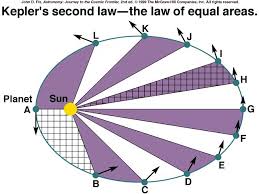

The farther a planet is from the sun, the
less time it will take to revolve around the sun
more time it will take to revolve around the sun
distance does not play a role
What will result in the most eccentric elliptical orbit
when the focal points are closest together
when the focal points are on top of one another
then the focal points are farthest apart
One astronomical unit (1 AU) is the
average distance from the sun to Earth
average distance from the sun to Earth's moon
average distance from the sun to Mars
A random number made up by astronomers
Which law states that the acceleration of an object depends on the force exerted on it and its mass?
1st Law
2nd Law
3rd Law
Which law states that for every action there is an equal and opposite reaction?
1st Law
2nd Law
3rd Law
Which law states that an object at rest stays at rest and an object in motion stays in motion unless an unbalanced force acts on it?
1st Law
2nd Law
3rd Law
Which activity would BEST demonstrate Newton's law of Inertia?
A plate sits on a table top.
A lady pushes a grocery cart.
A child jumps on a trampoline.
A boy swings a baseball bat.
What is the name of Newton's 2nd Law of Motion?
Law of Force and Acceleration
Law of Inertia
Law of Action / Reaction
What is the name of Newton's 3rd Law of Motion?
Law of Force and Acceleration
Law of Inertia
Law of Action / Reaction
When there is an INCREASE in MASS of an object you will have a DECREASE in ______________.
friction
acceleration
force
gravity
Weight is a force that depends on mass and:
friction
gravity
magnetism
energy
Compared to your weight and mass on Earth, if you were on the moon:
your weight and mass would be less.
your weight would be less but your mass would remain the same.
your weight would remain the same, but your mass would be less.
your weight would be greater, but your mass would remain the same.
What is the weight of your backpack in Newtons? The mass of your backpack is 10 kg. (assume: g = 9.8 m/s2)
10 N
9.8 N
98 N
980 N

The picture shoes two stacks of books with masses of 3 kg and 6 kg, respectively. How do their weight compare on Earth?
They have the same weight.
The 6 kg stack has 1/2 the weight of the 3 kg stack.
The 6 kg stack has 3 times the weight of the 3 kg stack.
The 6 kg stack has twice the weight of the 3 kg stack.
The correct equation to solve for weight in Newtons is:
W = m/g
W = g/m
W = grams
W = mg
On Earth, the acceleration due to gravity is constant. Without air resistance, objects will fall to the ground at the same acceleration.
True
False
An object’s weight:
is caused because it is pulled towards the Earth.
is caused by the Earth’s magnetic field.
is caused by the air pushing down on it.
stays the same, even if its mass changes.
The direction ‘down’ is:
the same everywhere.
at right angles to the ground.
towards the centre of the Earth.
different under water.
Which statement is not true?
The Earth attracts objects because it has a large mass.
You are attracting this Quiz paper with a small force of gravity.
Only large objects like the Earth produce a force of gravity.
Your body is attracting the Earth.
Gravity is less on the Moon than on the Earth because:
the Moon is smaller than the Earth.
the Moon has a bigger mass than the Earth.
the Moon is bigger than the Earth.
the Moon has less mass than the Earth.
On Mars, the strength of gravity is 9 N/kg.
If your mass is 50 kg, how much would you weigh on Mars?
450N
90N
50N
45N
Which statement is true?
Gravity always pulls a spacecraft towards the nearest planet.
There is no gravity in space.
Gravity is the same at all times during a space journey.
Gravity depends on how close a spacecraft is to a planet.
There have been different ideas about the Solar System in the past. Which one of these was not suggested?
The Moon is at the centre with the planets orbiting around it.
The planets are fixed to solid spheres that move around the Earth.
The planets move in circles around the Earth.
The planets move in circles around the Sun.
A satellite is:
anything that orbits a planet.
anything that orbits the Sun.
something man-made that orbits the Earth.
a machine that sends TV programmes.
Artificial satellites can be used for:
sending telephone calls.
taking photos of the stars and other galaxies.
helping people to find where they are on the Earth.
all of the above.
What is the sensation of weightlessness commonly experienced in?
When moving at constant velocity
In a state of free fall
When standing still
Only in space
If there was no gravity in space
objects would not orbit, they would fly away in straight lines
then astronauts wouldn't be weightless
the solar system would not exist
the moon would not orbit the earth
What happens to the force of gravity acting on an astronaut in orbit compared to on Earth?
It increases significantly
It decreases slightly
It remains the same
It becomes zero
What provides the force that keeps an astronaut circling around the earth in orbit (rather than moving forward in a straight line)?
The astronaut's speed
The force of gravity
The lack of air resistance
The vacuum of space
What force keeps the Moon in orbit around the Earth?
Magnetic force
Centrifugal force
Gravity
Electric force
What would happen to an object if it stops moving while in orbit around Earth?
It would float stationary in space.
It would continue in a straight line due to inertia.
It would fall towards Earth due to gravity.
It would move away from Earth into deeper space.
Which of the following equations represents the gravitational force between two masses ( m1 and m2 ) separated by a distance ( r )?
F=m1×m2×r
F=rm1×m2
F=r2m1×m2
F=G×r2m1×m2
The Law of Conservation of Momentum states:
The total momentum before a collision is equal to the total momentum after a collision.
The total momentum before a collision is greater than the total momentum after a collision.
The total momentum before a collision is less than the total momentum after a collision.
The total momentum before a collision is not related to the total momentum after a collision.
Which has more momentum: a car stopped at a red light or a bike moving at 15 mph?
car
Bike
Both has equal momentum
Cannot predict
What year was Pluto discovered?
79 AD
1930
2020
2000

Which of Pluto's moons is the largest (about half the size of Pluto)?
Charon
Nix
Hydra
Kerberos
Styx
What philosopher believed the Earth was at the center of the solar system?
Copernicus
Ptolemy
Galileo
Newton
What philosopher proposed the heliocentric theory that the sun was at the center of the solar system?
Copernicus
Ptolemy
Galileo
Newton
Which scientist proved the existence of gravity?
Copernicus
Ptolemy
Newton
Galileo
Around which planet did Galileo discover 4 moons?
Earth
Mars
Saturn
Jupiter
Which mathematician calculated the orbits of planets revolving around the sun?
Brahe
Copernicus
Galileo
Kepler
He discoverd Uranus while surveying stars in the night sky using a telescope that he had built himself.
The discovery was made based on mathematical calculations of its predicted position due to observed perturbations in the orbit of the planet Uranus, who discovered Neptune?
who discovered Pluto?

From the choices presented - which is the largest object or structure in space?
Earth
The Sun
The Solar System
The asteroid belt

Which object or structure is the smallest?
Earth
Mars
Jupiter
The Solar System

The largest single object in the solar system is ______.
Saturn
Jupiter
Earth
The Sun

The largest structure in the entire Universe is the
Universe itself.
Orion Nebula.
Milky Way Galaxy.
Virgo Supercluster.

What is a "light year?"
a distance of about 6 trillion miles (9.8 trillion km)
the distance traveled by the speed of light in 1 year
the time traveled by the speed of light in 1 year
a distance of about 6 billion miles (9.8 billion km)

Why do astronomers use light years as a measurement?
because miles & kilometers are sufficient
it's an easier way to describe huge distances
it's an easier way to describe large objects such as stars
because distances in space are extremely vast

The Milky Way galaxy is approximately _____ thousand light years in diameter.
1000
10
100
1

It would take a single beam of light about ______ years to travel across the Milky Way.
1 million
10
100,000
1 billion

The visible Universe may contain over _____ trillion galaxies.
100
1
.1
100,000

Which statement best describes constellations?
indecipherable so-called "patterns" that kinda make sense
stars that are fairly close to each other
patterns of stars that resemble animals and/or other objects
pattern of stars in the night sky that reflects a culture

The ecliptic describes the plane (or line) in which the Sun & the planets travel.
True
False

The zodiac constellations include all 88 recognized (western) constellations.
True
False

Polaris is also known as the "north star" and will remain so for the next 13,000 years.
True
False

_______ is/are used to find specific objects and constellations on the celestial sphere.
Right ascension
Azimuth
Celestial coordinates
Declination

Right ascension is a projection of ______ into space; declination is a projection of ______.
the north pole, the south pole
coordinates, azimuth
latitude, longitude
longitude, latitude

What is the difference between the angle of measurement terms azimuth & altitude?
altitude is only used to describe elevation
azimuth is a "side to side" circle; altitude is "up & down"
azimuth is a "up & down" circle; altitude is "side to side"
both are projections of latitude & longitude

The solar day is measured from sunrise to sunrise - while the sidereal day is measured from
star rise to star rise.
day to night & then back again.
sunrise to sunset.
star rise to sunset.

Solstices occur when the Sun reaches the highest & lowest position in the sky. This occurs
about once a year.
around March 21st & Sept. 21st.
very rarely.
around June 21st & Dec. 21st.

Equinoxes occur (around March 21st & Sept. 21st) when the Sun appears to be directly
over the Tropic of Capricorn.
over the Tropic of Cancer.
over the Equator.
between the Earth & Moon.

Earth's seasons are caused by
the precession of Earth's axis.
its distance from the Sun.
wobbles in its orbit and axis of rotation.
its tilt; revolution around the Sun, and spherical shape.

What is thought to be one of the main purposes of building Stonehenge?
to predict the future
to predict celestial events and seasons
to create a lasting memorial to the gods
to confound and confuse future historians

The ability to predict seasons & celestial events were very important to the ancients because
otherwise they would not know the time of day.
there was no other way to figure out planetary movements.
it allowed for crops to be planted and to keep track of time
the phases of the Moon was very important to know.

The Maya used a very sophisticated observatory called _______ to study the heavens.
Chichen Itza
Stonehenge
the pyramids
the Caracol

The 1000 year-old Mayan observatory was much more sophisticated than Stonehenge because it was
located in a more advantageous geographical area.
able to predict the position of Venus and more celestial events.
created by aliens.
not as old or broken down.

Why was the supernova of 1054 A.D. so important to astronomy?
because the Chinese were able to view it
it was the first time that a star actually blew up
the event was one of the first to be recorded world-wide
supernovas were (and still are) fairly common events

Terms like "azimuth" "zenith" and major star names like "Betelgeuse" originated from
Western European countries during the Renaissance.
Latin words with roots from the Ancient Greeks.
Muslim cultures during the Middle Ages.
Muslim cultures during the Middle Ages.

Why did the Ancient Greeks consider the stars to be "fixed" and non-moving?
stars did not change positions over time like planets
the stars were represented by the gods
stars were considered to be so old they couldn't move
they knew that the stars were always there

Then Sun & the Moon's movement across the heavens were ______ according to the Ancient Greeks.
slightly erratic leading to eclipses
predictable
not very predictable
bizarre

Why were planetary motions unpredictable?
because they were representative of the Greek gods
planets "wandered" or moved in backward loops unexpectedly
ancient peoples had very little insight into the heavens
they did not represent the stars so they were unpredictable

The "backward loops" that most planets would appear to do once a year is called
planetary motion.
retrograde motion.
prograde motion.
a mystery.

Retrograde motion was adequately explained by the geocentric theory and by Ptolemy's model.
True
False

Ptolemy used epicycles and deferents in his heliocentric model to explain planetary motion.
True
False

The geocentric model of the universe was basically accepted for over one thousand years.
True
False

The Ancient Greeks considered the _____ a perfect shape and had to represent the heavens.
parabola
the Earth
circle
Moon to be

Why was the Ptolemaic model of the universe accepted for so long?
no one had ever thought of a better explanation
people were prone to superstition
it basically explained most of the movements of the planets
religious & cultural reasons liked to put Earth at the center

Aristarchus (of ancient Greece) correctly predicted the _______ theory of the Universe.
geocentric
heliocentric
earth-centered
sun-centered

Heliocentric theory has the ____ revolving around the Sun, with only the ____ orbiting Earth.
Moon, planets
Moon, Sun
stars, Moon
planets, Moon

How did the heliocentric model of the Universe explain retrograde motion of the planets?
orbital speeds led to the illusion of retrograde motion
planetary motion was apparent and not real
by using epicycles & deferents
the model did not fully explain retrograde motion

What was the main reason why the heliocentric model made more sense than the geocentric model?
it was simpler
it fully explained planetary motion
it explained why the stars were "fixed" in the night sky
it did not require over 80 "circles within circles"

Why did Copernicus wait to publish his book on heliocentricity?
there wasn't enough scientific data
he wasn't sure if his theory was correct
he was fearful of the repercussions
the theory was originally Aristarchus' idea

_______ was the first to use a telescope to observe the heavens.
Newton
Kepler
Copernicus
Galileo

Galileo also discovered that the Moon had
what he thought were oceans (or maria).
active volcanoes.
mountains.
ice.

The combined discoveries of Galileo (using his telescope) provided direct evidence for
the geocentric model.
the Copernican model of the Universe.
Earth being a sphere.
the Ptolemaic model of the Universe

Why did Galileo receive so much criticism for his published observations & studies?
the observations made were crude due to technological limits
his data was not accurate
the findings were published in Latin & no one could read it
his findings went against the strict church teachings

What happened to Galileo after he published his findings in 1633?
not much
he was placed under house arrest
he made a fortune and retired back to Pisa, Italy
he was tried by the Inquisition and found guilty of heresy


What is the definition of parallax that they are talking about?
The change in color of an object when viewed from different angles.
The process of measuring the distance between two objects in space.
The phenomenon of objects appearing larger when viewed from a closer distance.
The apparent shift in the position of an object when viewed from different angles.
During a stargazing night, Liam, Arjun, and Grace were discussing how parallax is used in astronomy. Can you help them understand its application?
Parallax is used to study the composition of planets.
Parallax is used to determine the age of stars.
Parallax is used to measure the distance to nearby stars.
Parallax is used to measure the size of galaxies.
What is a light year?
The distance that light travels in one year in a vacuum.
The time it takes for light to travel one year
The speed at which light travels in one year
The distance that sound travels in one year
Avery, Laveah, and Ky are stargazing and discussing how astronomers measure the distance to stars. They come up with different ideas. Which method correctly describes the use of parallax to measure the distance to stars?
Avery suggests analyzing the star's composition
Leveah thinks it's by measuring the brightness of the star
Ky believes it's by observing the apparent shift in the position of a star when viewed from different points in Earth's orbit around the Sun
They all agree on using a telescope to directly measure the distance
Parallax is used to determine a star’s
distance from Earth.
brightness.
How does parallax change as the distance to the object increases?
decreases
increases
How far away is Earth from the sun in Astronomical Units?
150 million
1
If a star has a parallax angle of 1 arcseconds, how far away from Earth is it in lightyears?
3.26
1
Constellation is a group of (a) to make a pattern in the sky.

What is the name of this constellation?
Big dipper
Orion
Southern Cross
Scorpion

What is the name of this constellation?
Southern Cross
Big dipper
Orion
Scorpion
Scorpio

What is the pattern of this constellation?
Kite
Ladle
Hunter
Big dipper

What is the pattern for this constellation?
Big dipper
Southern Cross
Kite
Hunter

Which statements are correct about this constellation?
The largest constellation.
It can be found at southern area.
It shows north direction.
It can be found at northern area.
The smallest constellation.
Which constellation shows harvesting season?


Which constellation shows qibla direction?


Which constellation shows planting season?


If you are lost at southern hemisphere, which constellation to look out for direction?
Big dipper
Southern cross
Orion
Scorpio
Why Orion constellation is used to show direction of praying for Muslim?
Because it is the only constellation in the sky
Because it can be found in Northern and Southerrn hemisphere
Because it is the only constellation can show the direction
_______ are balls of gases made up of mainly hydrogen and helium.
Moons
Stars
Planets
Asteroids
________ do not give out heat and light.
Planets
Stars
Sun
Betelgeuse


The distance light can travel in one year is ______________
15,000 kilometers
1 light-year
15 Astronomical Units
6,000 miles
Which unit of measurement is used to measure distances within our solar system?
inches
kilometers
miles
Astronomical units
The speed of light in a vacuum is approximately 0.3Gm/s. What is its speed in meters per second (m/s)
1 Gigameter = 1 x 10⁹ meter
3 x 10⁸ m/s
3 x 10⁻⁸ m/s
6 x 10⁹ m/s
200.0 cm = _?_ km
20.00
2.000
0.002
0.02
What is a LY in AU
63,240 AU
30,000,000 AU
30,000,000 AU
3.26 AU
1 AU in meters
3 x 10⁸ m
9.46 x 10¹⁵m
1.55 x 10¹¹ m
1.25 million m

