
 Worksheets
Office Hours Reteach: Scientific Variables
Total questions: 133
Worksheet time: 3hrs 8mins

In this graph, scientists counted how many seeds were made by a fruit depending on how the flower was pollinated. (Self pollinated, by a bee or by the farmer/manual) What is the RESPONDING/dependent variable?
The number of seeds
The type of fruit
How the flower was pollinated (self, bee, manual)
In this graph, scientists counted how many seeds were made by a fruit depending on how the flower was pollinated. (Self pollinated, by a bee or by the farmer/manual) What is the MANIPULATED/Independent variable?
The number of seeds
The type of fruit
How the flower was pollinated (self, bee, manual)

What is something you would have to keep constant in this experiment? (select all that apply)
amount of sunlight all plants get
amount of water all plants get
type of plants
Plastic or Cloth covering
Which of these contains steps in the right order?
Ask a question, research, state your hypothesis, experiment, analyze, draw a conclusion
State your hypothesis, ask a question, research, experiment, analyze, draw a conclusion
State your hypothesis, ask a question, research, draw a conclusion, experiment, analyze
Ask a question, state your hypothesis, research, experiment, analyze and draw a conclusion, share the results
A series of steps used by scientists to solve a problem or answer a question.
Hypothesis
Scientific method
Data collection
Experiment
All factors that can change in an experiment.
Results
Variables
Conclusions
Data
Performing a test or experiment allows you to test your ___________.
Conclusions
Hypothesis
Data
Question
The outcome of your test.
Question
Variable
Results
Experiment
If you are testing the buoyancy of a cotton ball and you leave one plain, cover one half in oil, and cover the third in oil completely then place each in water, what is the independent variable?
Time
Water
Cotton ball
Amount of oil
The dependent variable is
The variable that you change in an investigation
The variable that you measure in an investigation
A variable that you keep the same in an investigation
A controlled experiment is designed to test
The effect of one variable on other
all the variables
the controlled variables only
More trials or repetitions of an experiment will make the results or conclusions more .........................
Accurate
False
Experimental
Having an experiment repeated by others is called ?
Repetition
Replication
Experiment
During replications others have to follow the same procedures to get the same output or results
True
False
SC.7.N.1.2
Scientists frequently repeat the experiments of others scientists. Why is this important in science?
a. Scientists often ask each other for help in performing experiments.
b. Replication of experiments helps to confirm and verify results.
c. Scientists frequently perform other scientists’ experiments in order to practice their technique.
d. Repeating experiments is an effective way to make sure a laboratory is in optimal condition.
a
b
c
d
SC.7.N.1.2
Cara read an article on why repetition and replication are so important, but she did not understand the difference between them. Which of the following best explains the two terms?
a. Repetition is when a scientist repeats an experiment; replication is when a scientist conducts an experiment on genetic material.
b. Repetition is when a scientist does the same experiment a number of times; replication is when other scientists reproduce a scientist’s experiment.
c. Repetition is when a scientist publishes in more than one scientific periodical; replication is when another scientist reproduces another scientist’s results.
d. Repetition is when a scientist commits an error in an experiment the first time and must repeat it; replication is when a scientist repeats an experiment to make sure it is valid.
a
b
c
d
The one factor that a scientist changes during an experiment.
Controlled Variable
Dependent Variable
Independent Variable
The variable that is measured.
Controlled Variable
Dependent Variable
Independent Variable
In a controlled experiment, how many independent variables can be tested at a time?
one
none
two or more
how ever many makes sense.
Why is it important to have only one independent variable and to control the other variables when performing science experiments?
So you can tell which factor is causing the change in the experiment.
It does not matter, you can have as many independent variables as you want.
Ben makes five paper helicopters with different wing lengths. He drops them the same way from a height of two meters for five trials each. He records the amount of time it takes for each helicopter to fall to the ground.
What is the independent variable?
Dropping the same way
Wing Length
Amount of time it takes the helicopter to hit the floor
Dropping from the same height
Ben makes five paper helicopters with different wing lengths. He drops them the same way from a height of two meters for five trials each. He records the amount of time it takes for each helicopter to fall to the ground.
What is the dependent variable?
Dropping the same way
Wing Length
Amount of time it takes the helicopter to hit the floor
Dropping from the same height
Ben makes five paper helicopters with different wing lengths. He drops them the same way from a height of two meters for five trials each. He records the amount of time it takes for each helicopter to fall to the ground.
What are two controlled variables? (Select 2 answers)
Dropping the same way
Wing Length
Amount of time it takes the helicopter to hit the floor
Dropping from the same height
Cindy wanted to find out how the amount of sunlight affects the growth of plants. She placed two tomato plants in 10 inch pots with potting soil and watered them ¼ cup each day. One plant was placed under a cardboard box and one was placed in the sunlight. She measured the growth of the plant each week for three weeks.
What are two controlled variables? (Select 2)
Using the same type of plant
Each plant was placed in a 10 inch pot
The growth of the plant
One plant is in the sunlight and the other is under a box
In an experiment to measure the effect of sunlight on plant growth, Aria observes the height of the plants. What is the dependent variable in this experiment?
The amount of sunlight the plants receive
The type of plants used in the experiment
The color of the plant pots
The growth of the plants as measured by their height
In Rohan's science experiment, what would be considered as an independent variable?
The variable that Rohan changes or manipulates during the experiment
The variable that Anika measures in the experiment
The variable that Aria ensures remains constant throughout the experiment
The variable that is randomly selected by the experimenter
Anika, Benjamin, and Lily are working on a science project. Which of the following is NOT a step they would take in the scientific method for their project?
Analyzing data
Drawing conclusions
Conducting experiments
Formulating a hypothesis
Arjun is working on a science project to build a model bridge. What is the first step in the engineering process for his project?
Solution implementation
Data analysis
Prototype development
Problem identification
In an experiment to measure the impact of study time on test scores, Arjun recorded the number of hours he studied and the scores he received on his tests. Which of the following is an example of a dependent variable?
The color of Arjun's shirt
The number of hours Arjun studied
The temperature outside on the day of Arjun's study
The score Arjun received on his test
Henry is conducting an experiment to see how different temperatures affect the time it takes for sugar to dissolve in water. Which of the following is an example of an independent variable in Henry's experiment?
Option A: Time
Option B: Temperature
Option C: Amount of sugar
Option D: Speed of stirring
David and Anika are conducting a scientific experiment to determine the effect of sunlight on plant growth. What is the purpose of having a control group of plants that are not exposed to sunlight?
To manipulate the independent variable
To collect data for statistical analysis
To serve as a baseline for comparison with the plants exposed to sunlight
To ensure that the experiment is conducted in a controlled environment
Benjamin, Abigail, and Arjun are working on a science project. They have conducted experiments, collected data, and formulated a hypothesis. What is their final step in the scientific method?
Conducting more experiments
Drawing conclusions or making a hypothesis
Collecting more data
Formulating another hypothesis
Grace, Charlotte, and Priya are working on a school project. They have identified a problem and are following the engineering process. What should they do as the second step?
Implement the solution
Brainstorm solutions
Define the problem or need
Test and evaluate
Harper, David, and Scarlett are discussing the characteristics of a good hypothesis for their science project. According to them, which of the following is NOT a characteristic of a good hypothesis?
Based on prior knowledge
Specific and measurable
Vague or untestable
Supported by evidence
Lily and Rohan are designing an experiment to test the strength of different materials. What should they consider as the dependent variable in their experiment?
The type of materials used
The weight applied to the materials
The strength of the materials as measured by the force required to break them
The temperature at which the experiment is conducted
During a science fair, Aria and Henry are presenting their project on water filtration. What would be the first step in the engineering process for their project?
Testing the water filter prototype
Identifying the contaminants in water
Designing the water filter system
Defining the criteria for clean water
Grace is conducting an experiment to determine how the pH level of soil affects plant growth. Which of the following would be an independent variable in her experiment?
The type of plant she is growing
The pH level of the soil
The height of the plants
The amount of water given to the plants
Emma and Lucas are designing an experiment to test the effect of different fertilizers on plant growth. What should they use as a control in their experiment?
A plant that receives no water
A plant that receives no sunlight
A plant that receives water but no fertilizer
A plant that is grown in a different type of soil
During their chemistry project, Mia and Noah are tasked with measuring the rate of a chemical reaction. Which of the following would be a dependent variable in their experiment?
The concentration of reactants
The temperature at which the reaction is carried out
The time taken for the reaction to complete
The volume of the reaction vessel
Olivia and Ethan are working on a physics project to determine the efficiency of different light bulbs. What is an example of an independent variable in their experiment?
The cost of the light bulbs
The brand of the light bulbs
The amount of electricity used by the light bulbs
The type of light bulbs being tested (LED, incandescent, etc.)
What is a hypothesis?
the thing changed on purpose in the experiment
an explanation about what you observed
a prediction based on background knowledge
a guess about the outcome of an experiment

Choose the correct hypothesis for "What effect does studying have on test grades?"
IF I study for 6 hours, THEN my test grade will be the best, BECAUSE studying improves your knowledge retention (Klein).
IF I have a good test grade, THEN I will study BECAUSE it's important (Klein).
Good grades are from studying BECAUSE you must have studied a lot.

A students was doing an experiment using the scientific method. Every three days the student plans to count the green leaves. Which would be a good hypothesis for this experiment?
If plants are placed in direct sunlight, then they will grow lots of green leaves, because leaves need sunlight to produce glucose (Klein)
If plants are places in bright light, then they will grow the most green leaves because leaves need sunlight to produce glucose (Klein).
If plants are place in clay pots, then they will grow more green leaves than plastic pots because leaves need sunlight to produce glucose (Klein).
If plants are in warmer temperatures, then they will grow more green leaves because leaves need sunlight to produce glucose (Klein).
What words should be in your hypothesis? Check all that apply
If
then
because
citation
What do you put in the "if" part of a hypothesis?
the dependent variable
the independent variable
A specific level of the IV
A specific level of the DV
What do you put in the "then" part of a hypothesis?
An exact DV (like 10 cm, 15 cm, or 5 cm)
The IV (like the plant shape or color)
One end of the DV (like biggest, smallest, furthest)
One experimental group of the IV (like the type of plant)
What do you put in the BECAUSE part of the hypothesis?
Background research that helps inform the outcome of the experiment
Your gut feeling that informs the outcome of the experiment
The funniest research you found that might relate to the experiment
What you know is going to happen because you already did the experiment
What would be the correct in-text citation for this source:
Amenabar, Teddy. “Are You a Mosquito Magnet? It’s because of How You Smell.” Washington Post, The Washington Post, 18 Oct. 2022, www.washingtonpost.com/wellness/2022/10/18/why-mosquitos-bite-some-people/. Accessed 19 Oct. 2022.
Amenabar
(Amenabar, Teddy. “Are You a Mosquito Magnet? It’s because of How You Smell.”)
(Amenabar)
www.washingtonpost.com/wellness/2022/10/18/why-mosquitos-bite-some-people/.
Match the following.
experiment
A scientific procedure carried out to test a hypothesis.
independent variable
The part of the experiment that is manipulated or changed in order to test the hypothesis.
dependent variable
The part of the experiment that changes in a measurable way in response to what is being tested.
controls
The parts of the experiment that stay the same to make it valid.
How does the amount of acid in the water affect the length of the lives of the fish in the water?
Dependent Variable
length of lives
Independent Variable
amount of acid
Control
water temperature
How does the amount of baking soda used affect the size of the cookie
baked?
Dependent Variable
Size of cookies
Controlled Variable
oven temperature
Independent Variable
amount of baking soda
Does the shape of a skateboard affect how fast it will travel?Match the following
Control Variable
the surface the skateboard is on
Independent Variable
shape of skateboard
dependent variable
how fast it goes
How does the size of a bicycle tire affect the distance it will travel when it is
pedaled in a certain number of times?
Dependent Variable
distance traveled
Independent Variable
size of bike tires
Control
The type of road.
How does the amount of water affect the height a sunflower grows?
Independent Variable
Amount of water given to each plant.
Dependent Variable
Height the sunflower grows.
Control
The type of water given to each plant.
How does the mass of a paper airplane affect how far it will fly?
control
Design of plane
independent variable
mass of the airplane
dependent variable
how far it will fly
How does the amount of fertilizer affect how many potatoes a plant produces?
control
type of soil
dependent variable
how many potatoes
independent variable
amount of fertilizer
Does the amount of salt in the water affect how fast it boils?
independent variable
amount of salt
dependent variable
how fast it boils
control
amount of water
Does the color of the birdseed affect how much the birds will eat?
independent variable
color of birdseed
dependent variable
how much birds will eat
control
location of birdseed
Does the size of a bouncy ball affect how high it bounces?
independent variable
size of bouncy ball
dependent variable
how high it bounces
control
surface it's bounced on
What is the independent variable in the following hypothesis?
HYPOTHESIS: If I spend more time studying, then my grades in science will improve.
Time spent studying
Improvement in grades
Playing soft music in the background
Location for studying science
Ellin is conducting a scientific investigation in which she measures a certain type of plant's growth in response to different amounts of fertilizer. What is the independent variable?
Amount of fertilizer
Plant growth
Type of plant
Temperature of the fertilizer
Adam conducted a science experiment on the effect of different environments on plant growth. He put one plant in the closet and the other plant in the window at his house. He measured the growth of each plant weekly for six weeks. He then created a graph after he reviewed his data. What is the dependent variable of Adam's experiment?
Total Growth of Plant
Plant Environment
The Effect of Different Environments
Measurement over Six Weeks
A student performed an experiment that tested how many days it takes different types of grass seed to grow to a height of two inches. Four types of grass seed were tested, and the student recorded the number of days for each type to grow.
What is the independent variable in this experiment?
type of grass seed
two inches
number of days
sunlight
A student wants to test how different amounts of UV light affect the growth of the bacteria, Staphylococcus aureus. She wants to grow the bacteria in petri dishes for her experiment. Which of the following variables should NOT be held constant in this experiment?
amount of UV light bacteria is exposed to
amount of time to grow bacteria
location of petri dishes while growing bacteria
type of bacteria (Staphylococcus aureus)
A student is investigating how compost can increase the size of vegetables grown in the garden. To test this, two separate gardens will be grown that are almost identical. The only difference will be that one plot will use regular soil and the other will use compost enriched soil. What is the dependent variable in this investigation?
compost enriched soil
quality and size of vegetables
two garden plots
water supply
What is the independent variable in the following hypothesis?
"If the salinity of freshwater is increased, then the growth rate of harmful algae decreases."
salinity of freshwater
decreases
algae
growth rate
Identify the independent variable in the following hypothesis. "If the amount of rainfall increases, then the occurrence of plant disease decreases."
rainfall
disease
decrease
plants
Students are testing the James River for dissolved-oxygen levels. They test in the Blue Ridge Mountains, at the river's source, and in Richmond Virginia, a highly populated area. What is the independent variable in this experiment?
the location of the test sights
the time of year for gathering samples
the method for testing dissolved oxygen
the time of day for gathering samples
The factor that is being measured in an experiment is called the ___.
dependent variable
independent variable
constant
hypothesis
John and Emily were experimenting with the effects of road salt on plant growth. To do this, they watered plants daily with the same amount of salt water. They could BEST improve their experiment by ___.
watering half the plants with pure water and half with salt water
adding food color to see how far the salt penetrates the plants
cooling the salt water before watering the plants
increasing the amount of salt added to the water each day
Ellin is conducting a scientific investigation in which she measures a certain type of plant's growth in response to different amounts of fertilizer. What is the dependent variable?
Plant growth
Amount of fertilizer
Type of plants
Temperature of the fertilizer
James is conducting an experiment to test the effect of insecticides on frogs. What is the control group in his experiment?
The frogs that were NOT exposed to the insecticides.
The frogs that were exposed to 15 mL of insecticide.
The frogs that were exposed to 30 mL of insecticide.
The frogs that did not survive the experiment.
In an experiment, the factor being tested or changed on purpose is called the ___.
independent variable
dependent variable
constant
experimental error
Jackie performs an experiment on how the type of music played in a room can affect plant growth. In her experiment, the independent variable is the ___.
type of music
height of plant
type of plant
color of flower
What is the dependent variable in the following hypothesis?
HYPOTHESIS: If I add fertilizer to my flowers, then the flowers will grow taller.
Height of the flowers
Amount of fertilizer added
Amount of time the flowers bloom
The number of blooms on each flower.
Alicia is testing the effectiveness of different brands of antibacterial hand sanitizers. What is the independent variable in Alicia's experiment?
The different brands of hand sanitizers
The amount of hand sanitizer used
The amount of time the sanitizer is left on the hands
The time of day the experiment is conducted
Jeremiah is measuring the growth of two indoor plants. He wants to find out if there is a difference in plant growth based on the amount of sunlight that each plant receives. All of the following are variables in this experiment EXCEPT ___.
color of pot
growth
sunlight
plants
Factors in an experiment that must be kept the same are called ___.
constants
variables
hypothesis
experimental error
Glenda is designing an experiment for her science fair project on the amount of water that will grow the tallest plant. She wants to find out which amount of water will grow the tallest plant - 100mL, 200mL, or 300mL per week. What is the independent variable in this experiment?
Amount of water
Type of plant
Plant height
Color of the pot
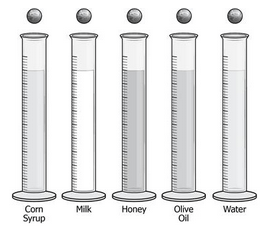
A student is conducting an experiment on the movement of a marble through five different substances. The student knows that is takes an average of 0.9 seconds for a marble to move through 80 mL of water. What is the control in the experiment?
Water
Corn Syrup
Milk
Olive Oil
A student performed an experiment that tested how many days it takes different types of grass seed to grow to a height of two inches. Four types of grass seed were tested, and the student recorded the number of days for each type to grow. Use this information to answer the next question.
What should be held constant in this experiment?
amount of sunlight, amount of water, and type of soil
amount of sunlight
amount of water and type of soil
amount of water
An experiment that is done exactly the same way as another experiment, but without a variable, is called a ___.
control experiment
test
study
comparison experiment
A student is studying the effect of sunlight on plants. The student developed this hypothesis: Plants need light to make food and to grow properly. To conduct a controlled experiment, which method should she use?
Choose two identical plants; put one in the dark and one near sunlight; use the same amount of water; water both regularly
Choose a healthy plant; put it in a dark place; use clean water; water the plant regularly.
Choose two identical plants; put each in the dark for 12 hours and then light for 12 hours; use the same amount of water; water both regularly.
Choose three identical plants; put one in the dark, one near sunlight, and one in the shade, water only the plant in light.
A possible explanation for why something happens is called ___.
a variable
an experiment
a hypothesis
an assumption
An experiment is designed in which one quantity is varied, such as the amount of fertilizer applied. If there is one condition where no fertilizer is applied, what is that condition called?
a starting value
a zero
a control
a test value
In an experiment to find out how the temperature affects the bounce height of a ball, the dependent variable is ...
The one variable in an experiment that is purposely changed and tested by the scientist is the________________.
dependent variable
independent variable
data
control group

Research Question: Does the type of gasoline put in a car affect how fast the car can drive.
What is the independent variable?
Type of gasoline
which car the gas is put into
how fast the car can drive
how much gas is put into the car

In a line graph you will find the independent variable on .... axis and the dependent variable on .... axis
x , y
y, x
they can be switched
How many independent variables should you have in an experiment?
two
as many as possible
four
one
This part of the experiment serves as a basis of comparison; the group that does not receive the independent variable.
constant
control group
experimental group
hypothesis

An experiment is performed on plants to see how different liquids affect plant growth. Each plant in the experiment is given a different liquid: water, apple juice, or milk. What should be kept constant?
This is the group that is affected by the variable or the group that is changed.
Control Group
Experimental Group
Changed Group
Cool Group

If I floss more, then I will have fewer cavities. What is the independent variable?
Number of cavities
Amount of flossing
Type of floss used
Amount of brushing

What is the independent variable on this graph?
Number of push ups
Days

During which month did Sam have a weight of 73 Kg?
January
February
May
March


What is the independent variable?
Months
Temperature
Highs
Lows
What does the amount of bacteria represent?
Independent Variable
Dependent Variable
Constant
Control
What does the brand of potato chips represent?
Independent Variable
Dependent Variable
Constant
Control
What will testing with plant water represent?
Independent Variable
Dependent Variable
Constant
Control
What does natural light, incandescent light, and fluorescent light represent?
Independent Variable
Dependent Variable
Constant
Control
What does the the amount of screen time represent?
Independent Variable
Dependent Variable
Constant
Control
What do the test scores represent?
Independent Variable
Dependent Variable
Constant
Control
What does using water for all tests represent?
Independent Variable
Dependent Variable
Constant
Control
What does plant growth represent?
Independent Variable
Dependent Variable
Constant
Control
What does soaking the dentures for one hour represent?
Independent Variable
Dependent Variable
Constant
Control
What does using pop secret, ACT II, and Jiffy represent?
Independent Variable
Dependent Variable
Constant
Control
What does the name brand stain remover represent?
Independent Variable
Dependent Variable
Constant
Control
What does the number of butterflies at a light source represent?
Independent Variable
Dependent Variable
Constant
Control
What does the temperature that the plants are grown in represent?
Independent Variable
Dependent Variable
Constant
Control
What does testing with lima beans represent?
Independent Variable
Dependent Variable
Constant
Control
What does testing the sunflower without fertilizer represent?
Independent Variable
Dependent Variable
Constant
Control
What does testing in the library, the restroom, and the cafeteria represent?
Independent Variable
Dependent Variable
Constant
Control
What does heart rate represent?
Independent Variable
Dependent Variable
Constant
Control
What does success of opening the containers represent?
Independent Variable
Dependent Variable
Constant
Control
What does using new batteries represent?
Independent Variable
Dependent Variable
Constant
Control
What does using bread, cheese, fruits and meat represent?
Independent Variable
Dependent Variable
Constant
Control
What does the different ages of participants represent?
Independent Variable
Dependent Variable
Constant
Control
What does the amount of weight used to add to the bags represent?
Independent Variable
Dependent Variable
Constant
Control
What does the expensive name brand represent?
Independent Variable
Dependent Variable
Constant
Control
What does the amount of grease represent?
Independent Variable
Dependent Variable
Constant
Control

