
 Worksheets
Cells Unit Review
Total questions: 89
Worksheet time: 1hrs 4mins
cell division
What is the basic unit of life?
heart
lungs
cells
brain
All cells must come from pre-existing cells.
True
False
What is the function of the golgi apparatus?
ATP energy
produce proteins
receive, sort, modify and ship molecules
detoxification

The structure called flagella helps the prokaryotic cell (bacteria) do what?
gather food
Movement
Reproduce
defense
What are 3 differences between plant and animal cells?
Plants have cell wall, large vacuole, and chloroplasts
Animal cells have cell walls and chloroplasts
Both cell types have cell walls
Plant cells have small vacuoles and animal cells have a large vacuole
Main use of vacuoles is for .....
Waste Removal
Cellular Respiration
Storage of water and nutrients
photosynthesis


There are three parts to the cell theory. Which is NOT one of those parts?
All organisms are composed of one or more cells.
The cell is the basic unit of structure and organization in organisms.
Cells spontaneously arise from carbon and nutrients carried in the bloodstream.
All cells come from pre-existing cells.
Which invention was the most important thing that helped scientists develop the cell theory?
compound light microscope
petri dish
scanning electron microscope
dissection tools


command center, direct's the cell's activities
nucleus
lysosome
mitochondria
endoplasmic reticulum

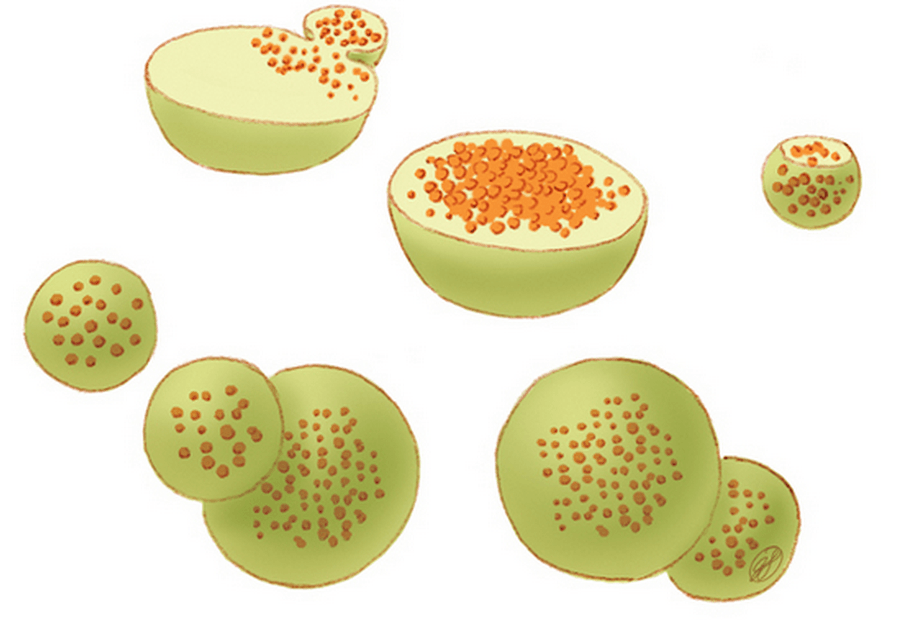
Which part is colored in the picture? (Look closely--it's the little dots!)
Nucleus
Mitochondria
Vacuole
Ribosomes

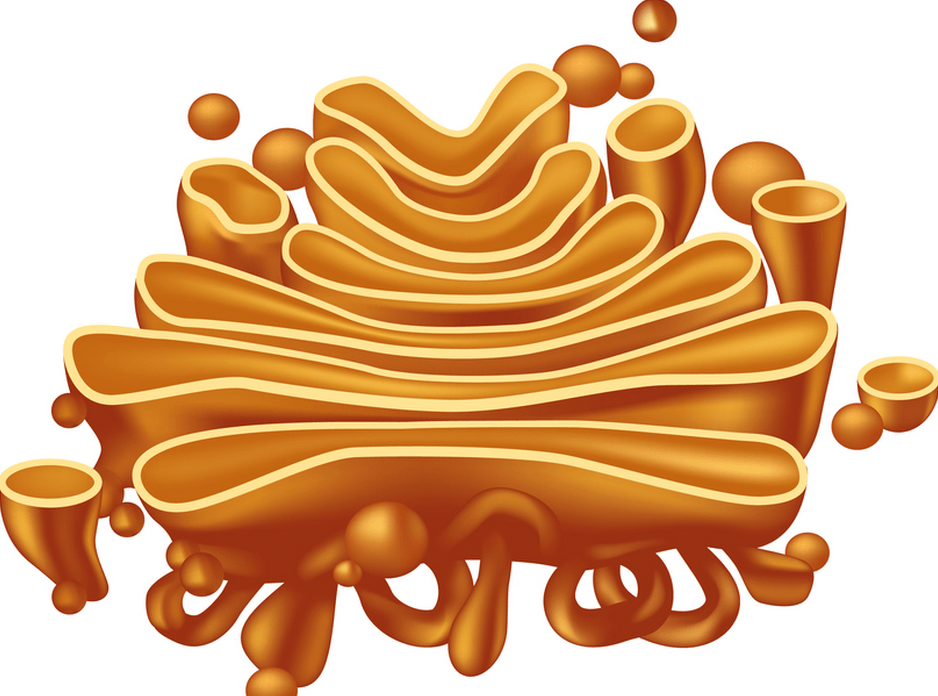
Which organelle is colored in this picture?
Endoplasmic reticulum
Gogli body
Lysosomes
Cell mebrane

Examine the animal cell, what does number 8 represent?
Smooth ER
Rough ER
Nucleus
Golgi Apparatus
Mitochondria
Is the jelly-like substance in the cell that contains the organelles
ribosome
cytoplasm
cell wall
chloroplast

Sac within the cytoplasm that STORES fluid, plants have a larger one that stores food and water.
vacuole
lysosome
cell wall
ribosome


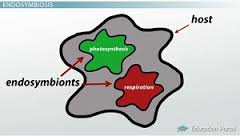
The theory of Endosymbiosis explains
The origin of eukaryotes
How bacteria live
How species develop
Why cells rely on one another
____________ & _________________ are organelles that definitely arose from endosymbiosis.
Nucleus and cell membrane
Chloroplast and mitochondria
Mitochondria and nucleus
Cell wall and chloroplast
What are evidence to support endosymbiotic theory?
Mitochondria is found outside the cells
Mitochondria and chloroplast can divide independently
Mitochondria and chloroplast have their own cell membrane
Mitochondria and chloroplast have their own genetic material
Why type of cell does not contain membrane bound organelles?
Animal Cells
Prokaryotic Cells
Eukaryotic Cells
Plant Cells
Eukaryotes are thought to have evolved by a prokaryote engulfing one heterotrophic bacteria and one photosynthetic bacteria.
false
true
Specialized cells such as muscle, blood, or nerve cells are caused by cell differentiation led by
DNA
nucleus
ribosomes
plasma membrane
Cells differentiate to perform different functions because
all genes are turned on inside that cell
all genes are turned off inside that cell
different genes are turned on inside that cell
different genes are turned on or off inside that cell
Unspecialized cells in our body that has the ability to differentiate into different types of cells are called
specialized cells
differentiated cells
nerve cells
stem cells
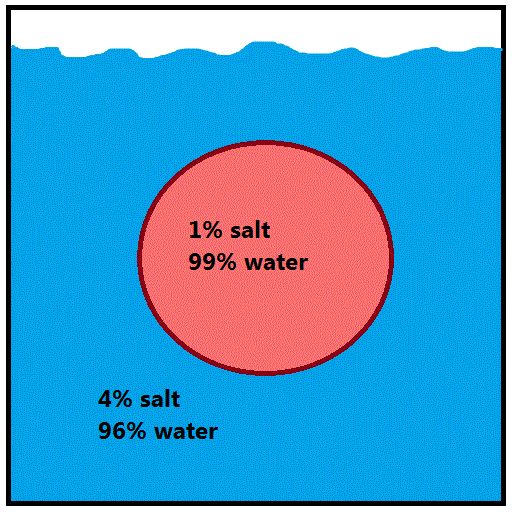
What term is used to describe when two solutions have reached a balanced state?
Hypotonic
Tonicity
Hypertonic
Equilibrium
How are osmosis and diffusion similar processes?
A both move solute molecules
both move water molecules
they move low to high concentrations
both move high to low concentrations
A cell has 80% water 20% solute, the surrounding solution has 60% water and 40% solute. What type of solution is this?
Hypertonic
Isotonic
Hypotonic
Equilibrium
When placed in a solution of 30% water 70% salt, what would happen to a cell that is 70% water?
it will take in salt and swell
it will take in water and swell
it will lose water and shrink
it will remain the same size
Active transport requires
osmosis
energy
a hypotonic solution
a concentration gradient
Why would a plant cell become wilted in a concentrated sugar solution?
the cell would gain water by the process of osmosis
the cell would lose water by the process of osmosis
the cell would lose water because of active transport
the cell would gain water because of active transport
Movement of particles or molecules from an area of high concentration to an area of low concentration is called
Photosynthesis
Concentration gradient
Diffusion
Active Transport

What type of transport is displayed here?
Active Transport
Facilitated Diffusion
Simple Diffusion
Pick all that apply: Passive Transport
Osmosis
Simple Diffusion
Doesn't require Energy
Molecules move from low concentration to high concentration
Which is not apply to Active Transport?
Requires Energy
Exocytosis
Endocytosis
Osmosis


Students were asked to distinguish between a theory and a law. Four student responses were placed in the table below.
Student 1
Student 2
Student 3
Student 4
Scientists create both scientific theories and scientific laws as they make observations and conduct experiments about the natural world. Which of the following statements most accurately compares the difference between scientific theories and scientific laws
science laws are based on evidence while science theories are not
science theories involve only biology, while laws involve all types of science
science theories involve mathematical equations, while science laws are based on observations
science theories are ideas that explain natural events, while science laws predict what will happen in a natural event.
Which of the following are well supported descriptions about what happens in nature, without attempting to explain why it happens?
Scientific law
Scientific Theory
Both a scientific law and theory
Scientific Observations
Tamar is talking about evolution with a friend. The friend says, “It’s just a theory, so I don’t believe it. When they prove it and it becomes the law of evolution, then maybe I’ll change my mind.” Which of these possible replies best describes scientific principles or the work of scientists?
Scientific theories do not become scientific laws; they are explanations for natural phenomena based on evidence.
Science always finds the right answer; the answers that scientists and researchers discover never change.
He should be wary of science because it is based on research and evidence, not bias and opinion.
Scientists take each other at their word regarding experimental results, and the public should, too
Joe tells Gabby his theory about why sea turtles nest on the beach instead of in the ocean. He says, “The turtle eggs would sink to the bottom of the ocean, and the baby turtle would drown. I know this because my uncle is a fisherman, and he told me this information. Gabby tells Joe that his theory is not scientific. Why does Joe’s idea not meet the requirements to be a scientific theory?
Joe’s idea is already a scientific law.
Joe’s idea is not supported by scientific evidence.
Joe’s idea is a good guess that can be tested by experiments.
Joe and his uncle are not scientists.

