
 Worksheets
Unit 1 & 2 review 8.6ABCDE
Total questions: 80
Worksheet time: 3600secs
Which of the following best describes the pH scale?
A scale used to measure the toxicity of solutions.
A scale used to measure the level of acids or bases in solutions.
A scale used to measure the density of solutions.
A scale used to measure the conductivity of solutions.
Which of the following would be considered a very weak acid?
A solution with a pH of 3.
A solution with a pH of 9.
A solution with a pH of 11.5.
A solution with a pH of 6.5.
Which of the following correctly describes the values on the pH scale?
A pH of 0-6 represents an acid and a pH of 8-14 represents a base, with 7 being neutral.
A pH of 0-6 represents a base and a pH of 8-14 represents an acid, with 7 being neutral.
A pH of 0-6 represents an acid and a pH of 8-14 represents a base.
A pH of 0-7 represents a base and a pH of 8-14 represents an acid.
How much stronger or weaker do acids or bases of solutions become as you move from one value to the next on the pH scale?
1 time
5 times
10 times
20 times
True or False: The lower the pH of a substance, the stronger of a base it represents.
True
False
A liquid with a pH of 7, like water, is considered ____________________.
neutral
acidic
basic
alkaline
A solution with a higher concentration of hydrogen ions (H+) and a pH less than 7 is known as a(n) ____________________.
acid
base
neutral solution
alkaline solution
A solution with a higher concentration of hydroxide ions (OH-) and a pH greater than 7 is known as a(n) ____________________.
base
acid
neutral
salt

Which substance would represent the pH 1 on scale below.
Lemon juice
Water
Baking soda
Bleach
Which substance would represent the pH 7 on scale below.
Lemon juice
Water
Baking soda
Bleach
Which substance would represent the pH 13 on scale below.
Lemon juice
Water
Baking soda
Bleach

Milk is a very weak acid. What might its pH value be?
6.5
7.8
4.2
12.2

1. Which of the following correctly describes the Law of Conservation of Mass?
a. The mass of the products in a chemical reaction must be less than the mass of the reactants.
b. The mass of the products in a chemical reaction must be more than the mass of the reactants.
c. The mass of the products in a chemical reaction must be equal to the mass of the reactants.
d. The mass of the products in a chemical reaction must be different than the mass of the reactants.
2. If the total mass of all of the reactants is 150 grams, which of the following would be the total mass of all of the products?
100 g
150 g
200 g
250 g
True or False: The Law of Conservation of Mass applies to all solid and liquids, but not gases
True
False
A ____________________ ____________________ is a representation of a balanced chemical reaction
using chemical symbols for elements and compounds.
Chemical formula
Chemical reaction
Chemical equation
Physical reaction
A ____________________ ____________________ is a process in which one or more
substances are converted into different substances with the breaking and forming of chemical
bonds
Chemical formula
Chemical reaction
Chemical equation
Physical reaction
The Law of Conservation of Mass states that matter cannot be ____________________ or
____________________.
Created or Formed
Destroyed or Decimated
Saved or Preserved
Created or Destroyed
Elements or compounds on the left side of a chemical equation are known as the
____________________, while elements or compounds on the right side of a chemical
equation are known as the ____________________.
Elements and Compounds
Product and Reactant
Reactant and Product
Sigma and Beta

Using the photosynthesis chemical equation below, calculate the missing mass (in grams).
6CO2 + 6H2O → C6H12O6 + 6O2
65 g 115 g __ g 30 g
65 g
115 g
150 g
210 g
A chemical equation contains 4 atoms of oxygen on the reactants side. How many atoms of oxygen must be present on the products side?
8
4
2
6
Students mix 25 grams of baking soda with 15 grams of vinegar to observe the chemical reaction that takes place. How many grams of products would be expected?
35 g
40 g
10 g
5 g
According to the Law of Conservation of Mass, during a chemical reaction atoms are -
Created
Destroyed
Unchanged
Rearranged
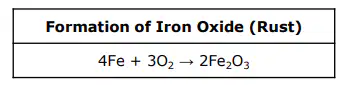
Which of the following correctly describes the chemical reaction?
There are 4 atoms of iron on both sides of the equation
There are 3 atoms of oxygen on both sides of the equation
There are 3 elements present on the reactants side
There are 4 total elements present in the equation
According to the Law of Conservation of Mass, if 225 grams of 2Fe2O3 are produced, which of the following would have been required?
100 grams of 4Fe and 25 grams of 3O2
125 grams of 4Fe and 125 grams of 3O2
195 grams of 4Fe and 30 grams of 3O2
225 grams of 4Fe and 225 grams of 3O2
Which of the following is not a true statement?
There are 4 molecules of Fe on the reactants side
There are 7 total atoms on the products side
Atoms of iron and oxygen are present
Atoms of iron and oxygen are rearranged into iron oxide
The ____________________ are the elements or compounds on the right side of a chemical equation.
Products
Reactions
Formulas
Reactants
The ____________________ are the elements or compounds on the left side of a chemical equation.
Products
Reactions
Formulas
Reactants
The amount of matter in an object is referred to as ____________________.
Products
Molecules
Subscript
Mass
Identify whether the examples below correctly represent the Law of Conservation of
50 grams of C3H8 + 15 grams of 5O2 → 35 grams of 3CO2 + 45 grams of 4H2O
Yes
No
Identify whether the examples below correctly represent the Law of Conservation of
115 grams of 4Fe + 20 grams of 3O2 → 140 grams of 2Fe2O
Yes
No
Identify whether the examples below correctly represent the Law of Conservation of
62 grams of 4Al + 15 grams of 3O2 → 77 grams of 2Al2O3
Yes
No
Identify whether the examples below correctly represent the Law of Conservation of
84 grams of 2SnO2 + 16 grams of 2H2 → 35 grams of 2Sn + 65 grams of 2H2O
Yes
No
A(n) ____________________ is the basic building block of all matter
Atom
Molecule
Subscript
Element
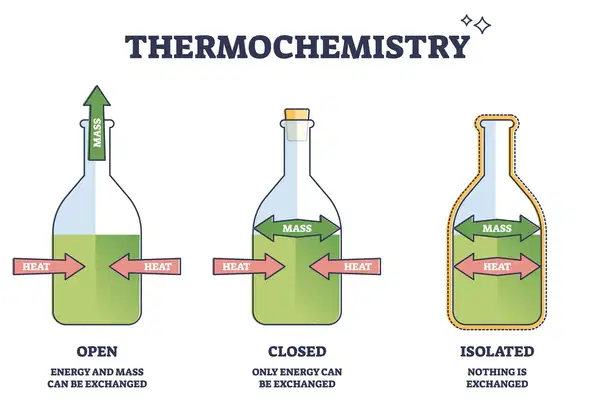
A(n) ____________________ does not allow the transfer of matter in or out of the system, but allows energy to be transferred.
Open system
Closed system
Stable
Conserved
If you begin with 175 grams of reactants, you must have 175 grams of products after a reaction takes place.
True
False
The total mass of the reactants must be exactly the same as the total mass of the products in a chemical reaction
True
False
Which of the following tells you how many atoms of element are present in a chemical formula?
Coefficient
Subscript
Chemical symbol
Capital and lower case letters
Which of the following tells you how many elements are present in a chemical formula?
Coefficient
Subscript
Chemical symbol
Capital and lower case letters
Which of the following tells you how many molecules of a substance are present in a chemical formula?
Coefficient
Subscript
Chemical symbol
Capital and lower case letters
Which of the following chemical equations contains the most hydrogen atoms?


Chemical symbol

Capital and lower case letters

Which of the following is a benefit of using chemical equations to represent chemical reactions
They list out all of the elements that exist on the Periodic Table of Elements.
They show you the state of matter of each compound involved in the reaction.
They are a shorter representation of a chemical reaction using symbols instead of words.
They are a longer representation of a chemical reaction using symbols instead of words.
Which of the answers below would be a correct chemical symbol of an element?
Zn
zn
ZN
zN
The scientist who organized the first Periodic Table was ____________________
____________________.
Isaac Newton
Nicolas Tesla
Dmitri Mendeleev
Wade Wilson
If an element’s symbol in a chemical reaction has a subscript of 3, then there is/are
__________________ atom(s) of that element.
3
6
9
Depends on the element.

How many atoms of oxygen are represented in the products of photosynthesis? ______
6
12
18
24

Identify the total number of atoms of each element that are represented on the reactant side
and product side of the chemical reaction below.
Fe= 4
O= 6
Fe= 1
O= 2
Fe= 4
O= 3
Fe= 4
O= 2
Which of the following is responsible for water forming a “dome” shape when it is poured onto a surface?
Cohesion
Adhesion
Surface Tension
Friction
Water soaking into a paper towel is an example of which of the following?
Cohesion
Adhesion
Surface Tension
Friction
Which of the following allows water striders to walk on water?
Cohesion
Adhesion
Surface Tension
Friction
The attraction between molecules of different substances is known as _______________.
Cohesion
Adhesion
Surface Tension
Friction
Which of the following occurs when a water droplet is placed on a hydrophobic surface?
It absorbs into the surface
It spreads out into a thin layer
It forms a meniscus on the surface
It beads up on the surface
How does cohesion play a role in the high surface tension of water?
It causes water molecules to stick together
It causes water molecules to stick to other substances
It causes water to flow easily
It causes water to evaporate
The curved surface of a liquid, typically water, when poured into a graduated cylinder is known as a _______________.
Water Bead
Parabola
Crescent
Meniscus
_______________ _______________ is a measure of how difficult it is to break the surface of a liquid.
Cohesion
Suraface Tension
Adhesion
Capilary Action
The attraction between molecules of the same substance is known as _______________.
Cohesion
Suraface Tension
Adhesion
Capilary Action
Which of the following chemical formulas contains the most molecules?
5CO
3H2O
2Fe2O3
4C3H8

Which of the following correctly lists the elements in the chemical formula above?
Carbon, hydrogen, cobalt, oxygen
Carbon, hydrogen, oxygen
Carbon, helium, oxygen
Carbon, cobalt, oxygen
How many different elements are present in the chemical formula above?
1
2
3
4

Water
Carbon Dioxide
Sodium Chloride
Glucose

Water
Carbon Dioxide
Sodium Chloride
Glucose
Elements are many different types of atoms together but compounds are just
one type of atom.
Elements are puresubstances that cannotbe broken down physically but
compounds are pure substances that can be broken down physically.
Elements are not found on the Periodic Table but compounds are found on the
Periodic Table.
Elements are pure substances that cannot be broken down chemically but
compounds are pure substances that can be broken down chemically.
Carbon (C)
Nitrogen (N)
Hydrogen (H)
Oxygen (O)
Element
Compound
Mixture
Organic Compound
Which of the following could be the chemical formula for a compound?
Na
CO2
H2 + O2
Au
Which of the following could be the chemical formula for an element?
Si2
H2O
C + O2
C6H12O6
Which of the following could be the chemical formula for a mixture?
Ne
CO2
H2
NaCl + H2O
How could you separate a mixture of sand and water?
Pick out each sand grain
Allow the water to evaporate
Drink the water
This mixture cannot be separated
A(n) _______________ mixture has a uniform composition and the same properties
throughout.
Element
Compound
Homogeneous Mixture
Heterogeneous Mixture
A(n) _______________ mixture that is not uniform in its composition and made of different substances
throughout.
Element
Compound
Homogeneous Mixture
Heterogeneous Mixture
A(n) _______________ consists of two or more substances that are together, but not
chemically combined.
Element
Compound
Mixture
Atom
A(n) _______________ is a substance that consists of two or more elements chemically
combined in a set ratio.
Element
Compound
Mixture
Atom
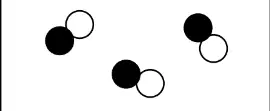
Identify the substance below.
Element
Compound
Mixture of Elements
Mixture of elements and compounds
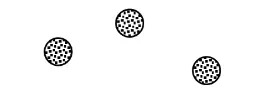
Identify the substance below.
Element
Compound
Mixture of Elements
Mixture of elements and compounds
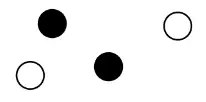
Identify the substance below.
Element
Compound
Mixture of Elements
Mixture of elements and compounds
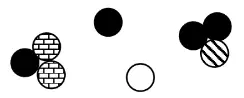
Identify the substance below.
Element
Compound
Mixture of Elements
Mixture of elements and compounds

