Worksheets
unit 1 Test: Chemistry Beginnings
Total questions: 142
Worksheet time: 2hrs 22mins
What does the blue color on the NFPA diamond stand for?
Special Information
Health Hazard
Flammability Hazard
Reactivity Hazard
What does the white color on the NFPA diamond stand for?
Special Information Hazard
Health Hazard
Flammability Hazard
Reactivity Hazard
What does the red color on the NFPA diamond stand for?
Special Hazard
Health Hazard
Flammability Hazard
Reactivity Hazard
What does the yellow color on the NFPA diamond stand for?
Reactivity Hazard
Radioactivity Hazard
Flammability Hazard
Health Hazard

Which is the most significant hazard the chemical has?
Very reactive
Toxic
Highly flammable
Body injury

Which type of hazard has the lowest rating for this chemical?
Health hazard
Reactivity
Toxicity
Radioactivity
It is okay to pick up broken glass with your bare hands as long as the glass is placed in the trash can.
True
False
Horseplay, practical jokes, or pranks in the classroom are
not dangerous.
okay if you are working alone.
always against the rules.
okay.
What does MSDS stand for?
Material Safety Data Sheet
Modern Safety Day Special
Medium Small Data Stuff
Made Something Doing Something
Match the following
Qualitative data
Descriptions about experimental data
Quantitative data
Numerical info about experimental data
scientific law
rule that describes a pattern in nature
scientific theory
tested concept that explains observation
In 1859, Charles Darwin described a model of how living things change over time. He described this model and the evidence that supported it in a book called On The Origin of Species. Which scientific term is used to describe a testable model that seeks to explain natural phenomena?
data
hypothesis
theory
observation
A scientific law is a repeatable pattern in nature
True
False
Abigail and Laddaris were testing which color candle would burn the fastest with their teacher. They thought the red one would burn the fastest and made their prediction before doing the experiment.
What part of the scientific method is this called?
a) hypothesis
b) materials
c) procedure
d) data

Type of data that is measured with numbers; example: temperature of water:
quantitative
qualitative
experimental
observational

Type of data that is in the form of a description; example: color of the water:
qualitative
quantitative
experimental
observational

In an experiment to find out how the temperature affects the bounce height of a ball, the dependent variable is ...
The one variable in an experiment that is purposely changed and tested by the scientist is the________________.
dependent variable
independent variable
data
control group

What is the independent variable for this graph?
The Relationship between Time Spent Studying and Test Grades
The effect of Time Spent Studying and Test Grades
Time Spent Studying
Test Grades
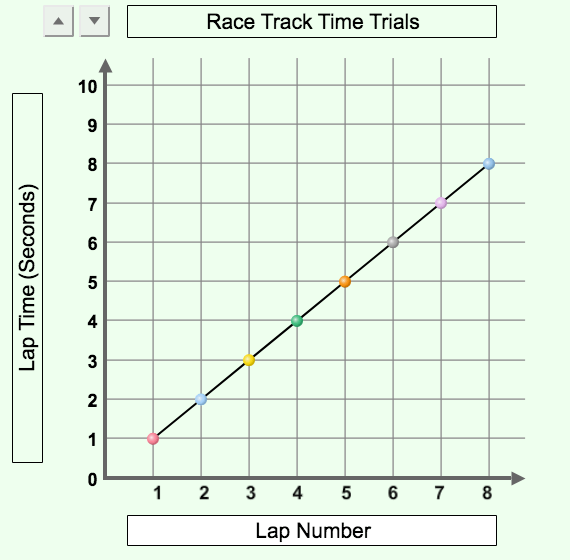
A car is timed around a race track for 8 laps. The laps are numbered in order. Look at the relationship between Lap Number and Lap Time (seconds).
What type of relationship is this?
Direct
Inverse
Diagonal
Horizontal


In the table, Bubbles is the ______________.
independent variable
dependent variable

Which of the following is the label for the independent variable.
Money Collected
Raising Money
Boxes Sold
None of the above

PPE stands for
Personal perspective Equipment
b. Private protective equipment
c. Private Pain equipment
d. Personal Protective Equipment
If a harmful chemical splashes in your eyes or on your skin, you should—
ignore it and hope it goes away.
wipe it off with a paper towel and finish the lab.
flush with water at the eyewash station or in the lab shower and tell the teacher.
run to the bathroom.
Broken glass should be cleaned up by—
telling the teacher immediately and letting them deal with it
picking it up with your hands.
throwing it away in a normal trash can.
hiding it in a lab drawer.
When you first enter a laboratory, you should—
arrange and move items to the way you think is best.
finish eating quickly so you have enough time to complete the lab.
wait for your teacher’s instructions to begin without touching anything.
put your sandals on so that you don’t get hot.
Goggles are worn in the laboratory
A. to avoid eye strain.
B. to improve your vision
C. only if you don’t have corrective glasses.
D. any time chemicals, heat, or glassware are used.
Which piece of lab equipment is used to transfer small amounts of liquid?
Graduated cylinder
Pipette
Test tube
Flask


After completing an experiment, all chemical wastes should be—
Left at your lab station for the next class
Disposed of according to your instructor's directions
Dumped in the sink
Taken home
Long hair in the laboratory must be
cut short
held away from the experiment with one hand
always neatly groomed
tied back or kept entirely out of the way with a hair band

What should you do before starting any experiment in the laboratory?
Proceed directly with the experiment
Read and understand all the safety instructions related to the reagents and equipment
Only consult the Safety Data Sheets (SDS) if an accident occurs
Ignore the instructor's instructions if they seem unnecessary

When selecting Personal Protective Equipment (PPE), which of the following is NOT considered appropriate?
Open sandals for greater comfort
Chemical-resistant gloves
Safety glasses
Laboratory coats

What should you do if you don't understand the instructions given for an experiment?
Ask a fellow student for help
Guess the procedure and hope for the best
Seek clarification from the instructor or supervisor
Ignore the instructions and do the experiment your own way

Approved eye protection devices (such as goggles) are worn in the laboratory ____.
to avoid eye strain
to improve your vision
only if you do not have corrective glasses
any time chemicals, heat, or glassware are used

What is the correct action to take if a chemical reagent is spilled?
Ignore it and continue with the experiment
Ask a colleague to clean it up.
Clean it immediately with paper towels
Immediately inform the instructor and follow the specific handling instructions

When determining the compatibility of chemical waste mixtures for disposal, what resource is most critical?
The laboratory’s general waste disposal guidelines
The chemical’s Safety Data Sheet (SDS) for each component
Advice from a colleague
A generic online search for chemical compatibility

Which of the following Personal Protective Equipment (PPE) should be used? Select all that apply
A lab coat
Breathable mesh sneakers for comfort
Latex gloves for chemical resistance
Safety goggles to protect against splashes

Before using a fume hood to work with volatile reagents, you should:
Verify that the hood is turned on and functioning properly
Make sure it is turned off to avoid annoying noises
Open the laboratory windows to improve ventilation
Work as quickly as possible to minimize exposure

In the event of a small fire in your work area, what is the first step you should take? Select all that apply
Evacuate the laboratory
Attempt to extinguish it with water
Take photos for the incident report
Use the appropriate fire extinguisher for the type of fire, if you feel capable of doing so

At the end of an experiment, the proper disposal of chemical waste includes:
Pouring them down the nearest drain
Leaving them in the fume hood to evaporate
Storing them in a common area until the laboratory is cleaned
Following specific procedures in SDS for their safe disposal

What is the importance of keeping emergency exits and hallways clear in the laboratory?
To ensure a quick and safe evacuation in case of an emergency
To prevent visual clutter and maintain the laboratory's aesthetics
To facilitate access to laboratory equipment
To create space for additional storage

Why is it important to know the location of eye wash stations and emergency showers?
They provide a good place to clean up before breaks.
In case of chemical exposure, quick access can be vital
They are usually where the cleanest water is found
It’s a good meeting point in case of evacuation

Why is it important to wear closed-toe shoes in the laboratory?
To make a fashion statement
To protect your feet from falling objects or spills
To keep your feet cool and comfortable
To show respect for the laboratory environment

Why is it important to label all chemical containers in the laboratory?
To make the lab look organized
To confuse other lab members
To ensure proper identification and prevent accidents
Labels are not necessary in a lab setting

Why is it important to wear a lab coat in the laboratory?
To make a fashion statement
To protect you from spills and splashes
To show off your personal style
To keep warm in a cold lab environment
What is a homogeneous mixture?
a physical combination of substances that looks the same all the way through
a chemical combination of two or more substances
a physical combination of substances in which you can see the different parts
the simplest form of matter that cannot be broken down further
Which of the following is a heterogeneous mixture?
water
tea
salt water
sand and water
What are gases?
They have no definite shape or volume and will fill any container they are in.
They take the shape of their containers and have a definite volume.
They have a definite shape and volume.
Choose all the correct answers: Which of the following are pure substances?
Hydrogen (H)
Sugar Water
Sodium Chloride (NaCl)
Chocolate Milk
What are liquids?
They have no definite shape or volume and will fill any container they are in.
They have a definite shape and volume.
They take the shape of their containers and have a definite volume.
Which of the following is an example of a physical change?
sodium metal blowing up when placed in water
ice melting
a bike rusting in the rain
milk going sour
Is the following a pure substance or mixture? Baking Soda ( NaHCO3 )
pure substance
mixture
Is the following an element or compound? A silicon (Si) chip.
element
compound
Is the following an element or compound? hydrogen peroxide (H2O2)
element
compound
Is the following homogeneous or heterogeneous? Fruit salad
homogeneous mixture
heterogeneous mixture
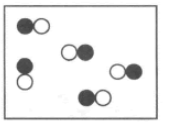
Classify the particle diagram.
element
compound
mixture of elements
mixture of compounds
mixture of elements and compounds
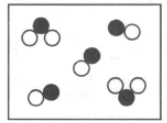
Classify the particle diagram.
element
compound
mixture of elements
mixture of compounds
mixture of elements and compounds
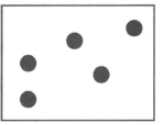
Classify the particle diagram.
element
compound
mixture of elements
mixture of compounds
mixture of elements and compounds

Classify the particle diagram.
element
compound
mixture of elements
mixture of compounds
mixture of elements and compounds

Classify the particle diagram.
element
compound
mixture of elements
mixture of compounds
mixture of elements and compounds

How would you classify this image?
homogeneous mixture
heterogeneous mixture
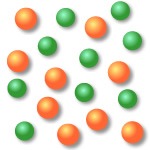

The state of matter where particles are very spread out and moving quickly.
gas
liquid
solid
Helium
What kind of matter is soil?
Element
Compound
Homogeneous Mixture
Heterogeneous Mixture
What kind of matter is salt (NaCl)?
Element
Compound
Homogeneous Mixture
Heterogeneous Mixture
What kind of matter is Calcium (Ca)?
Element
Compound
Homogeneous Mixture
Heterogeneous Mixture
What kind of matter is Iron (Fe)?
Element
Compound
Homogeneous Mixture
Heterogeneous Mixture
A physical blend of 2 or more components is called a ____.
type of element
mixture
chemical reaction
physical property
A mixture in which the composition is NOT uniform throughout is called a _____ mixture.
Heterogeneous
Homogeneous

What type of material is pictured?
Element
Compound
Heterogeneous mixture
Homogeneous mixture
What type of matter is formed from two or more elements chemically bonded together?
atoms
elements
molecules
compounds

Ethanol and water have different boiling point. What would be the suitable separation technique for a mixture of both substances?
Distillation
Chromatography paper
Sieving

You want to separate the components of a felt tip pen. What is the suitable separation technique?
distillation
chromatography paper
decanting
sieving

Sulphur is not soluble in water. If, accidentally, some sulphur drops into a glass of water. Which separation technique would you use to separate it from the water?
by decanting
by filtering
by crystallization
by sieving
What is the physical property on which fractional distillation depends?
different boiling points
different melting points
different solubilities
different densities
Which of the following is made up of two or more types of atoms chemically combined together?
elements
compounds
mixtures
solids

What type of mixture does this diagram represent?
Homogeneous
Heterogeneous


This separation method is called...
Magnetism
Filtration
Distillation
Evaporation

Identify the substance in box B.
element
compund
mixture

Identify the substance in box D.
element
compound
mixture

Identify the substance in box Y.
element
compound
mixture

Identify the substance in box W.
element
compound
mixture

Identify this substance.
element
compound
mixture

Identify this substance.
element
compound
mixture

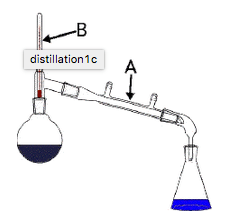
Label part B
Thermometer
Fractionating column
Condenser
Round bottom flask

instrument used to transfer liquids or fine-grained materials into containers with small openings. Also used for filtration
pipette
funnel
beaker

a narrow-necked glass container, typically conical or spherical, used in a laboratory to hold reagents or samples
Beaker
graduated cylinder
Erlenmeyer Flask

evaporating dish
watch glass
mortar and pestle
funnel

evaporation
watch glass
mortar and pestle
funnel

crucible tongs
beaker tongs
forceps
tweezers


iron ring
ring stand
face mask
Bunsen burner stand


instrument for measuring precise fluid volumes
graduated cylinder
beaker
Erlenmeyer Flask

What is the purpose of this lab equipment?
to hold misbehaving students
to capture chemical vapor and fumes
to perform all lab experiments
to measure the mass of a solid

What is the purpose of this lab equipment?
to wash chemicals off of a persons body or out of their eyes
to extinguish a fire
to shut off the gas supply in the lab
to pull the lever and see what happens


Name this item
ring stand
watch glass
buret
spatula

What is used to measure (but not precise), heat, and mix large amounts of liquids?
beaker
flask
test tube
graduated cylinder
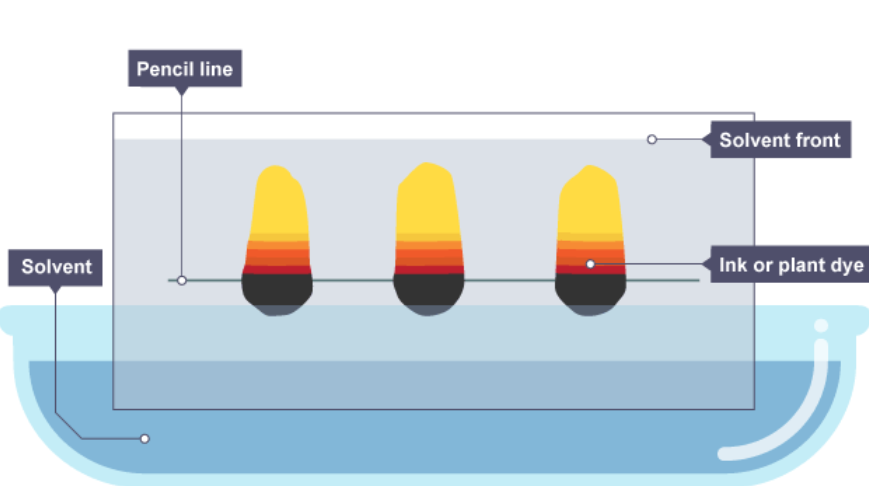
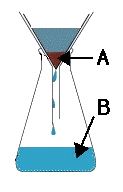
Which method is this a picture of?
Filtration
Evaporation
Distillation
Chromatography