
 Worksheets
Immunity Challenge
Total questions: 74
Worksheet time: 39mins


In science class temperature is measured in ..
Fahrenheit
Centimeters
Celcius
Ruler

1 cm = ______ mm
10 mm
100 mm
1000 mm
20 mm

1 km = _______ m
10 m
100 m
1000 m
5 m

How much liquid is in the graduated cylinder?
24 ml
20 g
35 cm
25 C

Measure the black line.
4 km
4.3 cm
45 mm
4.4 mm
What is the metric measurement used for Mass?
Grams
Liters
Meters
Celcius

What is the temperature in metric form?
78 degrees Fahrenheit
78 degrees Celsius
25 degrees Fahrenheit
25 degrees Celsius
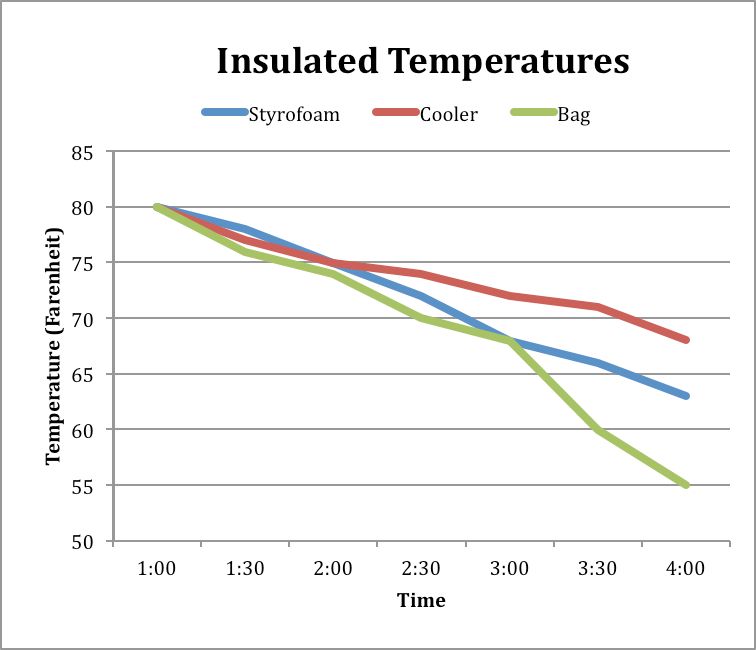
What data does this graph represent?
Change in temperature of a liquid over time in 3 different containers
How temperature can change the molecules in a material
The phase changes of a material
What type of container people use the most to store hot liquids.

Which type of container keeps liquid the hottest for the longest time?
Bag
Cooler
Cooler and bag are tied
Styrofoam
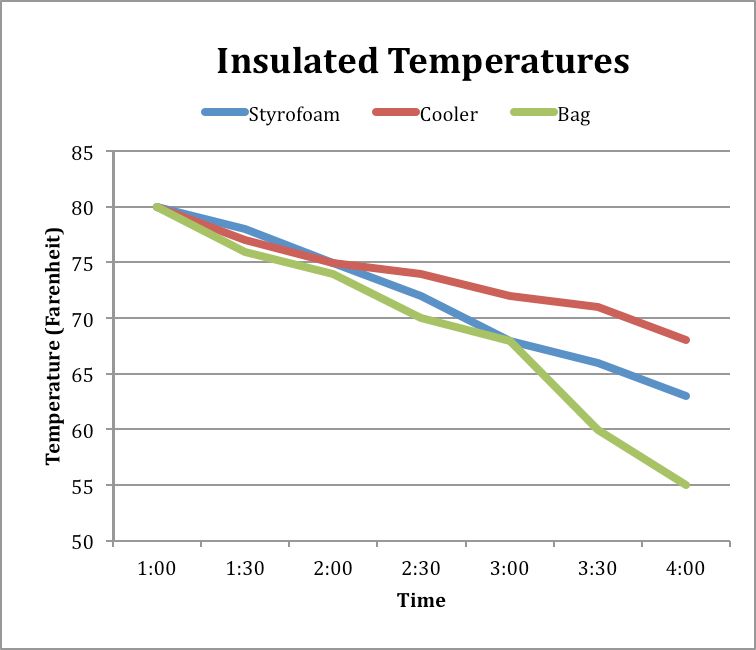
What was the temperature of the liquid in the Styrofoam container at 4:00?
55 degrees
68 degrees
73 degrees
63 degrees
You want to make a graph for an experiment you did about plant growth over a two week period of time. What type of graph would you use?
bar graph
line graph
pictograph
pie chart
The parts of the experiment that MUST stay the SAME
control
constants
hypothesis
dependent variable
Using your 5 senses to collect qualitative
and quantitative information
observations
quantitative observations
qualitative observations
conclusions
Observations having to do with NUMBERS
quantitative observations
qualitative observations
research
problem
Observations having to do with characteristics (color, texture, taste)
quantitative observations
qualitative observations
conclusion
problem
What is the independent variable in the above question?
Choose the correctly written hypothesis for "What is the effect of putting Pam Cooking Spray on the bottom of a sled?"
I think the sled will slide faster.
If I put Pam Cooking Spray on the bottom of my sled, then I will win the race."
If I put Pam Cooking Spray on the bottom of my sled, then I will slide faster.

The part you look through - also has a 10X lens in it.
objective lens
stage
nosepiece
eyepiece (ocular lens)

These are attached to the nosepiece and vary in size. The shortest lens is the least powerful and the longest lens is the most powerful. Often times people who make microscopes put different colored bands to identify the different powers. (#5)
objective lens
ocular lens
nosepiece
body tube

Big knob (moves the stage up and down)large changes in focus. Used for finding items under low power NEVER use this when viewing on high power. (#10)
fine adjustment knob
slide
cover slip
course adjustment knob

Round disk under the stage that has several different size holes in it - used to vary the amount of light passing through the slide. (#7)
objective lens
diaphragm
light source
stage clips
Which magnification lens should you start on?
low magnification
middle magnification
high magnification
How many hands should you use to carry a microscope?
one
two
none
Why are our microscopes called compound microscopes?
There are multiple lenses inside the microscope
Microscope is a compound word
The microscopes are made of metal
The best way to avoid air bubbles when making a wet mount slide is to:
drop the cover slip on at an angle
drop the cover slip on flat
squeeze the slide and cover slip after it is on
tap on the cover slip once it is in place
Which of the following describes homeostasis?
keeps variables exactly at the set point
organism's ability to maintain steady(stable) internal conditions
acts to keep values outside of a desired range
operates through positive feedback
The air sacs that are covered with capillaries where gas exchange takes place
bronchi
lungs
oxygen
alveoli
When you breathe, your lungs take in ___ and remove ___.
air/oxygen
oxygen/carbon dioxide
carbon dioxide/waste
waste/air
During gas exchange what enters from alveoli to the capillaries?
CO2
CO
O2
nitrogen
What is the main function of the respiratory system?
to provide oxygen and remove carbon dioxide from the body
to bring oxygen to the body
to break down food and absorb nutrients
to remove oxygen from the body and deliver carbon dioxide
What are the products of cellular respiration? Choose 3.
water
ATP
Oxygen
Sunlight
Carbon Dioxide
Which organ in a cell produces a large amount of ATP through cellular respiration?
chloroplast
mitochondrion
nucleus
ribosome
During cellular respiration, energy is released from food. What else does the cell need for this process to take place.
carbon dioxide
oxygen
sunlight
nitrogen
Cellular Respiration occurs in what cell organelle?
chloroplast
cytoplasm
mitochondria
animal
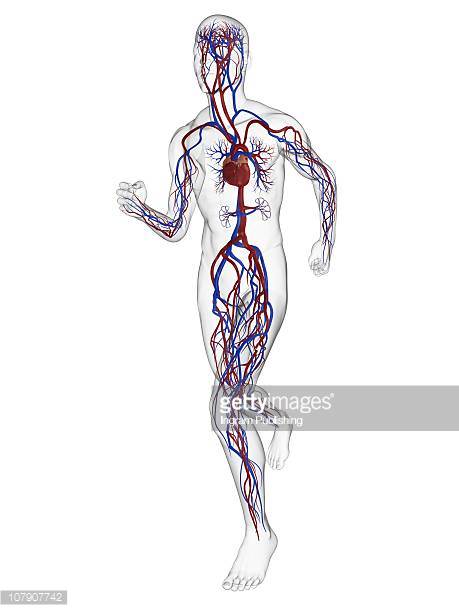
What is the main organ of the circulatory system?
small intestine
bone
lungs
heart
Arteries carry oxygen rich blood away from the heart.
True
False
Veins carry oxygen poor blood back to the heart.
False
True
A feedback loop best fits which characteristic of life?
Cells
Organization
Homeostasis
Adaptation
Which body system controls the body to maintain homeostasis?
excretory
nervous
circulatory
skeletal
True or False: Our organ systems work separately and do not interact with each other at all in our bodies
True
False
Why is maintaining glucose concentrations important?
Helps build stomach acid
Supplies energy needed for cells to survive and grow
Needed to regulate insulin
Gives oxygen to muscle cells
How does the muscular system work with the skeletal system? (5.L.1.2)
Both give us structure
The muscular system helps move our bones so we can move around
The skeletal system helps us move while the muscular system protects our heart.
They both do the same job.
Which two systems work together to transport nutrients to the body for energy? (5.L.1.2)
The nervous and digestive systems
The respiratory and circulatory systems
The digestive and ciruclatory systems
The skeletal and digestive systems
What is the function of the excretory system?
to move the body and help organs move
to support the body and protect it
to break down food to be absorbed
to remove cell waste from the body
What is the function of the digestive system?
to move the body and help organs move
to support the body and protect it
to break down food to be absorbed
to remove cell waste from the body
What is the function of the skeletal system?
to move the body and help organs move
to support the body and protect it
to break down food to be absorbed
to remove cell waste from the body
What is the function of the muscular system?
to move the body and help organs move
to support the body and protect it
to break down food to be absorbed
to remove cell waste from the body
Humans burn fossil fuels and wood, releasing carbon dioxide into the atmosphere. This carbon dioxide is then absorbed by trees for photosynthesis. These processes are contributory to which chemical cycle?
The carbon cycle
The water cycle
The nitrogen cycle
The phosphorous cycle
How does the human body return carbon to the atmosphere in the carbon cycle?
Waste products
Photosynthesis
Cellular respiration
Formation of glucose
In the carbon cycle, animals can release carbon back into the cycle through __________ or through __________.
burning . . . photosynthesis
fixation . . . decomposition
decomposition . . . photosynthesis
respiration . . . decomposition
respiration . . . photosynthesis
What is the ultimate source of energy for most organisms?
The Sun
The Earth
Plants
Producers
A ______ species is a species on which other species in an ecosystem largely depend, and if it were removed, the ecosystem would change drastically.
Keystone
Apex
Primary
Endangered

Which is an apex predator in this food web?
Hawk
Snake
Frog
Bird

Which of the following would be the definition of a scavenger/detritivore?
Animals that eat insects.
Organisms that feed on rocks, recycling the nutrients back into the ground.
Organisms that eat only plants
Things that feed on dead, rotting organisms (roadkill)

In a food chain, 100% of energy is passed from one link to the next.
True
False

Which level contains organisms that do photosynthesis?
A
B
C
D

