
Font size
 Worksheets
marine end of unit 1
Total questions: 143
Worksheet time: 2hrs 32mins
Why are seashells found at the top of Mt. Everest?
It rose out of the sea
They were carried by birds
They were placed there by humans
They formed naturally on the mountain
The ocean covers what percent of the Earth?
50
71
85
90
What was the primary goal of Darwin’s expedition?
Discover new species
Map the coastlines
Find new trade routes
Study ocean currents
Where is the closest place that upwelling occurs?
Gulf of Mexico
Pacific Ocean
Indian Ocean
Mediterranean Sea
The American commodore is considered the “Father” of physical oceanography. Who is he?
Charles Darwin
James Cook
Matthew Maury
Ferdinand Magellan
Which explorer explained the formation of the distinctive rings of coral reefs called atolls?
James Cook
Charles Darwin
Matthew Maury
Ferdinand Magellan
Which explorer was the first to use a chronometer?
Christopher Columbus
Ferdinand Magellan
James Cook
Vasco da Gama
Which hemisphere is the least explored?
Northern
Southern
Eastern
Western
From where did the Challenger expedition make collections of marine organisms?
Atlantic Ocean
Pacific Ocean
Indian Ocean
All around the world
Oceanography is the science of:
Studying the biological aspects of the sea
Studying the physical but not the biological aspects of the sea
Studying marine life exclusively
Studying ocean currents only
The ocean is covered in a single continuous mountain range; this mountain range is known as?
Mid-ocean ridge
Andes
Himalayas
Rockies
The average depth of the ocean is?
12,000 feet
5,000 feet
20,000 feet
30,000 feet
Who is the first scientist credited with documenting that sea floor life varies with depth?
Edward Forbes
Charles Darwin
Jacques Cousteau
Sylvia Earle
Which expedition remains one of the most important voyages in the history of oceanography?
Challenger
Beagle
Endeavour
Discovery
Which expedition was the first international survey by the US government?
Wilkes
Lewis and Clark
Apollo
Magellan
The first hydrothermal vents were found at the?
Galapagos rift
Mariana Trench
Great Barrier Reef
Bermuda Triangle
The Greek philosopher considered by many to be the first marine biologist is?
Aristotle
Plato
Socrates
Pythagoras
Who is the scientist that proposed the idea that living organisms could not survive in the cold and darkness of the ocean depths?
Edward Forbes
Charles Darwin
Rachel Carson
Carl Linnaeus
The ocean is slow to change in temperature because?
Of the sheer volume
Of the salt content
Of the ocean currents
Of the wind patterns
The voyages of Captain Cook provided?
Reliable navigational charts
New species of fish
Maps of the moon
The first submarines
The “workhorse” of all ROV’s is called?
Alvin
Nautilus
Titan
Poseidon
Have humans explored most of the ocean?
No, very little
Yes, almost all
About half
Only the surface
This US agency is responsible for funding ocean exploration?
NOAA
NASA
EPA
USGS
Why is studying marine life forms important in understanding early life on earth?
Marine life forms are the most complex organisms.
Marine life forms can provide clues about early life on earth.
Marine life forms are the largest organisms.
Marine life forms are the most diverse organisms.
Which of the following is NOT a product derived from marine species?
Medicines
Food resources
Herbal medicines
Plastic materials
How do marine environments and their habitats benefit humans?
They provide fresh water.
They support recreation and tourism.
They produce fossil fuels.
They create deserts.
What do marine organisms produce that is used by aerobic organisms, including humans?
Carbon dioxide
Nitrogen
Oxygen
Hydrogen
How do oceans help to regulate climate?
By absorbing sunlight
By being slow to change in temperature due to the sheer volume of water
By producing greenhouse gases
By reflecting sunlight
Where do marine biology research stations exist?
Only in the United States
Only in Europe
In locations around the world
Only in Asia
Which country has several facilities considered to be among the best in the world for marine biology research?
Canada
Australia
United States
Japan

What can satellite sensors measure?
Air pressure
Sea Surface Temperature (SST)
Wind speed
Humidity levels
What can satellite sensors measure according to the provided learning material?
Ocean depth
All answers are correct
Ocean temperature
Ocean salinity
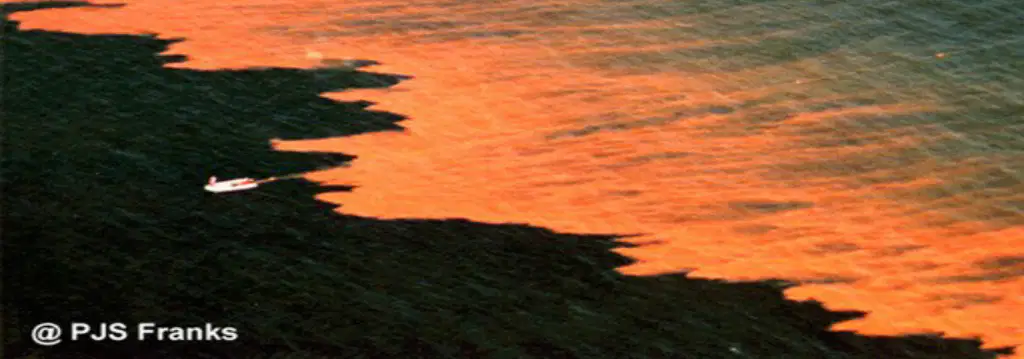
What specific ocean phenomenon is mentioned in the learning material that satellite sensors can measure?
Blue Tide
Green Tide
Red Tide
Yellow Tide

What can satellite sensors measure using altimetry?
The temperature of the ocean surface
The salinity of the ocean water
The bulges and topography of the ocean floor
The color of the ocean water
How are the bumps on the ocean floor measured by a satellite?
By a radar altimeter aboard a satellite
By a thermometer aboard a satellite
By a salinometer aboard a satellite
By a colorimeter aboard a satellite
What does the acronym SONAR stand for?
Sound Navigation and Ranging
Sound Navigation and Recording
Sound Navigation and Reflecting
Sound Navigation and Rebounding
How does sonar work?
By transmitting light waves toward the bottom and seeing how long it takes for them to return to the original signal
By transmitting sound waves toward the bottom and seeing how long it takes for them to return to the original signal
By transmitting radio waves toward the bottom and seeing how long it takes for them to return to the original signal
By transmitting heat waves toward the bottom and seeing how long it takes for them to return to the original signal
What is Side-Scan Sonar used for?
To direct sound waves to the seafloor at an angle, mapping the sides of underwater hills and other topographic features
To direct light waves to the seafloor at an angle, mapping the sides of underwater hills and other topographic features
To direct radio waves to the seafloor at an angle, mapping the sides of underwater hills and other topographic features
To direct heat waves to the seafloor at an angle, mapping the sides of underwater hills and other topographic features
What does the acronym SCUBA stand for?
Self Contained Underwater Breathing Apparatus
Submarine Contained Underwater Breathing Apparatus
Solo Controlled Underwater Breathing Apparatus
Submarine Contained Underwater Breathing Appendage
Who co-invented the aqua-lung, a precursor to SCUBA?
Jacques-Yves Cousteau
Albert Einstein
Thomas Edison
Alexander Graham Bell
What does ROV stand for?
Remotely Operated Vehicles
Remote Ocean Vehicles
Robotic Ocean Vehicles
Remote Operated Vessels
What is one of the main purposes of using ROVs?
To explore marine environments when scuba is not an option
To transport goods across the ocean
To monitor weather patterns
To communicate with submarines
What is the name of the sub that located a lost hydrogen bomb in the Mediterranean Sea in 1966?
Alvin
Nautilus
Atlantis
Beagle
How deep can Alvin dive?
4,500 meters
3,000 meters
5,000 meters
2,500 meters
How long does each dive of Alvin last?
Six to ten hours
Two to four hours
Eight to twelve hours
Four to six hours
What new equipment was installed on Alvin in 2006?
A new robotic arm
A new sonar system
A new propulsion system
A new communication system
In which year did Alvin survey the wreck of RMS Titanic?
1986
1976
1996
2006
What is the primary purpose of research vessels?
To transport goods across the ocean
To allow oceanographers and marine biologists to explore marine environments
To serve as luxury cruise ships
To provide a habitat for marine animals
How long can research vessels allow scientists to explore marine environments without returning to a land-based facility?
Days
Weeks, months, or even years
Hours
Only a few days
Why is it correct to say that the earth has only one ocean?
Because it is a single entity with interconnected water flows.
Because it is divided into five separate oceans.
Because it is made up of freshwater and saltwater.
Because it covers 71% of the earth's surface.
Why is most of the ocean cold?
Because the average ocean temperature is 39 degrees F.
Because the ocean is deep.
Because the ocean is shallow.
Because the ocean is near the poles.
Where is the deepest spot in the oceans?
The Atlantic Ocean
The Challenger Deep in the Mariana Trench
The Gulf of Mexico
The Mediterranean Sea
Why is most of the life in the ocean concentrated near the surface?
Because the surface is warmer.
Because sunlight penetrates only a short distance.
Because the surface has more nutrients.
Because the surface has less pressure.
What is upwelling?
The process of water moving from the surface to the deep ocean.
The process of nutrient-rich water rising to the surface.
The process of water evaporating from the ocean.
The process of water freezing in the polar regions.
Why do upwelling areas usually contain more organisms than any other ocean habitat?
Because they are warmer.
Because they have more sunlight.
Because they have more nutrients.
Because they are deeper.

why is the ocean important
The ocean produces over half of the world's oxygen and absorbs 50 times more carbon dioxide than our atmosphere
we can eat fish
its a great place to store are trash
the ocean is not important
Why are seashells found at the top of Mt. Everest?
Birds dropped them after eating the organisms inside
Sea level dropped
It rose out of the sea
Climate change
The ocean covers what percent of the Earth
75
71
81
95
What was the primary goal of Darwin’s expedition
Map the Great Barrier reef
Chart wind surfaces
Explore all oceans
Map the coastlines
Where is the closest place that upwelling occurs?
Coral sea
Atlantic Ocean
Gulf of Mexico
North sea
The american commodore is considered the “Father” of physical oceanography
Edward Forbes
Matthew Maury
James Cook
Charles Darwin
This explorer explained the formation of the distinctive rings of coral reefs called atolls
Matthew Maury
James Cook
Edward Forbes
Charles Darwin
This explorer was the first to use a chronometer
Charles Darwin
Edward Forbes
James Cook
Matthew Maury
Which hemisphere is the least explored
Southern
Northern
Eastern
Western
From where did the Challenger expedition make collections of marine organisms
Pacific ocean only
Mediterranean sea only
All around the world
Altlantic ocean only
An example of an underwater robot could be which of the following
ROV
Remote sensing
Critter arm
AUV
Oceanography is the science of
Studying the physical but not the biological aspects of the sea
Latin & Greek culture applied to the sea
Recording and describing oceanic processes and contents
Creating oceanic graphs
The ocean is coverd in a single continuous mountain range; this mountain range is known as?
Galapagos rift
Challenger deep
RMS Okeanos
Mid-ocean ridge
The average depth of the ocean is
100 feet
unknown
5 miles
12,000 feet
Who is the first scientist credited with documenting that sea floor life varies with depth
Edward Forbes
Matthew Maury
James Cook
Charles Darwin
This expedition remains one of the most important voyages in the history of oceanography
Challenger
Okeanos
Wilkes
HMS Beagle
Which expedition was the first international survey by the US government
Okeanos
Beagle
Wilkes
Challenger
The first hydrothermal vents were found at the
Atlantis
Southern ocean
Galapagos rift
Bahamas
The greek philosopher is considered by many to be the first marine biologist
Homer
Aristotle
Hipparchus
Eratostheries
Who is the scientist that proposed the idea that living organisms could not survive in the cold and darkness of the ocean depths
Edward Forbes
Charles Darwin
Matthew Maury
James Cook
Satellite sensors can measure all except
Altimetry
Sea surface temperature
Ocean color
Depth
Other disciplines that draw on marine science include
Zoology
All answers are correct
Physics
Meteorlogy
Other disciplines that draw on marine science include
Zoology
All answers are correct
Physics
Meteorlogy
The ocean is slow to change in temperature because
Of the raw materials found in the abyss
It is shallow
It contains living organisms
Of the sheer volume
The voyages of Captian Cook provided which of the following?
Soundings of deep seas
The first exploration of northern polar regions
An explanation of atolls
Reliable navigational charts
The “workhorse” of all ROV’s is called
Alvin
Atlantis
Okeanos
Johnson sea link
Have humans explored most of the ocean?
No, very little
Yes and no, about half
Not enough information is available
Yes, almost all of it
This US agency is responsible for funding ocean exploration
ESPN
WHOI
NOAA
NASA
Which of the following is not a major ocean basin?
Atlantic
African
Pacific
Artic
The Chinese were responsible for inventing what important navigational tool
Magnetic compass
Chronometer
Protractor
Astronavigation
What percent of the US lies beneath the sea
50
70
71
25
What percent of the Earth is covered in a single continuous mountain range
23
40
12
32
Which of the following is the first step in the Scientific Method?
Hypothesis
Observation
Question/Problem
Experiment
What step in the Scientific Method involves making an educated guess?
Data Collection
Hypothesis
Conclusion
Retest
Which step in the Scientific Method involves gathering information through the senses?
Experiment
Observation
Conclusion
Retest
In the Scientific Method, what is the step called where you test your hypothesis?
Data Collection
Conclusion
Experiment
Retest
What is the final step in the Scientific Method?
Conclusion
Data Collection
Retest
Observation
What are observations gathered through?
Emotions
Senses
Intuition
Imagination
What does a scientist notice in their natural world?
Artificial objects
Imaginary creatures
Something in their natural world
Fictional events
What is a hypothesis?
A proven fact
A suggested solution to the problem
An untestable idea
A random guess
Which of the following is a requirement for a hypothesis?
It must be complex
It must be testable
It must be a fact
It must be a theory
What does a hypothesis do?
It describes an experiment
It predicts an outcome
It provides a conclusion
It summarizes data
What is the purpose of an experiment?
To create a hypothesis
To test the hypothesis
To prove a theory
To collect data
In an experiment, what is a variable?
A constant factor
A factor that is being tested
A factor that is not important
A factor that is always changing
How many variables should a good or "valid" experiment have?
None
One
Two
Multiple
What does an experimenter change in a scientific experiment?
Two factors
One factor
Three factors
No factors
What does an experimenter do after changing one factor in a scientific experiment?
Ignores the results
Changes another factor
Observes or measures what happens
Stops the experiment
What is the term used for factors that are kept constant by the experimenter to ensure they do not affect the outcome?
A) Independent variables
B) Dependent variables
C) Control variables
D) Random variables
Why does the experimenter make a special effort to keep certain factors constant?
A) To ensure they affect the outcome
B) To ensure they do not affect the outcome
C) To change the outcome
D) To make the experiment more complex
What is the purpose of a control in an experiment?
Controls are being tested
Controls are used for comparison
Controls are not used in experiments
Controls are used to change variables
Which of the following statements is true about controls?
Controls are being tested
Controls are used to change variables
Controls are not being tested
Controls are the main focus of the experiment
What is the factor that is changed in an experiment called?
Dependent variable
Control variable
Independent variable
Constant variable
Why is it best to make several trials with each independent variable?
To ensure the results are consistent and reliable.
To save time and resources.
To make the experiment more complicated.
To avoid using a control group.
How many groups are required to conduct a valid experiment?
One group
Two groups
Three groups
Four groups
What are the two groups required for a valid experiment?
Control group and variable group
Experimental group and variable group
Control group and experimental group
Experimental group and observation group
How many variables should there be in a valid experiment?
One variable
Two variables
Three variables
Four variables
What is a key requirement for data according to the learning material?
Must be colorful
Must be organized
Must be encrypted
Must be digital
Into what forms can data be organized?
Lists, paragraphs, or essays
Charts, tables, or graphs
Images, videos, or audios
Codes, scripts, or programs
What is the conclusion in an experiment based on?
The hypothesis itself
The data obtained from the experiment
The initial observation
The control variables
Why must experiments be retested?
To verify the results
To change the hypothesis
To increase the sample size
To reduce the cost
What is the broad field of study focused on discovering how nature works and using that knowledge to describe what is likely to happen in nature?
Mathematics
Science
History
Literature
What practice is used by scientists to ask questions, gather data, and formulate and test hypotheses?
Scientific theory
Scientific method
Scientific law
Scientific observation
What is a possible and testable answer to a scientific question or explanation of what scientists have observed in nature?
Scientific theory
Scientific method
Scientific hypothesis
Scientific law
What is the term for factual information collected by scientists?
Model
Data
Scientific theory
Peer review
Which term refers to a physical or mathematical representation?
Data
Scientific law
Model
Peer review
What is a well-tested and widely accepted description of observations that have been repeated many times in a variety of conditions?
Scientific theory
Peer review
Data
Model
What is the process called where scientists report the details of their methods, results, and reasoning for their interpretations, and their peers evaluate their work?
Scientific law
Data
Model
Peer review
What describes what scientists find happening in nature repeatedly in the same way, without known exception?
Scientific theory
Scientific law
Data
Model
Which of the following senses is NOT one of the five senses used in observation?
Smell
Taste
Sight
Intuition
What is an observation?
A biased statement describing a fact
A statement describing a fact using your senses
A guess based on feelings
A prediction about the future
Which of the following is true about an observation?
It should be biased
It should be non-biased
It should be based on feelings
It should be a prediction
What is an inference?
Making a mental judgment based on observations. Inferences cannot be directly observed. They require thought.
A direct observation of an event.
A random guess without any basis.
A statement that can be proven with direct evidence.
Which of the following is an example of making an inference?
Observing that the sky is blue.
Noticing that a tree has leaves.
Concluding that it rained because there are puddles, dark clouds, and humidity.
Seeing a bird fly.
What does an inference require?
Direct observation.
Thought and interpretation of facts.
Random guessing.
Immediate evidence.
What is the 5th step of the scientific process? (a)
What is the third step of the scientific process: (a)
What is the final step of the scientific process? (a)
How many steps are in the Scientific Method?
4
5
6
7
The first step of the scientific process is testing the hypothesis.
True
False
The steps in the Scientific Method in order are:
research, experiment, hypothesis, question, analysis, conclusion
hypothesis, experiment, question, analysis, research, conclusion
question, research, hypothesis, experiment, analysis, conclusion
analysis, question, research, experiment, hypothesis, conclusion
Which are the steps in the Scientific Method?
hypothesis, experiment, observation, theory
hypothesis, theory, experiment, observation
observation, hypothesis, experiment, theory
theory, hypothesis, observation, experiment
Collect Information is step (a) in the Scientific Method.


What step does every scientific experiment begin with?
hypothesis/question
Observation/question
procedures/data
conclusion/results

What step does every scientific experiment begin with?
hypothesis
question/problem
procedures
conclusion
What is the first step of the Scientific Method?
Formulating a hypothesis
Conducting an experiment
Making an observation
Analyzing data
What is the final step in the scientific method?
Write a conclusion about your results
Record and analyze the data
Form a hypothesis
Research your topic
hypothesis
question/problem
procedures
conclusion

