
Font size
 Worksheets
Biomolecules RECAP
Total questions: 91
Worksheet time: 1hrs 8mins
Which of these inorganic ions is found in Haemoglobin
Magnesium
Iron
Nitrate
Phosphate
What type of bond joins Hydrogen atoms to Oxygen atoms within a molecule of water
Covalent
Ionic
Hydrogen
Disulphide
What type of bond joins two monosaccharides together to form a disaccharide?
Glucosidic
Glycosidic
Ester
Estree

Which form of glucose is this
Alpha
Beta
All four biomolecules are based on Carbon.
TRUE
FALSE
The term "Disaccharides" means
sugar that contains one glucose
Sugar that contains two glucose
Sugar that contains more than two glucose.
Ribose is the pentose sugar present in _________________
DNA
RNA

What is true about ionic bonds compared to covalent bonds?
Ionic bonds are stronger
Ionic bonds are weaker
Ionic bonds are the same strength
Ionic bonds do not exist.
Which process is associated with the release of water?
Hydrolysis
Condensation
Photosynthesis
Respiration
What happens to the polymer chain in a hydrolysis reaction?
It becomes longer
It becomes shorter
It remains the same
It forms a new bond.
Lactose is formed from which two monosaccharides?
Glucose and Fructose
Glucose and Galactose
Fructose and Galactose
Glucose and Glucose
What is the main storage molecule in plants?
Cellulose
Starch
Glucose
Protein
Select all types of molecule which are used as energy store molecules
starch
glycogen
cellulose
glucose
Glycogen is an example of
a fat
a protein
a complex carbohydrate
a simple sugar

This is a section of which molecule?
Amylopectin
Amylose
Cellulose
Glycogen

It consists of two glucose monomers
maltose
sucrose
lactose
cellulose

The illustration shows...
alpha-glucose
beta-glucose
fructose
maltose
Alpha-glucose differ from its beta isomer in position of:
OH group at carbon 1
OH group at carbon 4
lack of O at carbon 3
OH group at carbon 2
Tick the subunits of starch:
amylose
amylopectin
cellulose
lactose
maltose
The disaccharide lactose is made from which of the following?
glucose
fructose
galactose
maltose
Calculate the pH of a solution that has the hydrogen ion concentration of
2.75 × 10⁻⁴ M. Use the formula pH = −log10[H+].
pH 2.56
pH 4.44
pH 3.5
pH 3.56

Which of these are known as "macromolecules" (large molecules)
fatty acids
glycerol
protein
lipids
carbohydrates
What are the monomers of proteins called?
Monosaccharides
Fatty acids
Amino acids
Nucleotides
6. The monomer of carbohydrates is known as _______.
Amino Acid
Fatty Acid
Nucleotide
Saccharide
7. Glycerol and fatty acids are the monomers of _________.
Lipids
Carbohydrates
Proteins
Nucleic Acids
1. The four most common elements found in biomolecules are __________.
Sulfur, Phosphorus, Carbon, Oxygen
Carbon, Oxygen, Nitrogen, Hydrogen
Sulfur, Nitrogen, Carbon, Iron
Carbon, Nitrogen, Hydrogen, Sulfur
Enzymes are an example of
Lipids
Carbohydrate
Protein
Nucleic Acid
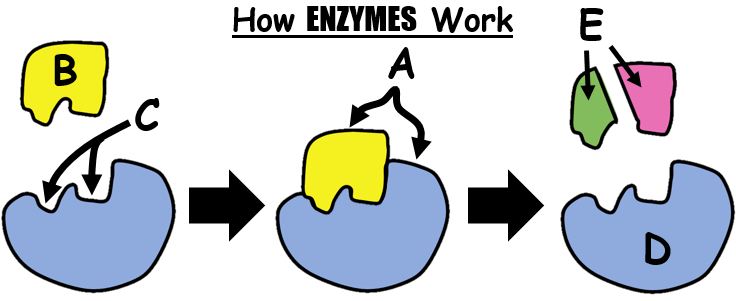
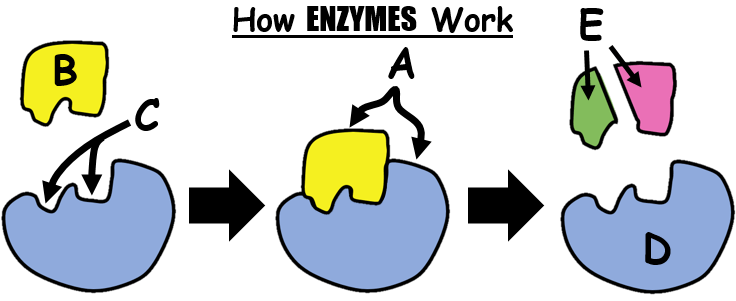
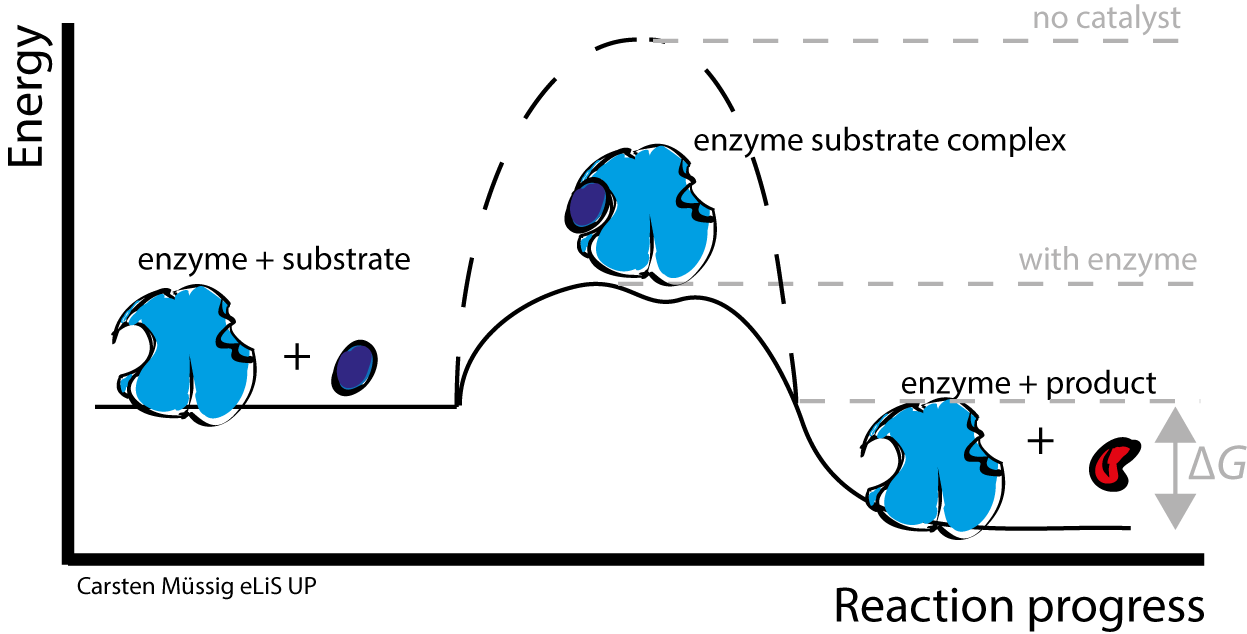
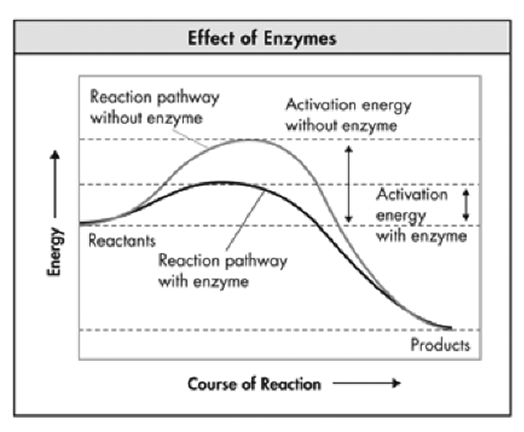
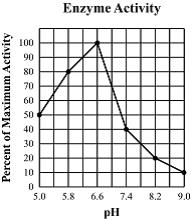


Identify the following respectively:
No inhibitor - Competitive inhibitor - Non-competitive inhibitor
X - Y - Z
X - Z - Y
Y - X - Z
Z - X - Y

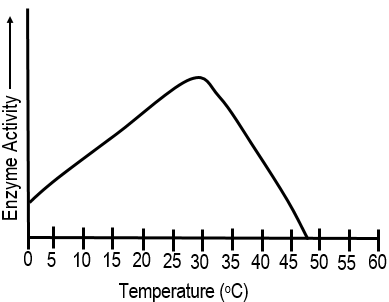
The graph shows the progress of an enzyme - catalysed reaction with increasing temperature. The decline in the rate at X is MOST likely because
peptide bonds are broken
the enzyme loses its secondary nature
the enzyme loses its tertiary structure
the substrate concentration becomes too low

Which graph shows the changes in substrate concentration during the course of an enzyme catalyzed reaction?
A
B
C
D
Which of the following is the BEST example of anabolism?
Glycogen is converted to glucose
Peptide bonds are hydrolysed by peptidases
Amino acids joined by peptide bonds to form a polypeptide
Amylose and amylopectin combine to form starch molecules
Which of the following tests for starch?
Iodine
Benedict's
Biuret
Emulsion
When protein is present Biuret turns...
purple
blue-black
orange
brick red
A negative test for protein will cause Biuret to stay...
brick red
blue
black
orange
What is a positive result for the lipid emulsion test?
milky white colour
clear
yellow
green
In this experiment, you must put your test tubes into a hot water bath
Benedict's Test
Biurets Test
Iodine Test
Ethanol Emulsion Test

This photo represents a
negative test for glucose
negative test for protein
positive test for starch
positive test for glucose

The test tubes in the photo represent a negative and positive result for
Benedict's with glucose
Biuret with protein
Iodine with starch
Ethanol with fat


It consists of two glucose monomers
maltose
sucrose
lactose
cellulose
What monomer is found in cellulose but not in starch?
amylose
β-glucose
α-glucose
amylopectin
Which tests for the presence of reducing sugars?
Iodine
Biuret
Benedict's
Emulsion
To test for non-reducing sugars, you must first hydrolyse your sample using....
Strong alkali
Universal indicator
Strong acid
Heat
Which of the following are branched? Tick all that apply.
Glycogen
Amylose
Amylopectin
Cellulose
Which of the following contains cross-links due to hydrogen bonding between microfibrils?
Glycogen
Cellulose
Starch
Maltose
Dipeptides and polypeptides are formed in which type of reaction?
condensation reaction
decomposition reaction
displacement reaction
hydrolysis reaction
What type of bond is formed between two amino acids?
ester bond
glycosidic bond
phosphodiester bond
peptide bond
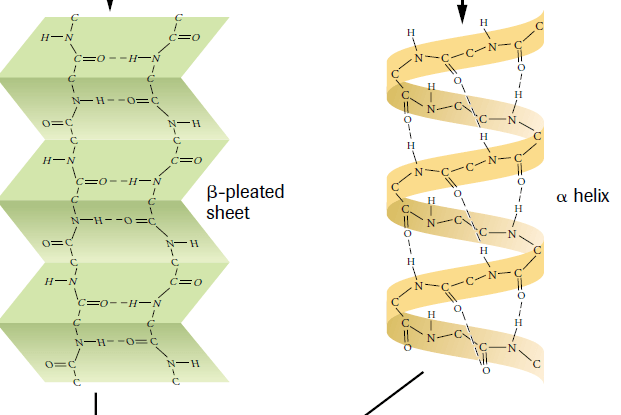
Which type of bond is responsible for forming beta pleated sheets?
covalent bond
hydrogen bond
ionic bond
metallic bond
In which of the following situations would a disulfide bridge form?
in a polypeptide chain with two adenine amino acids close together
in a polypeptide chain with two cysteine amino acids close together
in a polypeptide chain with two guanine amino acids close together
in a polypeptide chain with two thymine amino acids close together
A disulfide bridge is an example of a...?
covalent bond
hydrogen bond
ionic bond
metallic bond
Which of the following is not present in all proteins?
primary structure
secondary structure
tertiary structure
quaternary structure
Lipase and protease are examples of...?
antibodies
enzymes
structural proteins
transport proteins
Hydrophobic and hydrophilic amino acids are integral structures to which type of protein?
antibodies
enzymes
structural proteins
transport proteins
Which feature of proteins makes them good structural molecules?
cross links between polypeptide chains
high solubility
hydrogen bonds
hydrophobic regions
Which two substances are used to test for protein?
sodium hydroxide solution and copper sulfate solution
sodium hydroxide solution and ethanol
sodium hydroxide solution and iodine solution
sodium hydroxide solution and potassium iodide solution

What is another name for a protein?
fat
sugar
amino acid
polypeptide


All of the following are functions of proteins EXCEPT
catalyze/speed up chemical reactions
provide quick energy
make up muscles, hair, and bones
support the immune system
An amphoteric compound is when a _____ & ______ interact
base
acid
neutral
salt
Saturated fats are __________ at room temperature.
liquid
solid
Fatty Acids differ in there chain length and their
protein carriers
Side chains
energy level
degree of saturation
What lipoprotein is responsible for transporting fat in blood?
VLDL
Chylomicrons
HDL
LDL

The bonds that join fatty acids and glycerol to form triglycerides are called:
Glycosidic Bonds

What is the following molecule?
glucose
saturated fat
unsaturated fat
peptide

What is the following molecule?
triglyceride
phospholipid
steroid
protein
A triglyceride is made up of __ glycerol and __ fatty acids.
3; 1
1; 3
1; 2
Which of the following is a main function of a lipid?
source of quick energy
stores energy, insulates us, and makes up the cell membrane
transport substances in and out of the cell
stores genetic information

