Worksheets
Unit 2 Bio
Total questions: 78
Worksheet time: 57mins
Which organelle controls what goes in and out of the cell?
nucleus
nucleolus
cell membrane
nuclear membrane
This organelle digests dead cell parts and contains enzymes
lysosome
golgi body
smooth ER
Rough ER

What organelle is represented by this image?
rough endoplasmic reticulum
smooth endoplasmic reticulum
ribosome
nucleus
The jelly-like material inside the cell
ribosomes
lysosome
granum
cytoplasm
Which organelle contains DNA and controls the cell?
Cell membrane
nucleus
nucleolus
lysosme

What function does this organelle carry out in the cell?
detoxification
packaging materials for release from the cell
breaking down old cellular components
storing genetic material
Proteins are produced at this organelle.
golgi body
ribosome
cytoskeleton
cilia
This organelle makes useable energy for the cell
chloroplast
mitochondria
ribosome
nucleolus

What is the function of this organelle?
modify and build proteins
break down proteins
make lipids for the membrane
store extra material, like water and food
This organelle produces the microtubules used during cell division.
lysosome
centriole
cytoplasm
ribosome
In _______ cells, the vacuole is large and located in the center of the cell.
plant
animal
both plant and animal
all
Which of the images below represents a chloroplast?


Ribosomes are produced here
nucleus
nuclear membrane
nucleolus
chromosomes
This structure provides protection to plant cells and is made of cellulose.
chloroplast
cell membrane
cell wall
cytoplasm

Which organelle is this?
Golgi Apparatus
Mitochondria
Nucleus
Chloroplast
Which organelle is only found in animal cells?
cytoplasm
vacuole
centriole
ribosome
This organelle makes lipids for the cell.
Rough ER
Smooth ER
Golgi body
nucleus

What organelle does this image represent?
Golgi Apparatus
Ribosome
Mitochondria
Chloroplast
Which 2 organelles are involved in the making of a protein?
Ribosome
Lysosome
Rough Endoplasmic Reticulum
Smooth Endoplasmic Reticulum
Which of the following organelles is found only in a plant cell?
mitochondria
chloroplast
centrioles
vacuole

Movement across the cell membrane that does not require energy is called [ active / passive ] transport.
active
passive

The cell membrane is composed of proteins embedded in a [ phospholipid / molecular ] bilayer.
phospholipid
molecular

If there is a concentration gradient, substances will move from an area of high concentration to an area of [ equal / low ] concentration.
equal
low

The cell membrane is [ selectively permeable / impermeable ].
selectively permeable
impermeable
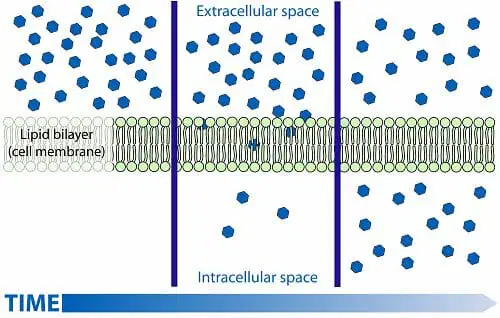
[ Equilibrium / Diffusion ] is the simplest type of passive transport.
Equilibrium
Diffusion
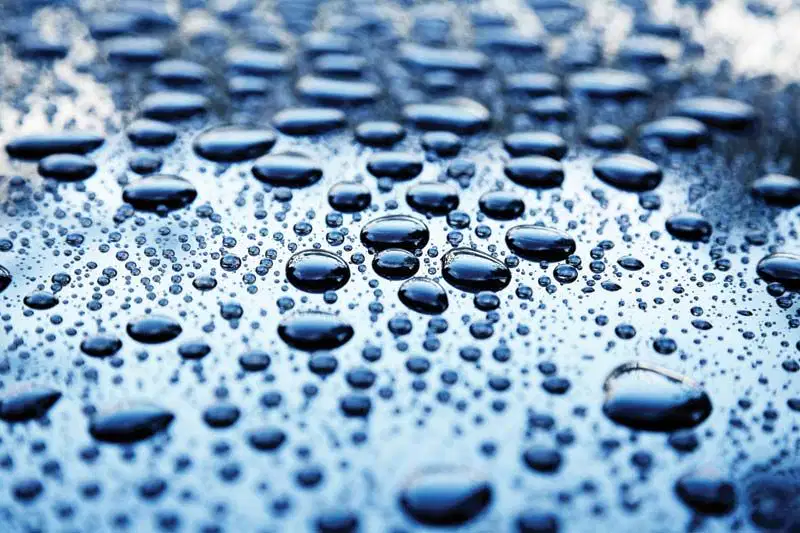
The diffusion of water through a selectively permeable membrane is called [ osmosis / diffusion ].
osmosis
diffusion
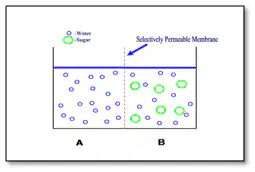
The direction of water movement across the cell membrane depends on the concentration of free water[ molecules / solutions ].
molecules
solutions

A solution that causes a cell to swell is called a [ hypertonic / hypotonic ] solution.
hypertonic
hypotonic
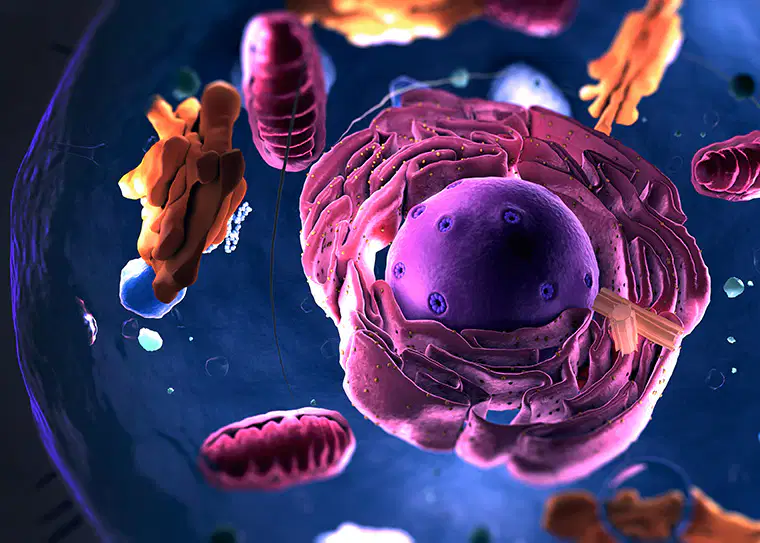
Organelles that collect excess water inside the cell and force water out are called [ diffusion organelles / contractile vacuoles ]
diffusion organelles
contractile vacuoles
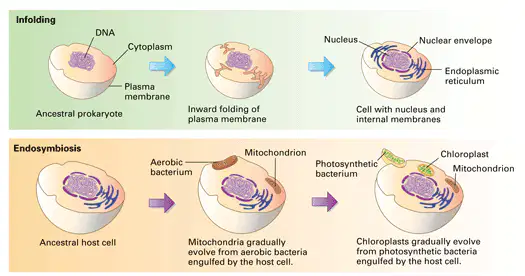
The process of taking material into the cell by infolding the cell membrane is called [ endocytosis / exocytosis ]
endocytosis
exocytosis
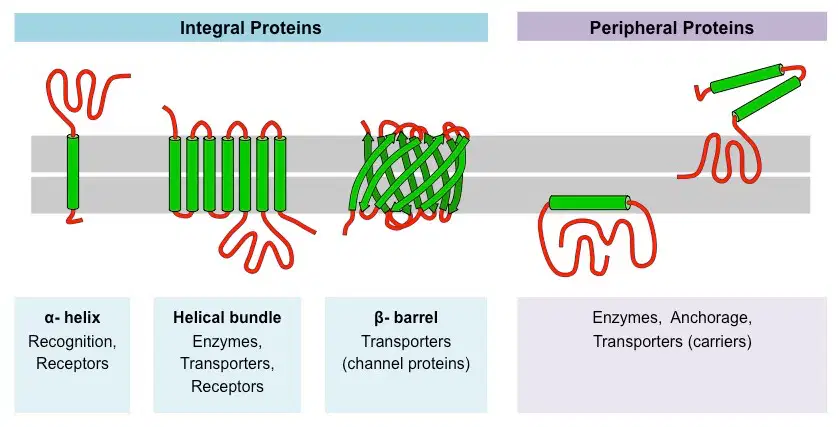
In [ facilitated / molecular ] diffusion, membrane proteins help molecules across the membrane.
facilitated
molecular

In diffusion, molecules [ spread out / condense ]
spread out
condense
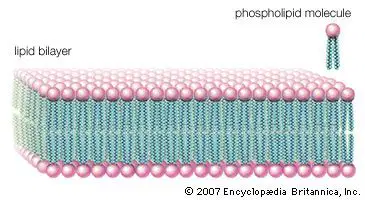
The lipid bilayer describes [ a type of transport / the cell membrane ]
a type of transport
the cell membrane
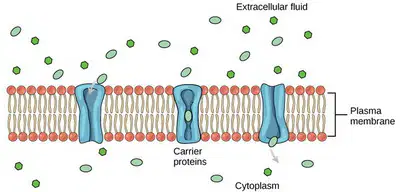
Facilitated diffusion moves substances down their concentration gradient [ with / without ] using the cell's energy.
with
without
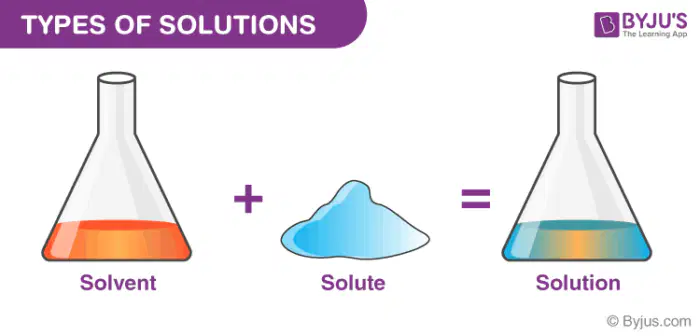
This cell would be in a [ hypertonic / hypotonic / isotonic ] solution.
hypertonic
hypotonic
isotonic

All of the processes in the image are examples of [ active / passive ] transport.
active
passive
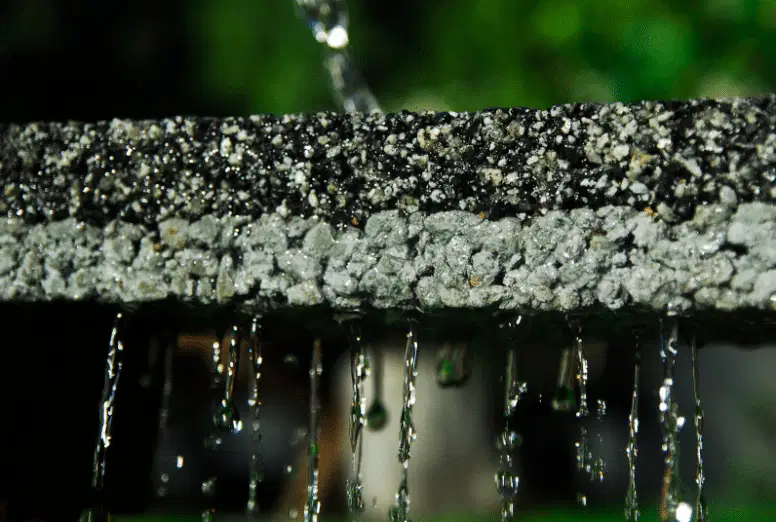
The cell membrane can be described as [ semi-permeable / impermeable ]
semi-permeable
impermeable

Oxygen enters the cell by [ diffusion / osmosis ].
diffusion
osmosis

Water enters the cell by [ diffusion / osmosis ].
diffusion
osmosis
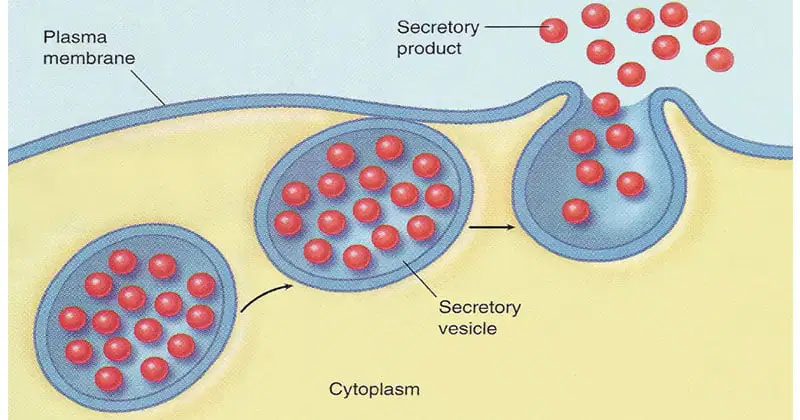
The process of releasing materials out of the cell by fusion of a vesicle with the membrane is called [ endocytosis / exocytosis ]
endocytosis
exocytosis

A solution that causes a cell to shrink is called a [ hypertonic / hypotonic ] solution.
hypertonic
hypotonic

The movement of molecules from an area of high concentration to an area of low concentration is called [ osmosis / diffusion ].
osmosis
diffusion
The process of moving materials from an area of lower concentration to an area of higher concentration is called [ active / passive ] transport.
active
passive

A solution with the same concentration of solutes as inside the cell is called a [ hypertonic / isotonic / hypotonic ] solution.
hypertonic
isotonic
hypotonic
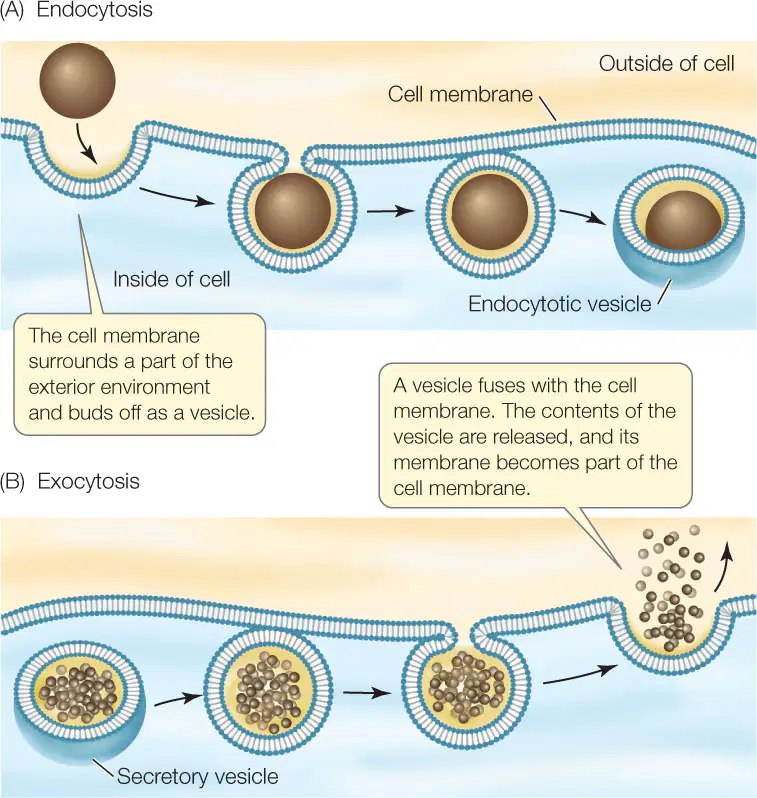
The process of taking in large particles by the cell is called [ endocytosis / exocytosis ].
endocytosis
exocytosis

The process of moving materials from an area of higher concentration to an area of lower concentration is called [ active / passive ] transport.
active
passive

A solution that has a higher concentration of solutes than inside the cell is called a [ hypertonic / isotonic / hypotonic ] solution.
hypertonic
isotonic
hypotonic
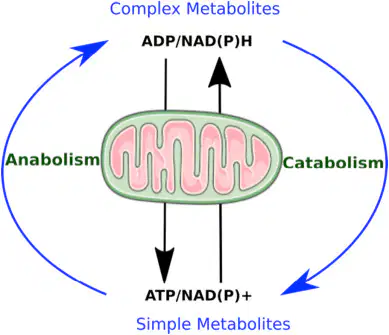
The process of moving materials from an area of lower concentration to an area of higher concentration using the cell's energy is called [ active / passive ] transport.
active
passive
A cell that is 70% water and 30% solute is placed in a solution that is 75% water and 25% solute. Which of the following is correct?
It is isotonic because the concentration is the same inside and outside the cell.
It is hypertonic because water is exiting the cell.
It is hypotonic because water is entering the cell.
It is hypertonic because water is entering the cell.
A cell that is 90% water and 10% solute is placed in a solution that is 90% water and 10% solute. Which of the following is correct?
it is hypertonic because water is exiting the cell.
it is isotonic because the concentration is the same inside and outside the cell.
it is hypotonic because water is entering the cell.
it is hypertonic because water is entering the cell.
A cell that is 70% water and 30% solute is placed in a solution that is 75% water and 25% solute. Which of the following is correct?
It is isotonic because the concentration is the same inside and outside the cell.
It is hypertonic because water is exiting the cell.
It is hypotonic because water is entering the cell.
It is hypertonic because water is entering the cell.

The two kinds of cells are Prokaryotes and Eukaryotes. How are they different?
Prokaryotes have a nucleus.
Eukaryotes have a nucleus.
There is no difference.

What type of cell is this?
Animal cell because it has chloroplast, a cell wall, and only one large vacuole.
Plant cell because it has mitochondria and a nucleus.
Animal cell because it has chloroplast, and a cell membrane.
Plant cell because it has chloroplast, a cell wall, and only one large vacuole.
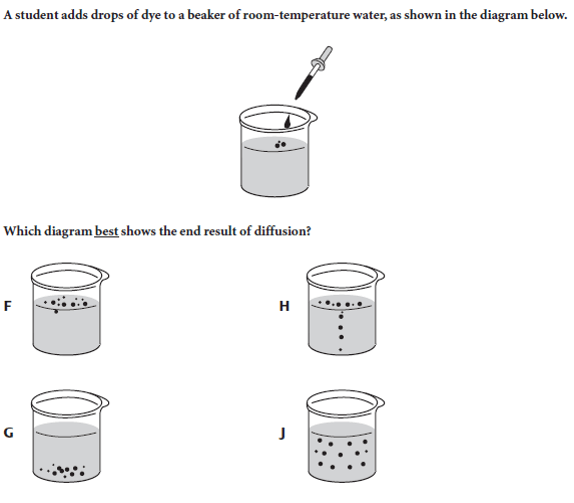
Which one is the definition of active transport?
movement of particles through the cell membrane from a region of lower concentration to a region of higher concentration using energy in the form of ATP.
passage of water molecules from a region of their higher concentration to a region of their lower concentration through a partially permeable membrane
net movement of molecule from a region of higher concentration to region of lower concentration. Molecule down a concentration gradient
net movement of molecule from a region of lower concentration to region of higher concentration. Molecule down a concentration gradient
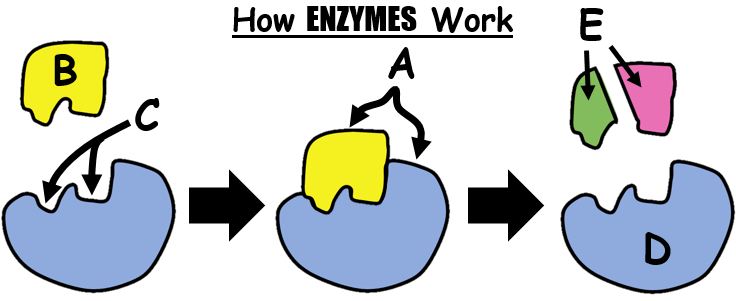
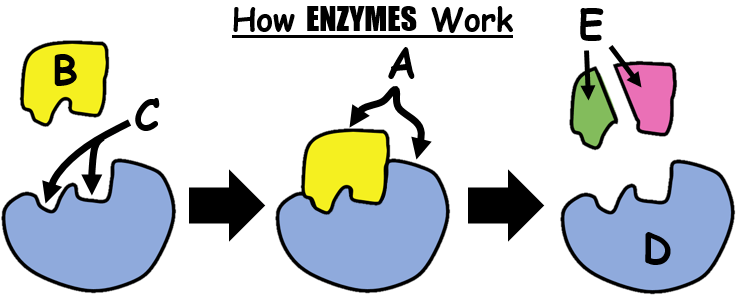
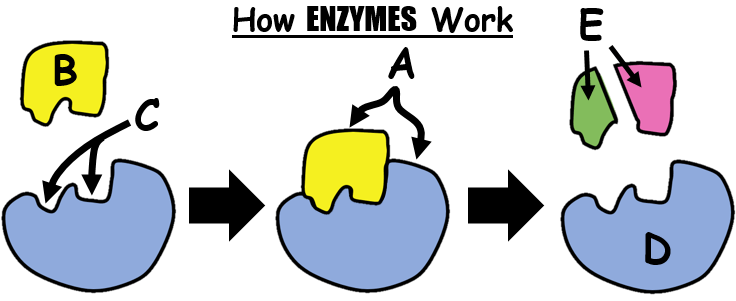
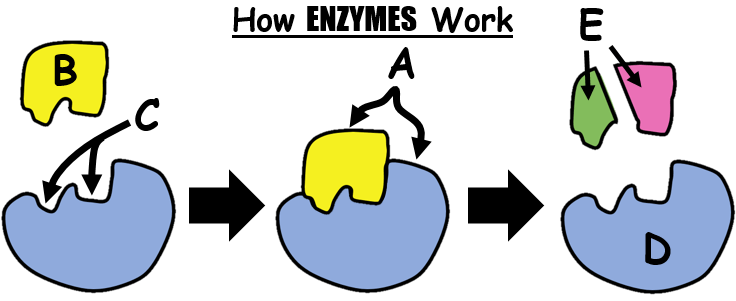
Enzymes are an example of
Lipids
Carbohydrate
Protein
Nucleic Acid