
 Worksheets
S1 Finals Review Quiz
Total questions: 120
Worksheet time: 1hrs 4mins
What is a MACROMOLECULE?
A large molecule that makes up the structure of our bodies
A trace metal like iron (Fe) that aids in functions such as transporting oxygen
A small molecule like water which dissolves and transports many nutrients throughout the body
An individual charged atom (ion) such as Na+ that aids in functions such as nerve signalling
What are TWO reasons why CARBON is so important for life, especially the structure of macromolecules?
It will only bond with oxygen
It is a good sharer of electrons, with other atoms and itself
It can form up to four bonds
It is greedy for electrons
I'm a macromolecule and there are 20 different varieties of me. I can link into long sequences which then fold up into many different shapes, and I can be found in high amounts in nuts and meat. What am I?
Carbohydrate
Amino acid
Nucleotide
Lipid
Amino acids are the building blocks of...
Cell membranes
Complex carbohydrates
DNA and RNA
Proteins
I'm a macromolecule with a long hydrophobic ("water-fearing") tail and I can be found as fats and oils. What am I?
Amino acid
Carbohydrate
Nucleotide
Lipid
I'm a macromolecule made of rings of carbon, sometimes many rings linked together, and I can be found in high quantities in plants and plant-based foods. What am I?
Nucleotide
Amino acid
Lipid
Carbohydrate
The CELL WALLS of plants are made of ______ woven together.
Simple carbohydrates
Complex carbohydrate chains
Nucleic acid strands
Amino acid sequences
Plant cells (especially those in fruit) produce relatively high quantities of ____ through ____
Simple carbohydrates / photosynthesis
Complex carbohydrates / combustion
Lipids / membrane formation
Protein / photosynthesis
I'm a macromolecule and when I link together, I can form a nucleic acid, such as a strand of DNA or RNA. What am I?
Lipid
Amino acid
Nucleotide
Carbohydrate
Which TWO of the following properties would BEST allow a macromolecule to serve as relatively QUICK ENERGY in our cells?
Soluble
Insoluble
Few links to break apart
Many links to break apart
Which property would BEST allow a macromolecule to serve as a PROTECTIVE MEMBRANE in our cells?
Four varieties, many combinations
Soluble
Few links to break
Insoluble
Which property would BEST allow a macromolecule to serve as INFORMATION STORAGE in our cells?
Few links to break
Four varieties, many combinations
Insoluble
Soluble
Which property would BEST allow a type of macromolecule to perform many different functions in our cells?
20 varieties, many combinations
Many links to break
4 varieties, many combinations
Insoluble
Based on previous answers, SIMPLE CARBOHYDRATES most often function as...
Many different functions
Quick energy
Protective membranes
Info storage
Based on previous answers, LIPIDS most often function as...
Info storage
Protective membranes
Quick energy
Many different functions
Based on previous answers, sequences of NUCLEOTIDES function as...
Info storage
Protective membranes
Many different functions
Quick energy
Based on previous answers, sequences of AMINO ACIDS often function as...
Many different functions
Protective membranes
Quick energy
Info storage
A protein's function depends MOST DIRECTLY on its...
Solubility
Sequence length
Polarity
Shape
Some proteins function as ENZYMES to speed up chemical reactions. How does an enzyme accomplish this?
Using its custom shape to stretch a particular bond, so it is easier to break
Using any old shape it wants to stretch a bond, so it is easier to break
Using thermal (heat) energy to blow apart bonds
Using its greediness for electrons to stretch a bond, so it is easier to break
What is ACTIVATION ENERGY?
The final energy needed for two atoms to form a stable bond in a chemical reaction
The thermal energy of an enzyme
The initial energy needed to break existing bonds before a chemical reaction can proceed
The stretching energy of an enzyme
What effect does the stretching of a bond have?
It releases energy
It lowers the activation energy needed to finally break the bond, speeding its breakage
It lowers the womp it up energy needed to finally break the bond, speeding its breakage
It provides activation energy directly to the reaction, speeding its breakage
What is DENATURATION?
The breaking of a link between rings of carbon in a carbohydrate
The unfolding or misfolding of a protein
The dissolving of a polar substance in water
The breakdown of a hydrocarbon tail of a lipid
Which TWO conditions are MOST likely to lead to DENATURATION?
Extremely high concentration of lipids
Extreme acidity (for example, in the stomach)
Extreme heat (for example, in cooking)
Extremely high concentration in water
Which atom below is "greedy" for electrons, and likely to form "unfair" bonds?
Hydrogen
Carbon
Oxygen
Sodium
In an O-H bond, ELECTRONS will spend MORE time around ___ , giving it a partially ___ charge.
Oxygen / positive
Hydrogen / negative
Oxygen / negative
Hydrogen / positive
In an O-H bond, ELECTRONS will spend LESS time around ___ , leaving it with a partially ___ charge.
Hydrogen / positive
Oxygen / positive
Oxygen / negative
Hydrogen / negative
The "unfair" (uneven) sharing of electrons in a bond, resulting in a DIFFERENCE IN CHARGE across the bond, is known as...
Surface tension
Polarity
Adhesion
Cohesion
Which one of these molecules is NON-POLAR? Think about where or whether you see charges, or "fair" or "unfair" bonds on that molecule. For the latter: think about which atom we know to be "greedy" and form "unfair" bonds.
Then think about whether a NON-POLAR bond would have charges, or whether it would be "fair" or "unfair".

HYDROCARBON CHAIN (as in an OIL)

SODIUM CHLORIDE

GLUCOSE

WATER
Water is MOST likely to be attracted to...
A molecule with only
C-H bonds
Oxygen gas
A molecule with only
C-C bonds
Anything polar/charged
What are TWO reasons why WATER is so important for life?
It can use its polarity to dissolve lots of things, including other polar molecules (like some nutrients)
It is NOT attracted to itself, allowing it to cross through the lipid bilayer of our cell membrane
It is attracted to itself and other slightly charged surfaces, allowing it to travel through small spaces (roots, blood vessels)
It can use its non-polarity to dissolve lots of things, including fats and oils
Which of these organelles functions as the control center of the cell?
Mitochondria
Nucleus
Chloroplast
Golgi
Which of the following is PERMANENTLY stored in the nucleus (except during cell division)?
Ribosomes
Vesicles
DNA
Lysosomes
Which of the following is NOT made in the nucleus?
Lysosome
Ribosome
DNA
RNA
What is the function of a RIBOSOME?
To interpret DNA/RNA instructions and make other proteins
To package proteins
To get rid of unneeded or denatured proteins
To store information about making proteins
Which TWO places may RIBOSOMES go to perform their functions?
Endoplasmic reticulum
Mitochondria
Golgi
Cytoplasm
Which of the following is NOT an example of a MEMBRANE?
Endoplasmic reticulum
Golgi
Cytoskeleton (including spindle fibers in cell division)
Nuclear envelope
I'm a MEMBRANE surrounding the nucleus with RIBOSOMES docked onto me.
Rough endoplasmic reticulum
Smooth endoplasmic reticulum
Cytoskeleton
Golgi
Given the function of a RIBOSOME (use your answer to that question to help), which of these will logically have to travel OUT of the nucleus with it?
Permanent DNA
Lipids
Vesicles
RNA copy of the DNA
I'm a newly assembled protein. Where will I most likely go FIRST?
Along the golgi, then to the ER in my vesicle vehicle
Along the ER, then to the golgi in my vesicle vehicle
Across the cytoskeleton into the mitochondria
Through a channel protein into the extracellular matrix
Which TWO of the following happen in the GOLGI?
Proteins are assembled from DNA/RNA instructions
Some proteins are helped to fold into their final shapes
Bits of lipid/carb are added to proteins to tell them their final destination
Glucose is broken apart to release energy stored inside
Which TWO of these are NOT typical functions of PROTEINS?
Solute transporter or pump
Enzyme that speeds up a reaction
Permanent info storage
Membrane
Which kind of molecule will MOST EASILY diffuse across the LIPID BILAYER of the cell membrane BY ITSELF, without any help? (Size: think about what would most easily fit between the phospholipids. Polarity: think about whether being attracted back to water would help or hinder it crossing the bilayer.)
Small, non-polar
Large, polar
Large, non-polar
Small, polar
What TWO additional components of the cell membrane help molecules pass through the lipid bilayer if they cannot diffuse by themselves?
Receptor proteins
Carrier proteins
Channel proteins
Phospholipids
What is a SOLUTE?
A large particle
A particle that is small and polar
The particle doing the dissolving
The particle being dissolved
What is a SOLVENT?
A large particle
The particle doing the dissolving
A small, non-polar molecule
The particle being dissolved
In biology, the most common SOLVENT by far is...
Water
Oil
Glucose
Citric acid
Which of these processes will require the cell to expend energy?
Facilitated diffusion - helping solutes go from high to low concentration
Active transport of solutes from low to high concentration
Passive diffusion of solutes from high to low concentration
Osmosis - movement of water toward higher solute concentration
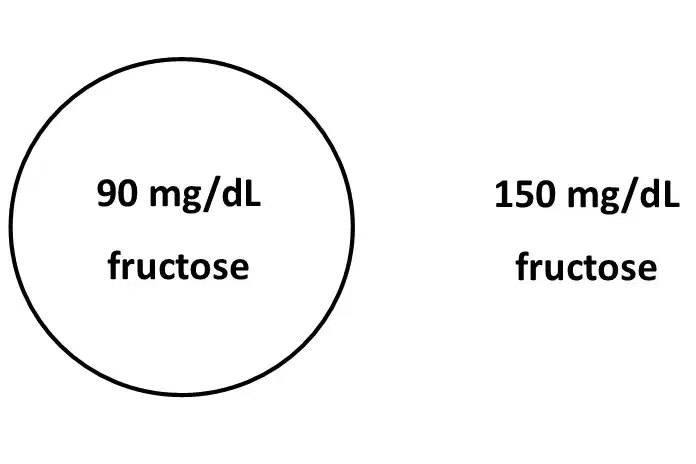
You drink a sugary soda and load up your blood with fructose (the type of sugar in most juices and soft drinks). Which way is water going to move?
Into your cells (leftward on the diagram)
Water will move halfway into your cells
Water will stay the same concentration on both sides
Out of your cells (rightward on the diagram)
Which symptom will most likely result from the previous water movement?
Mental confusion
Decreased urination
Mild dehydration
Swelling
What is the function of the hormone INSULIN?
To signal your cells to build transport proteins to let water inside
To signal your cells to build transport proteins to let glucose inside
To signal glucose to passively diffuse across the lipid bilayer
To signal your cells to stop glucose from crossing the lipid bilayer
Imagine someone with Type I diabetes, and they have not quite gotten enough insulin. Which of the following will be the immediate result?
Glucose will rush into their cells
Their pancreas will start to produce more glucose
Glucose will build up in their blood
Glucose concentrations will remain equal inside and outside their cells
Based on your previous answer, after a short time, which TWO symptoms will likely result? (Think about whether water would be moving in or out of the cells in this situation, and what the consequences would be.)
Swelling of nerve cells
Gaining water weight
Fatigue
Increased urination
What is one major difference between Type I and Type II diabetes?
Type I develops over many years
In Type II diabetes, the pancreas cannot make insulin
A person is (usually) born with Type I diabetes
A person is (usually) born with Type II diabetes
Why is Type II diabetes often more difficult to treat than Type I diabetes?
The transport proteins that let glucose into the cell begin to malfunction
Cells take in too much glucose
The pancreas cannot produce insulin
Cells become resistant to insulin even when it is available
What advice would you give yourself to lower your risk of Type II diabetes?
Holler at your pancreas to make it feel bad
Limit your sugar intake so your cells don't become resistant
Increase your sugar intake so the pancreas receives the signal to make insulin
Take insulin supplements
What is a TISSUE?
Many cells of the same type working together to perform a common function
The most basic unit to fully qualify as living (that everyone can agree on)
A component of a eukaryotic cell that performs a specific function
Many organ systems working together to make a fully functioning whole
What is an ORGAN?
Many cells of the same type working together toward a common function
The most basic unit to fully qualify as living (that everyone can agree on)
A component of a eukaryotic cell that performs a specific function
Tissues of different types working together toward a common function
Which of the following represents a logical progression of levels of organization in an organism?
Molecule --> macromolecule --> cell --> organelle
Cell --> tissue --> organ --> organ system
Cell --> macromolecule --> organelle --> organ system
Organelle --> organism --> organ --> organ system
Being made of trillions of cells instead of one big bag of goo makes us MEASURABLY better at...
Protecting our bodies from danger
Moving quickly and easily
Quickly transporting nutrients and waste
Performing many different functions
In our bodies, what system delivers digested nutrients and carries away waste DIRECTLY to and from our cells?
Muscular system
Digestive system
Skeletal system
Circulatory system
A plant cell captures energy from ___ using its ___ , then stores some of that energy by making ___ which functions like a ___ .
sunlight / mitochondria / glucose / battery
glucose / chloroplasts / oxygen / reactor
sunlight / chloroplasts / glucose / battery
oxygen / mitochondria / glucose / explosion
To perform PHOTOSYNTHESIS, a photosynthesizer REQUIRES which three of the following?
energy + CO2 + H2O
energy + glucose + CO2
energy + glucose + oxygen gas
H2O + glucose + oxygen gas
What are the PRODUCTS of photosynthesis (what gets made once photosynthesis happens)?
Energy + CO2 + H2O
Glucose + carbon dioxide gas
Glucose only
Glucose + oxygen gas
Glucose stores energy. When a cell needs some of that stored energy, the cell will...
Break glucose apart again in the nucleus
Break glucose apart again in the mitochondria
Make glucose in the nucleus
Make glucose in the mitochondria
The process in the previous question is an example of...
Hydrolysis
Combustion
Cellular respiration
Photosynthesis
Where does most of the energy from glucose go next, once the glucose is broken apart?
Directly out into the cell as heat
Towards reloading many ATP
Towards breaking apart many ATP
Towards making other glucose
Which of the following is the best analogy for ATP?
A 9V battery you keep on a shelf in your garage (longer-term energy storage)
A reactor
An explosion
A spring pressed behind a trigger (energy storage for immediate use)
Which of the following best summarizes the ATP reloading process?
Energy from glucose crams a third phosphate onto an ADP molecule to make ATP, like pressing a spring behind a trigger; a water molecule is squeezed out in the process
Energy from glucose adds water to an ATP molecule, which triggers and releases the spring
Energy from glucose adds water to an ADP molecule, which crams on a third phosphate to make ATP, like pressing a spring behind a trigger
Energy from glucose allows water to be released from an ATP molecule, which triggers and releases the spring

What is a major source of stored energy in reloaded ATP?
Positive charges that want to repel each other
Opposite charges that attract
Opposite charges that want to repel each other
Negative charges that want to repel each other
The ATP "spring" is triggered and the energy is RELEASED by...
Cramming on a third phosphate
A water molecule being added back on
A water molecule being released
A molecule of glucose being broken apart
ATP provides useful energy to cellular processes by...
Raising the temperature of the cell a few degrees
Launching a phosphate, pushing on proteins and changing their shapes to do work
Giving proteins an electric charge, pushing them and changing their shapes to do work
Greedily tearing out electrons from macromolecules
Why do photosynthesizers initially store energy in glucose instead of just reloading ATP directly from sunlight? Think about what molecule "triggers" ATP and the environment ATP is immersed in.
ATP doesn't last as long as glucose
ATP can only be used for certain processes
ATP cannot be transported
ATP delivers energy less efficiently
Oxygen helps our bodies...
Transport nutrients across our cells membranes
Assemble new proteins from DNA/RNA instructions
Store energy for immediate use by reloading ATP (cellular respiration)
Store energy on a longer-term basis by synthesizing glucose
Why is it especially important for big-brained, active mammals like us to breathe large amounts of oxygen? Keep your previous answer in mind.
Its greediness makes it good at tearing apart macromolecules, getting more energy out of them to release as heat
Its greediness makes it good at tearing apart macromolecules, getting more energy out of them to reload enough ATP
Oxygen is necessary for photosynthesis
Oxygen can store energy for long periods of time
Which of the following is the best description of how PHOTOSYNTHESIS and CELLULAR RESPIRATION are related?
They both depend on sunlight, but are independent from each other
They are opposites and form a cycle
They both release energy
They both produce the same molecules, but different forms of energy
Which of the following is the BEST explanation of MATTER in an ecosystem?
It CYCLES, because atoms are reused in different processes and organisms, over and over
It CYCLES, because once glucose is broken apart, the atoms are gone forever
It FLOWS one way, because once glucose is broken apart, the atoms are gone forever
It FLOWS one way, because atoms are reused in different processes and organisms, over and over
Which of the following is the BEST description of ENERGY in an ecosystem?
It CYCLES, because once energy is released from ATP, it transforms into heat and is no longer usable
It CYCLES, because the same energy is reused in different processes and organisms, over and over
It FLOWS one way, because once energy is released from ATP, it transforms into heat and is no longer usable
It FLOWS one way, because the same energy is reused in different processes and organisms, over and over
Which of the following BEST summarizes the path of ENERGY through life on Earth?
Sunlight --> ATP --> glucose --> heat
Sunlight --> glucose --> ATP --> heat
Heat --> sunlight --> glucose --> ATP
Sunlight --> heat --> glucose --> ATP
As you go up trophic levels, there seem to be fewer and fewer organisms occupying each level. Which TWO options together help explain why this is the case?
More and more glucose is broken apart for energy at each level, leaving only structural glucose for the next level
More and more glucose is used for structure at each level, leaving only the glucose broken apart for energy for the next level
Once glucose is broken apart for energy, the energy is eventually 'lost' as unusable heat
Once glucose is broken apart for energy, the energy transforms into heat and can be reused for photosynthesis
Plants obtain C, H, and O from ___ in the soil and ___ in the air.
Water / oxygen gas
Water / glucose
Water / carbon dioxide
Carbon dioxide / water
Plants obtain USABLE NITROGEN most directly from...
Soil bacteria
The atmosphere
Weathering of rocks into soil
Precipitation
Which form of NITROGEN can NOT be used directly by plants and animals?
NH4+
NO3-
NH3
N2
Which of these is a potential consequence of farmers and gardeners using too much nitrogen fertilizer?
The nitrogen returns to the atmosphere, overloading it with nitrogen gas
The nitrogen runs off into bodies of water, causing fish and other aquatic organisms to overpopulate
The nitrogen runs off into bodies of water, killing massive amounts of algae and eliminating other organisms' food supply
The nitrogen runs off into bodies of water, causing algal blooms that choke off oxygen to other aquatic organisms
Plants obtain PHOSPHORUS and OTHER MINERALS primarily through...
The atmosphere + recycled dead things
Soil bacteria + recycled dead things
Weathering of rocks into soil + recycled dead things
Precipitation + recycled dead things
Animals obtain C, H, O, nitrogen (N), phosphorus (P), and other minerals most directly by...
Weathering of rocks into soil
Precipitation
Soil bacteria
Eating plants (or animals who ate the plants)
WATER and CARBON DIOXIDE exit plants and animals into the atmosphere again primarily as PRODUCTS of...
Photosynthesis
Fermentation
Cellular respiration (aerobic)
The nitrogen cycle
As WATER VAPOR rises into the atmosphere, most of it...
Hangs around in the atmosphere and re-enters plants through stomata
Precipitates into liquid or solid, then falls as condensation
Condenses into liquid or solid, then falls as precipitation
Transpires into liquid, then falls as condensation
After CARBON DIOXIDE exits plants and animals, it...
Transpires into liquid, then falls as condensation
Enters the soil and re-enters plants through the roots
Condenses into liquid or solid, then falls as precipitation
Hangs out in the atmosphere until it re-enters plants through their stomata
NITROGEN, PHOSPHORUS, and OTHER MINERALS return to soil from plants and animals through...
Cellular respiration
Dead plants, dead animals, and poop being broken down by primary consumers
Photosynthesis
Dead plants, dead animals, and poop being broken down by decomposers
In which TWO situations would a cell be MOST likely (and able) to use FERMENTATION?
Glucose is available; the cell cannot use oxygen
Glucose is available; the cell can use oxygen, but it is NOT available
Glucose and oxygen are both available, and the cell can use oxygen
Glucose is unavailable to the cell
What molecule serves as the cell's permanent information storage?
Amino acids
DNA
RNA
Ribosomes
Which of the following is NOT a component of a nucleotide?
A deoxyribose or ribose sugar
A phosphate
One of four nitrogenous bases
An amino acid
Which TWO represent the best analogies for the role of the phosphates and sugars in DNA?
The hooks in the zipper that interlock with each other
The strips of fabric on each side of the zipper holding the hooks
The protective covers of a book
The letters on a page/keyboard that in sequence form "words"
Which TWO represent the best analogies for the role of the nitrogenous bases in DNA?
The strips of fabric holding the zipper hooks
The hooks in the zipper that interlock with each other
Protective covers of a book
Letters on a page/keyboard that in sequence form "words"
Which is NOT an example of a nitrogenous base?
Adenine (A)
Guanine (G)
Serine (S)
Cytosine (C)
Why are the nitrogenous bases hidden as pairs in the middle of the double-stranded DNA?
Protection - it's our cells' permanent info source
The nitrogenous bases are not in the middle
It's easier to replicate the DNA that way
It's easier to transcribe the DNA that way
Which of the following is a base-pairing that would NOT normally happen?
Adenine (A) <--> Thymine (T)
Adenine (A) <--> Guanine (G)
Cytosine (C) <-->
Guanine (G)
Guanine (G) <--> Cytosine (C)
When the two strands are together, DNA further twists into a...
DNA polymerase
DNA helicase
Base-pair
Double helix
DNA spends most of its time in the nucleus as...
Absent from the cell
Loosely-packed chromatin
Unzipped strands
Tightly-packed chromosomes
What is CHROMATIN?
DNA wrapped around histone proteins (somewhat but not super-compact; easy to access)
DNA curled many times over into a super compact form that can be easily transported to daughter cells
A section of DNA that codes for something specific (often a protein)
The anchor point at the center of a chromosome where spindle fibers attach
In order for a cell to reproduce by division, which of the following steps must happen before the others? The cell must...
Replicate its DNA
Pack the DNA tightly into chromosomes
Attach spindle fibers to sister chromatids to pull them apart
Separate into two through cytokinesis
To replicate its DNA, what must the cell do first?
Wrap the DNA around histone proteins
Pack the DNA tightly into chromosomes
Unzip the two DNA strands
Attach the DNA to spindle fibers
Imagine you're a DNA polymerase tasked with replicating a section of DNA. You start with one of the strands. If you're given the sequence below, what would the complementary DNA strand be?
CATTAG
GTAATC
GATTAC
ACGTCT
TGCAGA
Once the step in the previous question has been accomplished, what TWO steps will the cell perform most immediately NEXT?
Start packing the chromatin tightly into chromosomes
Separate the sister chromatids
Start making centrosomes ("renting the moving trucks")
Separate into two cells through cytokinesis
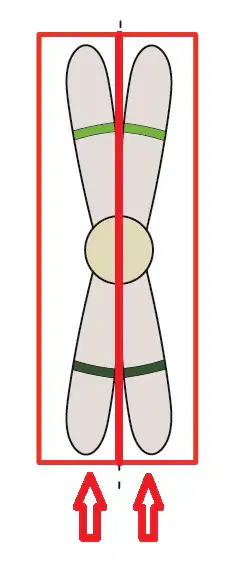
The portion of the image inside the red box(es) represents...
A non-duplicated chromosome
A duplicated chromosome
Sister chromatids, one mutated due to a copy error during replication
Sister chromatids
During MITOSIS, sister chromatids are...
copied in preparation for cell division
are kept inside the nuclear membrane
pulled to opposite ends of the cell by spindle fibers
loosely organized in the form of chromatin
How does the number of chromosomes in each daughter cell after mitosis compare with the number of chromosomes in the original cell before replication?
The number of chromosomes in daughter and original cells is not related
Daughter cells have half the number of chromosomes as the original cell before replication
Daughter cells have the same number of chromosomes as the original cell before replication
Daughter cells have twice the number of chromosomes as the original cell before replication
A cell in the first phase of the cell cycle receives a signal to enter the DNA replication phase and prepare for cell division. This signal is most likely a...
Tumor suppressor protein
Cancer-causing enzyme
Histone protein
Growth factor protein
Technically, only stem cells are involved in the full cell cycle. If, say, a daughter epithelial stem cell DIFFERENTIATES, it...
Continues to grow, then divides into daughter stem cells
Specializes in function (ex: skin cell), then dies after a certain amount of time
Undergoes immediate cell death
Spreads throughout the body as a malignant tumor
What is APOPTOSIS?
When a cell stops dividing to specialize in structure and function
When a cell undergoes programmed cell death
When a cell grows and then divides into two daughter cells
When cell division becomes uncontrolled
APOPTOSIS is NOT immediately important in which situation below?
During development of fingers and toes
At the end of the life cycle of (for example) a differentiated bone, skin, or intestinal cell
Stem bone cells dividing (some of them then differentiating into bone cells) to heal a break in the bone
During replication if copy errors cannot be fixed
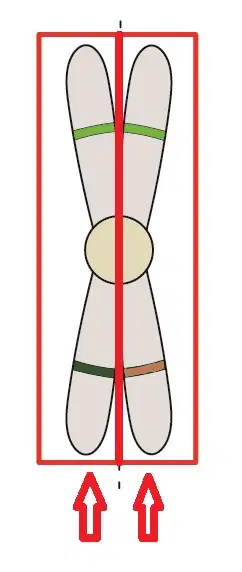
The portion of the image inside the red box(es) represents...
Sister chromatids
Sister chromatids, one mutated due to a copy error during replication
A non-duplicated chromosome
A duplicated chromosome
The more often a cell divides and the more often copy errors happen, the higher the probability that...
The cell will differentiate and then undergo apoptosis
The daughter cells will become a different type of stem cell
The cell will give you mind-reading powers or super-strength
A mistake in a process of the cell cycle leads to it becoming poorly regulated or uncontrolled
The most common cancers tend to come from which type of tissue? Keep your previous answer in mind.
Skeletal and cardiac muscle cells
Nerve cells, including neurons (brain cells)
Epithelial cells (ex: skin, gut, outer covering of lung)
Bone cells
A tumor suppressor gene encodes a protein that ___ cell division (such as at a failed cell cycle checkpoint, or during apoptosis), and a proto-oncogene encodes a protein that ___ cell division (such as a growth factor).
Slows or halts / encourages
Slows or halts / slows or halts
Encourages / slows or halts
Encourages / encourages
Think of the cell cycle like the motion of a car. A DNA copying error that disables a tumor-suppressor gene is like...
Slamming the accelerator
Driving without a brake
Driving without an accelerator
Slamming on the brake
Think of the cell cycle like the motion of a car. If proto-oncogenes normally code for growth factors, and a mutated proto-oncogene codes for an overactive growth factor, this would be like...
Driving without a brake
Driving without an accelerator
Slamming on the brake
Slamming on the accelerator
Which of the following does NOT potentially contribute to the formation of a tumor?
Too much cell division
DNA copy errors
Apoptosis
Too little cell death
What separates a benign tumor from a malignant tumor?
A benign tumor can spread throughout the body
A malignant tumor is contained to one area
A malignant tumor can spread throughout the body
A benign tumor only happens in skin cells
Which TWO of these represent common mechanisms by which CHEMOTHERAPY can stop the further division of fast-dividing (including tumor) cells?
Disrupting the spindle fibers that pull sister chromatids apart during mitosis
Recognizing specific mutations that commonly develop in tumor cells and killing the cells that have them
Degrading the DNA of the tumor cells with concentrated doses of radiation
Disabling the enzymes that keep DNA from tangling in knots, therefore preventing DNA from being replicated or forming chromosomes

