
Font size
 Worksheets
Year 8 review-December
Total questions: 138
Worksheet time: 2hrs 46mins
Thermal energy is energy involving what?
something in motion
stored energy
electricity
heat
What form of energy transfer is most likely responsible when your clothes dryer dries your clothes?
Potential to Chemical to Nuclear
Kinetic to Thermal to Light
Chemical to Mechanical to Electrical
Electrical to Kinetic and Thermal
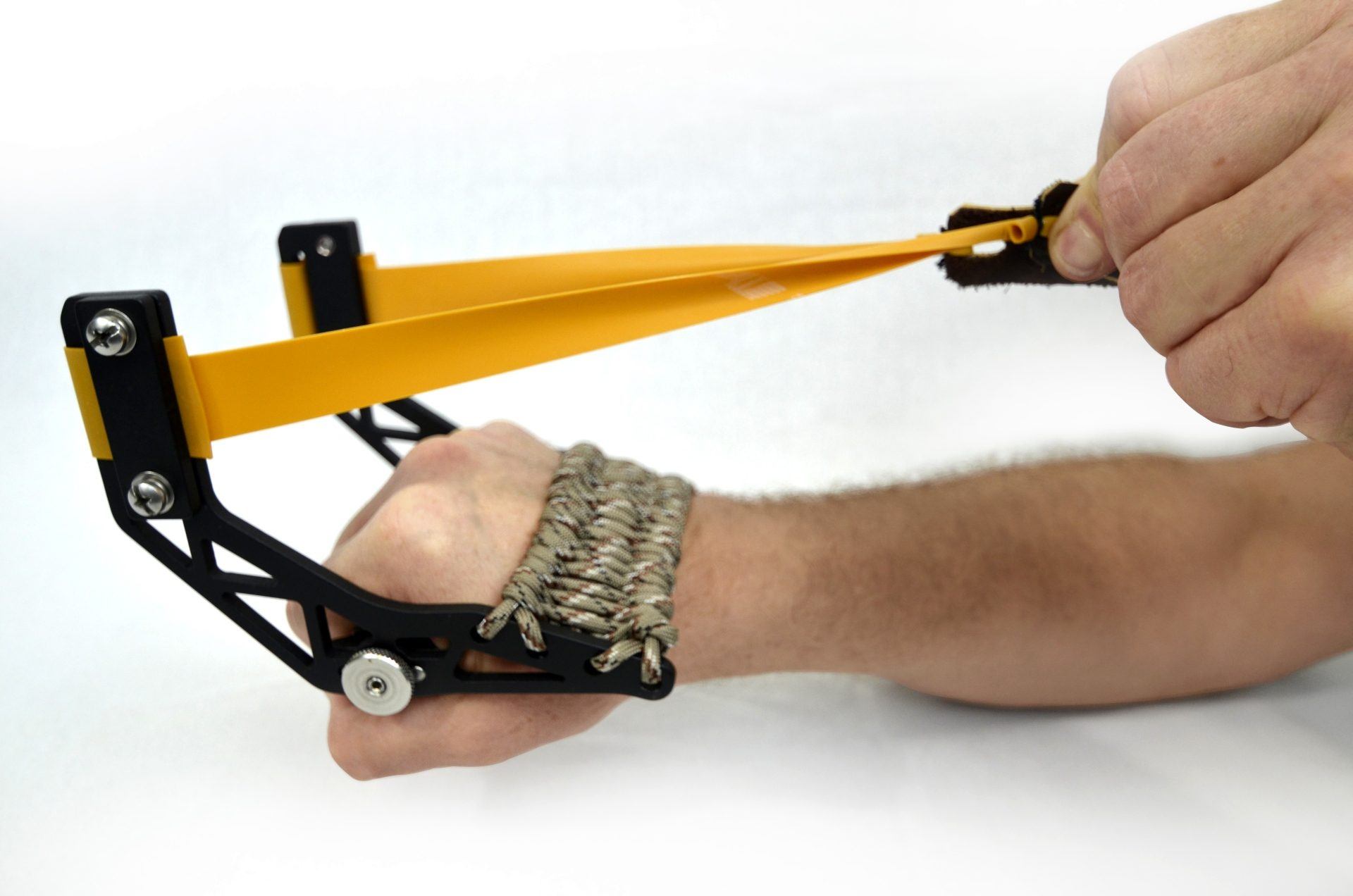
What type of energy is in this picture?
Kinetic
Elastic Potential Energy
Chemical
Sound

The diagram shows a cart moving freely along a track. What happens to the energy of the cart as it moves from point A to point B on the diagram?
GPE is transformed to kinetic energy.
Kinetic energy is transformed to GPE
Both GPE and kinetic energy stay the same.
Which term describes the energy that is stored due to the height of an object above the ground?
kinetic energy
chemical energy
mechanical energy
gravitational potential energy
What forms of energy are involved in hammering a nail into wood? Select all that apply
Sound
Kinetic
Electrical
Nuclear
An object at rest on op of a shelf is likely to have:
No energy
Gravitational potential energy
Hydroelectric power
Batteries are stores of:
Chemical energy
Electrical energy
Light energy
Energy is usefully transferred from a personal audio player as:
Kinetic energy
Thermal energy
Sound energy
Which is likely to contain the most thermal energy?
A red hot horseshoe
A spark from a firework
An ice cube
Which is likely to have the highest temperature?
A red hot horseshoe
A spark from a firework
An ice cube
Which type of energy transfer requires particles?
Conduction
Temperature
Radiation
Thermal energy is transferred by conduction from:
The hot end to the cold end
The cold end to the hot end
The Sun to the Earth
What type of energy transfer can occur through a vacuum?
Conduction
Radiation
Convection
What type of energy is stored in a wind up toy?
Elastic potential
Gravitational potential energy
Heat
What type of diagram shows the efficiency of energy transfer?
Flow
Arrow
Sankey
What is the main source of energy that has been used for over 200 years?
Hydroelectric energy
Wind energy
Solar energy
Fossil fuels
Which of the following is NOT a type of renewable energy?
Coal
Biomass
Ocean energy
Geothermal
What is the main advantage of renewable energy sources over fossil fuels?
They are easier to find
They are cheaper
They don't run out
They require less technology
Which renewable energy source uses the sun?
Hydroelectric
Solar panels
Wind turbines
Biomass
Why aren't renewable energies used more widely?
They are too complex
They are not effective
They are not available
They are still expensive
_________________________ is created when the kinetic energy from falling water is converted into electricity.
geothermal energy
biomass energy
wind energy
hydroelectricity
____________________ energy is created by transforming radiant energy from the sun.
geothermal
biomass
solar
nuclear
Light and water waves are examples of what?
Transverse waves
Longitudinal waves
The speed of light in a vacuum is:
3 x 10⁹ m/s
3 x 10⁸ m/s
3 x 10⁸ km/s
3 x 108 cm/s

What word describes the distance between the middle line and the highest part of the wave?
Wavelength
Superposition
Amplitude
Frequency
The law of reflection says that the:
angle of incidence is greater than the angle of reflection
angle of incidence is equal to the angle of refraction
angle of incidence is equal to the angle of reflection
angle of incidence is less than the angle of reflection
When light goes from a less dense medium to a more dense medium, light bends in what direction?
Away from the normal
towards the normal
continues at the same angle
When light moves from glass into air, the light will bend in what direction?
Away from the normal
Towards the normal
Continues at the same angle
What is the part of the eye that is coloured?
Cornea
Lens
Iris
Retina
What is the the photo-sensitive part of the eye called?
Lens
Iris
Cornea
Retina
White light is a mixture of colours that can be seen when the light hits a prism. The correct order the colours come out in is:
Red yellow orange green blue indigo violet
Red orange yellow green indigo blue violet
Red orange yellow green blue indigo violet
Red orange green yellow blue indigo violet
Blue jeans appear blue because:
they absorb blue light and reflect all of the other colours
they reflect blue light and absorb all of the other colours
they reflect all of the colours
Black objects:
Reflect all of the colours
Absorb all of the colours
What type of wave does sound travel as?
Transverse
Longitudinal
A high pitched sound has a:
high frequency
low frequency
What units is frequency measured in?
Meters
Newton
Hertz
Seconds
Frequency measures:
the number of vibrations per hour
the number of vibrations per minute
the number of vibrations per second
the number of vibrations per millisecond
Sound is caused by:
waves
vibrations
heat
air

Elephants can make sounds of high intensity (volume). These sounds will be:
quiet.
high.
soft.
loud.

The tweeting sound made by a small bird has a pitch that is:
soft.
high.
low.
quiet.
Frequency:
is the amplitude of the vibrations.
is measured in metres.
is the number of vibrations each second.
affects how loud a sound is.

Sound cannot travel through empty space because:
air particles stay still.
there are no particles to vibrate.
particles pass on vibrations.
electricity sends it through the air.
Which list is in the correct order to show the speed of sound in different materials, starting with with the SLOWEST?
solids, liquids, gases
solids, gases, liquids
gases, liquids, solids
liquids, solids, gases
What do all waves transfer?
energy only
energy and matter
matter only
energy and particles
What is the amplitude of a sound wave?
its loudness
the maximum distance the particles vibrate away from their starting positions when the wave passes.
the height of the vibrations.
how high or low the sound is.
The ear changes sound waves into:
light
nerves
nerve impulses
heat

Which part of the ear changes sound vibrations into electrical signals to be sent to the brain?
the cochlea
the eardrum
the auditory nerve
the small bones
Which of the following statements is NOT correct?
Sound energy is transmitted when it goes through a material.
Sound energy is transmitted when it bounces off a material.
Sound waves can be reflected.
Energy can be absorbed by some materials.

You drop a stone in a pond. What happens to the amplitude of the waves as they travel away from the splash?
It gets bigger as the waves transfer energy.
It gets smaller as the energy transferred is spreading out.
It gets bigger as the energy transferred is spreading out.
It gets smaller because the frequency is changing.

When waves on the surface of water reach a solid barrier, they are:
reflected.
transmitted.
absorbed.
spread out.

Soundproofing works when:
windows in a room are left open.
sounds pass easily through the walls.
sounds are absorbed by certain materials.
the walls in a room are painted black.
6.1 It takes Earth _________ to make one complete rotation on its axis.
24 hours
365 days
28 days
24 days
6.1 Which of the following is true?
Earth is the centre of the solar system
The sun orbits the earth
Gravity exists only on Earth
The sun is the centre of the solar system

6.1 What happens when the area you live in tilts away from the sun?
It is summer
It is spring
It is fall
It is winter

6.1 Which causes the day-and-night cycle on earth?
Earth moving around the sun
The sun moving around the Earth
The tilt of the Earths axis
Earth spinning on its axis
6.2 The phases of the Moon are caused by which of the following?
Earth’s orbit (revolution) around the Sun
Earth’s rotation around its axis
The Moon’s orbit (revolution) around Earth
Earth’s shadow falling on the Moon

6.2 If it is winter in the Northern Hemisphere, what season is it in the Southern Hemisphere?
Spring
Autumn
Winter
Summer
6.2 It takes Earth _____________ to make one revolution or orbit around the Sun.
365 days
365 hours
28 days
24 hours
6.2 An imaginary line around the Earth equally distant from the North and South poles
axis
equator
6.3 Changing seasons are caused by which of the following?
The tilt of Earth's axis
The Earth's daily rotation
The revolution of the Moon
The distance of the Earth from the Sun
6.4 What force causes the planets to orbit the sun?
orbit
gravity
orbital velocity
friction
6.4 Which of the following causes the ocean’s tides?
Earth’s revolution around the Sun
The magnetic field between Earth’s north and south poles
The gravitational pull between Earth and the Sun and the Moon
Changes in atmospheric pressure

6.5 Which of these statements is true?
Your mass and weight are the same on Earth and the Moon.
Your mass is the same on the Earth and the Moon but your weight is different.
Your weight is the same on the Earth and the Moon but your mass is different.
You have no weight on the moon as it has no gravity

6.6 On which of these planets would you weigh the most?
Jupiter - Gravitational field strength = 25 N/Kg
Earth - Gravitational field strength = 10 N/Kg
Mars - Gravitational field strength = 3.7N/Kg
You weigh the same on them all
6.6 Weight = mass x gravity. You weigh 62kg. What is your mass on earth if the gravity is 10N/kg?
620N
62N
6.2N

6.7 When the moon's shadow appears on Earth’s surface (Sun - Moon - Earth)
Solar eclipse
Waxing phase
Lunar eclipse
Waning phase
6.7 Why does the speed of a planet change throughout it's orbit?
A planet will speed up if it is facing the sun
An orbit it not a perfect circle. Sometimes the planet is closer or further away from the sun (and its gravity) and will speed up and slow down.
A planet will slow down if a moon comes between it and the sun

6.7 What is the movement of the planets around the Sun called?
Rotation
Spin
Orbit
Twirl
6.7 A body that revolves around a star
planet
moon phase
moon
sun

6.9 A device with a magnetic needle which spins freely and generally points north
Compass
Magnetic Declination
Thermometer
Bar magnet

6.9 Which two sides of a magnet must be facing for it to attract?
North and north
south and south
north and south

6.10 Explain why the arrow on a compass points to geographical north.
A compass is a magnet that points in a north-south direction because Earth itself is a magnet.
A compass is a magnet that points in a south- north direction because Earth itself is a magnet.
like poles
Unlike poles
6.11 The star at the centre of our solar system
equator
sun
planet
constellation
6.11 A star and all the planets and other objects that revolve around it
galaxy
universe
constellation
solar system
6.11 How many stars are in our solar system?
billions
hundreds
two
one
6.11 A pattern of stars, named after mythological or religious figure, an object, or an animal
galaxy
star
constellation
planet
6.11 What is the Sun?
A Star
A Moon
A Planet
A Child
6.12 Everything that exists, including such things as stars, planets,gas,dust, and energy
sun
galaxy
universe
refraction
6.12 What tool would you use to study stars and space?
microscope
oscilloscope
telescope
nanoscope
6.13 What is the largest planet in our Solar System?
Mercury
Jupiter
Saturn
Neptune
6.13 Which of the following is the largest?
Star
Asteroid
Planet
Galaxy
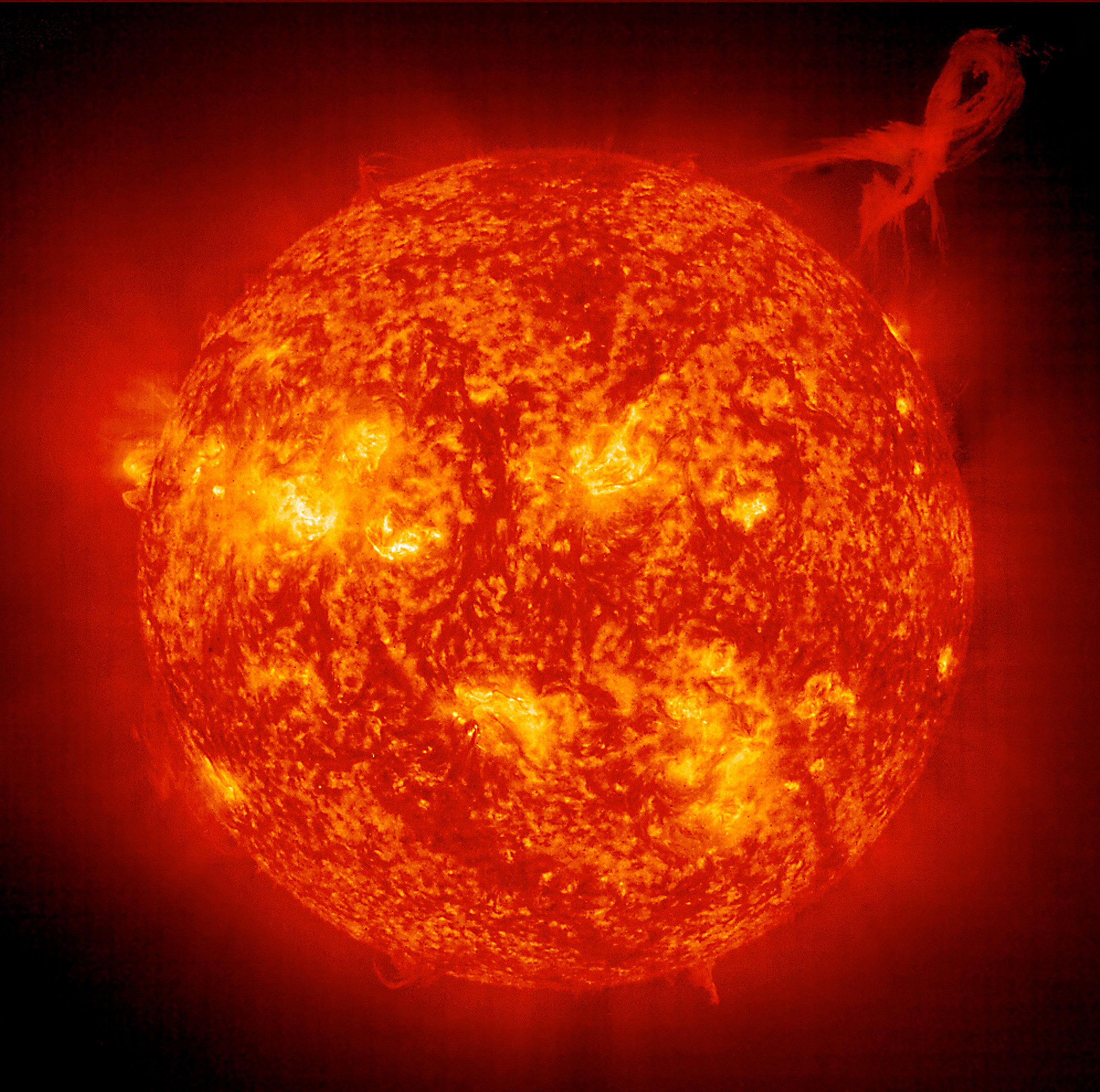
6.13 Why does the sun appear to be the largest star in the sky?
It is far away
It is very big
It is the closest star to earth
It is a planet
6.13 Which of these planets is one of the smaller inner planets?
Jupiter
Saturn
Mercury
Neptune
What is the shape of the Earth?
Flat
Round
Spherical
How long does it take the Earth to go once around the sun?
1 hour
24 hours
1 month
1 year
In the UK, there are over 16 hours of daylight in the middle of the summer. How is the number of hours of daylight different in the winter?
more hours
fewer hours
the same number of hours
12 hours
Why do we have day and night?
The Earth spins on its axis faster in winter.
The Earth’s axis is tilted.
The Earth spins on its axis once every month
The Earth spins on its axis once every 24 hours.
Why is the length of daylight different at different times of the year?
The Earth spins on its axis faster in winter
The Earth’s axis is tilted
The Earth spins on its axis once every month
The Earth spins on its axis once every 24 hours
The Earth has one moon called the Moon. What is the meaning of “a moon”?
A natural object that orbits a planet
Something that reflects light from the Sun
A small planet
How are we able to see the moon?
It shines its own light
We see it when it is close enough
It reflects light from the Sun
We can see the Moon because the Moon reflects light from the Sun. The phases of the Moon are evidence for this. What would we see if the Moon produced its own light?
it would shine every day.
it would shine every night.
it would be brighter than the Sun.
it would always appear to be a circle.
The moon has different phases. This proves...
that the moon changes in size as it orbits the Earth
that the moon is only being lit up from one side
the Earth moves around the moon
the moon produces its own light
List these things in order of size, starting with the smallest thing: Make sure to put a comma and a space as shown below.
Universe, Earth, Galaxy, Moon, Solar System, Sun.
(a)
Many other stars are much bigger and brighter than our Sun.
True
False
Why does our Sun look brighter than other stars?
It is the brightest star in our galaxy
It is closer to the Earth than the other stars
It is the biggest star in our galaxy
The fact that we have night and day is due to
The Earth spinning on its axis
The Earth’s axis being tilted
The Sun seems to move across the sky during the
day. This is because...
the Earth spins on its axis
the Earth’s axis is tilted
The stars seem to move across the sky at night. This is because...
the Earth spins on its axis
the Earth’s axis is tilted
When it is winter in the northern hemisphere it is summer in the southern hemisphere. This is because...
the Earth spins on its axis
the Earth’s axis is tilted
The Sun is higher in the sky in summer than in
winter. This is because...
the Earth spins on its axis
the Earth’s axis is tilted
Daylight lasts longer in summer than in winter;
we have seasons. This is because...
the Earth spins on its axis
the Earth’s axis is tilted
A new moon difficult to see, because lit side is facing ______ the Earth.
toward
away from

Which planets is one of the inner planets?
Jupiter
Saturn
Mercury
Neptune
How many stars are in our solar system?
billions
hundreds
two
one
What force causes the planets to orbit the sun?
orbit
gravity
orbital velocity
On which planet can you find water as a solid, liquid and a gas?
Earth
Mars
Venus
Where is the asteroid belt located?
Between Earth and Mars
Between Mars and Jupiter
Between Mercury and Venus
What is the basis from which the solar system formed?
Elliptical irregularity
A giant cloud of dust and gas
orbital rotation
the greenhouse effect
What are meteors?
Small pieces of rock that have entered earth's atmosphere
small pieces of rock that hit Earth's surface
Small pieces of rock in outer space
The Milky Way is a _____________________ galaxy.
Elliptical
Spiral
Nebula
Irregular
_________________________ is the largest planet in the solar system.
Saturn
Jupiter
Mercury
Pluto

The plane is flying. The forces acting on it are all balanced. What does this tell you about the plane's speed?
its speed is constant
it is accelerating (it's speeding up)
it is slowing down (decelerating)
The plane is flying. The forces acting on it are all balanced. What does this tell you about the plane's height?
its height is constant
its height is changing

There are 4 forces acting on the astronaut. Which direction will the astronaut move?
to the left
to the right
upwards
downwards

The person is about jump.
Which sum should you do to calculate the resultant force acting on them?
1100 - 800 =
1100 ÷ 800 =
1100 + 800 =
1100 x 800 =
The person is about jump.
What is the resultant force acting on them?
300 N
upwards
300 N
downwards
3 N
downwards
1900 N
upwards

What will happen to the astronaut's movement when these forces act on her?
She'll stay still
She'll continue moving at a constant speed and height
She'll accelerate (speed up)
She'll slow down (decelerate)

What sum should we do to calculate the resultant force on the box? Include the answer

The parent and child push the trolley together.
What is the resultant force acting on the trolley?
50 N
30 N
0 N
Which direction will the astronaut move?


