
 Worksheets
Biology Fall Final Review
Total questions: 175
Worksheet time: 44hrs 45mins
Which organelle contains DNA and controls the cell?
Cell membrane
nucleus
nucleolus
lysosme
Which organelle controls what goes in and out of the cell?
nucleus
nucleolus
cell membrane
nuclear membrane
This pigment is found in chloroplasts.
rhodopsin
chlorophyll
thylakoid
stroma
Proteins are produced at this organelle.
golgi body
ribosome
cytoskeleton
cilia
this organelle makes ATP.
chloroplast
mitochondria
ribosome
nucleolus
Prokaryotic cells do not have…….
membrane bound organelles
cell membrane
DNA
genetic material
What does a plant cell have that an animal cell doesn't have?
Cell Membrane and Cell Wall
Cell Wall and Mitochondria
Cell Wall and Nucleus
Cell Wall and Chloroplast
What is the function of the vacuole?
To produce energy for the cell
To store water and other nutrients
To store genetic material (DNA)
To give the cell shape and support
Both Eukaryotic and Prokaryotic cells have __________.
ribosomes
nucleus
ribosomes and a nucleus.
What type of organism makes its own food?
Autotroph
Heterotroph
Which of the following organisms is made up of prokaryotic cells?
Plants
Bacteria
Animals
Fungi
Which type of cell has a nucleus?
Prokaryotic cells
Eukaryotic cells
Both prokaryotic and eukaryotic cells
Eukaryotic cells have membrane bound organelles.
True
False

This organelle functions in cellular respiration and makes ENERGY for the cell. What organelle am I?
chloroplast
endoplasmic reticulum
lysosome
mitochondria

This organelle is found only in plants & performs photosynthesis to make food for the plant.
What organelle am I?
mitochondria
cell wall
chloroplast
large vacuole

Which organelle is responsible for controlling the cell's activities? HINT: THE BRAIN
Nucleolus
Nucleus
Mitochondria
DNA


What kind of cell is in the diagram?
Eukaryotic, Animal
Prokaryotic
Eukaryotic, Plant
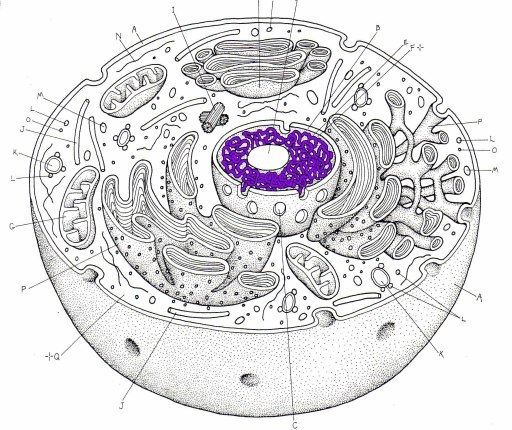
What kind of cell is in the diagram?
Eukaryotic, Animal
Prokaryotic
Eukaryotic, Plant
Particle of movement from an area of lower concentration to an area of higher concentration.
Active transport
Passive transport

Which type of diffusion is represented?
Facilitated diffusion
Osmosis
Diffusion

The cell expanded in size to the point of lysing (bursting), which means it was placed in a ____ solution.
Isotonic
Hypertonic
Hypotonic

The cell shows water moving in and out equally, which means it was placed in a ___ solution.
Isotonic
Hypertonic
Hypotonic

Which type of active transport is displayed?
Endocytosis
Exocytosis
Particle of movement from an area of higher concentration to an area of lower concentration.
Active transport
Passive transport

Why do red blood cells in group A look different from a normal, healthy red blood cell?
They have gained water.
They have lost water.
They have been attacked.
They are symptom of sickle cell anemia.

What is this process called?
Endocytosis
Exocytosis
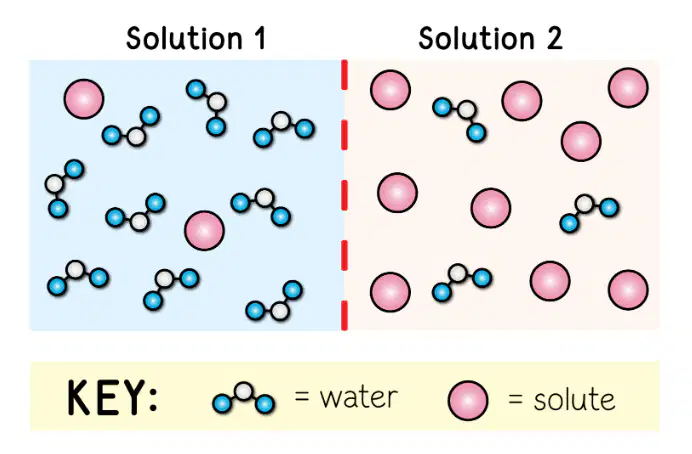
What does the red dashed line between the two solutions represent?
An impenetrable membrane
A semipermeable membrane
A permeable membrane
A red filter

Which diagrams show active transport. (More than 1 correct answer)
A
B
C
D
Material that dissolves in a solvent.
Homesostasis
Solute
Solvent
Solution
Movement of materials from high to low concentration by means of a transport protein.
Form of passive transport
Diffusion
Active Transport
Facilitated Diffusion
Passive transport
Material that dissolves the solute.
Solution
homeostasis
solvent
solute
A solution with a lower concentration of solutes than a cell.
Isotonic Solution
Hypotonic solution
Homeostasis
Hypertonic Solution


What molecule is pictured?
Integral Protein
Carbohydrate chain
Phospholipid


Phospholipids
have hydrophobic heads and hydrophilic tails
have hydrophilic heads and hydrophobic tails
have hydrophilic heads and hydrophobic tails, depending on their placement in the cell membrane
have hydrophobic heads and hydrophilic tails, depending on their placement in the cell membrane
There is only one type of protein used in the cell membrane
False
True

A is the
Transport Protein
Carbohydrate chain
Protein
Lipid Bilayer
Phospholipids
B is the
Transport Protein
Carbohydrate chain
Protein
Lipid Bilayer
Phospholipids
C is the
Transport Protein
Carbohydrate chain
Protein
Lipid Bilayer
Phospholipids


Hydrophobic means...
water-loving
water-fearing
nonpolar
lipid soluble
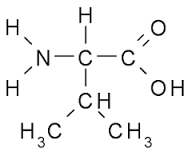
What are proteins made of?
amino acids
monosaccharides
nucleic acids
fatty acids
Which macromolecule is used as our main source of energy?
Lipids/Fats
Nucleic Acids
Proteins
Carbohydrates
This macromolecule breaks down into sugars such as glucose.
Lipids/Fats
Nucleic Acids
Protein
Carbohydrates

What is happening in this example of an enzyme-substrate complex?
The catalyzed reaction is releasing a product
New bonds are being made between the two substrates
Restructuring of the enzymes
The substrate is beginning to bind to the enzyme
Temperature is one factor that affects the shape of a protein, therefore it also affects the ______________of a reaction.
direction
heat energy
equilibrium
rate
An enzyme is a catalyst that:
increases the activation energy
decreases the rate of the reaction
halts the chemical reaction
lowers the activation energy required for the reaction to move forward
Atoms share pairs of Electrons in what kind of bond
Covalent
Ionic
Electrical
Cohesive
Any compound that donates H+ ions to an aqueous solution and measures less than 7 on the pH scale:
Acid
Base
Solvent
Solute
Which is not a property of water
Adhesion
Cohesion
Heat capacity
Solvency
Enzymes are
proteins that speed up reactions
lipids that slow down reactions
carbohydrates that speed up reactions
nucleic acids that slow down reactions


Type of bond that involves sharing electrons:
ionic
organic
cohesive

Substances that consist of only one type of atom:
macromolecules
compounds
neutrons
elements

Substances that consist of two or more elements:
macromolecules
enzymes
protons

Lactase is an ____ that breaks down milk sugar.
electron
element
enzyme
organic

Property of water that causes it to stick to other water molecules:
ionic
cohesion
organic

Compounds that consist of chains of carbon:
salts
hydrogen
elements

Refers to molecules that have a partial negative and positive charge.
protons
organic
hydrogen
polarity

Formed between water molecules; type of weak bond: ____ bond
covalent
organic
hydrogen
ionic


____, H, O, N make up 96% of living matter.
F
Na
P
C
Water molecules are
polar
nonpolar
positively charged
negatively charged
The process by which a polymer is split into its monomers is called
dehydration
hydrolysis
A protein is _____________ when it loses its shape and ability to function because of hear, a change in pH or some other disturbance.
dehydrated
neutralized
denatured
hydrolyzed
There are 6 elements that make up 95% of lipids, proteins, and carbohydrates in living things. Which of these is NOT one of them?
carbon
oxygen
phosphorus
silicon
Organic compounds contain mostly ___, ___, and ____ atoms.
oxygen, carbon, and hydrogen
sulfur, phosphorus, and nitrogen
hydrogen, sulfur, and carbon
nitrogen, oxygen, and hydrogen

What type of reaction is shown?
Dehydration synthesis
Hydrolysis

What is indicated by letter C?
enzyme
product
substrate
active site

What is labeled D in this diagram?
Product
Enzyme
Subrate
Enzyme-Substrate complex
Which of the following causes an enzyme to change its shape?
(choose all that apply)
Temperature
(too hot/too cold)
Light
(too bright/too dark)
pH
(too acidic/too basic)
Space
(too crowded)

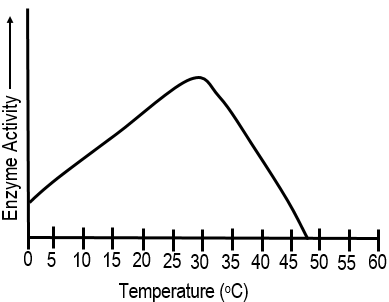
Looking at the graph shown, what is the optimum temperature for this particular enzyme to work?
10 degrees
40 degrees
63 degrees
30 degrees

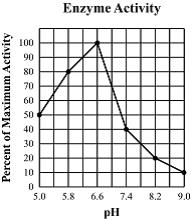
What is the optimum ph for this enzyme to work?
0
6
7
10
What is the function of proteins?
provides quick energy
stores energy
helps with growth and repair of tissues
stores genetic information
What is the function of nucleic acid?
provides quick energy
stores energy
helps with growth and repair of tissues
stores genetic information

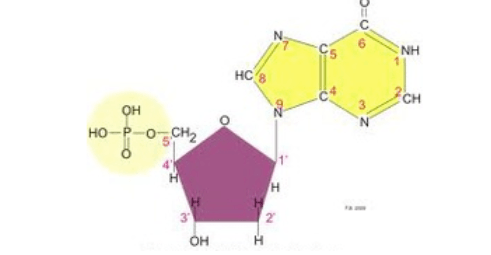
What is the monomer for proteins?
Monosaccarides
Fatty Acids
Amino Acids
Nucleotides
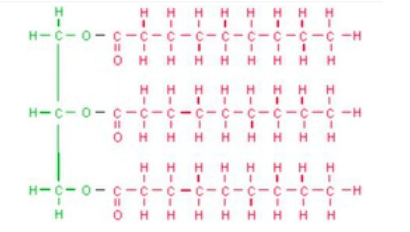
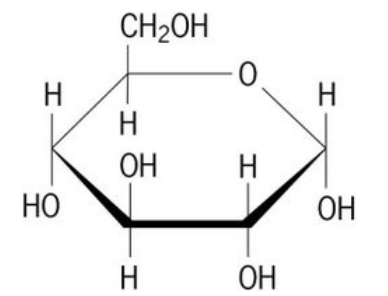
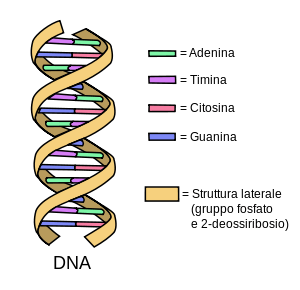
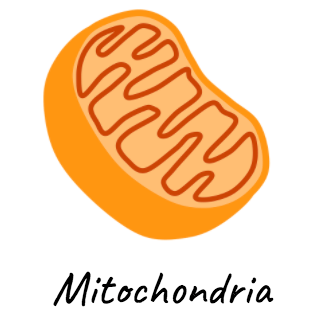
The products of cellular respiration
CO2
CO2, H2O
CO2, H2O, glucose
CO2, H2O, ATP


What is depicted in this diagram?
exchange of ideas from the cows to the trees
exchange of gases from cows to trees
exchange of gases from the trees to the cows
exchange of gases from the cows to the trees to the cows again


Which of the following is the first reaction in aerobic respiration?
Glycolysis
Krebs Cycle
Electron Transport Chain
Calvin Cycle
Which of the following is a reactant for aerobic respiration?
ATP
Carbon Dioxide
Glucose
Water
What molecule do animal and plant cells use to power processes in the cell?
ATP
Glucose
NADH
Oxygen Gas
Where does glycolysis happen?
Cell Membrane
Chloroplast
Cytoplasm
Mitochondria
Where does the electron transport chain take place?
Cell membrane
Chloroplast
Cytoplasm
Mitocchondria
Which part of aerobic respiration makes the most ATP?
Calvin Cyle
Electron Transport Chain
Glycolysis
Krebs Cycle
Cell respiration is aerobic because...
It is used to gives cell the energy needed to work.
It produces oxygen gas in the electron transport chain
It uses oxygen gas in the electron transport chain.
It produces water at the end of the electron transport chain.
What is pumped into the inner membrane space during the electron transport chain?
Carbon dioxide
Electrons
Hydrogen ions
Oxygen gas
Why is NADH important?
It absrobs damaging electrons moving around the cell.
It transfer electrons and hydrogen to electron transport chain.
It is made during the Krebs Cycle.
It can be recycled and used again.
Energy-carrying biological molecule, which, when broke down, drives cellular activities.
NADP+
Rubisco
Adenosine Triphosphate
Pigment
Series of reactions in which pyruvate is broken down into carbon dioxide inside the mitochondria of cells.
Calvin Cycle
Krebs Cycle
Anaerobic Process
Aerobic Respiration
Process in which NAD+ is regenerated, allowing cells to maintain glycolysis in the absence of oxygen
Fermentation
Photosynthesis
Aerobic Respiration
Anaerobic Process
The major electron carrier involved in electron transport.
Adenosine Triphosphate
Rubisco
NADP+
Pigment
Types of fermentation are ___
(Select all that apply)
Bacteria
Yeast
Lactic Acid Fermentation
Ethanol Fermentation
Which of the following is NOT a stage of aerobic cellular respiration?
glycolysis
Krebs Cycle
fermentation
ETC

Which of these chemical reactions produces glucose?
aerobic respiration
anaerobic respiration
photosynthesis
fermentation
Light-independent reactions during phase two of photosynthesis in which energy is stored in organic molecules as glucose.
Glycolysis
Krebs Cycle
Calvin Cycle
Photosynthesis
One of the stacked, flattened, pigment-containing membranes in which light-dependent reactions occur.
Phloem
Stroma
Granum
Thylakoid
Metabolic process that does not require oxygen.
Aerobic Process
Anaerobic Process
Glycolysis
Krebs Cycle
What organelle does aerobic cellular respiration?
mitochondria
chloroplast
nucleus
vacuole

What is part D?
thylakoid
matrix
stroma
cristae
What is part C?
thylakoid
matrix
stroma
cristae
Which of the following is a true statement regarding aerobic respiration and fermentation? Select all that apply.
Both aerobic respiration and fermentation create energy.
All cells must use some form of respiration to make energy
Aerobic respiration creates more ATP than fermentation.
Fermentation uses oxygen and aerobic respiration does not.
What is made in the mitochondria?
protein
energy
nucleotides
waste
Which organelle is found in plant cells, but not in animal cells?
nucleus
ribosome
lysosome
chloroplast
Where are proteins made?
nucleus
ribosome
Golgi Apparatus
vacuole
Which organelle is sometimes covered with ribosomes?
Golgi Apparatus
Nucleus
Vacuole
Endoplasmic Reticulum
Which organelle puts the finishing touches on proteins and ships them around the cell or out of the cell?
Lysosomes
Ribosomes
Endoplasmic Reticulum
Golgi Apparatus

