wayground logo

Free Printable Worksheets

Font size

S
M
L
XL
Worksheets

AQUATIC MID TERM 2024

Total questions: 119

Worksheet time: 2hrs 53mins

Name
Class
Date
1.
What two elements make up water?
a)
Helium and oxygen
b)
Hydrogen and oxygen
c)
helium and carbon
d)
oxygen and carbon
2.
What word describes when water is attracted to other substances?
a)
cohesion
b)
adhesion
c)
capillary action
d)
surface tension
3.
Which end of the water molecule has a slightly positive charge?
a)
the oxygen end
b)
the hydrogen end
c)
both ends are slightly positive
d)
neither end is positive
4.
Water is a universal solvent because it...
a)
It can be found anywhere
b)
It freezes when it gets cold
c)
floats when frozen
d)
Dissolves most substances
5.
Large bodies of water, such as lakes and oceans, do not quickly fluctuate in temperature. What is the reason for this phenomenon?
a)
Water is an acid.
b)
Water is a versatile solvent.
c)
Water has a high heat capacity.
d)
 Water acts as a buffer.
6.
The fact that ice floats on liquid water is due to the fact that water's solid is ___________ than it's liquid form
a)
less polar
b)
more polar
c)
less dense
d)
more dense
7.
How much of Earth's water is salt water?
a)
50%
b)
66%
c)
75%
d)
97%
8.
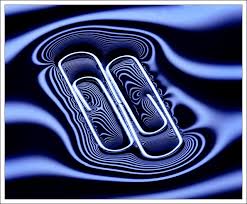
The tightness across the surface of water that enables paper clips to float is ____________.
a)
adhesion
b)
capillary action
c)
surface tension
d)
polarity
9.
When a molecule has an opposite electrical charge on each end, it is known as what?
a)
cohesion
b)
polar molecule
c)
hydrogen bond
d)
solution
10.
When water molecules stick easily to other water molecules, this is called what?
a)
cohesion
b)
adhesion
c)
solution
d)
polar molecule
11.
Does evaporation happen before or after condensation?
a)
before
b)
after
c)
during
12.
What is it called when WATER is FORMED from an LIQUID to a WATER VAPOR Oor an [GAS]?
a)
EVAPORATION
b)
PRECIPITATION
c)
TRANSPIRATION
13.
What is the next stage after EVAPORATION in the water cycle?
a)
CONDENSTATION
b)
GROUNDWATER
14.
What is it called when plants give off water vapor as a waste product?
a)
condensation
b)
evaporation
c)
sublimation
d)
transpiration
15.
What part of the water cycle does this picture show?
a)
condensation
b)
precipitation
c)
evaporation
16.
What is A?
a)
Evaporation
b)
Condensation
c)
Precipitation
d)
Runoff
17.
What is B?
a)
Evaporation
b)
Condensation
c)
Precipitation
d)
Runoff
18.
What is C?
a)
Evaporation
b)
Condensation
c)
Precipitation
d)
Runoff
19.
What is      D?
a)
Evaporation
b)
Condensation
c)
Precipitation
d)
Runoff
20.
What percentage of Earth’s water is freshwater?
a)
75%
b)
3%
c)
1%
d)
97%
21.
Where is most water found on Earth?
a)
glaciers
b)
lakes
c)
rivers
d)
oceans
22.
What source of energy evaporates the most water from Earth’s surface?
a)
volcanoes
b)
the sun
c)
lightning
d)
wind
23.
Which of the following causes all of the water on the planet to change its state (solid, liquid, gas) and move through the water cycle?
a)
amount of plant matter
b)
location of ice caps
c)
size of ocean
d)
temperature
24.
The supply of freshwater under the Earth's surface.
a)
watershed
b)
mouth
c)
headwaters
d)
groundwater
25.

When is hurricane season?

a)

June 1-30

b)

Jan 1-Dec 31

c)

June 1-Nov 30

d)

June 30-Nov 1

26.

How many categories of hurricanes are there?

a)

1

b)

0

c)

5

d)

4

27.

Hurricanes can produce tornadoes.

a)

TRUE!

b)

FALSE!

28.

The strongest winds and heaviest rain typically is in this part of the hurricane:

a)

Outer band

b)

Eye Wall

c)

On the dry side

d)

On the dirty side

29.

One of the most costliest and damaging hurricanes the Texas Coast has seen in the last 10 years....

a)

Harvey

b)

Fred

c)

Isabella

d)

Nicholas

30.

Once a hurricane hits land, it is no longer a hurricane.

a)

TRUE!

b)

FALSE!

31.

Too much wind shear can prevent a hurricane from forming.

a)

TRUE!

b)

FALSE!

32.

One of the biggest hurricane dangers to people living close to the coast is:

a)

Storm surge

b)

Wind

c)

Lightning

d)

Tornadoes

33.

What supplies run out fast before hurricanes arrive?

a)

bottled water

b)

milk

c)

bread

d)

All of the previous

34.
How fast do winds have to be before it is considered a hurricane?
a)
50 mph
b)
75 mph
c)
100 mph
d)
40 mph
35.
The center of a hurricane is called the ______.
a)
center
b)
brain
c)
eye
d)
circle
36.
In order for a hurricane to form, the water must be ________.
a)
Cool
b)
Warm
c)
Cold
d)
Hot
37.
A hurricane rotates _____.
a)
Clockwise
b)
Counterclockwise 
38.
The major difference between a tropical storm and a hurricane is __________.
a)
rainfall amounts
b)
wind speed
c)
air temperature
d)
circulation
39.
Sustained winds of over 155 mph indicate a category _____ hurricane.
a)
1
b)
2
c)
4
d)
5
40.
What causes damage in a hurricane?
a)
Winds
b)
Flooding
c)
Storm Surge
d)
All of the above
41.
What destroys a hurricane? 
a)
Strong vertical winds
b)
Cold water
c)
Movement over land
d)
All of the above
42.
Hurricanes develop in ________ regions.
a)
Arctic
b)
Tropical
c)
Arid
d)
None of the above
43.
2. Which are bigger, hurricanes or tornadoes?
a)
Tornadoes
b)
Hurricanes
44.
What is the name of a hurricane in Asia?
a)
Cyclone
b)
Typhoon
c)
Bob
d)
Dennis
45.
The Gulf stream carries _____________ water from the east coast of The United States to the West coast of Europe.
a)
Cold
b)
Warm 
c)
Freezing
d)
Fresh
46.
Cold ocean currents generally come from
a)
The North Pole 
b)
The South Pole
c)
The Equator
d)
Both A and B
47.
The California Current (west coast) carries _________ water from canada
a)
Cold 
b)
Warm
c)
Freezing
d)
Fresh
48.
Two types of water currents are
a)
local and global
b)
sea and land
c)
surface and deep
d)
warm and cold
49.
A strong surface current that runs along the east coast of the United States and carries warm water to Europe.
a)
California Current
b)
Global Conveyor Belt
c)
Gulf Stream
d)
Surface Current
50.
A horizontal movement of ocean water that is caused by wind and that occurs at or near the ocean's surface.
a)
Gulf Stream
b)
Global Conveyor Belt
c)
Surface Current
d)
Gyre
51.
What process brings the deep cold ocean currents up to the surface?
a)
Conduction
b)
Global Wind Patterns
c)
Upwelling
d)
Temperature and salinity
52.

In the region where two continental plates collide, what geological feature most often forms?

a)

an ocean

b)

a volcano

c)

a river valley

d)

a mountain chain

53.
Pangaea was an ancient supercontinent made up of...
a)
America, Greenland, and Europe.
b)
Antarctica, India, and America.
c)
all of Earth’s continents.
d)
South Africa, India, Australia, and South America.
54.
The San Andréa fault in California is one example of a...  
a)
Divergent boundary
b)
Convergent boundary
c)
Transform boundary
d)
All of the above
55.
Upwelling is associated with
a)
a decrease in access to nutrients for phytoplankton
b)
cooler, nutrient-rich waters being pushed up from deeper ocean waters
c)
temperature gradients moving water from the equator to the poles
d)
an increase in human fatalities
56.

A type of hurricane that happens in the area of Japan is called a __________________

a)

Hurricane

b)

Typhoon

c)

Cyclone

57.
Which of the following was the deadliest hurricane in recorded history?
a)
Hurricane Ike 2008
b)
Hurricane Harvey 2017
c)
Galveston Hurricane of 1900
d)
Hurricane Katrina 2005
58.
What is the name of a hurricane in North America?
a)
Hurricane
b)
Typhoon
c)
Cyclone
d)
Tornado
59.
what is this ????
a)
transform
b)
divergent
c)
convergent
d)
divergent
60.
The area around the pacific plate where boundaries form is called...
a)
death ring
b)
fire zone
c)
ring of fire
d)
zone of fire
61.
What does the theory of continental drift state?
a)
The continents were once joined in a super-continent and have moved over time
b)
Continents are stationary and do not move
c)
The Earth is broken into lithospheric plates that move due to convection currents
d)
none of the above
62.
Name the boundary
a)
convergent boundary
b)
divergent boundary
c)
transform boundary
d)
sergent boundary
63.
Name the boundary
a)
convergent boundary
b)
divergent boundary
c)
transform boundary
d)
sergent boundary
64.
Which piece of evidence did Wegener use to prove continental drift?
a)
The shape of the continents
b)
Similar fossils found on separate continents
c)
Tree fossils found in odd places
d)
All of the above
65.
What is this a picture of?
a)
plate tectonics
b)
continental drift
c)
pangea
d)
glacier scaring
66.
What two specific continents fit together most noticeably?
a)
Africa and North America
b)
South America and Europe
c)
South America and Africa
d)
Antartica and Africa
67.
The movement of Earth's crust along plate boundaries produces
a)
earthquakes
b)
volcanoes
c)
mountains
d)
All of these options. 
68.
Can volcanic eruptions effect climate?
a)
yes 
b)
no
69.
There are volcanoes underwater.
a)
True 
b)
False
70.
Most tsunamis occur here.
a)
Atlantic Ocean
b)
Indian Ocean
c)
Arctic Ocean
d)
Pacific Ocean
71.

What is the term for destruction of the world or civilization?

a)

VEI

b)

Category 5

c)

EF12

d)

T.E.O.T.W.A.W.K.I.

72.

If Yellowstone volcano erupts as a super volcano what is the term for effect on life around the world?

a)

V.E.I

b)

Category 6

c)

E.LE.

(Extinction Level Event)

d)

Climate change

73.

What is the most destructive volcanic eruption?

a)

Category 6

b)

EF 5

c)

VEI 8

74.

If Yellowstone erupted now what would happen?

a)

the end of civilization

b)

nuclear winter

c)

millions of humans would die

d)

all are correct

75.

A collection of all the different populations (species, living things) that live in one area.

a)

biotic factor

b)

community

c)

biodiversity

76.

A nonliving FACTOR in an ecosystem such as moisture, temperature, wind, and soil.

a)

abiotic factor

b)

biodiversity

c)

keystone species

77.

Referring to things that are living, such as plants, animal, fungi, and bacteria.

a)

biotic factor

b)

abiotic factor

c)

community

78.

Put the levels of organization in order from the smallest level to the largest.

a)

Organisim

b)

Population

c)

Community

d)

Ecosystem

e)

Biome

1)
2)
3)
4)
5)
79.

Estuaries serve which important role for marine ecosystems?

a)

providing spawning and nursery grounds for many marine animals

b)

adding oxygen to the ocean water

c)

removing carbon dioxide from the ocean water

d)

removing salt from the ocean water

80.

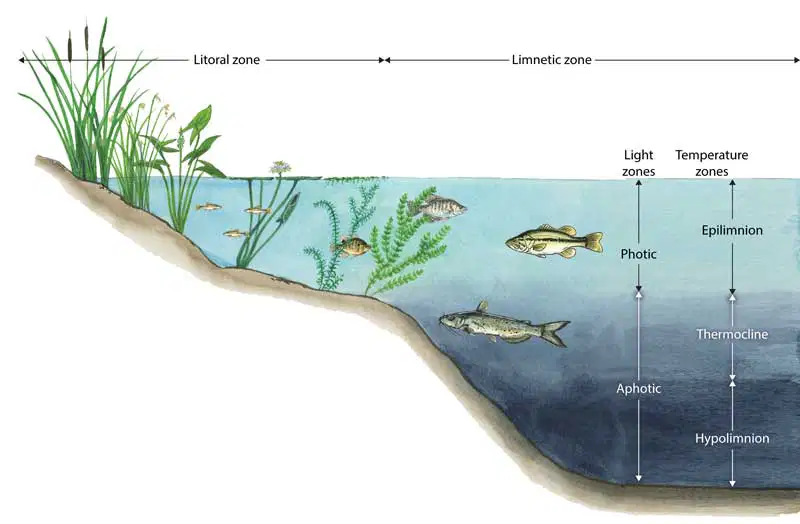
In an aquatic ecosystem, which layer of the water column doesn't have sunlight penetrate to it and photosynthesis cannot occur?

a)

photic zone

b)

aphotic zone

c)

limnetic zone

d)

littoral zone

81.

Which part of a pond has no aquatic plants?

a)

littoral zone

b)

aphotic zone

c)

benthic zone

d)

limnetic zone

82.

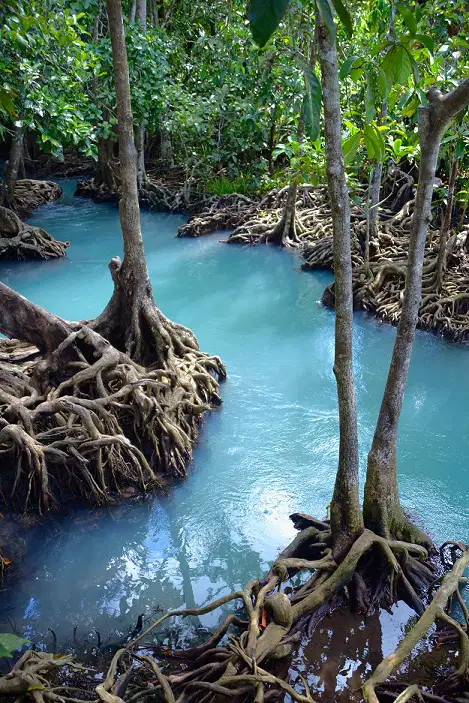
Like freshwater wetlands, salt marshes and mangrove forests help prevent soil ______

a)

erosion

b)

contamination

c)

pollution

d)

sink holes

83.
Mangroves provide a _________________________for small fish before they swim out to the deeper ocean.
a)
Safe breeding ground
b)
Fresh water system
84.

Which type of mangrove is seen here?

a)

white

b)

black

c)

purple

d)

red

85.

The vegetated buffer between streams and the nearby land is called the

a)

Profundal zone

b)

Riparian Zone

c)

Erosional Zone

d)

Depositional Zone

e)

Limnetic Zone

86.

Fish adapted to cool, dark waters in lakes are likely to be found in the____________

a)

limnetic zone

b)

hypnotic zone

c)

littoral zone

d)

profundal zone

e)

abyssal zone

87.

A group of organisms of the same species that live in the same area is called a(n)

a)

community

b)

population

c)

biome

d)

ecosystem

88.

Herbivores are which of the following?

a)

producers

b)

secondary consumers

c)

primary consumers

d)

decomposers

89.

Organisms that feed on dead or decaying mater are called

a)

herbivores

b)

carnivores

c)

omnivores

d)

detritivores

90.

What do all the biotic and abiotic factors in a given area make up?

a)

a habitat

b)

a community

c)

an ecosystem

d)

a population

91.

Which of the following provide most of the energy in ecosystems?

a)

keystone species

b)

carnivores

c)

generalists

d)

producers

92.

Almost all autotrophs get their energy from

a)

sunlight

b)

hydrothermal pools

c)

decaying matter

d)

producers

93.

An oak tree provides a sparrow a place to build a nest. The nest neither benefits nor harms the tree. What is the name of this type of symbiosis?

a)

mutualism

b)

commensalism

c)

predation

d)

parasitism

94.

What is the term used to describe organisms which feed on other living organisms?

a)

Heterotrophs

b)

Autotrophs

c)

Detritivores

d)

Saprotrophs

95.
What does every food chain start with? (Even if it's not drawn or written there!)
a)
producers
b)
sun
c)
consumer
d)
decomposers
96.

The carp in this food web would be considered a

a)
Decomposer
b)
Producer
c)
Secondary Consumer
d)
Primary Consumer
97.
Where an organism lives
a)
habitat
b)
niche 
c)
heterotrogh
d)
biosphere
98.

This cleaner shrimp is picking uneaten food and tiny parasites from this moray eel. This is

a)
commensalism
b)
mutualism
c)
parasitism
d)
predation
99.

What happens if a population grows past its carrying capacity?

a)

The population keeps growing

b)

The population starts to die off

c)

The entire species will go extinct

d)

The carrying capacity just increases

100.

The ecological role an organism performs in their specific environment is considered the organism's...

a)

Habitat

b)

Population

c)

Biome

d)

Niche

101.
Mistletoe extracts water and nutrients from a spruce tree. The spruce tree is harmed. 
a)
parasitism
b)
commensalism
c)
mutualism
102.

Which of the following shows the symbiotic relationship between the Rodent and the Bird?

a)

Mutualism

b)

Commensalism

c)

Competition

103.

Most health experts recommend only eating tuna a few times a week and only eating shark a few times a month. Why would health experts have this view of eating these fish?

a)

Most fish are low in protein and high in saturated fats which can cause health problems

b)

People with diets high in fish tend to have high blood pressure and heart issues

c)

These fish are endangered species, and eating them contributes to their decline

d)

Eating these fish could result in the buildup of pollutants in the fat tissue of humans

104.
Herbivores are plant eaters.
a)
True
b)
False
105.
Omnivores eat plants and animals.
a)
True
b)
False
106.
relationship in which two species live closely together
a)
resource
b)
mutualism
c)
succession
d)
symbiosis
107.

Technically speaking, ALL food chains should end with these types of organisms so that nutrients can be recycled back into the habitat…

a)

parasites

b)

predators

c)

herbivores

d)

symbiotes

e)

decomposers

108.

What do you call the total count of a specific organism living within their natural habitat?

a)

ecosystem

b)

community

c)

population

d)

symbiosis

e)

niche

109.
The bottom area of a pond or lake.
a)
Littoral zone
b)
Benthic zone
c)
Swamp
d)
Barrier island
110.
Free swimming organisms
a)
Benthos
b)
Nekton
c)
Amoba
d)
Crustacean
111.
Organisms that cannot swim against current.
a)
Fish
b)
Plankton
c)
Crustacean
d)
Benthos
112.

Adaptations for attachment and the ability to bend with the waves, as well as to protect against drying out, are part of organisms in this ecosystem:

a)

coral reef

b)

estuary

c)

rocky shore

d)

kelp forest

113.

Skulls and bones and antlers are abiotic.

a)

True

b)

False

114.

Tidepool life must deal with harsh conditions such as

a)

high salinity

b)

crashing waves

c)

periods of inundation and exposure to air

d)

ALL

115.

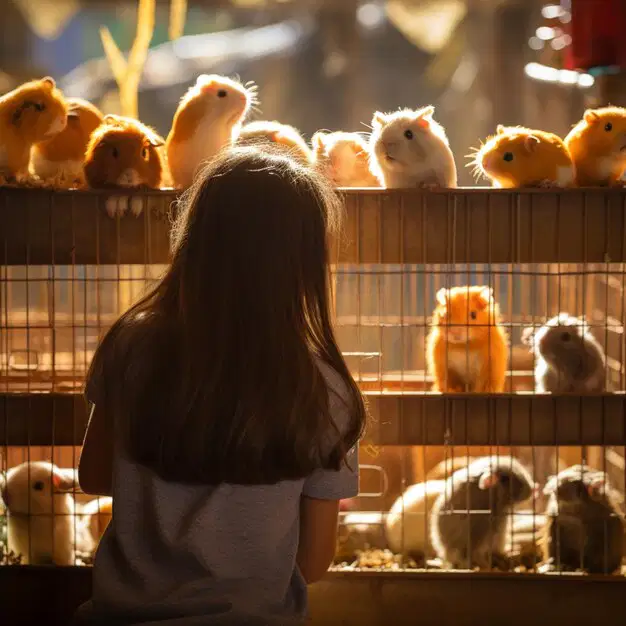
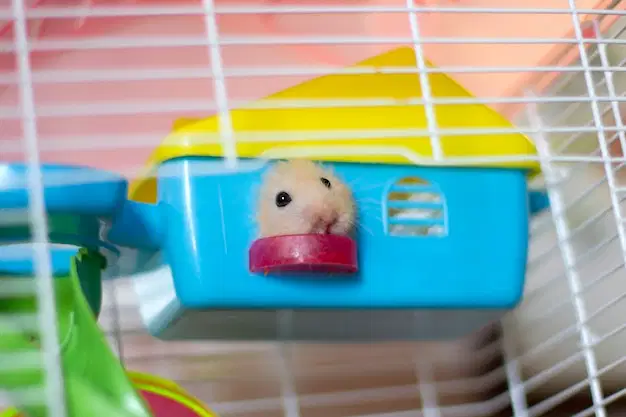
This hamster is an example of a

a)

organism

b)

population

c)

community

116.

These fish live in which zone?

a)

photic

b)

abyssal

c)

intertidal

d)

riparian

117.

This is an example of

a)

nekton

b)

predation

c)

swim faster! Much faster!

d)

All are correct

118.

The rare zones that can be 36,000' deep!

a)

hadal

b)

benthic

c)

abyssal

d)

profundal

119.

EXTRA CREDIT: What is dihydrogenoxide?

(a)