
Font size
 Worksheets
Liquids and Theories of Covalent Bonding
Total questions: 126
Worksheet time: 42mins
What are the two main types of intermolecular forces?
Ionic and covalent forces
London dispersion forces and dipole-dipole forces
Hydrogen bonding and adhesion
Surface tension and viscosity
Which type of intermolecular force is the weakest?
Ionic forces
Covalent forces
London dispersion forces
Hydrogen bonding
What is the main factor that determines the phase of a substance?
Density
Viscosity
Kinetic energy
Surface tension
Which substance is an example of a non-polar molecule?
Water
Carbon dioxide
Hydrogen bromide
Glycerol
What is the effect of cohesion in liquids?
Resistance to flow
Capillary action
Surface tension
Viscosity
Which type of intermolecular force is responsible for the unique properties of water?
London dispersion forces
Dipole-dipole forces
Hydrogen bonding
Adhesion
What is the term for the attraction of molecules in a liquid to the container?
Cohesion
Viscosity
Adhesion
Surface tension
What is the term for the resistance of a liquid to flow?
Cohesion
Viscosity
Adhesion
Surface tension
What is the effect of surface tension in liquids?
Resistance to flow
Capillary action
Viscosity
Formation of a spherical shape
Which substance is an example of a liquid at room temperature?
Bromine
Mercury
Diamond
Methane
What is the effect of boiling point on intermolecular forces?
The boiling point is inversely proportional to intermolecular forces.
The boiling point increases with stronger intermolecular forces.
The boiling point is not affected by intermolecular forces.
The boiling point decreases with stronger intermolecular forces.
Which type of intermolecular force is responsible for the high boiling point of water?
Ionic bonding
Hydrogen bonding
London dispersion forces
Dipole-dipole interactions
What is the term for the process of a liquid turning into a gas?
condensation
sublimation
melting
evaporation
Which substance is an example of a polar molecule?
Methane
Water
Carbon dioxide
Oxygen
What is the term for the attraction of molecules in a liquid to each other?
cohesion
repulsion
adhesion
dispersion
What do you mean by PROPERTIES of LIQUIDS?
The attraction between water molecules at the surface of water
The process in which a substance changes from its liquid to gas
The measure of a fluid’s resistance to flow
The ability of a substance to dissolve in a given amount of solvent at a specified temperature
What do you mean by VAPORIZATION?
The attraction between water molecules at the surface of water
The process in which a substance changes from its liquid to gas
The ability of a substance to dissolve in a given amount of solvent at a specified temperature
The measure of a fluid’s resistance to flow
Which will exert a higher vapor pressure? Why?
Acetone - because it has a lower molar heat of vaporization
Water - because it has a higher boiling point
Acetone - because it has a higher molar heat of vaporization
Water - because it has a lower boiling point
What are the factors affecting the rate of vaporization?
Viscosity and boiling point
Surface tension and molar heat of vaporization
Pressure and solubility
Temperature and intermolecular forces
What is the measure of how much energy it takes to make a liquid boil and turn into a gas?
Vapor pressure
Viscosity
Molar heat of vaporization
Surface tension
What is the temperature at which a liquid turns into a gas?
Boiling point
Surface tension
Molar heat of vaporization
Viscosity
What refers to the gas form of a substance that is usually a liquid or solid at room temperature?
Vaporization
Solubility
Boiling point
Vapor pressure
What is the measure of a fluid’s resistance to flow?
Surface tension
Molar heat of vaporization
Viscosity
Vapor pressure
What is the ability of a substance to dissolve in a given amount of solvent at a specified temperature?
Miscibility
Vaporization
Boiling point
Solubility
What is the attraction between like molecules?
Viscosity
Adhesion
Cohesion
Surface tension
Water has an unusually high boiling point for a molecular compound because it has
hydrogen bonding
ion-dipole interactions
ion-ion attractions
London dispersion forces
Which substance has the weakest intermolecular forces?
Substance A, boiling point of 75 °C
Substance B, boiling point of 105 °C
Substance C, boiling point of 25 °C
Substance d, boiling point of 45 °C
The weaker the intermolecular forces of a substance the (a) the boiling point
Melting and boiling points depend on thermal energy and the strength of ________
intramolecular forces
polar covalent bonds
metallic bonds
intermolecular forces
Water and ammonia molecules are roughly the same size and the same mass but ammonia boils at -28°F and water boils at 212°F. What can we conclude about the intermolecular forces between water and ammonia?
The intermolecular forces are the same strength
Ammonia has stronger intermolecular forces
Water has stronger intermolecular forces
Not enough information is given
This refers to the surface film on the surface of the liquid caused by the attraction of particles.
Specific heat
Surface tension
Density
Volatility
Higher IMF means (a) Viscosity.
A substance with a high vapor pressure have _______ intermolecular forces?
weak
strong
As the temperature of a liquid increases, the viscosity
Increases
Doesn't change
Not enough information
Decreases
These are forces between liquid molecules and another substance.
adhesive forces
cohesive forces
coercive forces
adversive forces
The ascension of liquids through slim tube, cylinder or permeable substance due to adhesive and cohesive forces interacting between the liquid and the surface is called_____.
capillarity
surface tension
cohesion
adhesion
Which of the following will take the longest to evaporate?
CH3CH2OH
CH3OH
CH3CH2CH2OH
The temperature at which its vapor pressure equals atmospheric pressure.
specific heat
molar heat of fusion
vapor pressure
boiling point
Which of the following would best remove Sharpie marker from your wall if this marker is known to be non-water soluble.
acetone (nail polish remover)
salt water
ammonia (nitrogen trihydride)
distilled water
Cohesive forces
Are the attraction of molecules to the container walls
Are only present when the liquid is exposed to glue
Are the attraction of molecules within a liquid
Are important for upward movement in capillary action
the interactive force that exist between water molecules and sides of a graduated cylinder is______.
adhesion
capillarity
cohesion
IMF
The temperature at which its vapor pressure equals atmospheric pressure.
specific heat
vapor pressure
molar heat of fusion
boiling point
The ascension of liquids through slim tube, cylinder or permeable substance due to adhesive and cohesive forces interacting between the liquid and the surface is called_____.
surface tension
cohesion
capillarity
adhesion
Cohesive forces
Are the attraction of molecules within a liquid
Are only present when the liquid is exposed to glue
Are the attraction of molecules to the container walls
Are important for upward movement in capillary action
Capillary action is
Caused by cohesive and adhesive forces
Not observed in liquid mercury
Allows some liquids to 'flow' vertically up a thin tube
All of the above
A substance with a high vapor pressure have _______ intermolecular forces?
strong
weak
A substance with a high amount of intermolecular forces will have a ______ vapour pressure.
high
low
Water droplets are mainly formed by what force?
Viscosity
Van der Waals forces
Hydrogen Bonding
Dipole-Dipole interactions
As the temperature of a liquid increases, the viscosity
Increases
Decreases
Doesn't change
Not enough information
Which of the following is NOT a property of a liquid
surface tension
capillary action
viscosity
polar
Property of liquid to resist an external force and thus assume a lesser surface area.
Surface Tension
Viscosity
Vapor Pressure
Boiling Point
The resistance of a liquid to flow. It is loosely referred to as the thickness or thinness of a liquid
Surface Tension
Viscosity
Vapor Pressure
Boiling Point
Is the pressure exerted by its vapor when in equilibrium with its liquid or solid
Surface Tension
Viscosity
Vapor Pressure
Boiling Point
Is the temperature at which its vapor pressure is equal to the external or atmospheric pressure
Surface Tension
Viscosity
Vapor Pressure
Boiling Point
Is the amount of heat required to vaporize one mole of a substance at its boiling point.
Heat of Vaporization
Amorphous Solids
Crystalline Solids
Heat of Fusion
The amount of heat needed for the solid-state change into liquid state.
Heat of Vaporization
Amorphous Solids
Crystalline Solids
Heat of Fusion
Have considerable disorder in their structure
Heat of Vaporization
Amorphous Solids
Crystalline Solids
Heat of Fusion
The type of solid that has a highly arrangement of particles.
Heat of Vaporization
Amorphous Solids
Crystalline Solids
Heat of Fusion
The substance changes from liquid to solid
Freezing
Melting
Condensation
Vaporization
The substance changes from solid to liquid
Freezing
Melting
Condensation
Vaporization
The substance changes from a gas to a liquid
Freezing
Melting
Condensation
Vaporization
It is a boiling point or the substance changes from a liquid to a gas
Freezing
Melting
Condensation
Vaporization
The substance changes directly from a solid to a gas without going through the liquid phase
Sublimation
Deposition
Equilibrium
Critical Point
The substance changes directly from a gas to a solid without going through the liquid phase
Sublimation
Deposition
Equilibrium
Critical Point
Triple point
Sublimation
Deposition
Equilibrium
Critical Point
When the gas can’t be liquified, some will be stay as gas
Sublimation
Deposition
Equilibrium
Critical Point
Which type of bond forms when valence electrons are traded?
ionic
covalent
metallic
Which type of bond is described as a "sea of electrons" floating on the surface of the material?
ionic
covalent
metallic
Which type of elements tend to lose electrons when forming bonds?
metalloids
metals
nonmetals
noble gases
Which type of elements is unlikely to form a bond of any kind?
metalloids
nonmetals
metals
noble gases
Which type of compound dissolves easily in water?
ionic compound
covalent compound
metallic compound
Covalent bonds occur between....
Metals
Metalloids
Non-metals
Actinide
Covalent bonds occur when.....
Atoms share valence electrons
Atoms transfer valence electrons
Atoms lose electrons and become ions
Atoms dance to the Macarena
What type of covalent bond is characterized by an unequal sharing of electrons?
Ionic Bond
Polar Covalent Bond
Non-Polar Covalent Bond
Covalent Bond
What type of covalent bond is characterized by an equal sharing of electrons
Non-Polar Covalent Bond
Covalent Bond
Ionic Bond
Polar Covalent Bond
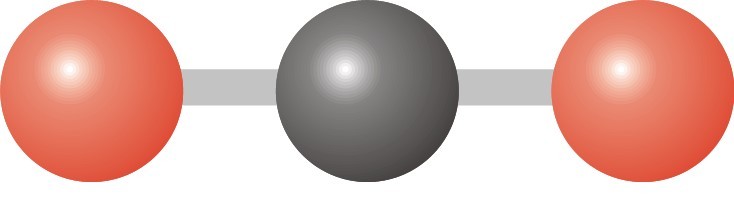
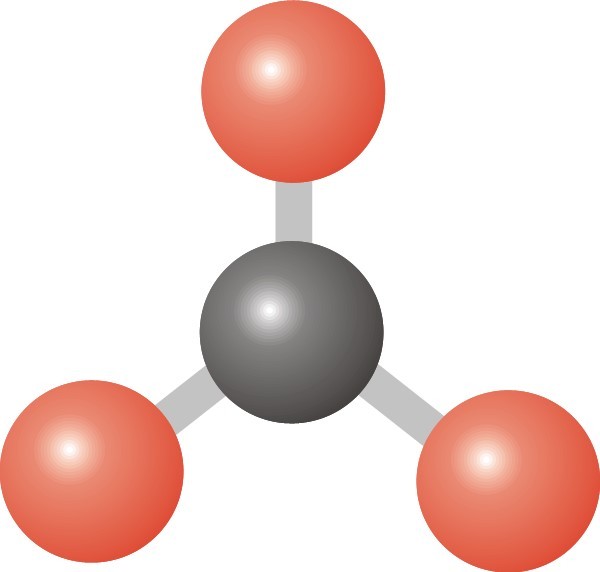
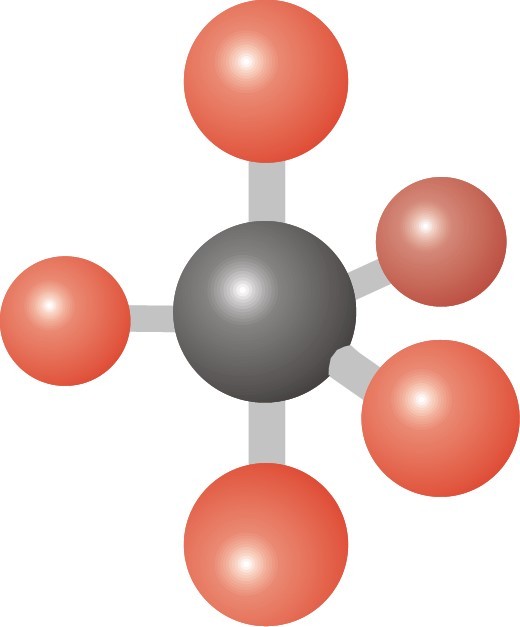
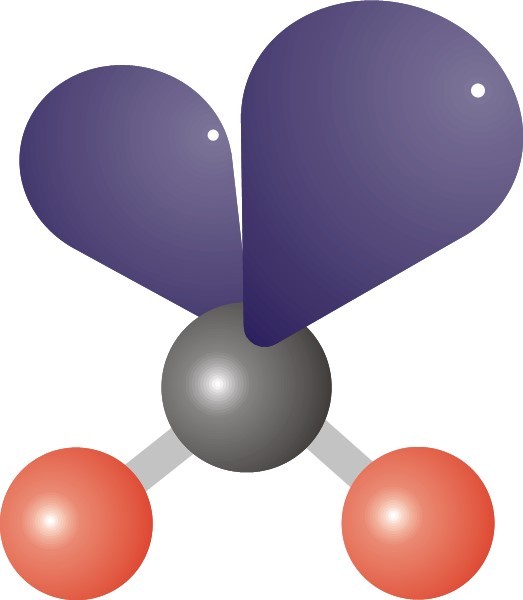
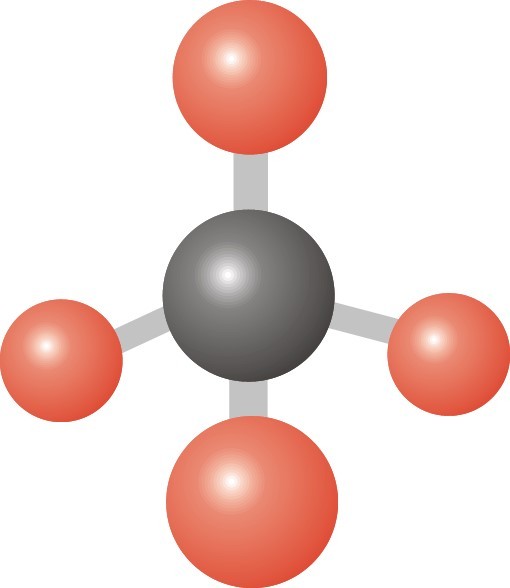
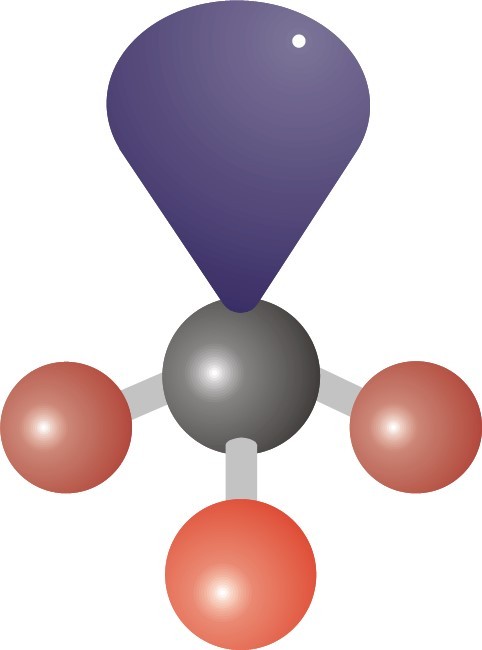
What molecular geometry would PH3 have?
Trigonal Pyramidal
Trigonal Bipyramidal
Bent
Linear


What shape would this have?
Trigonal planar
Pyramidal
Tetrahedral
Bent

The geometry of a molecule with 2 bonded pairs of electrons and 2 lone pairs of electrons, AB2E2
Tetrahedral
Trigonal Planar
Bent
Trigonal Pyramidal
Linear

AB3 is a symbol for molecular shape __________________
Tetrahedral
Linear
Trigonal planar
Trigonal pyramidal
The general formula for TETRAHEDRAL shape is __________
AB2
AB3
AB4
AB
s-s overlap is a _______
undefined
π Bond
px - px overlap (perpendicular to internuclear axis) is a _______
undefined
π Bond
Heitler and London introduced which theory?
VSEPR Theory
Valence Bond Theory
Molecular Orbital Theory
Covalent Theory
s-s overlap is a _______
undefined
π Bond
A π (pi) bond is the result of the
overlap of two s orbitals
overlap of an s orbital and a p orbital
overlap of two p orbitals along their axes
sidewise overlap of two parallel p orbitals
sidewise overlap of two s orbitals
Sigma bonds are formed by
side to side overlap of s orbitals
end to end overlap of s orbitals
side to side overlap of p orbitals
end to end overlap of p orbitals
Greater the overlap of the orbitals, _________________________
lesser the bond strength
greater the bond strength
bond strength remains the same
no bond formation
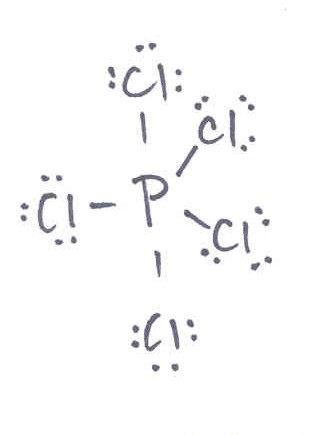
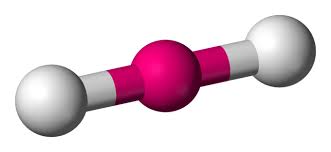
What is the hybridization of a linear molecule?
sp
sp2
sp3
sp3d
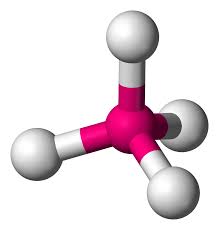
What is the hybridization of this molecule shown above
sp
sp2
sp3
sp4
Two carbon atoms form a linear shaped ethene, C2H4, molecule when bonded with four other hydrogen atoms. Prior to bonding, the carbon atom
does not hybridise
undergoes sp hybridisation
undergoes sp2 hybridisation
undergoes sp3 hybridisation
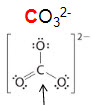
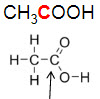
What is the hybridization of the carbon atom indicated by the arrow?
sp hybridization
sp2 hybridization
sp3 hybridization
sp3d hybridization
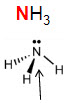
Which sub shell has more stability????
3d
4p
5s
4d
Sigma bond is formed when overlapping takes place along (if z-axis is inter nuclear axis)
x-axis
y-axis
z-axis
All axis
Which Quantum Number is used to describe Sub shell????
n
l
m
s

Nonmetals tend to
gain electrons
lose electrons
Two atoms form a compound by the attraction between positive and negative charges.
covalent compound
ionic compound
polymer
organic compound
True or False: An ionic bond forms when atoms of a non-metal give up electrons to atoms of a metal
True
False
In all covalent bonds, valence electrons are
lost
gained
shared equally
shared
Which two elements would NOT form an ionic bond?
calcium and lithium
calcium and oxygen
lithium and oxygen
calcium and carbon
What type of compound is formed when atoms share electrons to have a complete octet?
hydrocarbon
covalent compound
ionic compound
inorganic compound
What is the chemical formula for the ionic compound formed between magnesium and oxygen?
MnO
Mg2O
MgO
MnO2
What is the chemical formula for sodium nitride?
Na3N
NaN3
SN3
S3N
An example of a covalent compound is
sodium floride
calcium chloride
carbon dioxide
all of the above
Identify the following compound as ionic or covalent: Na2SO4
ionic
covalent
Identify the following compound as metallic, ionic or covalent: SO2
ionic
covalent
metallic
Identify the following compound as ionic or covalent: CO
ionic
covalent

