wayground logo

Free Printable Worksheets

Font size

S
M
L
XL
Worksheets

Chapter 8: Weather Systems

Total questions: 122

Worksheet time: 3hrs 48mins

Name
Class
Date
1.
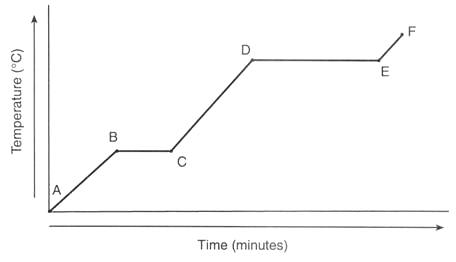
What line segment represents only the solid state?
a)
A-B
b)
B-C
c)
C-D
d)
D-E
2.
Between which points is the temperature of the substance remaining constant?
a)
A-B only. 
b)
A-B, C-D, E-F
c)
B-C only. 
d)
B-C, D-E
3.

Between which two points is Heat of Vaporization?

a)

A <----> B

b)

B <----> C

c)

C <----> D

d)

D <----> E

e)

E <----> F

4.
The graph shows a cooling curve for an unknown substance.  What is happening during segment DE?
a)
boiling
b)
condensation
c)
freezing
d)
melting
5.
What state(s) of matter are present at D-E?
a)
Solid-liquid
b)
Liquid
c)
Liquid-gas
d)
Gas-Solid
6.
True or false: melting and freezing occur at the same temperature!
a)
True
b)
False
c)
I don't know
7.
Which of the following terms identifies the change from a liquid to gas?
a)
Vaporization
b)
Condensation
c)
Deposition
d)
Sublimation
8.

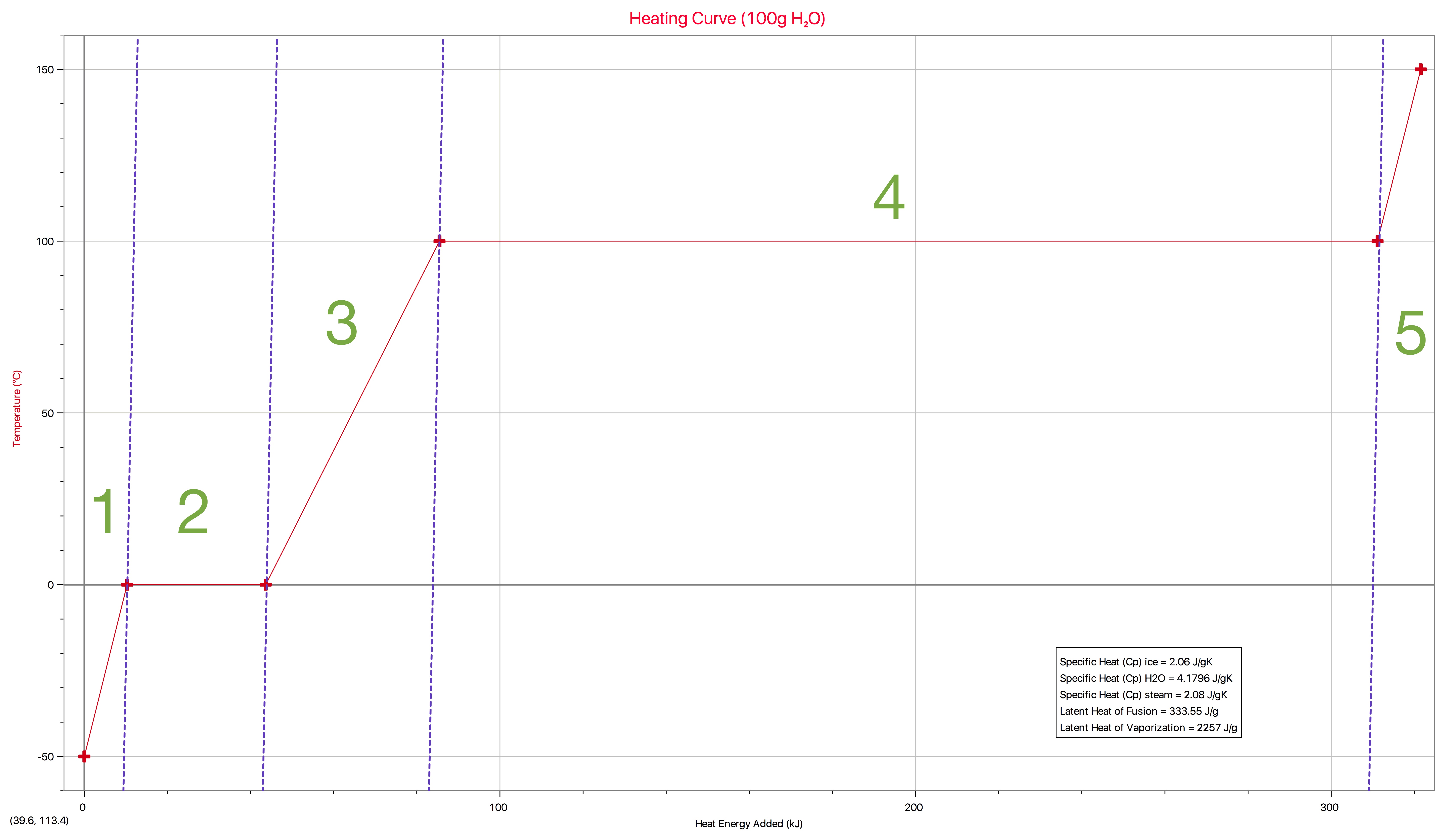
Describe the phase change between letters D and E. 
a)
Gas
b)
Liquid
c)
Melting
d)
Evaporating
9.
In which region(s) does temperature remain constant?
a)
Region 1, 3, & 5
b)
Region 2 & 4
c)
Region 1 only
d)
Region 1 & 2
10.

At which letter is the substance changing its state of matter?

a)

A only

b)

A, C, and E

c)

D and E

d)

B and D

11.

In a heating curve, diagonal lines indicate temperature is __________, while flat lines indicate temperature is __________.

a)

Constant, changing

b)

Changing, constant

12.

Describe the substance at letter A.

a)

Solid

b)

Liquid

c)

Melting

d)

Evaporating

13.

The energy transferred between objects that are at different temperatures is called

a)

Heat

b)

Temperature

c)

Energy

d)

Friction

14.

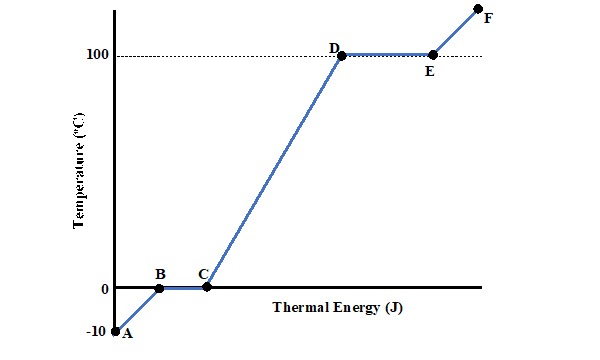
The melting point of the sample is

a)

-60 ºC

b)

20 ºC

c)

60 ºC

d)

100 ºC

15.

Describe the substance at letters D.

a)

Gas

b)

Liquid

c)

Melting

d)

Evaporating

16.

At higher temperatures

a)

Particles in an object move slower

b)

Particles in an object move faster

c)

Particles move at the same speed as lower temperature

17.

NaCl was heated starting at an initial temperature of 0°C. The heating curve is shown in the picture. What is the melting point of this substance?

a)

0°C

b)

801°C

c)

1000°C

d)

1465°C

18.

What happens to particles when energy is added (heated)?

a)

They speed up and spread out

b)

They slow down and compress

c)

They stop moving

d)

They move closer together and speed up

19.

Change from Liquid to Solid is called ...

a)

fusion

b)

Freezing

c)

sublimation

d)

evaporation

20.
Change from gas to liquid...
a)
condensation
b)
evaporation
c)
expansion
d)
movement
21.
7. All phase changes (changing states) requires energy to be added or taken away.
a)
True
b)
False
22.

What is the phase change of a solid to a liquid?

a)

freezing

b)

melting

c)

boiling

d)

condensation

23.
5. What is it called when a solid turns directly into a gas?
a)
Sublimation
b)
Condensation
c)
Liquid
24.

2. How many Joules/gram of energy is gained during melting ?(just the number)

(a)  

25.

3. How many Joules/gram of energy is released during freezing? (just the number)

(a)  

26.

4. How many Joules/gram of energy is gained during vaporization? (just the number)

(a)  

27.

5. How many Joules/gram of energy is released during condensation? (just the number)

(a)  

28.
6. Which two changes in phase need to gain energy to occur?
a)
freezing and melting
b)
vaporization and condensation
c)
melting and vaporization
d)
freezing and condensation
29.
7. Which two changes in phase need to lose energy to occur?
a)
freezing and melting
b)
vaporization and condensation
c)
melting and vaporization
d)
freezing and condensation
30.
8. Which process requires water to gain 334 Joules of energy per gram?
a)
vaporization
b)
melting
c)
condensation
d)
freezing
31.
9. What is the latent heat of vaporization of water?
a)
334 J/g
b)
540 J/g
c)
2260 J/g
d)
80 J/g
32.

Match the following descriptions to the correct form of electromagnetic radiation

a)

The waves we can see

1.

Visible light

b)

Used to cook food and in cell phones

2.

Microwaves

c)

Detected as heat, used in remote controls

3.

Infrared

d)

The highest frequency waves, very dangerous to humans

4.

Gamma

e)

Produced by the sun & can cause sunburns

5.

Ultraviolet

33.

Which of these is the wavelength?

34.

Which wave has the highest wavelength?

a)

A

b)

B

c)

C

35.

Which wave has the highest frequency?

a)

A

b)

B

c)

C

36.

Reorder the following from lowest frequency to highest

a)

radio waves

b)

infrared waves

c)

visible light

d)

ultraviolet

e)

x-rays

1)
2)
3)
4)
5)
37.

Which of these is the correct unit for frequency?

a)

Meters

b)

Hertz

c)

Joules

d)

Meters/second

38.

Which of these is the correct relationship between wavelength and frequency?

a)

As wavelength goes up, frequency goes up.

b)

As wavelength goes down, frequency goes up.

c)

Wavelength is always half of the frequency.

39.

Which wave has the highest energy?

a)

A

b)

B

c)

C

d)

You cannot tell from this diagram.

40.

What happens to frequency when wavelength decreases?

a)

stays the same

b)

decreases

c)

increases

d)

There is no relationship between wavelength & frequency.

41.

Which color waves have the shortest wavelength?

a)

red

b)

yellow

c)

green

d)

violet

42.

Which color waves have the lowest frequency?

a)

red

b)

yellow

c)

green

d)

violet

43.

Which EM waves are have the highest energy & are the most dangerous?

a)

radio

b)

gamma rays

c)

infrared

d)

x-rays

44.

Which EM waves are have the lowest frequency?

a)

radio

b)

none

c)

infrared

d)

x-rays

45.

Which EM waves are have a SHORTER wavelength than visible?

a)

radio

b)

none

c)

infrared

d)

x-rays

46.

Which EM waves are invisible? (more than one correct answer)

a)

radio

b)

visible

c)

ultraviolet

d)

gamma rays

47.
Which section of the spectrum is the ONLY one we can see?
a)
X-rays
b)
Visible Light
c)
Gamma Rays
d)
Ultraviolet Rays
48.

Which of the following has the most energy?

a)

Red

b)

Blue

c)

Green

d)

Yellow

49.

Which of the following has the highest frequency?

a)

The color blue

b)

The color orange

c)

The color yellow

d)

The color violet

50.

A firework explodes in red light with the wavelength of 700 nm. How much energy does this light have? Answer in scientific notation with correct sig figs.

(a)  

51.

Medical devices use waves. Which type of wave helps with cancer cells?

a)

radio waves

b)

gamma rays

c)

infrared waves

d)

visible light waves

52.
Which of the following lists the electromagnetic waves in order of increasing wavelength?
a)
X-rays, visible light, radio waves
b)
gamma rays, microwaves, UV rays
c)
infrared rays, radio waves, x-rays
53.

The _________ wave has a low frequency and low energy.

a)

Red

b)

Blue

54.

Sunscreen protects you from sunburns. What type of electromagnetic wave causes sunburns?

a)

Infared

b)

Gamma

c)

Ultraviolet

d)

Visible Light

55.

What electromagnetic wave is used to scan luggage and other bags for dangerous objects?

a)

X-rays

b)

Gamma Rays

c)

Radio waves

d)

Microwaves

56.

The _________ wave has a high frequency and high energy.

a)

Red

b)

Blue

57.

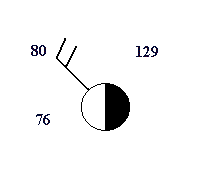
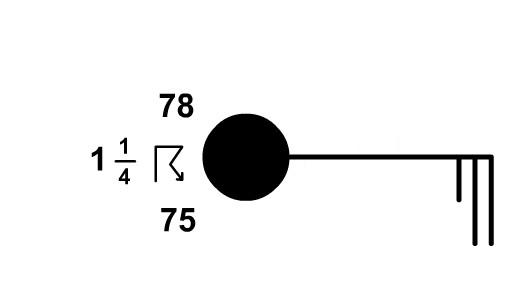
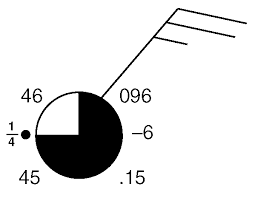
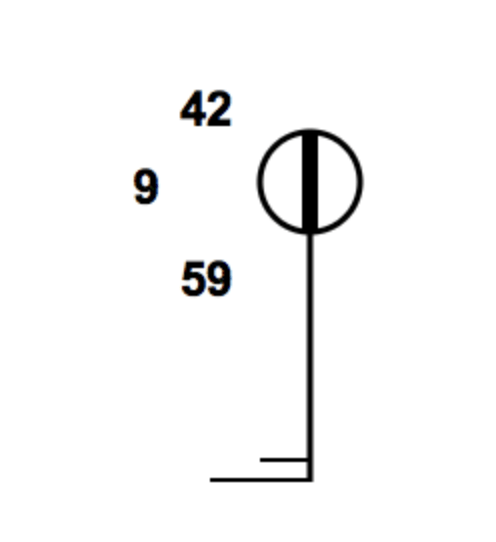
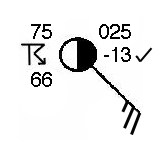
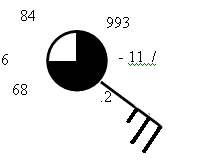
What is the temperature for the following station model?

a)

4 ºF

b)

76 ºF

c)

80 ºF

d)

129 ºF

58.

What is the dewpoint for the following station model?

a)

10 ºF

b)

23 ºF

c)

65 ºF

d)

75 ºF

59.

What is the present weather for the following station model?

a)

rain

b)

thunderstorms

c)

drizzle

d)

fog

60.

What is the amount of precipitation for the following station model?

a)

.15 in

b)

1/4 in

c)

6 in

d)

46 in

61.

What is the visibility for the following station model?

a)

1/2 mi

b)

9 mi

c)

42 mi

d)

59 mi

62.

What is the wind direction for the following station model?

a)

north

b)

east

c)

northwest

d)

northeast

63.

What is the wind speed for the following station model?

a)

10 knots

b)

15 knots

c)

20 knots

d)

25 knots

64.

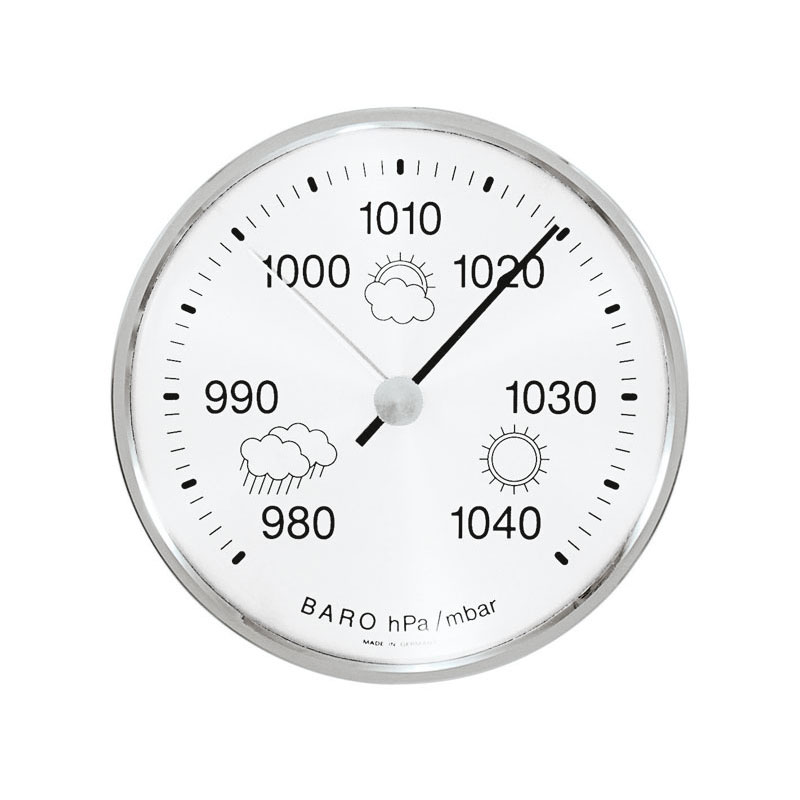
What is the station model code for a barometric pressure of 1019.5 mb?

a)

101

b)

195

c)

019

d)

119

65.

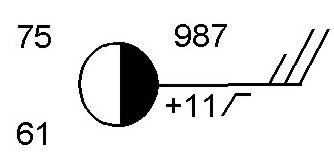
What is the barometric pressure for the following station model?

a)

987 mb

b)

998.7 mb

c)

1098.7 mb

d)

1098 mb

66.

What is the barometric trend for the following station model?

a)

steady 31 mb drop

b)

steady 31 mb rise

c)

steady 3.1 mb drop

d)

steady 3.1 mb rise

67.

What is the amount of cloud cover for the following station model?

a)

25%

b)

50%

c)

75%

d)

100%

68.

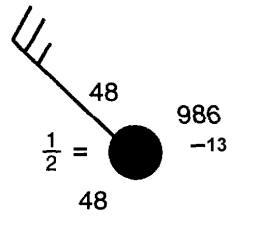
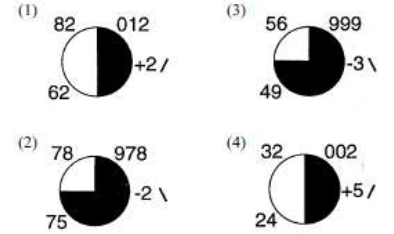
Which weather station shows the highest relative humidity?

a)

1

b)

2

c)

3

d)

4

69.
This is the symbol for a... 
a)
Cold Front
b)
Warm Front
c)
Stationary Front
d)
Occluded Front 
70.
This is the symbol for a... 
a)
Occluded Front
b)
Stationary Front
c)
Warm Front
d)
Cold Front 
71.

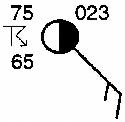
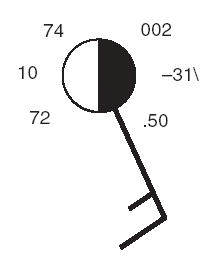
What is the barometric pressure on this station model?

a)

100.02 mb

b)

100.2 mb

c)

900.2 mb

d)

1000.2 mb

e)

002

72.
The boundary  between two air masses is known as:
a)
front
b)
storm
c)
climate
d)
flood
73.
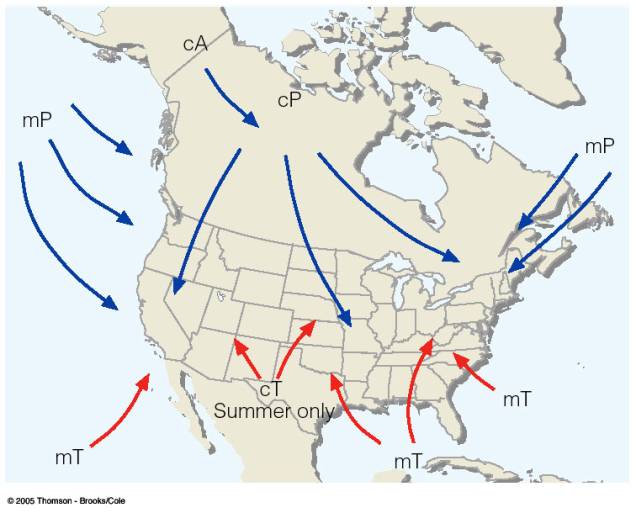
Cold air traveling south from Canada is:
a)
continental tropical
b)
continental polar
c)
maritime tropical
d)
maritime polar
74.
Warm air moving upwards from the Gulf of Mexico is:
a)
continental tropical
b)
continental polar
c)
maritime tropical
d)
maritime polar
75.
Identify the type of front that is shown in the image.
a)
Occluded Front
b)
Cold Front
c)
Stationary Front
d)
Warm Front
76.
Identify the type of front that is shown in the image.
a)
Occluded Front
b)
Cold Front
c)
Stationary Front
d)
Warm Front
77.

What is the barometric pressure?

a)

997.8 mb

b)

1097.8 mb

c)

9997.8 mb

d)

9978.0 mb

e)

978

78.
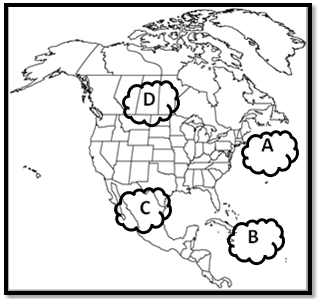
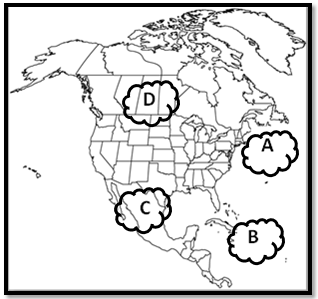
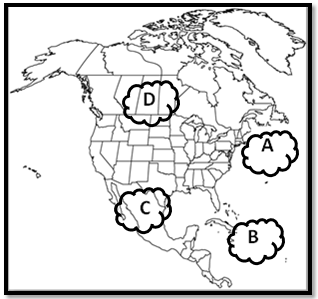
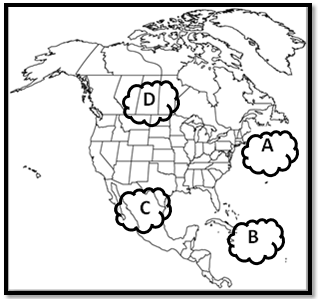
Which type of air would you find at air mass A?
a)
cold, dry
b)
warm, humid
c)
warm, dry
d)
cold, humid
79.
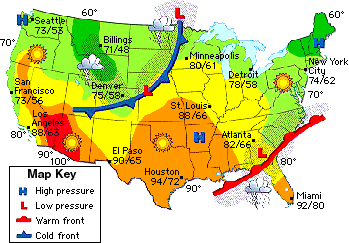
Based on the weather map, which city will most likely experience increasing temperatures during the next 24 hours? 
a)
Denver, because it is raining there
b)
Minneapolis, because a cold front is approaching
c)
Atlanta, because a warm front is approaching
d)
Houston, because it is in a high pressure area
80.
A body of air that has the same temperature and moisture levels throughout is called what? 
a)
Fronts
b)
Air Masses
c)
A cold front
d)
A warm front
81.
A maritime polar air mass is 
a)
Dry and Cold
b)
Wet and Cold
c)
Wet and Warm
d)
Dry and Warm
82.
How do we name air masses?
a)
Water and temperature
b)
Air pressure
c)
Humidity and temperature
d)
Cold and warm
83.
How do we characterize an air mass that forms over the ocean?
a)
Dry
b)
Wet
c)
Cold
d)
Warm
84.
How do we characterize an air mass that forms over land?
a)
Dry
b)
Wet
c)
Cold
d)
Warm
85.
How do we characterize an air mass that forms over near the equator?
a)
Dry
b)
Wet
c)
Cold
d)
Warm
86.
How do we characterize an air mass that forms near the poles?
a)
Dry
b)
Wet
c)
Warm
d)
Cold
87.
What types of air masses form over oceans?
a)
Maritime
b)
Continental
c)
Polar
d)
Tropical
88.
What's the humidity and temperature of a continental tropical air mass?
a)
Wet and cold
b)
Dry and warm
c)
Wet and warm
d)
Dry and cold
89.
What's the humidity and temperature of a maritime tropical air mass?
a)
Wet and cold
b)
Dry and warm
c)
Wet and warm
d)
Dry and cold
90.
A wet and cold air mass would be a...
a)
Maritime polar
b)
Continental polar
c)
Maritime tropical
d)
Continental tropical
91.
A dry and cold air mass would be...
a)
Maritime polar
b)
Continental polar
c)
Maritime tropical
d)
Continental tropical
92.
A dry and hot air mass would be...
a)
Maritime arctic
b)
Maritime tropical
c)
Continental tropical
d)
Continental polar
93.
Which type of air would you find at air mass A?
a)
cold, dry
b)
warm, humid
c)
warm, dry
d)
cold, humid
94.
Which type of air would you find at air mass B?
a)
cold, dry
b)
warm, humid
c)
warm, dry
d)
cold, humid
95.
Which type of air would you find at air mass C?
a)
cold, dry
b)
warm, humid
c)
warm, dry
d)
cold, humid
96.
Which type of air would you find at air mass D?
a)
cold, dry
b)
warm, humid
c)
warm, dry
d)
cold, humid
97.
Where would you find a tropical maritime air mass?
a)
over the ocean, near the equator
b)
over the ocean, near the poles
c)
over a continent, near the equator
d)
over a continent, near the poles
98.
Which abbreviation of an air mass can be identified as dry and hot?
a)
cP
b)
mP
c)
cT
d)
mT
99.
Which abbreviation of an air mass can be identified as cold and moist?
a)
cP
b)
mP
c)
cT
d)
mT
100.
Air travels
a)
from high pressure to low pressure
b)
from low pressure to high pressue
101.

A high pressure system is located north of New York City. What type of weather will be experienced there?

a)

clear, sunny skies

b)

cloudy and rainy

102.
A low pressure system is located over Georgia. What type of weather will they have?
a)
clear, sunny skies
b)
cloudy and rainy
103.
What front is moving through the NW part of the US?
a)
Stationary
b)
Warm
c)
Occluded
d)
Cold
104.
Choose the best forecast for Chicago on Saturday.
a)
rain
b)
warmer temperatures
c)
snow
d)
sunny skies
105.
Choose the best forecast for Miami on Saturday. 
a)
sunny skies
b)
warmer temperatures
c)
rain
d)
snow
106.
Which city is experiencing thunderstorms?
a)
Denver
b)
New York 
c)
Miami 
d)
Boise
107.
Which city is closest to a high pressure system?
a)
New York
b)
Miami
c)
Minneapolis
d)
Boise
108.
Choose the best forecast for Dallas on Saturday.
a)
thunderstorms
b)
snow
c)
warmer temperatures
d)
clear skies
109.
What direction is the warm front moving?
a)
Northeast
b)
Northwest
c)
Southeast
d)
Southwest
110.
 What conditions can lead to the formation of a hurricane?
a)
 low-pressure over warm tropical ocean 
b)
low-pressure system over artic tundra
c)
 high-pressure over warm tropical ocean
d)
high-pressure system over hot, dry land
111.
If an air mass is rising, it must be
a)
cold and less dense
b)
cold and more dense
c)
warm and more dense
d)
warm and less dense
112.

Base your answer on the weather map below, which shows the locations of a high-pressure center (H) and a low-pressure center (L) over a portion of North America. The isolines indicate surface air pressures.

The arrows on which map show the most likely path in which these two pressure centers will move over the next few days?

a)
b)
c)
d)
113.

Which map shows the most likely location of clouds associated with these pressure centers?

a)
b)
c)
d)
114.

Which map best represents the surface wind pattern associated with high-pressure and low-pressure systems in the Northern Hemisphere?

a)
b)
c)
d)
115.

An air mass entering Alaska from the northern Pacific Ocean would most likely be labeled on a weather map as

a)

cP

b)

cT

c)

mP

d)

mT

116.

Jet stream winds over the United States generally move from

a)

east to west

b)

west to east

c)

north to south

d)

south to north

117.

Base your answer on on the station models below, which show various weather conditions recorded at the same time on the same day at four different cities.

Which city had the lowest relative humidity?

a)

Chicago

b)

Detroit

c)

Buffalo

d)

Utica

118.

Base your answer on the map below, which shows sea-level air pressure, in millibars, for a portion of the eastern coast of North America. Points A, B, C, and D are sea-level locations on Earth's surface.

Which location most likely recorded the highest wind speed?

a)

A

b)

B

c)

C

d)

D

119.

Which weather-station model shows an air pressure of 993.4 millibars?

a)
b)
c)
d)
120.

Base your answer on the weather map below. The map shows a low-pressure system and some atmospheric conditions at weather stations A, B, and C.

Which cross section best represents the air masses, air movement, clouds, and precipitation occurring behind and ahead of the warm front located between stations A and B?

a)
b)
c)
d)
121.

Base your answer on the weather map below and on your knowledge of Earth science. The weather map shows a typical low-pressure system and associated weather fronts labeled A and B. The L indicates the center of the low-pressure system. A few New York State cities are shown. Symbols cP and mT represent different air masses. The wind direction at Utica and Rochester is shown on the station models.

Which front symbols are drawn correctly, based on the air masses shown?

a)
b)
c)
d)
122.

Which cross section best represents a cold front?

a)
b)
c)
d)