
 Worksheets
Milestone Practice
Total questions: 131
Worksheet time: 2hrs 8mins

Look at this illustration of a wave.
Point W is a trough; Point Y is a crest
Point Y is a trough; Point W is a crest
Point Y is a trough, Point X is a crest
Point W is a trough; Point Z is a crest
What do waves carry through objects?
Sound
Light
Energy
Water
The Speed of the wave is called the
Wavelength
Wave Speed
Amplitude
Frequency

The illustration shows a transverse wave. Which bar measures the wavelength of the wave?
Bar W
Bar X
Bar Y
Bar Z
The height of the wave is called the
wavelength
wave speed
amplitude
frequency
Wave cycles in a given unit of time is called
wavelength
wave speed
amplitude
frequency
Which statement BEST describes the relationship between visible light and the EM spectrum.
Visible light and the electromagnetic spectrum are different names for the same phenomenon.
Visible light occupies about half of the electromagnetic spectrum.
Visible light is a narrow band in the electromagnetic spectrum.
Visible light and the electromagnetic spectrum have a small area of overlap.
Visible light is which type of wave?
seismic
mechanical
longitudinal
electromagnetic
Which of these colors of visible light has the shortest wavelength?
red
green
violet
yellow
Which part of the EM spectrum can humans sense without using equipment or technology?
radio waves
visible light
microwaves
X-rays
Which statement is true about visible light?
Humans cannot see any light from the electromagnetic spectrum.
Visible light makes up a small part of the electromagnetic spectrum.
Visible light has a frequency equal to that of gamma rays.
Humans can see visible light only as white light.
Visible light in the EM Spectrum
is a broad band within the spectrum
is a narrow band within the spectrum
makes up 50% of the spectrum
makes up more than 75% of the spectrum
Multiple Choice from Item Central
The electromagnetic spectrum is the complete range of electromagnetic radiation ranging from radio waves to gamma rays. Which type of radiation in this spectrum is associated with observable colors such as red, green, and blue?
gamma rays
X-rays
visible light
radio waves
This occurs when light bounces off a surface
reflection
refraction
absorb
scatter
How is light different from other kinds of waves?
light travels more slowly
light must travel through matter
light does not need matter to travel
Why can you see your reflection in a window?
light is absorbed by the glass
light is reflected off the glass
light is transmitted through the glass
How do humans see different wavelengths?
as different colors
as ultraviolet light
as infrared rays
What determines the color that an object looks to your eyes?
the color of the light
the wavelengths of light that reaches your eyes
the distance of the object from you
What is the relationship between eyesight and light?
light shines through all objects, allowing people to see them.
light enters the eye before striking an object, allowing people to see the object.
light reflects off an object and then enters the eye. allowing people to see the object.
Which situation would cause your pupils to change from small to large?
the light got dimmer
the light got brighter
the person looked at a distance object
the person looked at a closer object.
Color blindness in humans is best described as
seeing in only black and white
not seeing pink
not seeing one or more colors
not seeing ultraviolet
The bending of light as it goes through a different material is
reflection
refraction
absorb
diffraction

Which letter is an example of reflection?
A
B
C
Which type of behavior does light display when striking a transparent object?
scattering
reflection
transmission
absorption

What type of behavior is represented by this diagram?
reflection
refraction
scattering
absorption

What behavior does this diagram represent?
reflection
scattering
absorption
transmission

What behavior is represented by the diagram?
transmission
absorption
reflection
refraction
What is the difference between the the 7 main colors of light?
Their amplitudes
Their wavelengths

Sound is received in your ear through
the vibration of matter such as air, water, or other material
energy waves that can go through empty space
vibrations of space
Which travels faster: light or sound waves?
Sound Waves
They Travel the same
Light waves
A rainbow occurs because of
Reflection
Refraction

Which of the following visible colors has the shortest Wavelength?
Purple
Green
Yellow
Red

What is true of red light?
shortest visible wavelength
longest visible wavelength

What do waves CARRY though a medium from one end of the wave to the other?
particles
energy
What occurs when light hits and object and bounces off the surface?
Refraction
Reflection
Color
Gamma Ray
The distance between two troughs in a wave is:
frequency
wavelength
equilibrium
period
A substance (like solid, liquid or gas) that the energy of a wave can travel through
amplitude
compression
medium
frequency
The highest point on a wave.
frequency
compression
trough
crest

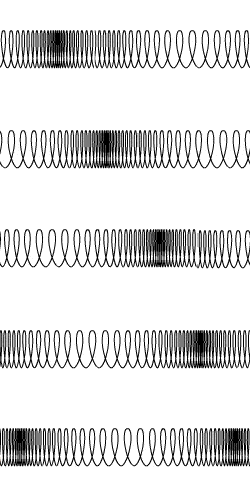

What is frequency measured in?
Milliseconds
Miles
Hertz
Kilograms
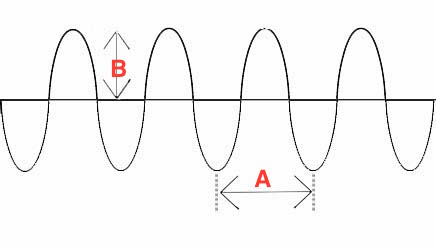

Matter has two main properties mass and volume.
True
False



Element
Compound
Homogeneous Mixture
Heterogeneous MIxture

What is it?
Pure Substance
Mixture

What is it?
Pure Substance
Mixture
When there is one type of atom
Element
Compound
Homogeneous Mixture
Heterogeneous Mixture
When there is 2 or more atoms combined together
Element
Compound
Homogeneous Mixture
Heterogeneous Mixture
A group of 2 or more items, that are not chemically combined
Pure Substance
Mixture
Which among the following is a NON MATTER?
Mars
Smoke
Steam
none of the choices
How many N (Newton/s) does a 1000 kg really weighs?
980 N
9800 N
102 N
0.0098 N
What makes mass and weight different?
Mass is the amount of matter meanwhile weight is expressed in kg, lbs. and g.
Mass and weight are expressed in g, kg and lbs.
Mass is the amount of matter meanwhile weight is the force of gravity on an object's mass.
none of the choices
Which of the following is being used to identify if a certain object is a matter or NOT?
Weight
Density
Volume
Mass
Neil weighs 750 N on Earth. On Mars, the force of gravity is 38% of that on Earth. How much would Neil weigh on Mars?
285 N
285 kg
7 350 N
7 350 kg
The ratio of gravitational force on Earth is 1:6. James has a mass of 84 kg on Earth. What is his mass on the moon?
84 kg
4 939 N
4 939 kg
16 N
Vaporization/ evaporation is the change of physical state from _______ to _______.
gas to liquid
liquid to gas
solid to gas
gas to solid
Dry ice on the kitchen counter has disappeared without a trace. Dry ice skips the liquid phase. It never "melts" instead turns directly into a gas. This is an example of what change of physical state?
Sublimation
Melting
Condensation
Deposition
If someone sprays perfume in front of the class, why is it that we can smell it even from the back?
because gas has NO definite shape but takes the container's shape
because gas has low density
because gas has NO definite volume
because gas can diffuse easily
It is formed by heating and ionizing a gas. Occurs only in lightning discharges and artificial devices.
Bose-Einstein Condensate
Plasma
Plsama
Plamas
Which of the following does NOT belong to the group?
Electrical Conductivity
Chemical State
Volatility
Ductility
Which of the following is an example of chemical property?
Electrolysis
Corrosive
Combustibility
all of the choices
Why do you feel cool when you sweat?
because the sweat takes energy from your skin to escape through evaporation
because sweat releases energy to your skin that cools you down when it escapes through evaporation
because sweat takes up energy from the surrounding air causing your skin to loose energy
all of the choices
Why does your drink get cold when you put ice on them?
because the ice takes up energy from your drink causing them to get colder
because the ice takes up energy from the surrounding air causing your ice to melt
because the ice needs energy to melt causing it to release energy to your drink
none of the choices
Which among the following is NOT true about liquid?
no definite shape
has definite volume
slight expansion during heating
none of the choices


What is the general relationship between the mass applied and the extension on the spring?
(1) a direct relationship: as mass increases, the extension of the spring increases
(2) an indirect relationship: as mass increases, the extension of the spring decreases
(3) constant relationship: as mass increases, the extension of the spring stays the same
(4) no relationship: there is no relationship between the mass and the extension of the spring

Based on the data, estimate the extension of the spring when a 450-gram mass is applied.
(1) 0.2 cm
(2) 0.7 cm
(3) 0.9 cm
(4) 2.0 cm

Identify the force acting on the mass that causes the spring to extend.
(1) drag
(2) friction
(3) gravity
(4) inertia

The arrows in the diagram below represent the forces acting on a moving bicycle at two different times, time 1 and time 2. The length of each arrow represents the amount of force being applied. As a result of the change in the forces from time 1 to time 2, the bicyclist will
(1) move slower in a forward direction
(2) move in a backward direction
(3) move faster in a forward direction
(4) stop moving

The diagram represents a person pushing a 50-kg box up a ramp. Which force will decrease if the surface of the ramp is made smoother?
(1) gravity
(2) magnetism
(3) friction
(4) electricity
In a car accident, a seat belt helps prevent injuries by applying a force
(1) less than the force of the moving passenger
(2) greater than the force of the moving car
(3) in the same direction as the car’s motion
(4) in the opposite direction of the passenger’s motion

A person uses a bow to shoot an arrow at a target. In which diagram does the bow and arrow have the greatest amount of potential energy?


An object accelerates at 3 meters per second2 when a 10-newton (N) force is applied to it. Which force would cause this object to accelerate at 6 meters per second2?
(1) 5 N
(3) 20 N
(2) 10 N
(4) 30 N

The diagram below represents a roller coaster at two positions on the roller coaster track. Compared to the potential energy of the roller coaster at the top of hill 1, the potential energy of the roller coaster at the top of hill 2 is
(1) less because the roller coaster is at a lower elevation
(2) less because the roller coaster is on a more gentle slope
(3) greater because the roller coaster is at a lower elevation
(4) greater because the roller coaster is on a more gentle slope
The gravitational potential energy is most affected by
(1) motion and volume
(2) motion and distance apart
(3) mass and volume
(4) mass and height

