
 Worksheets
vocabulary for the whole year
Total questions: 91
Worksheet time: 48mins
What is a wave? A wave is a ________ pattern that can transfer energy.
repeating
random
static
irregular
What is amplitude? Amplitude is the ________ of the wave; midpoint to crest.
height
length
speed
frequency
What is the top of the wave called?
Crest
Trough
Base
Node
What is the bottom of the wave called?
Trough
Crest
Peak
Amplitude
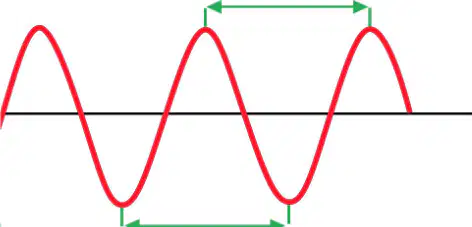
What is the length of the wave measured from crest to crest or trough to trough called?
Wavelength
Frequency
Amplitude
Velocity
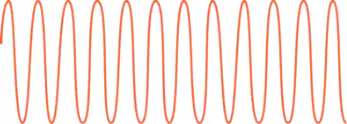
What is the number of waves that pass a point in 1 second called?
Frequency
Amplitude
Wavelength
Velocity
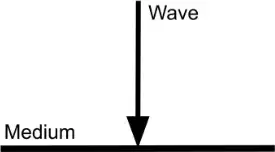
What is the definition of Absorption?
The transfer of energy from a wave to a material that it encounters.
The reflection of a wave off a surface.
The bending of a wave as it passes through an opening.
The spreading out of waves as they move away from a source.
What is the definition of Transmission?
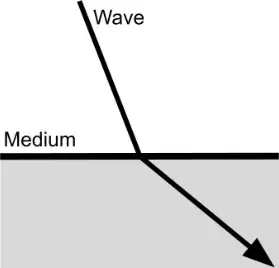
What is the term for the bending of waves as they enter a new medium at an angle?
Refraction
Reflection
Diffraction
Absorption
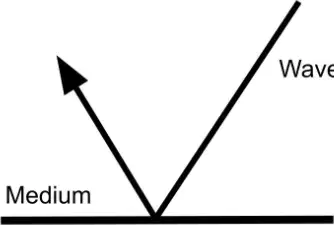
What is the term for the bouncing back of an object or a wave when it hits a surface through which it cannot pass?
Reflection
Refraction
Diffraction
Absorption
Light: An energy source that travels in waves that we see as different colors. Light = ________ Waves.
Transverse
Longitudinal
Mechanical
Sound
Sound: A type of energy that’s produced by vibrations in objects and travels as waves. Sound = ________ Waves.
Longitudinal
Transverse
Electromagnetic
Surface
Which type of wave does light travel in?
Longitudinal Waves
Transverse Waves
Circular Waves
Surface Waves
Which type of wave does sound travel in?
Longitudinal Waves
Transverse Waves
Circular Waves
Surface Waves
What is an analog signal?
A signal that allows for a continuous record of some kind of action.
A signal that allows for a record of numerical values at set time intervals.
A signal that only uses binary values.
A signal that cannot be measured.
What is a digital signal?
A signal that allows for a continuous record of some kind of action.
A signal that allows for a record of numerical values of an action at a set of continuous time intervals.
A signal that cannot be measured.
A signal that is always analog.
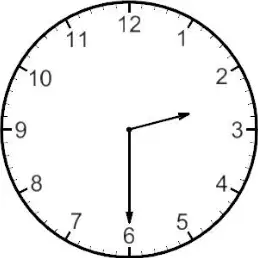
Which type of signal is represented by the analog clock shown in the image?
Analog Signal
Digital Signal

Which type of signal is represented by the digital clock shown in the image?
Analog Signal
Digital Signal
What is an element?
A substance made from only one type of atom
A mixture of different substances
A chart of all substances
A type of molecule

What is the Periodic Table of Elements?
A chart that shows all of the elements, organized by their properties
A list of all molecules
A table of chemical reactions
A chart of all atoms and molecules
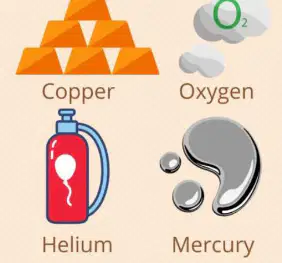
Helium, Copper, Oxygen, and Mercury are all examples of _______.
elements
compounds
mixtures
molecules
Which of the following is used to organize all known elements by their properties?
Periodic Table of Elements
List of Molecules
Table of Compounds
Chart of Atoms
What does the atomic number of an atom represent?
The total number of protons and neutrons in an atom
The number of protons in an atom
The number of electrons in an atom
The number of neutrons in an atom
What does the atomic mass of an atom represent?
The number of protons in an atom
The number of electrons in an atom
The total number of protons and neutrons in an atom
The number of neutrons in an atom
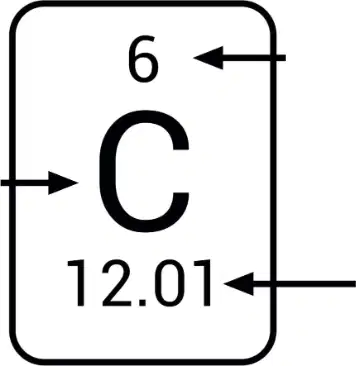
In the given diagram, what does the number 6 represent?
(a)
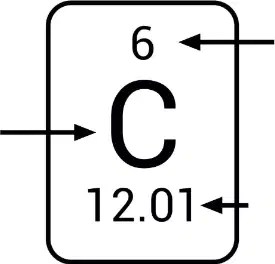
In the given diagram, what does the number 12.01 represent?
Atomic Mass
Atomic Number
Number of Neutrons
Number of Protons
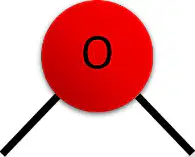
A ______ is two or more atoms bonded together.
molecule
element
compound
ion
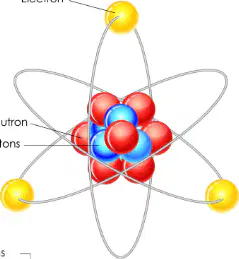
What is the smallest, most basic unit of matter?
Atom
Molecule
Cell
Electron
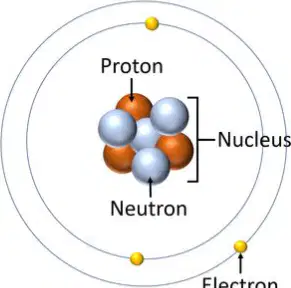
What is the center of an atom called?
Nucleus
Electron
Proton
Neutron
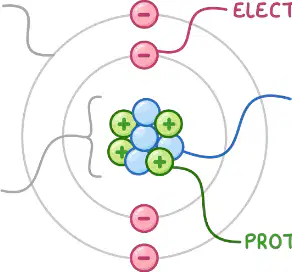
What is a positively charged particle found in the atom’s nucleus?
Proton
Electron
Neutron
Photon
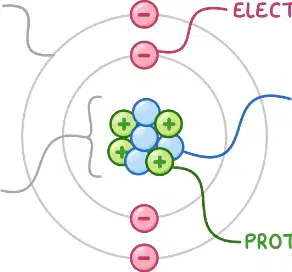
What is a particle found in the atom’s nucleus that has no charge?
Neutron
Proton
Electron
Positron
What is an electron?
A positively charged particle in the nucleus of an atom
A negatively charged particle that orbits the nucleus of an atom
A neutral particle in the nucleus of an atom
Which of the following is NOT an example of a pure substance?
Toothpaste
Water
Salt
Sugar
Chalk
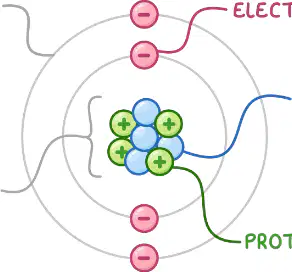
In the diagram, which particle is negatively charged and orbits the nucleus of an atom?
Electron
Proton
Neutron
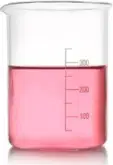
What is the definition of volume? Volume is the amount of ______ an object or substance takes.
space
weight
color
length
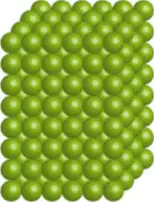
What is the definition of a solid? A solid is a state of matter in which a substance has a definite ______ and definite ______.
shape, volume
shape, mass
weight, volume
weight, mass
Which of the following is an example of a solid?
Water
Stone
Air
Oil
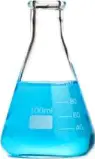
Which of the following best describes the term 'volume'?
The color of an object
The amount of space an object or substance takes
The weight of an object
The temperature of a substance

What is the definition of a liquid?
A state of matter in which a substance has an indefinite shape and definite volume
A state of matter in which a substance has an indefinite shape and indefinite volume
A state of matter in which a substance has a definite shape and definite volume
A state of matter in which a substance has a definite shape and indefinite volume
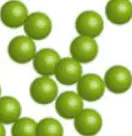
What is the definition of a gas?
A state of matter in which a substance has an indefinite shape and definite volume
A state of matter in which a substance has an indefinite shape and indefinite volume
A state of matter in which a substance has a definite shape and definite volume
A state of matter in which a substance has a definite shape and indefinite volume
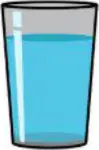
Water is an example of which state of matter?
Solid
Liquid
Gas

Oil is an example of which state of matter?
Solid
Liquid
Gas

Helium is an example of which state of matter?
Solid
Liquid
Gas

Oxygen is an example of which state of matter?
Solid
Liquid
Gas
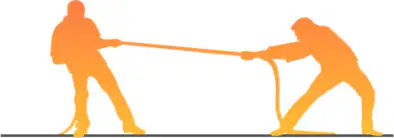
______ is a push or a pull.
Force
Energy
Mass
Speed
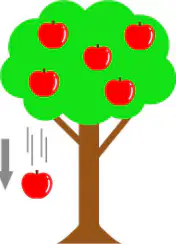
Fill in the blank: ______ is a force that pulls objects together that is due to their masses.
Gravity
Friction
Magnetism
Electricity
What is the definition of matter?
Anything that has mass and takes up space.
Anything that produces light.
Anything that can be seen with a microscope.
Anything that moves on its own.
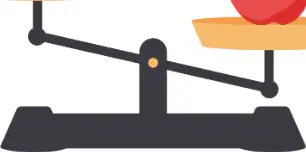
What is the definition of mass?
The amount of matter in an object.
The force acting on an object.
The volume of an object.
The speed of an object.
What is the term for the following definition: 'A measure of the force of gravity on an object.'?
Weight
Mass
Volume
Density
What is the term for the following definition: 'A speed in a specific direction.'?
Velocity
Acceleration
Distance
Force
What is the definition of acceleration?
The quantity of motion of a moving object, measured as a product of its mass and velocity.
A measure of how quickly the velocity is changing.
The distance covered by an object in a given time.
The force applied to an object.
The formula for acceleration is ________.
acceleration = (final velocity - initial velocity) / time
acceleration = (initial velocity + final velocity) / time
acceleration = force × mass
acceleration = distance / time
What is the definition of momentum?
The distance covered by an object in a given time.
The force applied to an object.
The quantity of motion of a moving object, measured as a product of its mass and velocity.
A measure of how quickly the velocity is changing.
Fill in the blank: The formula for momentum is ________.
p = mv
F = ma
v = u + at
E=mc2
What is the definition of Motion? Motion is the ________ over time.
change of position
increase in mass
loss of energy
creation of matter
What is Potential Energy? Potential Energy is ________ energy.
stored
moving
lost
thermal
What is kinetic energy? Kinetic energy is the energy something has when it is ______.
standing
forcing
moving
speeding
What is a pure substance? A pure substance is a substance that cannot be broken down by ______ means.
physical
chemical
biological
mechanical
Which of the following is an example of a pure substance?
Air
Salt (NaCl)
Soil
Salad
Kinetic energy is the energy something has when it is moving.
True
False

What is a mixture?
A single pure substance
Two or more substances that are together in the same place but their atoms are not chemically bonded
A substance that dissolves in water
A chemical compound
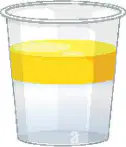
What is solubility?
The ability of a substance to melt
The ability of a substance to dissolve into another substance
The ability of a substance to freeze
The ability of a substance to mix without dissolving
A mixture is two or more substances that are together in the same place but their atoms are not ________ bonded.
chemically
physically
magnetically
mechanically
Solubility is the ability of a substance to ________ into another substance.
dissolve
evaporate
melt
condense
What is the term for 'How substances mix to form a solution'?
Dissolve
Evaporate
Condense
Melt
What is the term for 'A characteristic of a pure substance that can be observed without changing into another substance'?
Physical Property
Chemical Reaction
Mixture
Element
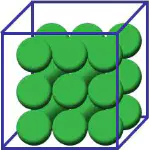
What is the measurement of how much mass of a substance is contained in a given volume called?
Density
Viscosity
Temperature
Pressure
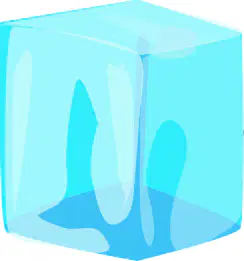
What is the process of changing from a solid to liquid called?
Melting
Freezing
Condensation
Sublimation

What is the term for 'Changing from a liquid to a solid'?
Freezing
Melting
Evaporation
Condensation

What is the term for 'The temperature at which a liquid boils'?
Boiling Point
Melting Point
Freezing Point
Condensation Point
__________ is the process by which molecules at the surface of a liquid absorb enough energy to change to a gas.
Evaporation
Condensation
Sublimation
Freezing
__________ is the change in state from a gas to a liquid.
Condensation
Evaporation
Sublimation
Freezing
What is the change in state from a solid directly to a gas without passing through the liquid state called?
Sublimation
Condensation
Melting
Evaporation
What is the change in state from a gas to a solid called?
Deposition
Sublimation
Condensation
Evaporation
What is a chemical property?
A characteristic of a pure substance that describes its ability to change into different substances.
The process by which atoms rearrange to produce a chemical change.
The physical appearance of a substance.
The temperature at which a substance melts.
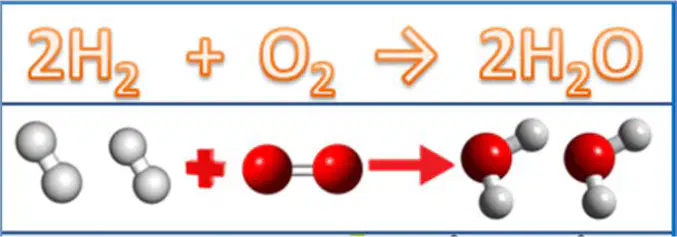
What is a chemical reaction?
A process by which atoms rearrange to produce a chemical change from one substance to another.
A process by which substances are mixed without changing their chemical properties.
The melting of ice into water.
The boiling of water. single option split into two
What is a reactant in a chemical reaction?
A substance that enters into a chemical reaction
A substance formed as a result of a chemical reaction
A catalyst
A solvent
What is a product in a chemical reaction?
A substance that enters into a chemical reaction
A substance formed as a result of a chemical reaction
A catalyst
A solvent
In the chemical equation 2 Na + Cl₂ → 2 NaCl, The reactants are ______ and the product is ______.
The reactants are Na and Cl₂ and the product is NaCl.
The reactants are NaCl and Cl₂ and the product is Na.
The reactants are NaCl and Na and the product is Cl₂.
The reactants are Na and NaCl and the product is Cl₂.
________ is a measure of how quickly a specific material is capable of catching fire and burning.
Flammability
Density
Elasticity
Viscosity
________ is the measure of the average kinetic energy (energy of motion) of the particles of a substance.
Temperature
Pressure
Volume
Density
The transfer of thermal energy from warm object to cooler object is called ____.
temperature
heat
cold
motion
Mr. Freeze that a marshmallow is a ______, which is why it doesn't burn your mouth even when frozen with liquid nitrogen
conductor
magnet
insulator
pure substance
The transfer of energy by electromagnetic waves is ____.
convection
conduction
radiation
insulation
When a reaction feels cold, like baking soda a vinegar, the reaction is called _____
exothermic
endothermic
When a reaction feels warm, like pocket hand warmers, it is called ___.
exothermic
endothermic
Thermal energy is ___.
the total kinetic and potential energy of the particles in an object
the total kinetic energy of particles in an object
the total potential energy of particles in an object
the chemical energy of particles in an object
Convection is
transfer of thermal energy through light
transfer of thermal energy through a fluid
transfer of thermal energy through a material
transfer of thermal energy through a sound
conduction is
transfer of thermal energy from light
transfer of thermal energy from a liquid
transfer of thermal energy from particle to particle
transfer of thermal energy from a sound
Mrs. Smith teaches science to ___
blue team
white team
red team
Ms. Schmitt teaches science to
blue team
white team
red team

