
 Worksheets
End of Year Review (EOY)
Total questions: 88
Worksheet time: 44mins
What is an element?
A pure substance that cannot be broken down into any other substance.
A combination of many different elements that are not chemically combined.
A pure substance made up of 2 or more elements that have chemically bonded together.
What is a compound?
A pure substance that cannot be broken down into any other substance.
A pure substance made up of 2 or more elements that have chemically bonded together.
A combination of many different elements that are not chemically combined.
What is a mixture?
A pure substance that cannot be broken down into any other substance.
A pure substance made up of 2 or more elements that have chemically bonded together.
A combination of many different elements that are not chemically combined and can be separated.
Fill in the blank: An element is represented on the periodic table by a _________.
chemical symbol
chemical equation
atomic mass
molecular formula
Fill in the blank: A compound is represented by a _________.
chemical formula
chemical symbol
atomic number
physical state
True or False: A mixture is a combination of many different elements that are chemically combined.
True
False
Which of the following is represented by only 1 capital letter?
Element
Compound
Mixture
Which of the following can be separated by physical means?
Element
Compound
Mixture
Which of the following models represents compounds?
A. [Diagram with different shapes not connected]
B. [Diagram with different shapes connected in pairs]
C. [Diagram with same shapes connected in pairs]
D. [Diagram with only triangles not connected]
Which of the following is an example of a chemical change?
Cutting
Burning
Folding
Freezing
Which of the following is NOT a physical change?
Chopping
Rusting
Bending
Melting
Fill in the blank: When a chemical change or chemical reaction occurs, __________ is formed.
a new substance
the same substance
no substance
only energy
Which of the following is evidence of a chemical change?
A) Drastic Color Change
B) Folding
C) Boiling
D) Sanding
Which of the following is an example of a physical change?
A) Burning
B) Evaporating
C) Reacting
D) Spoiling (Mold)
Fill in the blank: When a physical change occurs, a substance is altered but it is not transformed into a __________.
new substance
liquid
gas
mixture
Precipitate formation is evidence of a chemical change.
True
False
Which of the following is NOT evidence of a chemical change?
Gas Bubbles
Light Formation
Painting
Temperature (Heat) Change
Which of the following is a chemical change verb?
Freezing
Painting
Bubbling
Folding
Two liquids are mixed together. Which of the following does NOT identify the formation of a new substance?
A gas is produced.
One liquid dissolves into the other.
The temperature changes.
A solid is formed.
The table provided shows the observations gathered during several lab experiments: 1. Cutting paper using scissors changes a single piece of paper into multiple pieces. 2. Melting an ice cube changes a solid to a liquid. 3. When mixing a red liquid and a clear liquid, a bright blue liquid is produced. 4. Boiling water causes water vapor to rise from it. 5. Two liquids mix and form a solid substance. Which pieces of evidence listed indicates that a chemical change occurred? Select the TWO correct answers.
Cutting paper using scissors changes a single piece of paper into multiple pieces.
Melting an ice cube changes a solid to a liquid.
When mixing a red liquid and a clear liquid, a bright blue liquid is produced.
Boiling water causes water vapor to rise from it.
Two liquids mix and form a solid substance.
A student made the table to record his observations when mixing baking soda and vinegar in a beaker. Observations Before Mixing: - Vinegar is a clear liquid. - Baking soda is a white solid. Observations After Mixing: - The liquid remains clear. - Bubbles form. - The remaining solid settles at the bottom. The best evidence for the formation of a new substance is the observation of the —
liquid remaining clear
solid disappearing
bubbles forming
solid settling
Which of the following is a property of metals?
Dull (no luster/no shine)
Good Conductor
Brittle
Not Ductile
Which type of element is described as a semi-conductor and shares properties of both metals and nonmetals?
Metals
Metalloids
Nonmetals
None of the above
Fill in the blank: Nonmetals are ________ conductors.
poor
excellent
average
good
Which of the following is NOT a property of nonmetals?
Dull (no luster/no shine)
Good Conductor
Brittle
Not Malleable
Metals are usually ________.
shiny
dull
soft
transparent
Metalloids can be either shiny or dull.
True
False
Which property is shared by both metals and metalloids?
Ductile
Semi-conductor
Shiny
Brittle
Fill in the blank: Metals are ________.
malleable
brittle
gaseous
transparent
Which of the following is a property of metalloids?
Good Conductor
Semi-conductor
Not Ductile
Not Malleable
True or False: Nonmetals are ductile and malleable.
True
False
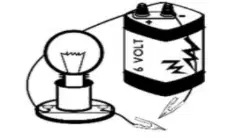
A student is testing a silver rock with the lab equipment shown in the diagram above. The silver rock completes the circuit and lights the bulb. The student concludes the sample could be which of the following?
I. Metal
II. Metalloid
III. Nonmetal
A. I
B. I, II
C. I, II, III
D. II, III
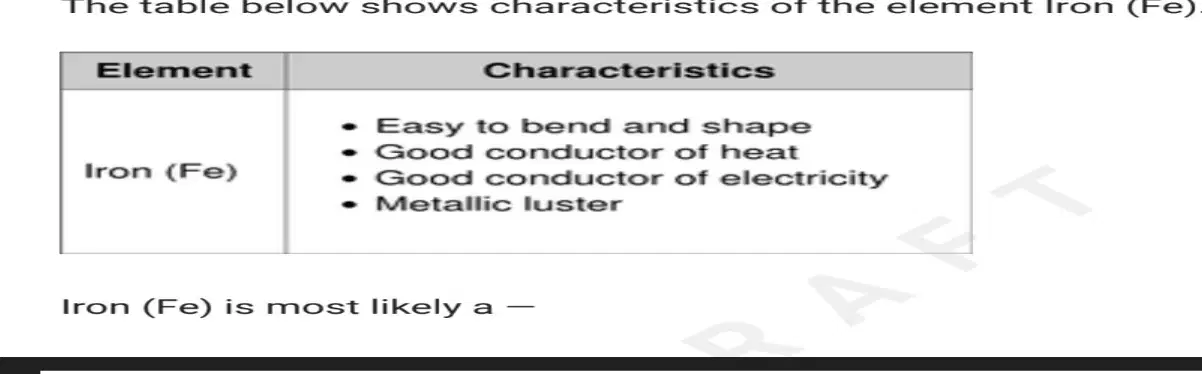
Iron (Fe) is most likely a —
metal.
gas.
metalloid.
nonmetal.
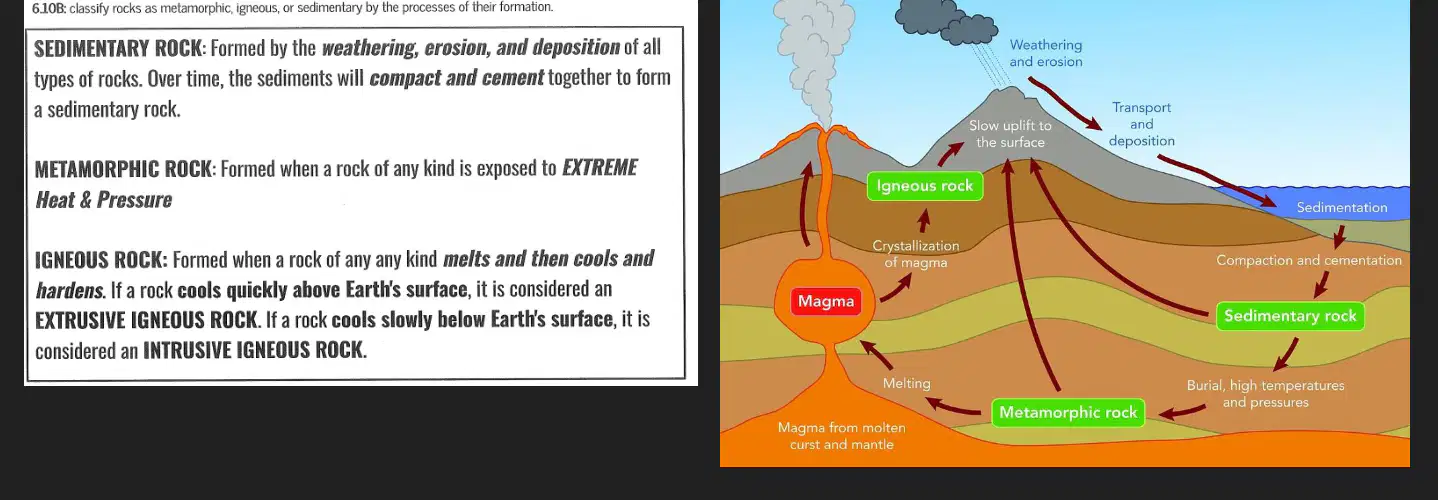
What type of rock is formed by the weathering, erosion, and deposition of all types of rocks, followed by compaction and cementation?
Igneous rock
Metamorphic rock
Sedimentary rock
Magma

Which type of rock is formed when a rock of any kind is exposed to extreme heat and pressure?
Sedimentary rock
Metamorphic rock
Igneous rock
Magma
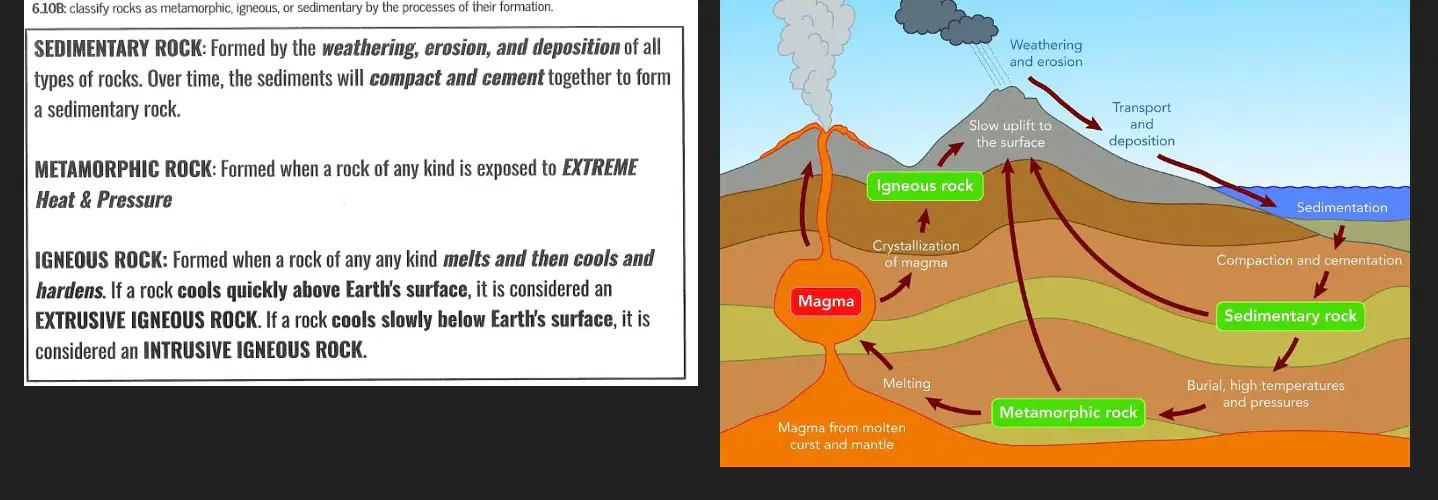
Igneous rock is formed when a rock of any kind melts and then cools and hardens.
True
False

If a rock cools quickly above Earth's surface, it is considered an ________ igneous rock.
extrusive
intrusive
metamorphic
sedimentary

If a rock cools slowly below Earth's surface, it is considered an ________ igneous rock.
intrusive
extrusive
metamorphic
sedimentary
Rocks are able to change into other types of rocks by going through geological processes. Using the image below, which process would turn the pictured rock into a metamorphic rock?
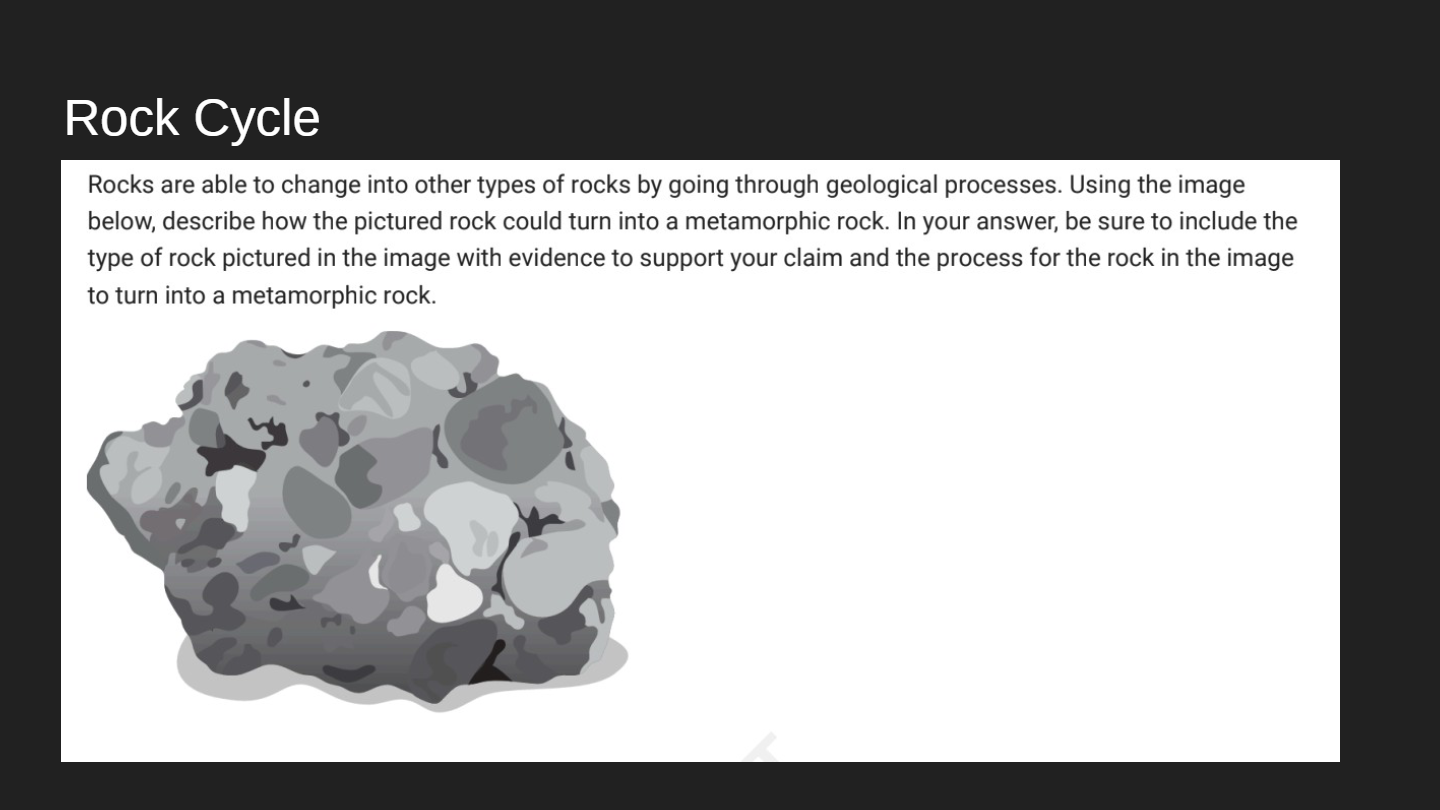
Melting and cooling
Weathering and erosion
Heat and pressure
Compaction and cementation
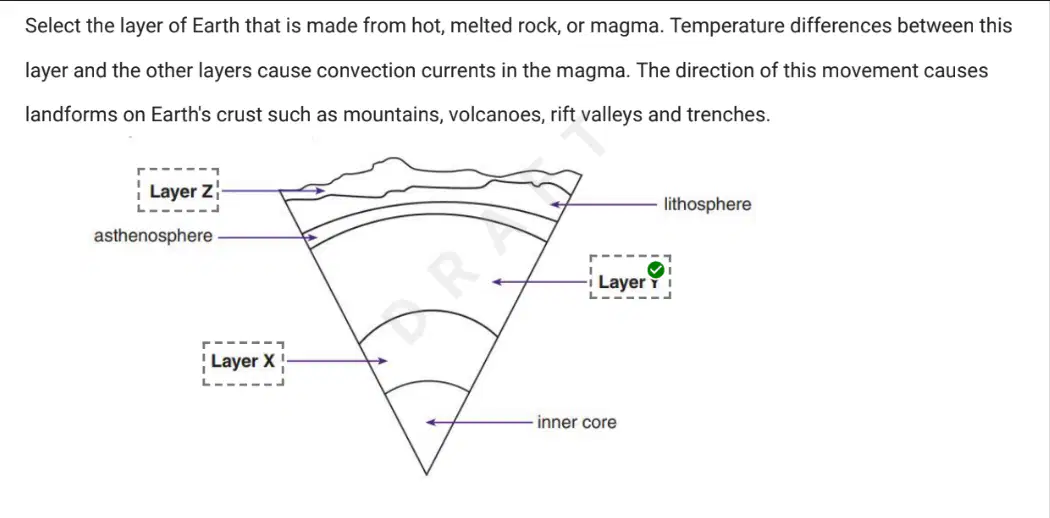
Select the layer of Earth that is made from hot, melted rock, or magma. Temperature differences between this layer and the other layers cause convection currents in the magma. The direction of this movement causes landforms on Earth's crust such as mountains, volcanoes, rift valleys and trenches. Which layer is made from hot, melted rock or magma?
Layer X
Layer Y
Layer Z
What causes seasons to occur on Earth?
The Earth is tilted at an angle of 23.5 degrees on its axis
The Earth revolves once around the Sun in 365 days
Seasons occur due to the Earth's tilt on its axis and revolution around the Sun
All of the above
Fill in the blank: The Earth is tilted at an angle of ____ degrees on its axis.
23.5
0
45
90
True or False: The Northern and Southern Hemispheres experience the same seasons at the same time.
True
False
When it is summer in the Northern Hemisphere, what season is it in the Southern Hemisphere?
Summer
Winter
Spring
Autumn

Name the four seasons shown in the diagram for the Northern Hemisphere.
Spring, Summer, Autumn, Winter
Summer, Autumn, Winter, Monsoon
Spring, Summer, Rainy, Winter
Autumn, Winter, Spring, Dry
Fill in the blank: The Earth revolves once around the Sun in ____ days.
365
400
365.25
250
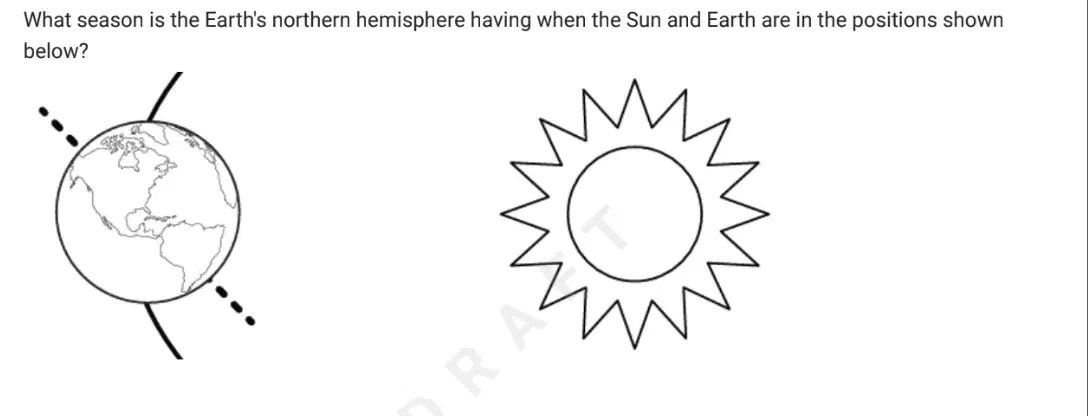
What season is the Earth's northern hemisphere having when the Sun and Earth are in the positions shown below?
Fall
Winter
Summer
Spring
Which of the following is NOT one of the three parts of the Cell Theory?
Living things are made of cells
Cells are the basic unit of structure and function of living things
Cells can be created from non-living matter
Cells come from other cells
Fill in the blank: ______ worked with plants to help develop the Cell Theory.
Schleiden
Schwann
Virchow
Hooke
Fill in the blank: ______ worked with animals to help develop the Cell Theory.
Schwann
Schleiden
Virchow
Hooke
Fill in the blank: ______ saw cells dividing under the microscope, supporting the idea that cells come from other cells.
Virchow
Schleiden
Hooke
Leeuwenhoek
According to the Cell Theory, living things are made of cells.
True
False
Cells are the basic unit of structure and function of living things.
True
False
Which statements of the following are NOT part of cell theory? Select TWO answers.
A. Everything is made of cells.
B. The cell is the most basic structure of life.
C. All cells arise from pre-existing cells.
D. All cells have the ability to move.
E. All living organisms are made of one or more cells.

Which type of cell has no nucleus?
Prokaryotic Cells
Eukaryotic Cells
Both
Neither

Which type of cell has a nucleus?
Prokaryotic Cells
Eukaryotic Cells
Both
Neither
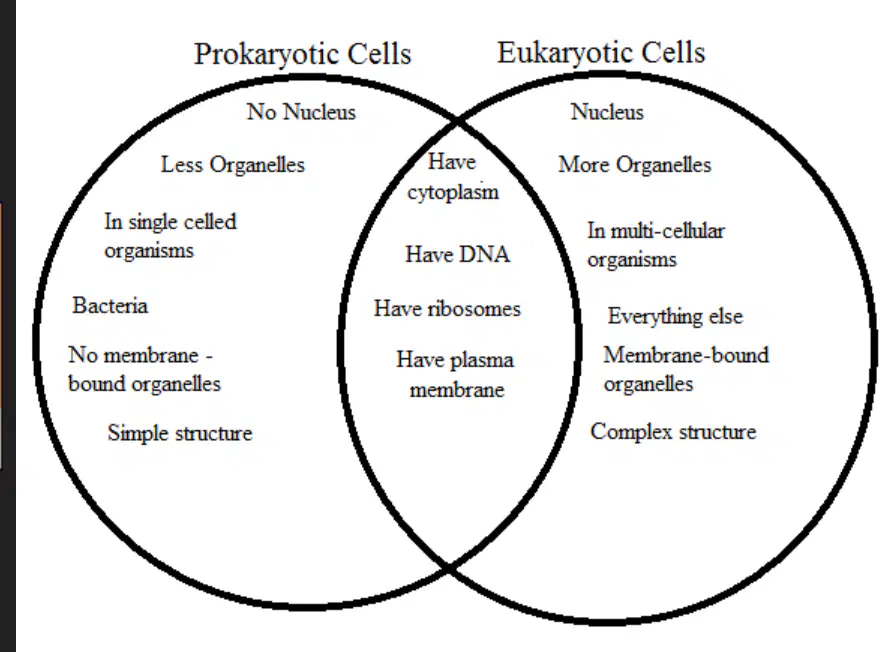
Prokaryotic cells have less organelles.
True
False
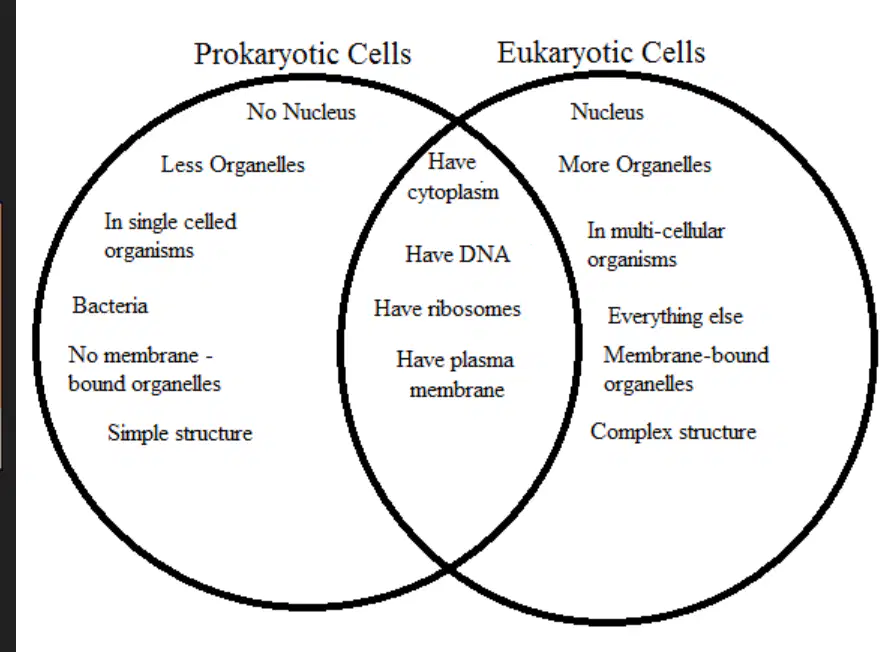
Eukaryotic cells are found in multi-cellular organisms.
True
False

Which type of cell is found in single-celled organisms?
Prokaryotic Cells
Eukaryotic Cells
Both
Neither
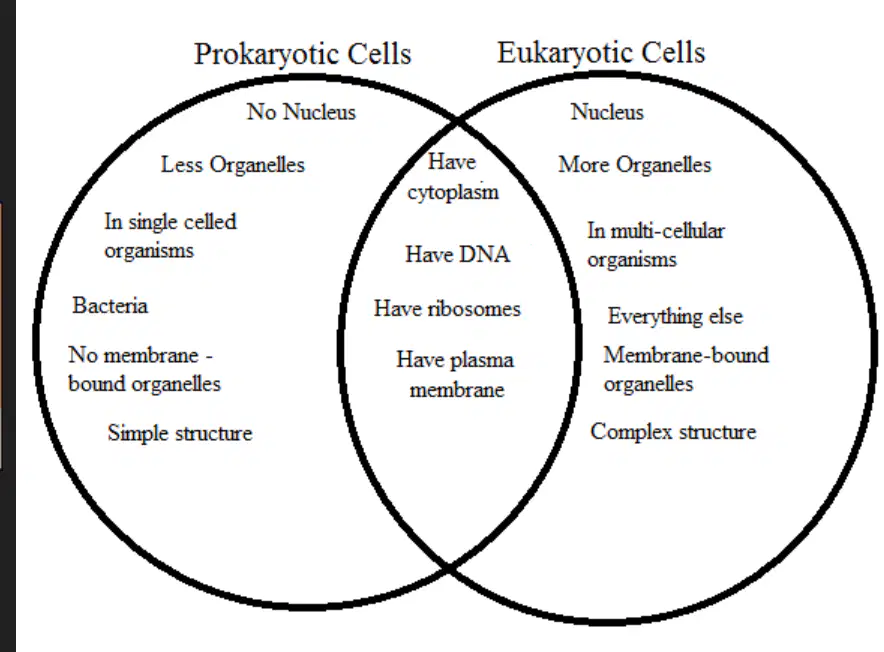
Bacteria are an example of which type of cell?
Prokaryotic Cells
Eukaryotic Cells
Both
Neither

Which type of cell has membrane-bound organelles?
Prokaryotic Cells
Eukaryotic Cells
Both
Neither
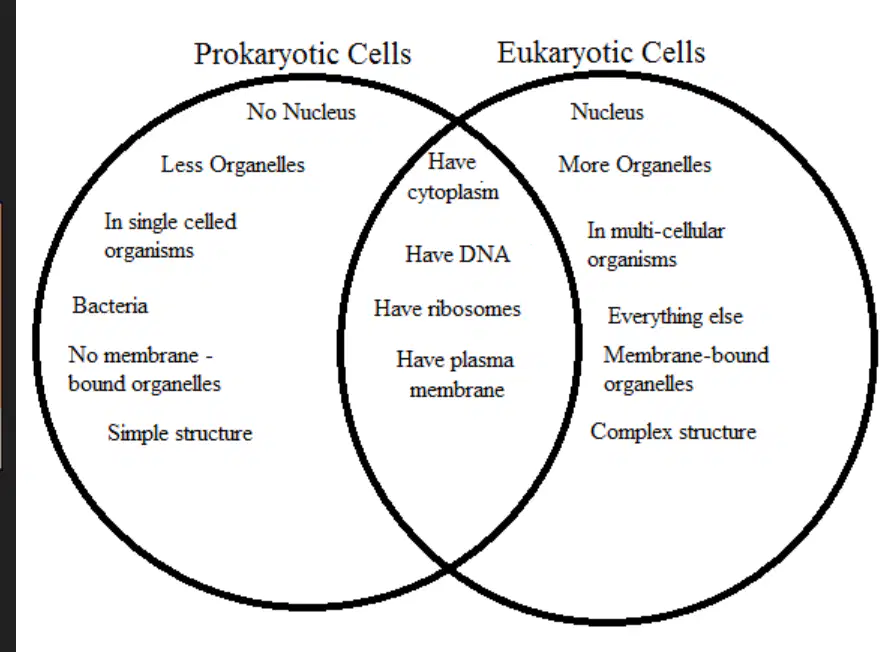
Which type of cell has a simple structure?
Prokaryotic Cells
Eukaryotic Cells
Both
Neither

Which type of cell has a complex structure?
Prokaryotic Cells
Eukaryotic Cells
Both
Neither
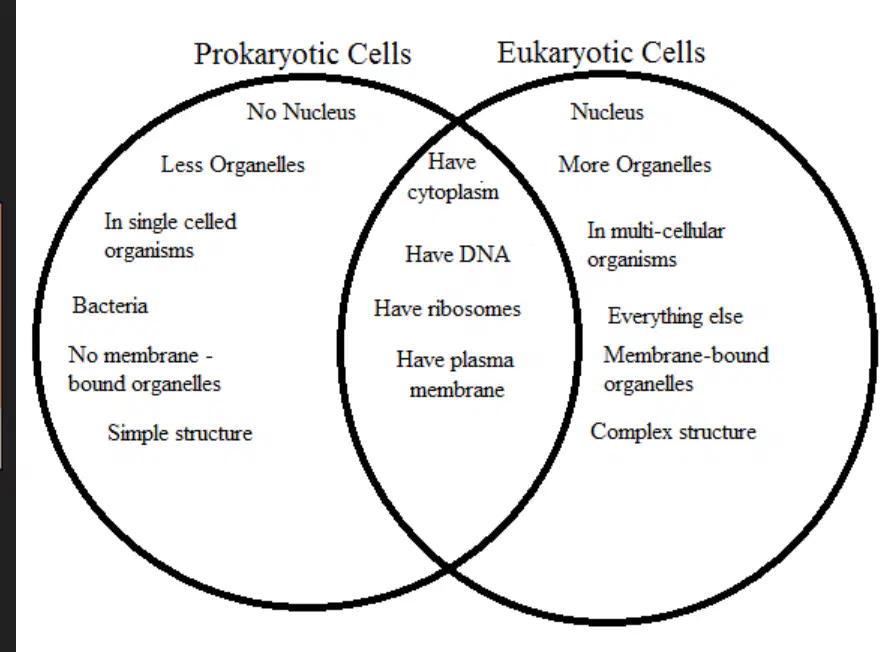
Which of the following is a similarity between Prokaryotic and Eukaryotic cells?
Both have cytoplasm
Both have DNA
Both have ribosomes
Both have plasma membrane
All of the above
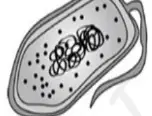
In what kingdom does the above cell likely belong?
Plantae
Animalia
Fungi
Bacteria
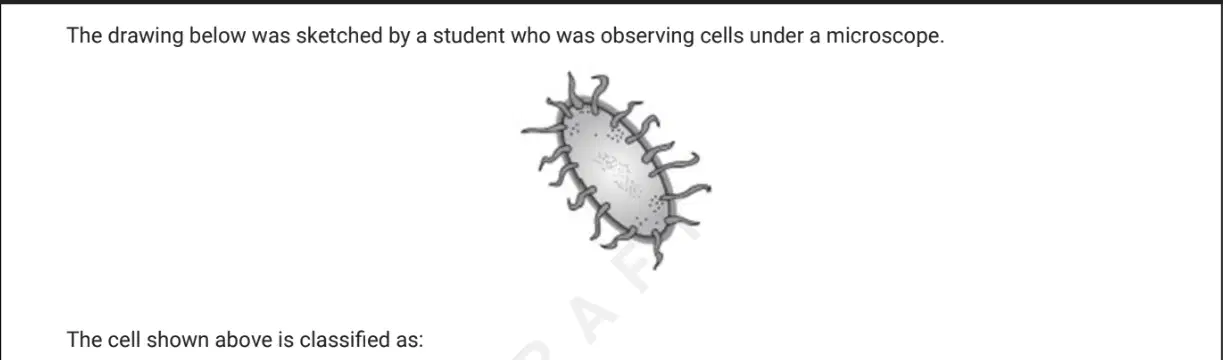
The cell shown above is classified as:
Prokaryotic
Eukaryotic
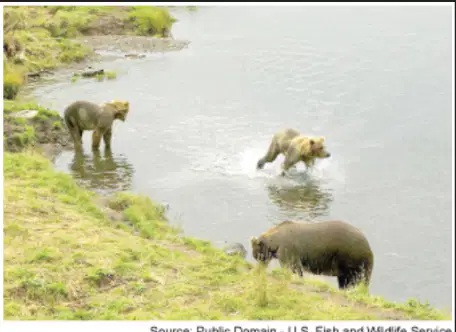
In this environment the brown bears by the river are....
biotic factors that catch biotic salmon in the river
abiotic factors that hunt along the biotic river
biotic factors that absorb the biotic sunlight
abiotic factors that breathe the abiotic air

Jack drew images of living things around his community. Which of the following answer choice correctly describe Jack's drawings?
The frogs represent a community.
The hawk represents a population.
The frogs represent a population.
The hawk represents a community.
What is a population
a single living thing
a group of the same species
groups of different living things
the environment in which they live
What is an organism?
a single living thing
a group of the same species
groups of different living things
the environment in which they live

All organisms in the kingdom Animalia are----
unicellular, prokaryotic, and heterotrophic
multicellular, eukaryotic, and autotrophic
multicellular, eukaryotic, and heterotrophic
unicellular, prokaryotic, and autotrophic

Which image represents a longitudinal wave
Top Image
Bottom Image
What is the net force acting on an object if two forces of 5 N and 10 N are applied in the same direction?
5 N
10 N
15 N
0 N
True or False: If the net force on an object is zero, the object must be at rest.
False
True
Which of the following scenarios will result in a net force of zero?
A car accelerating on a highway
A book resting on a table
A ball being thrown upwards
A cyclist pedaling uphill
According to Newton's Third Law, if a force is applied to an object, what happens?
The object moves in the direction of the force.
The object exerts an equal and opposite force.
The object remains stationary.
The object accelerates indefinitely.
Which of the following scenarios best illustrates Newton's Third Law of Motion?
A rocket launching into space.
A book resting on a table.
A car accelerating on a highway.
A person pushing against a wall and the wall pushing back.
Fill in the blank: Newton's Third Law states that for every action, there is an equal and opposite ________.
reaction
force
motion
acceleration
Which of the following is an example of chemical energy being transformed into thermal energy?
C) A wind turbine generating electricity
B) A car engine burning gasoline
D) A solar panel absorbing sunlight
A) A battery powering a flashlight
Fill in the blank: In a hydroelectric power plant, potential energy is first converted into ________ energy.
nuclear
kinetic
thermal
chemical
Which of the following processes involves the transformation of electrical energy into mechanical energy?
B) A fan spinning blades
A) A toaster heating bread
D) A refrigerator cooling food
C) A light bulb illuminating a room
Which state of matter has a definite volume but no definite shape?
Liquid
Plasma
Solid
Gas
Fill in the blank: In the gaseous state, particles are __________.
tightly packed
loosely packed
rigidly arranged
far apart
Which of the following processes involves a change from a liquid to a gas?
Melting
Freezing
Condensation
Evaporation
If an object floats on water, what can be inferred about its relative density?
It is less than 1.
It is equal to the density of water.
It is equal to 1.
It is greater than 1.
Which of the following substances is likely to have the highest density?
Iron
Water
Wood
Air
What is a density column?
A column of gases with the same density
A mixture of solids and liquids
A stack of liquids with different densities
A solid object with uniform density
Which of the following liquids would float on top in a density column?
Molasses
Oil
Honey
Water

