
 Worksheets
11HSC - Semester 1 Review
Total questions: 112
Worksheet time: 1hrs 17mins
Fertilization is the process in which:
A sperm cell fuses with an egg cell
A zygote divides into two cells
An embryo implants in the uterus
A fetus develops organs
Which of the following is required for successful fertilization?
Presence of healthy sperm and egg
Low temperature
Lack of nutrients
Absence of hormones
IVF is defined as:
A process of fertilization where an egg is combined with sperm outside the body
A surgical removal of the uterus
A method of natural childbirth
A type of genetic disorder
The process of IVF involves which of the following steps?
Fertilization of an egg outside the body and implantation into the uterus
Natural fertilization inside the body
Direct injection of sperm into the uterus without egg retrieval
Cloning of embryos in a laboratory
Fertilisation occurs when a ______ meets an oocyte, combining their DNA to form a new being.
sperm
neuron
enzyme
antibody
What is formed when a sperm meets an oocyte and their DNA combines?
A new being (zygote) is formed.
A red blood cell is formed.
A neuron is formed.
A muscle fiber is formed.
Which of the following is necessary for successful fertilisation?
Only the sperm meets the egg
Key steps must occur when sperm meets an egg
Only the egg is present
No additional factors are needed
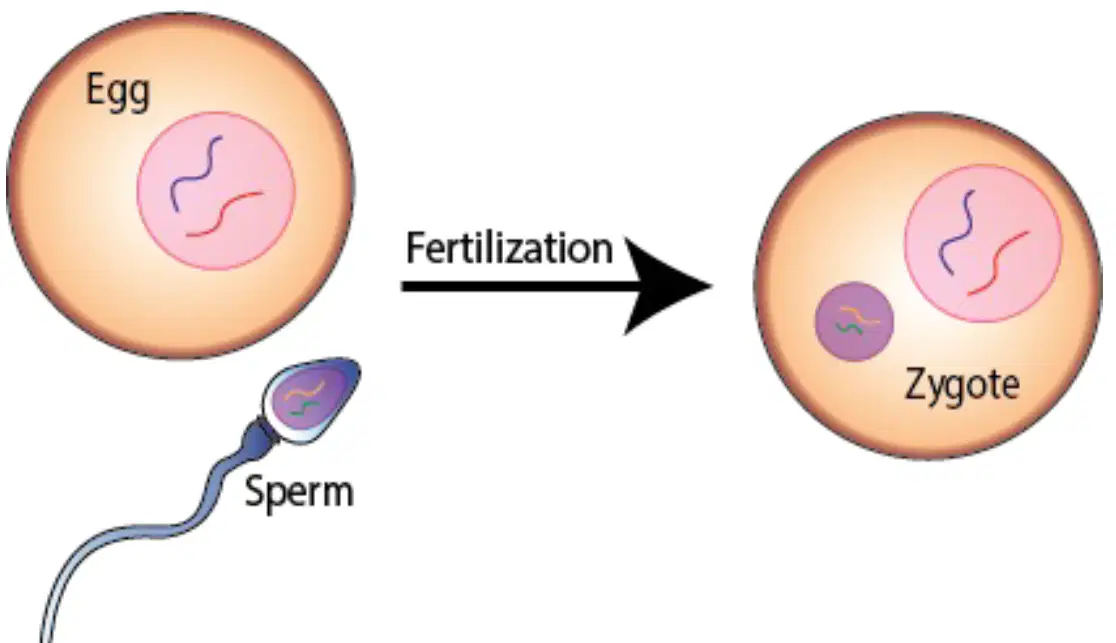
What is the result of fertilization between an egg and a sperm?
Zygote
Embryo
Ovum
Blastocyst
Fill in the blank: The ________ of the sperm contains numerous mitochondria which produce ATP, providing energy to move the sperm.
middle piece
head
tail
acrosome
Which part of the sperm contains the genetic material (haploid cell)?
Tail
Head
Middle piece
Flagellum
The tail of the sperm, also called the flagellum, makes whip-like movements that propel the sperm through the female reproductive tract.
True
False
Fill in the blank: The ________ contains enzymes required to penetrate and fertilize the female egg.
acrosome
mitochondria
nucleus
flagellum
What is the function of the Nucleus in the oocyte?
Contains the DNA (Haploid).
Produces energy for the cell.
Regulates the entry and exit of substances.
Synthesizes proteins.
Which part surrounds the nucleus, fills the cell, and contains necessary nutrients for the ovum’s development and early embryonic growth?
Cytoplasm
Nucleus
Cell membrane
Mitochondria
What is the function of the Vitelline Membrane?
Cell membrane; protects the cell contents & regulates substances coming in and out of the cell. Sperm break through to fertilise the egg.
Provides nutrients to the developing embryo.
Acts as a respiratory surface for gas exchange.
Stores genetic material for the embryo.
Refer to the diagram of the oocyte structure. Which part acts as a protective barrier and only allows 1 sperm cell through?
Zona Pellucida
Corona Radiata
Cytoplasm
Nucleus
Refer to the diagram of the oocyte structure. What is the Perivitelline Space?
Space between the vitelline membrane and the zona pellucida.
Space inside the nucleus of the oocyte.
Space between the zona pellucida and the corona radiata.
Space within the cytoplasm of the oocyte.
Which part is the outermost layer of the ovum, consisting of cells from the follicle that nourish the ovum and allow it to interact with its environment?
Corona Radiata
Zona Pellucida
Vitelline Membrane
Oolemma
The fertile window for each cycle is approximately how many days long?
6 days
2 days
10 days
14 days
Ovulation occurs on which days of the hormone cycle?
Day 7-8
Day 10-11
Day 14-15
Day 20-21
How long is the oocyte capable of fertilisation post ovulation?
12-24 hours
2-3 days
6-8 hours
48-72 hours
Sperm can survive in the female reproductive tract for how many days?
3-5 days
1 day
7-10 days
12-15 days
20-25 days
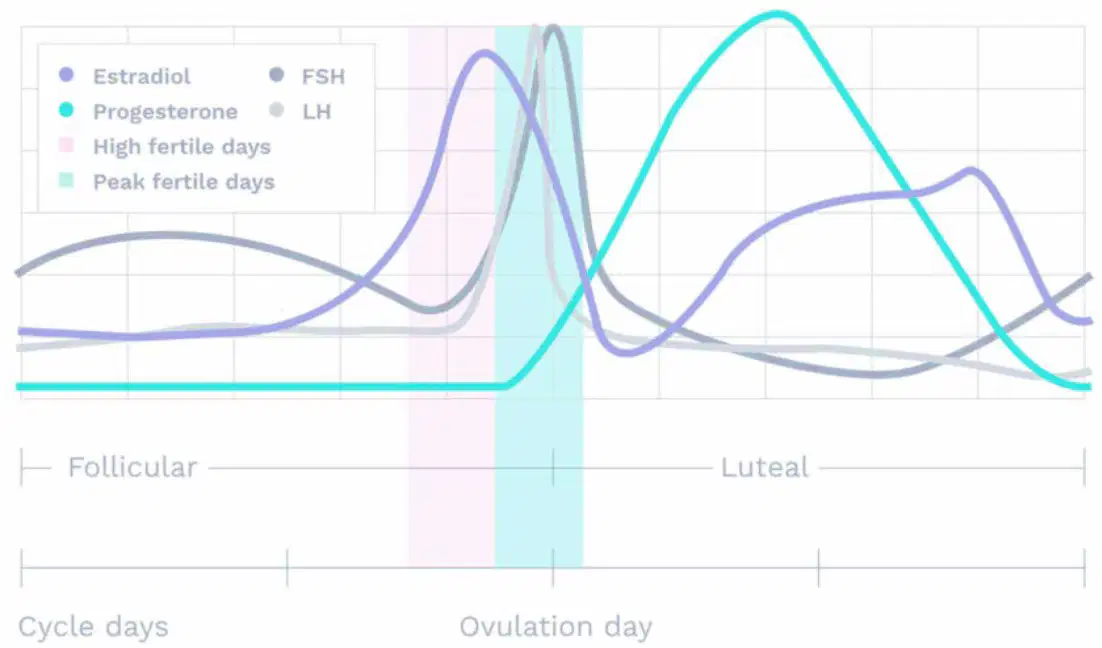
Refer to the graph showing hormone levels and fertile days. Which hormone peaks just before ovulation?
Estradiol
Progesterone
FSH
LH
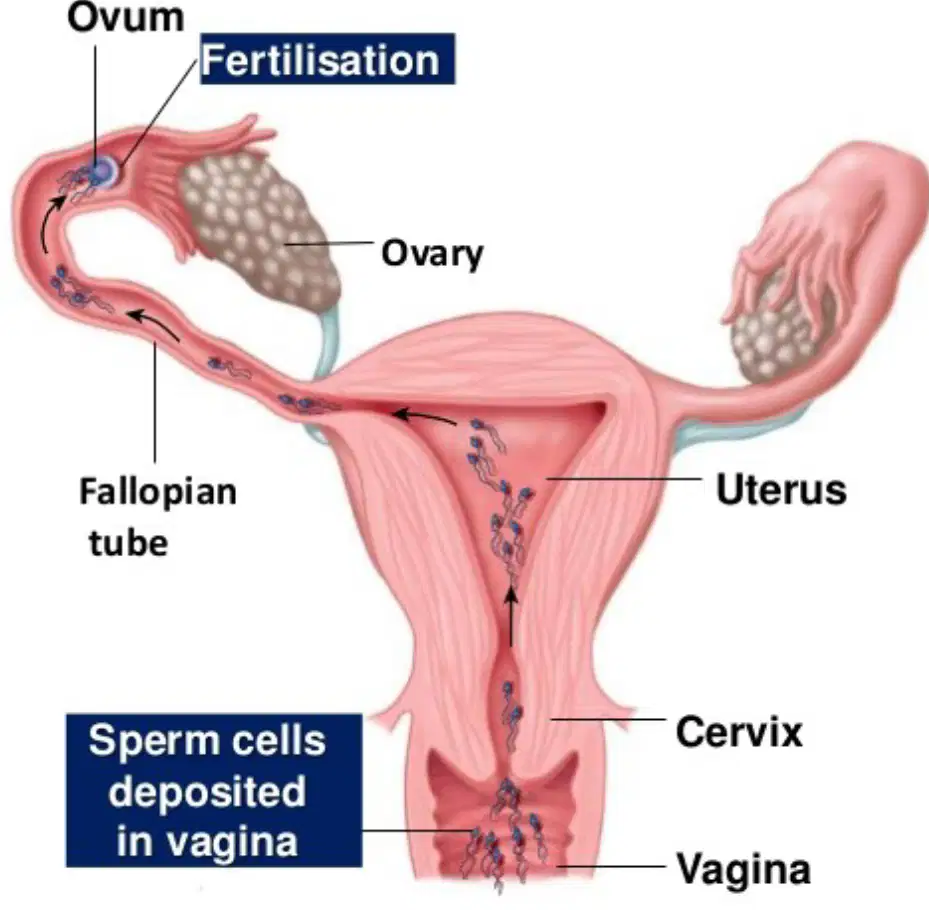
According to the passage, where must sperm travel to for fertilisation to occur?
The fallopian tube
The uterus
The ovary
The cervix
Which of the following is NOT a hazard faced by sperm during transit?
Acidic vaginal environment
Cervical mucus
High blood pressure
Immune cells in the uterus
Fill in the blank: The journey of sperm from the vagina to the fallopian tube takes ________ to ________, aided by uterine contractions.
30 minutes to 2 hours
5 minutes to 10 minutes
6 hours to 12 hours
1 day to 2 days
Name one hazard that sperm face during their transit to the fallopian tube.
Acidic vaginal environment
High oxygen concentration
Lack of nutrients in the fallopian tube
Low temperature in the uterus

For fertilization to occur, 6 main steps must take place. Fill in the blank: The first step of fertilization is _________.
Capacitation
Implantation
Cleavage
Gastrulation

For fertilization to occur, 6 main steps must take place. Fill in the blank: The second step of fertilization is _________?
Sperm Binding
Acrosome Reaction
Cortical Reaction
Zygote Cleavage

For fertilization to occur, 6 main steps must take place. Fill in the blank: The third step of fertilization is _________.
Acrosomal Reaction
Cortical Reaction
Capacitation
Zygote Formation

For fertilization to occur, 6 main steps must take place. Fill in the blank: The fourth step of fertilization is _________?
Membrane Fusion
Acrosome Reaction
Zona Pellucida Penetration
Cortical Reaction

For fertilization to occur, 6 main steps must take place. Fill in the blank: The fifth step of fertilization is _________.
Cortical Reaction
Acrosome Reaction
Zygote Cleavage
Zona Pellucida Penetration

For fertilization to occur, 6 main steps must take place. Fill in the blank: The sixth step of fertilization is _________?
Zygote Formation
Gamete Release
Sperm Maturation
Ovum Degeneration
Which of the following is NOT a step in the process of fertilization?
Capacitation
Sperm Binding
Photosynthesis
Zygote Formation
What is capacitation in sperm?
Sperm undergo capacitation as they travel through the uterus and fallopian tubes, preparing themselves to fertilise the egg.
It is the process by which sperm lose their motility after ejaculation.
Capacitation refers to the fusion of sperm with the egg membrane immediately after ejaculation.
It is the process where sperm are produced in the testes.
Which of the following is a feature of sperm capacitation?
Decrease in movement
Increase in movement
Addition of seminal coatings
Thickening of the sperm head membrane
During capacitation, what happens to the seminal coatings on the sperm?
They are added
They are removed
They become thicker
They change color
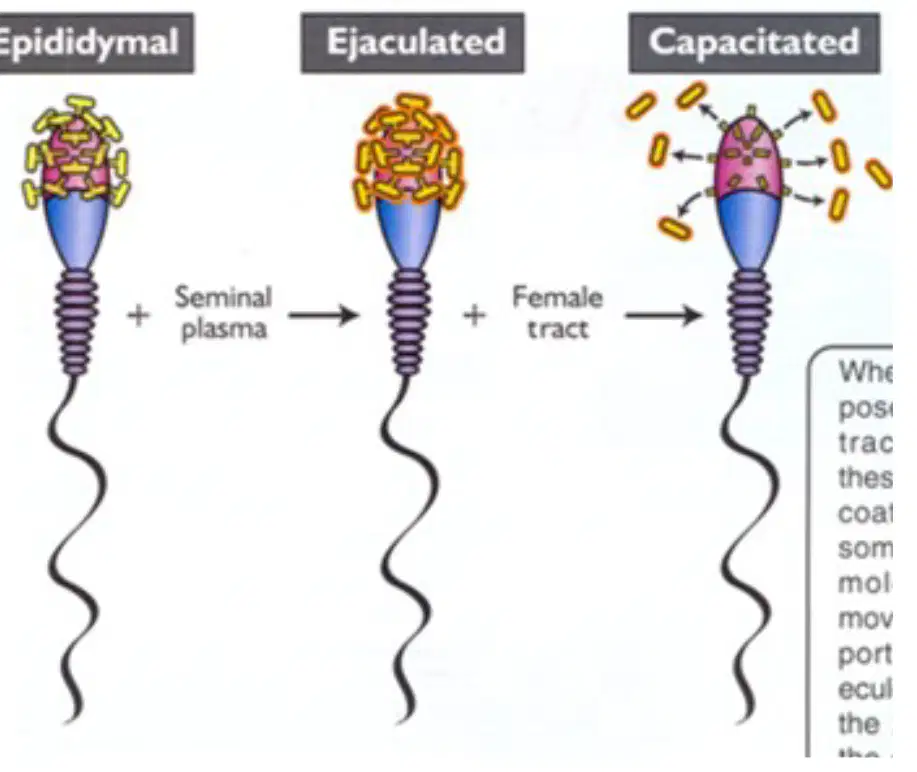
Refer to the diagram showing the stages of sperm (Epididymal, Ejaculated, Capacitated). Which stage occurs after the sperm passes through the female tract?
Epididymal
Ejaculated
Capacitated
Fill in the blank: Thinning the membrane of the sperm head during capacitation allows the sperm to ______ more easily with the egg.
bind
separate
compete
detach
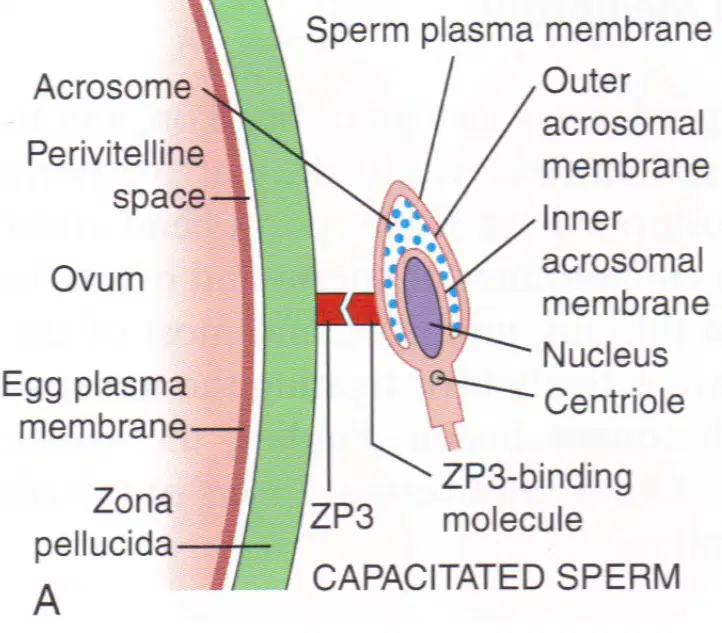
What is the name of the structure labeled as the outermost layer surrounding the ovum?
Zona pellucida
Egg plasma membrane
Perivitelline space
Acrosome
Fill in the blank: Sperm binding occurs when one sperm has made its way through the corona radiata cells and binds with specific proteins present on the zona pellucida called ______ molecules.
ZP3
LH
FSH
HCG
According to the passage, what attracts the sperm and egg to each other when they are near?
Electrical signals
Chemicals released by the corona radiata cells
Movement of the ovum
Temperature changes
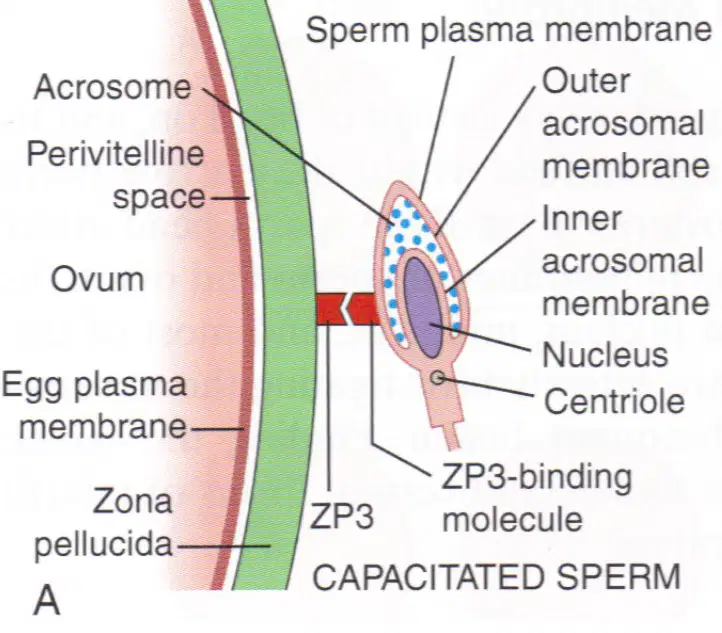
In the diagram, which part of the sperm is responsible for binding to the ZP3 molecules on the zona pellucida?
Acrosome
Midpiece
Tail
Nucleus
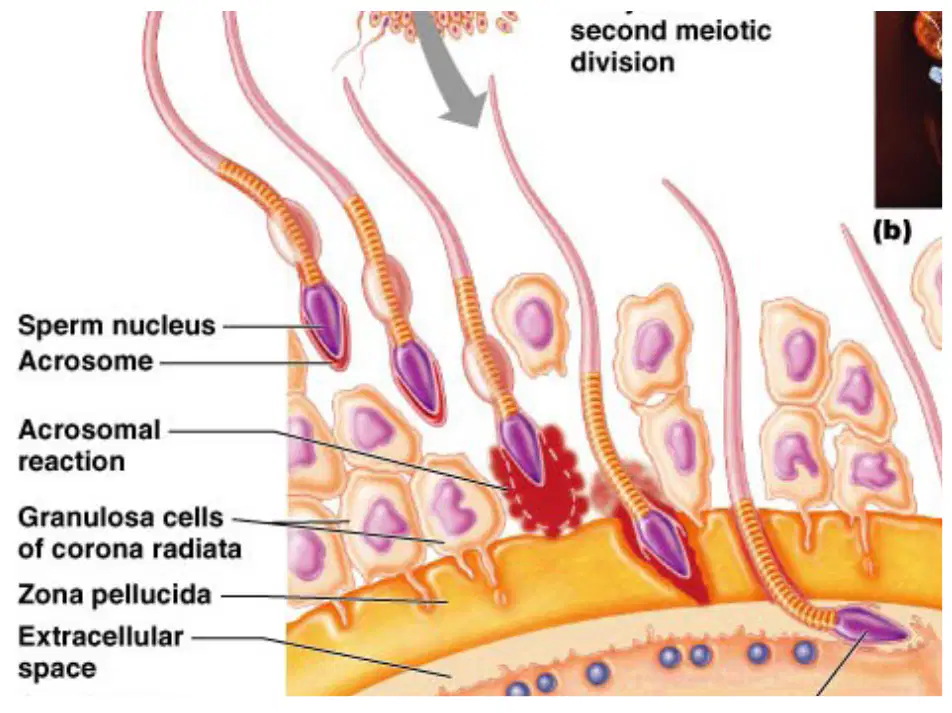
Binding of the sperm to the egg causes the ________ reaction to occur.
acrosomal
cortical
gastrulation
zona
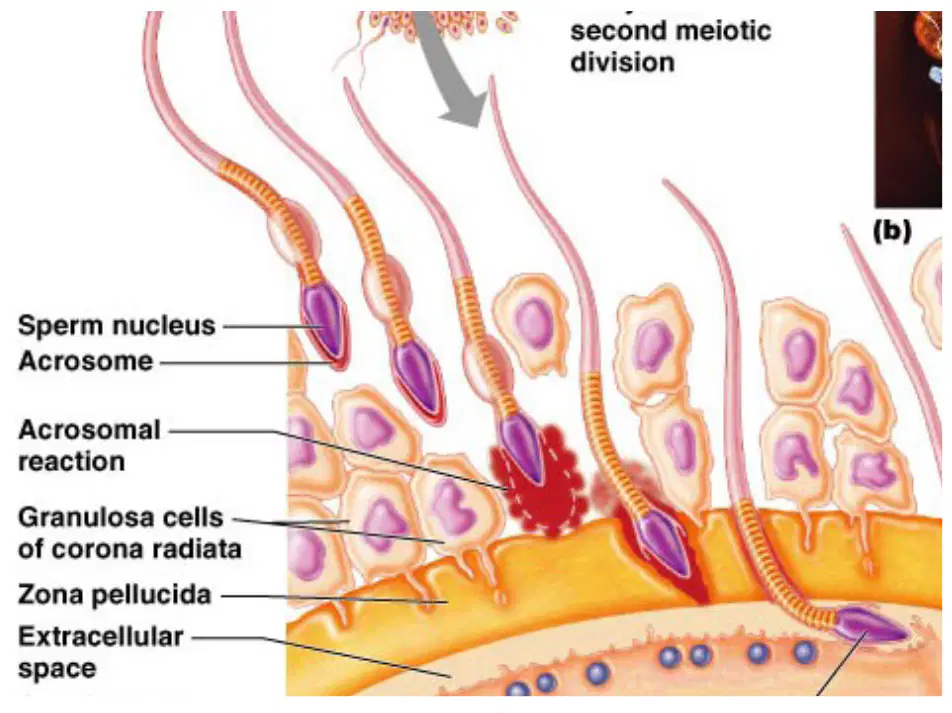
What is the function of the enzymes contained in the acrosome of the sperm?
To fertilize the egg directly
To break down the protective zona pellucida
To provide energy for the sperm
To form the sperm nucleus

What happens when the membranes of the sperm and oocyte fuse during fertilization?
The sperm is destroyed
The sperm transfers its nucleus into the egg
The oocyte is expelled
The egg divides immediately
The fusion of sperm and oocyte membranes triggers the oocyte to complete ________ and induces the next step, the cortical reaction.
Meiosis II
Meiosis I
Mitosis
Fertilization
The occurrence of membrane fusion between sperm and oocyte is what we refer to as fertilization.
True
False
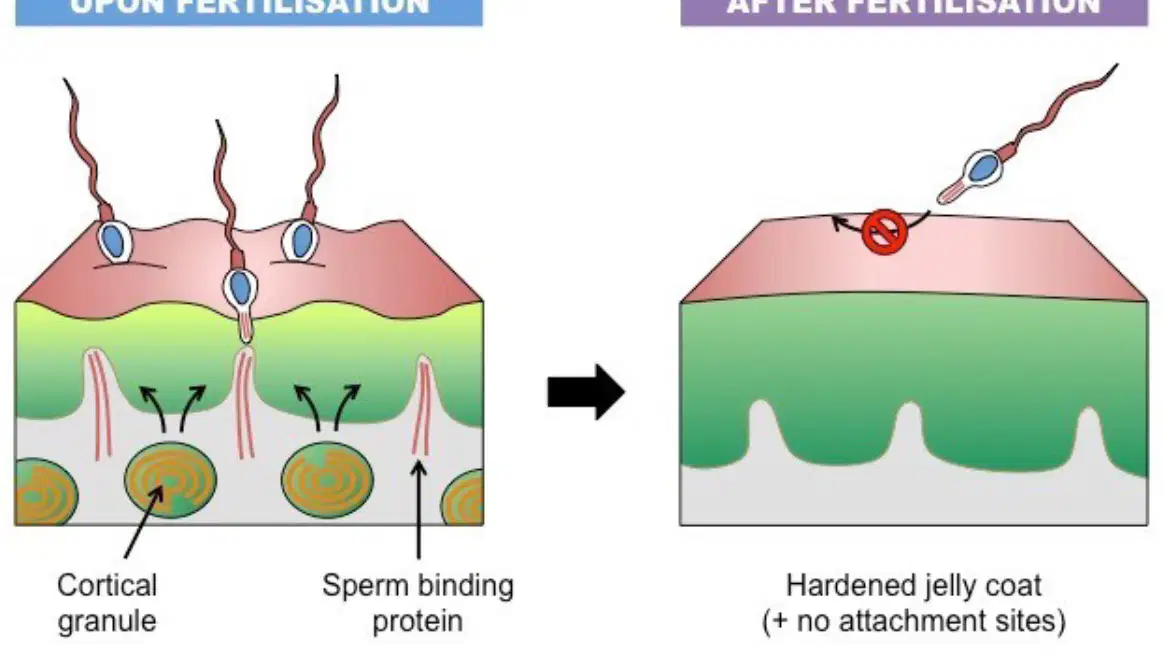
What is the main function of the cortical reaction during fertilization?
To allow multiple sperm to fertilize the egg
To prevent further sperm from binding to the egg
To break down the sperm
To harden the sperm
Fill in the blank: Upon the fusion of membranes, cortical enzymes are released from the ovum, which break down the _______ and inhibit any further sperm from binding on the cell's membrane.
zona pellucida
mitochondria
nucleus
cytoplasm
The cortical reaction prevents polyspermy, which is the fertilization of an egg by multiple sperm.
True
False
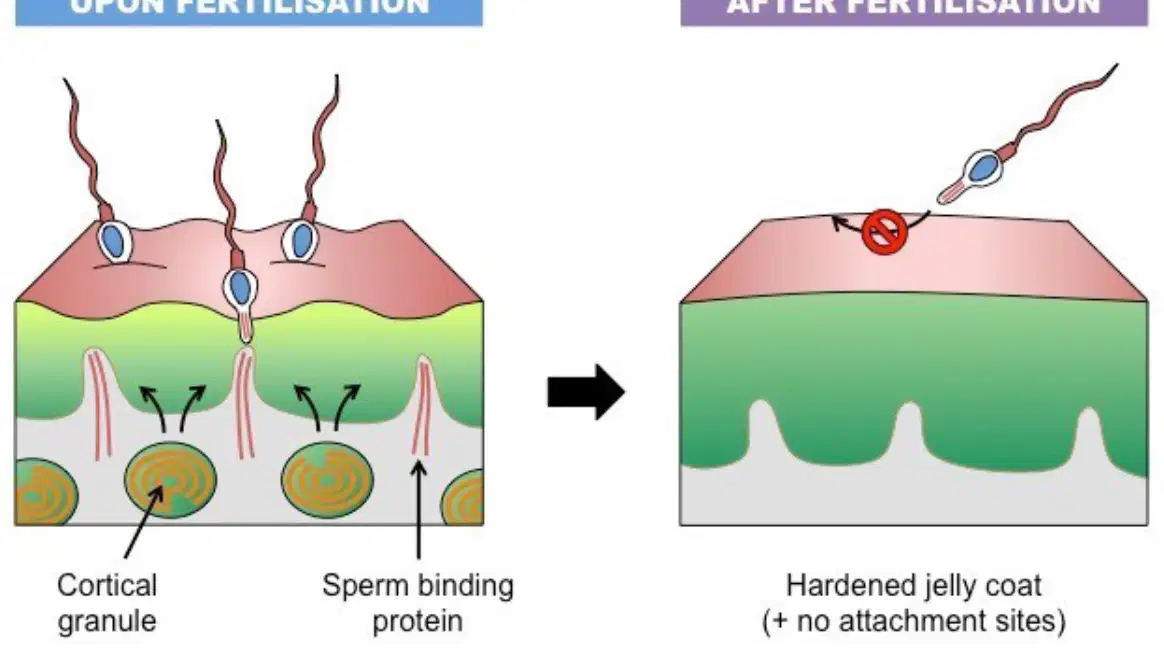
What happens to the jelly coat after fertilization according to the diagram?
It becomes softer
It hardens and loses attachment sites
It attracts more sperm
It dissolves completely
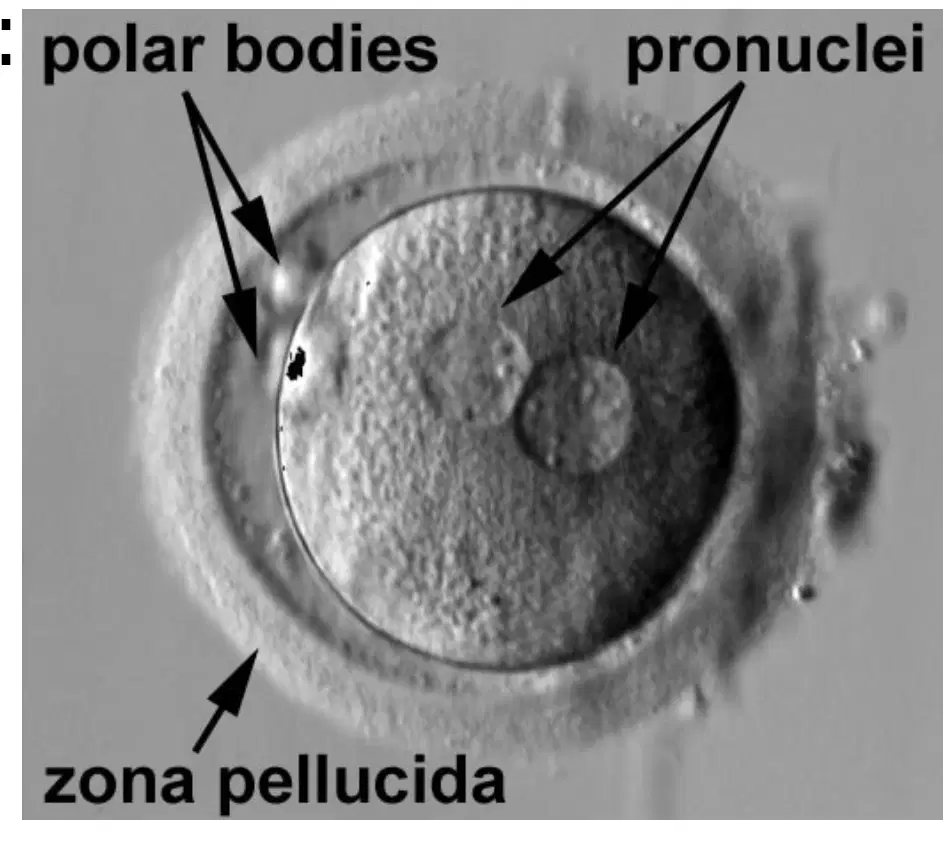
What structure is labeled as 'pronuclei'?
The pronuclei are the two enlarged nuclei formed from the sperm and oocyte, visible in the center of the cell.
The pronuclei are the outer membrane of the cell.
The pronuclei are the small vesicles near the cell membrane.
The pronuclei are the mitochondria clustered at one pole of the cell.
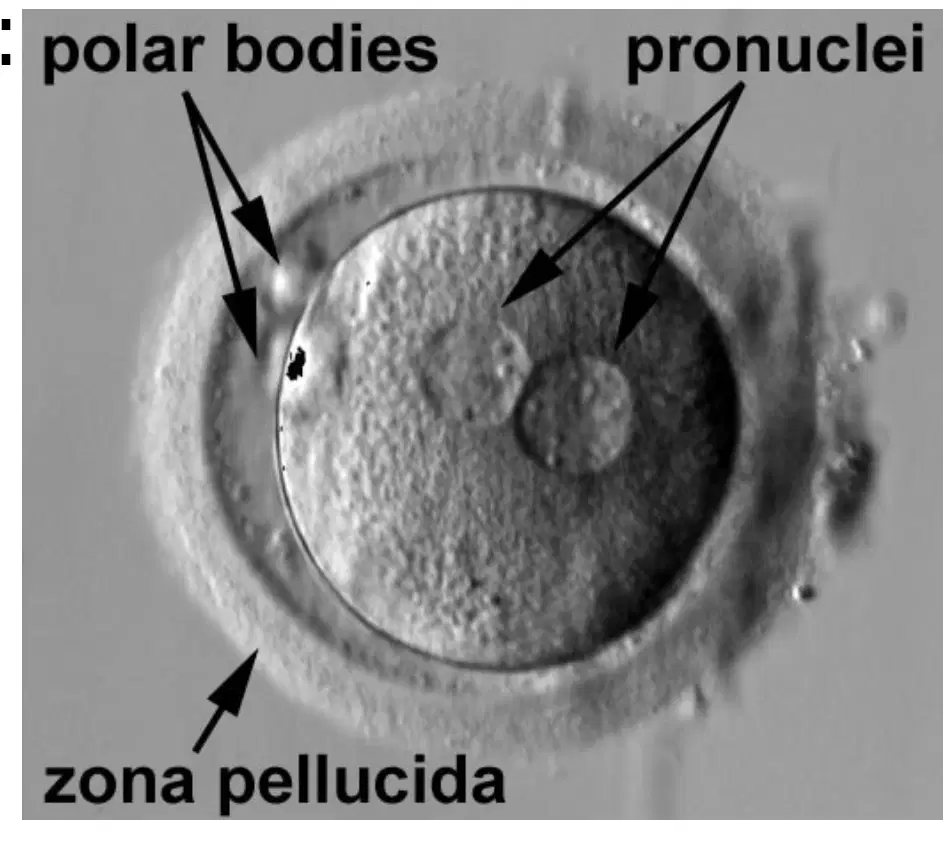
What is the function of the zona pellucida?
The zona pellucida is a protective glycoprotein layer surrounding the oocyte.
It is a hormone produced by the pituitary gland.
It is the outer membrane of the sperm cell.
It is a structure that forms the placenta.
The sperm releases its nucleus into the ________.
oocyte
zona pellucida
follicle
oviduct
Both nuclei enlarge, forming ________, and are drawn together.
polar bodies
pronuclei
zona pellucida
chromosomes
The true moment of fertilisation is when the two sets of ________ combine to produce a diploid zygote.
pronuclei
chromosomes
polar bodies
zona pellucida
Fertilisation is important in reproduction because:
It combines genetic material from two parents to form a new organism.
It helps in digestion of food.
It provides energy for movement.
It removes waste from the body.
Which of the following lists the key steps that occur for successful fertilisation?
Fusion of sperm and egg, formation of zygote, implantation
Ovulation, menstruation, fertilisation
Meiosis, mitosis, differentiation
Fertilisation, cleavage, gastrulation
The ‘fertile window’ refers to the days in a menstrual cycle when pregnancy is most likely to occur. How long does the fertile window typically last?
About 1 day
About 3 days
About 6 days
About 10 days
Sperm face which of the following challenges during their journey to the egg?
Navigating the female reproductive tract
Surviving the acidic environment of the vagina
Competing with other sperm
All of the above
What might happen if the cortical reaction did not occur properly?
Polyspermy could occur
Fertilization would be prevented
The egg would not mature
The sperm would not reach the egg
Abnormalities in sperm motility could affect fertilisation success by:
Increasing the chances of fertilisation
Decreasing the chances of fertilisation
Having no effect on fertilisation
Ensuring all sperm reach the egg
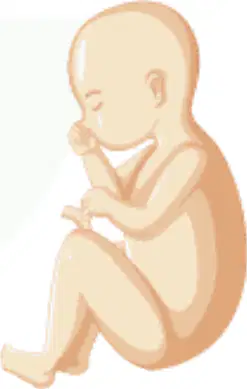
At how many weeks does the foetus appear most similar to a newborn baby in the diagram?
40 weeks
8 weeks
20 weeks
28 weeks
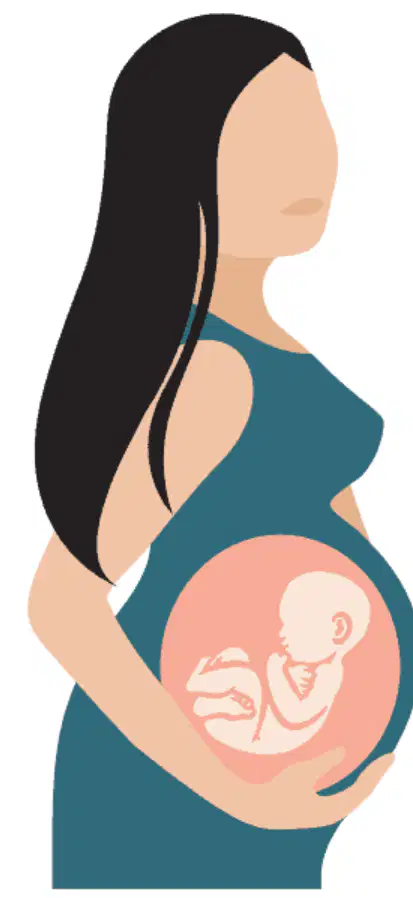
Pregnancy occurs when a woman is ________.
growing a new life
losing weight rapidly
recovering from illness
learning a new skill
traveling abroad
How long does a pregnancy last approximately?
40 weeks
30 weeks
20 weeks
50 weeks
Pregnancy is divided into how many trimesters?
3
2
4
5
Which of the following is the correct duration for the first trimester?
1 to 10 weeks
Conception to 12 weeks
13 to 27 weeks
28 to 40 weeks
The third trimester of pregnancy lasts from _______ to _______ weeks.
28 to 40
20 to 32
24 to 36
30 to 42

In the Foetal Development Timeline, which organ begins development first?
the heart
the lungs
Embryonic Development
This series of mitotic cell divisions from ___ --> embryo is called ___
(a)
gastrula -
a. ___ - inner layer
b. ___ - outer layer
c. ___ - middle layer
(a)
In differentiation, the
endoderm becomes ___, pancreas, lining of ___
mesoderm becomes ___, skeleton, ___ system
ectoderm becomes ___, ___ system, hair, nails
(a)
flow chart of development: ___ + ___ (fertilization) --> ___ (cleavage/mitosis) --> ___ (cleavage/mitosis) --> ___ (differentiation/gastrulation) --> ___ (differentiation) --> ___, ___, ___ --> ___ --> (growth)
(a)
Stems cells - ___ cells that have the ___ to become ___ cells
(a)
Adult stem cells
some adult ___ contain stem cells:
these cells give ___ to "like cells"
Embryonic stem cells
growth from in-vitro ___ eggs
taken from the 4-6 day old ___
toti/pluripotent - can become any type of cell. They can truly ___
(a)
About how many weeks is a woman considered to be full term when pregnant?
10
40
9
30
After fertilization, the zygote will divide to form _________ that implants itself in the uterus.
a baby
a fetus
an embryo
a blastocyst
In which organ does fertilization take place?
Ovary
Uterus
Fallopian Tube
Vagina
What happens at the placenta?
The mother's and baby's blood mix together
There is an exchange of nutrients, oxygen, and waste between the mother's and baby's blood across a membrane
It protects the baby
It determines the sex of the baby

What would happen if this was to occur in the woman?
She would not be able to produce any eggs
It would prevent the sperm from fertilizing the egg
The baby would start developing in the fallopian tube
She would have twins
The birth canal is also called the
uterus
fallopian tubes
ovaries
vagina
What is the main hormone that helps to maintain a pregnancy?
Progesterone
Estrogen
FSH
HCG
What is it called when the cervix opens up?
Efface
Dialate
Labor
Contraction
What is delivered after the baby and called the "after birth?"
Amnion
Umbilical cord
Placenta
Cervix
Select which methods are used by hormonal birth control methods to prevent pregnancy.
using a barrier to block sperm from getting past the cervix
preventing the eggs from leaving the ovaries
thickening the cervical mucus to prevent sperm from getting past the cervix
not having sex when ovulation occurs
thinning the lining of the uterus, discouraging a fertilized egg from implanting
Which contraceptives can also help to prevent the spread of sexually-transmitted diseases.
condom
abstinence
IUD
female (internal) condom
the pill
Which happen in the 1st trimester
baby gains 1/2 pound a week
all organ systems are formed
mother most likely to experience morning sickness
placenta forms
mother likely to feel an increase in energy
Which happen in the 2nd trimester?
baby's growth slows down
baby starts to practice breathing amniotic fluid
mother may lose her mucus plug
placenta forms
mother is likely to experience an increase in energy
Which happen in the 3rd trimester?
mother most likely to experience morning sickness
mother may lose her mucus plug
placenta forms
baby gains 1/2 pound per week
baby starts practicing breathing amniotic fluid
Which word or phrase refers to the uterus squeezing to push the baby out during labor?
dilation
effacement
water breaking
contractions
Which activities and substances should women avoid when pregnant?
sugar
alcohol
hot baths or hot tubs
exercise
nicotine

What does folic acid help protect against?
Iron deficiency anemia
Poor bone formation
Macrosomic fetus
Neural tube defects
In which stage of labor does the expulsion of the placenta occur?
Prenatal
Dilation
Expulsion
Placental
If a newborn has a heart rate of 110 beats per minute, their score on the Apgar scale would be which of the following?
0
1
2
3
What hormone is secreted into the bloodstream to begin the process of childbirth?
serotonin
dopamine
oxytocin
both A and C
How many centimeters (cm) is the cervix at full dilation?
10 cm
25 cm
5 cm
15 cm
At which stage of labor does the baby's head appear at the opening of the birth canal?
Delivery
Dilation
Afterbirth
Early Labor
What happens during the last stage of labor?
the mother births the placenta
the baby's head appears at the opening of the birth canal
the mother begins to push to deliver the baby
the cervix is fully dilated
How long does it take for the third stage of labor to take place?
up to one week
the second and third stage of labor take place at the same time
the next day
5 minutes up to 1 hour after the second stage
As the mother gets closer to delivering the baby, what happens to the contractions?
contractions get closer together in time
contractions get further apart in time
contractions weaken
contractions stop
Secretion of breast milk is affected primarily by
oxytocin
prolactin
norepinephrine
dopamine
Compared to colostrum,mature milk is
higher in sodium,potassium and chloride
lower in protein ,sodium and fat soluble vitamins
higher in fat and carotenoids
lower in fat and higher in sodium
The major determinant of breastmilk volume is
adequate diet
infant demand
high calcium intake
high fluid intake
What is true about breastfeeding?
It can reduce the risk of SIDS and breast cancer
It is cheaper than formula
It is easier for a partner to help with than formula
It can be painful and emotionally stressful for the mom

