Wayground logo

Free Printable Worksheets

Font size

S
M
L
XL
Worksheets

Biology Final Review

Total questions: 74

Worksheet time: 37mins

Name
Class
Date
1.

Where is DNA and RNA made in eukaryotes?

a)

nucleus

b)

cytoplasm

c)

mitochondria

d)

ER

2.

DNA contains the template to make RNA

a)

True

b)

False

3.

What are the components of a nucleotide?

a)

A phosphate, nitrogenous base, and an amino acid

b)

A nitrogenous base, a sugar, and an amino acid

c)

A phosphate, a sugar, and a nitrogenous base

d)

A nitrogenous base, sugar, and a helix
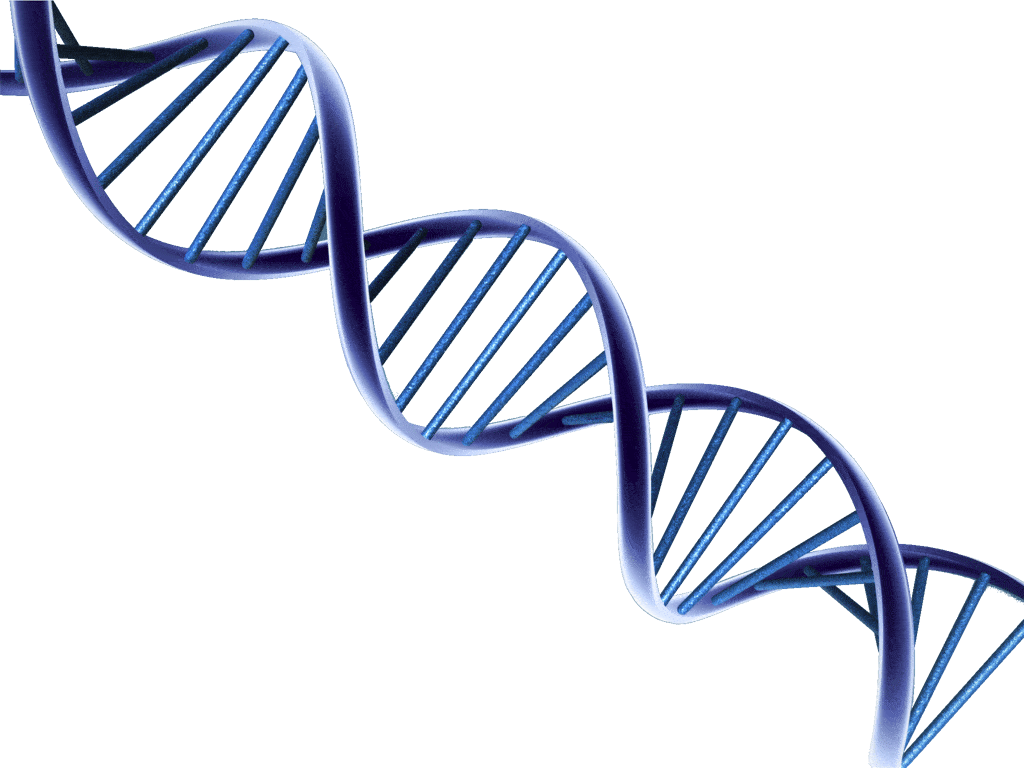
4.
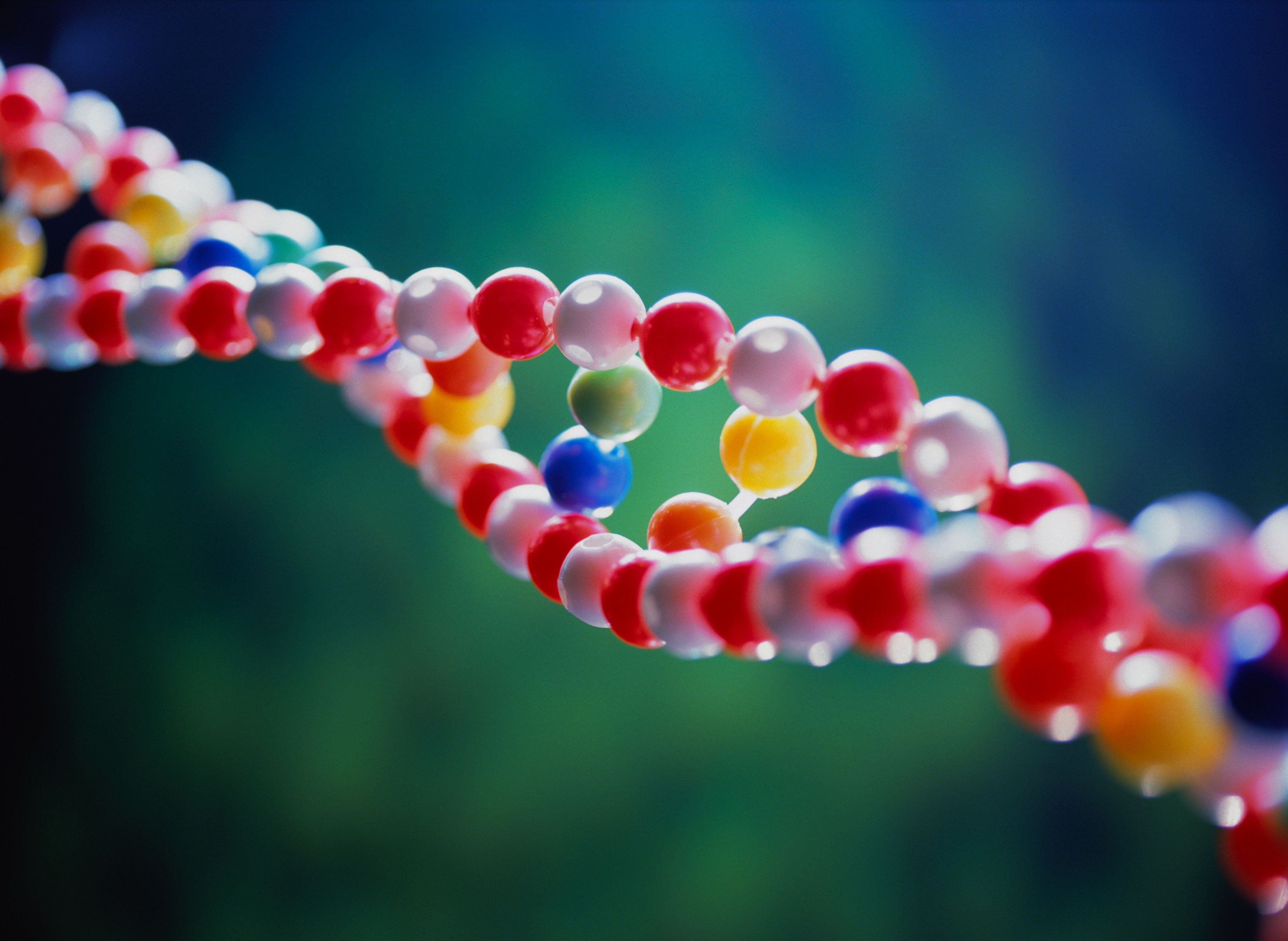
The drawing shows the structure of what molecule?
a)
A DNA molecule
b)
A lipid molecule
c)
A carbohydrate molecule
d)
A protein molecule
5.

Guanine always pairs with

a)

Urical

b)

Cytosine

c)

Adenine

d)

Thymine

6.
What does this picture represent?
a)
amino acid
b)
base pairing
c)
nucleotide
d)
the DNA molecule
7.

Which RNA carries a message?

a)

mRNA

b)

rRNA

c)

tRNA

8.
Which process is used to make mRNA from the DNA in the nucleus?
a)
transcription
b)
translation
c)
replication 
9.
Which RNA bases would pair with TACGAA in transcription? 
a)
AUGCUU
b)
ATGCTT
c)
GCATCC
d)
GCAUCC
10.

What enzyme does transcription use?

a)

DNA polymerase

b)

ligase

c)

RNA polymerase

d)

helicase

11.

What enzyme does replication use to build new DNA?

a)

DNA polymerase

b)

amylace

c)

RNA polymerase

d)

lysozyme

12.
Who is responsible for producing this image?
a)
Francis Crick
b)
James Watson
c)
Rosalind Franklin
d)
Watson and Crick
13.
Why is DNA important?
a)
it is very small and very complicated
b)
it's in everything
c)
it serves as the blueprint for traits of all living things
d)
because we eat it every day for energy
14.

How are you doing with the Covid-19 closures?

a)

I am doing really well.

b)

I am doing okay.

c)

I am struggling a bit.

d)

I am having a really hard time and would like you to check in with me.

15.

Does pineapple belong on pizza?

a)

No way, it is a disgrace.

b)

Yes, the best!

c)

I am neutral

16.

Which DNA bases would pair with TACGAA in replication?

a)

AUGCUU

b)

ATGCTT

c)

GCATCC

d)

GCAUCC

17.

Alleles are...

a)

Variation of a gene

b)

DNA sequence

c)

A coded, general trait

d)

enzymes that produce DNA

18.

What important structure in eukaryotic cells holds DNA and is the cite of replication and transcription?

a)

cytoplasm

b)

nucleus

c)

golgi

d)

ribosome

19.

What mutation has occurred here?

T-G-A-C-C-A

T-G-A-G-C-A

a)

Substitution

b)

Deletion

c)

Insertion

d)

Frameshift

20.

Which of the following would result in a frameshift mutation?

a)

Insertions only

b)

Substitution only

c)

Deletion only

d)

Insertions and Deletions

21.

DNA molecule segment is : TTACGCAAG

The mutated DNA segment is TTCGCAAG. This is an example of ___ mutation.

a)

Substitution

b)

Deletion

c)

Insertion

d)

Inversion

22.

A mutation is defined as:

a)

A change in the cell's structure

b)

Anything that changes in an embryo

c)

Any change in the physical features of a human

d)

A change in the DNA sequence

23.

ATTTGAGCC- Original

ATTGAGCC - Mutated

The example above is an example of a

a)

Insertion- Frameshift

b)

Deletion- Substitution

c)

Deletion -Frameshift

d)

All of the above

24.

What mutation has occurred here?

T-G-A-C-C-A

T-G-A-G-C-A

a)

Substitution

b)

Deletion

c)

Insertion

d)

Frameshift

25.

Why are insertion and deletion (frameshift) mutations so harmful?

a)

They change all of the codons from the mutation on down the line, which changes the amino acid sequence

b)

They insert things that an organism doesn't need.

c)

They often delete things that organisms need.

d)

Insertion and deletions are not any more harmful than substitution mutations.

26.

Identify the DELETION mutation form the following:

ATG CCA AAT

a)

ATG TCA AAT

b)

ATG CCT AAA T

c)

ATC CA AT

d)

ATG CCA AAT

27.

Which mutation will cause translation to stop?

a)

Mutations 1 and 3 only

b)

Mutation 1 only

c)

Mutation 2 only

d)

Muations 1, 2, 3

28.

Which type of mutation does the model demonstrate?

a)

Deletion

b)

Substitution

c)

Insertion

d)

Translocation

29.
Where the better adapted organisms survive to pass traits along to offspring.
a)
Evolution
b)
Natural Selection
c)
Extinction
d)
Artifical Selection
30.
Why are advantageous traits more likely to be passed onto offspring?
a)
Because they are more likely to survive and reproduce.
b)
Because they come from dominant alleles.
c)
Because they come from recessive alleles.
d)
Because the trait is an acquired phenotype.
31.
Natural selection is when ____________ decides who survives and who doesn't
a)
nature
b)
humans
c)
animals
d)
years
32.
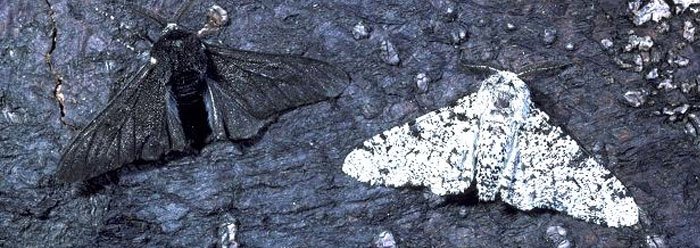
The trees these moths used to live on were white, but have been covered in soot from coal factories. Which moth will be more successful in this environment?
a)
Dark moth
b)
Light moth
c)
Both will be equally successful
d)
Neither will be successful
33.
Change over time
a)
Natural Selection
b)
Selective Breeding
c)
Homeostasis
d)
Evolution
34.
Which best describes mutations?
a)
Always helpful
b)
Always harmful
c)
Can be helpful or harmful
d)
Always neutral
35.
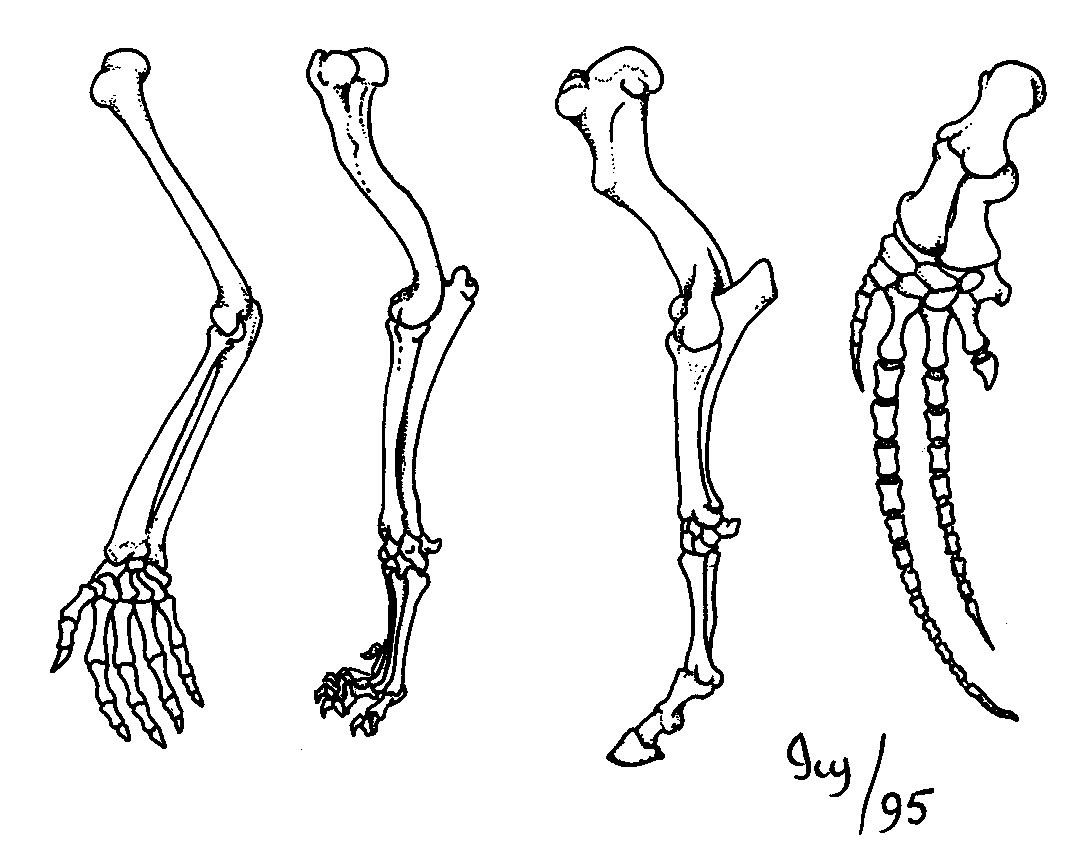
Structures with the same parts have different functions; suggests that organisms share a common ancestry
a)
vestigial structures
b)
homologous structures
c)
adaptive radiation
d)
fossil
36.
What does Darwin's theory of evolution suggest?
a)
species change over time
b)
extinct species are not related to living species
c)
different species can interbreed
d)
animals that look alike are most closely related
37.
Which of these best represents a time period in which an organism could evolve?
a)
5 days
b)
100 years
c)
10,000 years
d)
2 decades
38.
A theory has significant evidence to support it.  True or False
a)
True
b)
False
39.
The ability of an organism to survive and reproduce in its specific environment 
a)
diversity.
b)
evolution
c)
adaptation
d)
 fitness
40.
Where humans have bred organisms together based on traits we like.
a)
Evolution
b)
Natural Selection
c)
Extinction 
d)
Artificial Selection
41.
Genetic differences between organisms of the same species
a)
Variation
b)
Adaptation
c)
Behavior
d)
Environment
42.
The difference in the physical traits of an individual from those of other individuals in a group is called a(n)
a)
change
b)
adaption
c)
species
d)
variation
43.
The long and sharp beak of a woodpecker is an example of:
a)
Natural Selection
b)
Selective Breeding
44.
An error in DNA copying that results in a new trait
a)
Homeostasis
b)
Mutation
c)
Natural Selection
d)
Selective Breeding
45.
Autotrophs are organisms that can
a)
make their own food
b)
eat other organisms
c)
walk on 2 feet
d)
eat like pigs
46.
Humans are omnivores.  This means that
a)
humans can only eat plant based foods
b)
humans are at the top of the food chain
c)
humans are only capable of digesting other animal products
d)
humans eat both meat and plants
47.
As you move up the trophic levels of the ecological pyramid, what happens to energy?
a)
It decreases
b)
In increases
48.
If the producers contain 10,000 kcal of energy, how much is available to the secondary consumers?
a)
1000 kcal
b)
100 kcal
c)
10 kcal
d)
1 kcal
49.
What do the arrows show in the image?
a)
who is boss
b)
the direction of the sun
c)
transfer of energy
d)
who's eating who
50.
What would be a limiting factor for carnivores?
a)
dark daylight hours
b)
drought-like conditions
c)
small amounts of grasses and shrubs
d)
small number of prey
51.
Which level of the pyramid would have the highest concentration of toxins according to the idea of biomagnification?
a)
grass
b)
rabbit
c)

snake

d)
owl
52.
In a food web that contains bacteria, what is the usual function of this organism?
a)
nutrient production
b)
food source for primary consumers
c)
decomposition of organic material
d)
to make the organisms sick
53.
More than one type of species living together in an area is called a(n)
a)
ecosystem
b)
community
c)
population
d)
biosphere
54.
Elements essential to life like Carbon and Nitrogen must be
a)
created using combustion
b)
emitted as carbon monoxide
c)
burned as fossil fuels
d)
cycled throughout the earth
55.
Legumes such as soybean plants play an essential role in the Nitrogen cycle because they
a)
fix nitrogen on root nodules
b)
grow well in black soil
c)
are a nitrogen rich food source
d)
are yummy
56.
Which of the following is abiotic?
a)
a tree
b)
a dog
c)
water
d)
a flower
57.

The nitrogen cycle is important because

a)

plants need nitrogen to grow

b)

a majority of the air we breathe is nitrogen

c)

animals get nitrogen they need from eating plants

d)

all of the above is true

58.

Rhizobium is a bacteria that lives on the root nodules of legumes and is involved in

a)

decomposition

b)

nitrogen fixation

c)

cellular respiration

d)

photosynthesis

59.

Which organism in the diagram takes Nitrogen from the atmosphere and makes it usable to the plants?

a)

organism 1

b)

organism 2

c)

organism 3

d)

organism 4

60.

Carbon is stored deep in the lithosphere as

a)

biomass

b)

roots

c)

fossil fuels

d)

factory emissions

61.

Check all the ways that carbon is released in to the atmosphere.

a)

animal respiration

b)

emissions/combustion

c)

plant respiration

d)

decaying organisms

62.

Which of the following happened after the reintroduction of wolves to Yellowstone National Park?

a)

The wolves ate all the beavers.

b)

Migratory birds left the park.

c)

The deer and elk became overpopulated.

d)

The river banks stop eroding.

63.

Jackrabbits live in warm climates. Why have they adapted big ears?

a)

to release body heat

b)

to hear things

c)

to run faster

d)

to help catch prey

64.

Why are cacti well suited for a desert ecosystem?

a)

they grow in clusters

b)

their flowers attract a number of pollinators

c)

the spines on a cactus absorb sunlight

d)

they have a thick, waxy coating and can store water

65.

Another name for a top predator is a(n)

a)

producer

b)

apex predator

c)

secondary consumer

d)

herbivore

66.

What beneficial gas does algae put into ponds, lakes, and oceans?

a)

carbon dioxide

b)

oxygen

c)

nitrogen

d)

argon

67.

All viruses are different, but what are two parts that a virus must have?

a)

Genetic Information (DNA or RNA)

b)

a lipid membrane

c)

a nucleus

d)

a protein coat

68.

Which of these statements is true?

a)

A virus is unicellular, it has only one cell.

b)

A virus may sometimes be multicellular, have many cells.

c)

A virus has no cells

69.

Which statement is true?

a)

A virus has a nucleus, but no other organelles.

b)

A virus has a nucleus and ribosomes.

c)

A virus has no organelles, because it has no cells, and it is non-living.

70.

Cell membranes of living organisms are made of a bilayer (2 layers) of

a)

lipids

b)

proteins

c)

carbohydrates

71.

The little sticks poking out of the sides of these viruses are called

a)

sugar sticks

b)

spike proteins

c)

covid claws

72.

Which sentence is true about this picture.

a)

It shows a virus being made.

b)

It shows a virus entering the cell of a human or animal.

c)

It shows a virus being destroyed by soap.

73.

At the top left of this picture, you can see the spike protein of a virus fitting perfectly into a receptor site on our cells. Which sentence below is true?

a)

Humans have receptor sites for viruses on our cells because we want viruses to invade our cells.

b)

Humans have receptor sites for viruses on our cells because those receptor sites were made for a different purpose, but viruses evolved to be able to use them.

74.

Once a virus gets into a cell, it

a)

Releases its DNA or RNA into the cell.

b)

It begins to create DNA or RNA in the cell.

c)

It destroys its own DNA and RNA in the cell.