
Font size
 Worksheets
AP BIO TEST 2 REVIEW
Total questions: 83
Worksheet time: 42mins
Which chart correctly defines hypertonic, isotonic, and hypotonic in terms of solute concentration and describes what would happen to plant and animal cells in each solution?
A chart that shows hypertonic solutions have higher solute concentration, causing cells to shrink; isotonic solutions have equal solute concentration, causing no change; hypotonic solutions have lower solute concentration, causing cells to swell.
A chart that shows hypertonic solutions have lower solute concentration, causing cells to swell; isotonic solutions have higher solute concentration, causing cells to shrink; hypotonic solutions have equal solute concentration, causing no change.
A chart that shows all three solutions have the same solute concentration and cause no change in cells.
A chart that shows hypertonic solutions cause cells to burst, isotonic solutions cause cells to shrink, and hypotonic solutions cause cells to remain unchanged.
Circle one: a saltwater fish lives in a (hypertonic, isotonic, hypotonic) solution. To survive in this solution the saltwater fish must consume a lot of (salt, water) and must excrete a lot of excess (salt, water).
A saltwater fish lives in a hypertonic solution, must consume a lot of water, and must excrete a lot of excess salt.
A saltwater fish lives in a hypotonic solution, must consume a lot of salt, and must excrete a lot of excess water.
A saltwater fish lives in an isotonic solution, must consume a lot of water, and must excrete a lot of excess salt.
A saltwater fish lives in a hypertonic solution, must consume a lot of salt, and must excrete a lot of excess water.
If the concentration of NaCl inside a plant cell is 0.45M, which way will water diffuse if the cell is placed in a 0.25M NaCl solution?
Water will diffuse into the cell.
Water will diffuse out of the cell.
There will be no net movement of water.
Water will diffuse equally in both directions.
Calculate the solute potential of a 0.3M NaCl solution at 35°C. Find your answers in bars.
-14.7 bars
-7.3 bars
-12.2 bars
-9.8 bars
Review active and passive transport.
Active transport requires energy, while passive transport does not.
Both active and passive transport require energy.
Passive transport moves substances against the concentration gradient.
Active transport only occurs in plants.
Compartmentalization is important in cells because it allows specific functions to occur in isolated environments, such as lysosomes containing digestive enzymes that could damage other cell components if released. Which of the following best explains why compartmentalization is important in cells, using lysosomes as an example?
It prevents digestive enzymes in lysosomes from damaging other cell components.
It allows lysosomes to produce energy for the cell.
It helps lysosomes transport proteins out of the cell.
It enables lysosomes to store genetic information.
Both the mitochondria and chloroplast compartmentalize processes by separating different metabolic reactions into specific internal spaces. Which of the following best describes how this compartmentalization occurs?
Mitochondria have a double membrane with the matrix and intermembrane space, while chloroplasts have thylakoids and stroma for different reactions.
Both organelles use a single membrane to separate all processes.
Mitochondria and chloroplasts do not compartmentalize any processes.
Chloroplasts use the cytoplasm for all reactions, while mitochondria use only the matrix.
Compartmentalization affects surface area in which of the following ways?
It increases the surface area available for reactions.
It decreases the surface area available for reactions.
It has no effect on surface area.
It reduces the efficiency of cellular processes.
The mitochondria is highly folded because:
it increases the surface area for energy production
it helps store more genetic material
it allows the cell to divide faster
it protects the cell from toxins
Eukaryotic and prokaryotic cells differ in terms of compartmentalization in the following way:
Eukaryotic cells have membrane-bound organelles, while prokaryotic cells do not.
Both eukaryotic and prokaryotic cells have membrane-bound organelles.
Prokaryotic cells have more compartmentalization than eukaryotic cells.
Neither eukaryotic nor prokaryotic cells have compartmentalization.
The endosymbiotic theory explains how certain organelles in eukaryotic cells originated. Which statement best describes this theory?
It proposes that some organelles, like mitochondria and chloroplasts, originated from free-living prokaryotes that were engulfed by a host cell.
It states that all organelles in eukaryotic cells formed spontaneously from inorganic molecules.
It suggests that eukaryotic cells evolved directly from viruses.
It claims that organelles in eukaryotic cells are formed only through cell division.
Evidence that supports the endosymbiotic theory includes which of the following?
Mitochondria and chloroplasts have their own DNA
All cells have a cell wall
Mitochondria are found only in plants
Chloroplasts are found in animal cells
Mitochondria and chloroplasts can still be found as free-living prokaryotes (i.e. not in a symbiotic relationship with a eukaryote).
True
False
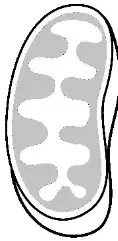
Site of ________________________________
cellular respiration
photosynthesis
protein synthesis
digestion
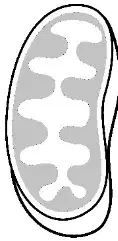
Structure of the double membrane: 1. Intermembrane: ________________________________
space between the inner and outer membranes
site of DNA replication
location of ribosome synthesis
area for protein folding
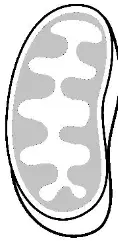
Location for the ________________________________
Krebs cycle
Glycolysis
Photosynthesis
Fermentation
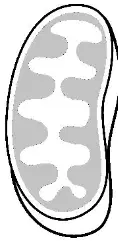
Structure of the double membrane: 2. Mitochondrial matrix: Contains: ________________________________
mitochondrial DNA, ribosomes, and enzymes
chlorophyll and thylakoids
cellulose and starch granules
lysosomes and peroxisomes
The number of mitochondria in a cell correlates with ________________________________
the cell's energy needs or metabolic activity
the cell's size only
the amount of water in the cell
the number of ribosomes present
Cells with _______________ metabolic activity have _______________ mitochondria
high; many
low; many
high; few
low; few
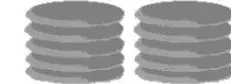
Chloroplast Specialized organelles in __________________________ organisms
photosynthetic
heterotrophic
parasitic
saprophytic
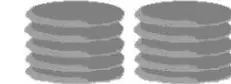
Membranous sacs that can organize into stacks called _______________
grana
thylakoids
stroma
lamellae
Select the organelles that are found in animal cells, but not in plant cells.
Centrioles
Chloroplasts
Cell wall
Large central vacuole
Select the organelles that are found in plant cells but not in animal cells.
Chloroplasts
Mitochondria
Ribosomes
Centrioles
Ribosomes help carry out instructions encoded in the DNA by:
translating mRNA into proteins
copying DNA into RNA
breaking down waste materials
transporting genetic material to the nucleus
If a cell has a high rate of protein synthesis, what organelle would you expect it to have a large number of?
Ribosomes
Mitochondria
Lysosomes
Golgi apparatus
The difference between rough and smooth ER is:
Rough ER has ribosomes on its surface, while smooth ER does not.
Smooth ER has ribosomes on its surface, while rough ER does not.
Both rough and smooth ER have ribosomes on their surfaces.
Neither rough nor smooth ER has ribosomes on their surfaces.
The main differences between prokaryotic and eukaryotic cells are:
Presence of a nucleus in eukaryotic cells and absence in prokaryotic cells
Both have a nucleus
Prokaryotic cells have membrane-bound organelles
Eukaryotic cells lack genetic material
The endomembrane system is best described as:
A group of organelles that work together to modify, package, and transport lipids and proteins.
A network of microtubules that provides structural support to the cell.
A collection of enzymes that break down waste materials in the cell.
A system of DNA molecules that control cell division.
Trace the path of a protein, from mRNA to modifications to final function.
mRNA → ribosome → endoplasmic reticulum → Golgi apparatus → final function
mRNA → nucleus → lysosome → final function
mRNA → mitochondria → cytoplasm → final function
mRNA → chloroplast → cell wall → final function
Which chart best compares the main functions of microtubules, microfilaments, and intermediate filaments?
A chart listing microtubules for cell shape and transport, microfilaments for movement and muscle contraction, and intermediate filaments for structural support.
A chart listing all three as responsible for photosynthesis.
A chart listing microtubules for DNA replication, microfilaments for protein synthesis, and intermediate filaments for energy production.
A chart listing all three as only involved in cell division.
Plants have a cell wall, therefore they do not have a plasma membrane. Is this true or false?
True
False
The function of the Golgi Complex is similar to a warehouse/mail facility because it:
sorts, packages, and ships materials within the cell
produces energy for the cell
controls cell division
stores genetic information
The statement asks whether you agree or disagree. What is the main purpose of this question?
To express your opinion and provide reasons
To memorize facts
To solve a math problem
To describe a diagram
The roles of both the mitochondria and the chloroplasts are:
Mitochondria produce energy through cellular respiration, while chloroplasts carry out photosynthesis.
Mitochondria store genetic information, while chloroplasts break down waste.
Mitochondria synthesize proteins, while chloroplasts transport nutrients.
Mitochondria control cell division, while chloroplasts regulate cell shape.
The main difference between the light dependent reactions and the Calvin cycle in the chloroplast is:
Light dependent reactions require light and produce ATP and NADPH, while the Calvin cycle uses these products to fix carbon dioxide into glucose.
Both processes occur in the stroma of the chloroplast and require sunlight directly.
The Calvin cycle produces oxygen, while light dependent reactions fix carbon dioxide.
Light dependent reactions occur in the mitochondria, while the Calvin cycle occurs in the chloroplast.
The Krebs cycle and the electron transport chain in mitochondria differ in their roles in cellular respiration.
The Krebs cycle produces NADH and FADH2, while the electron transport chain uses them to generate ATP.
Both the Krebs cycle and the electron transport chain directly produce large amounts of ATP.
The electron transport chain occurs in the mitochondrial matrix, while the Krebs cycle occurs in the inner mitochondrial membrane.
The Krebs cycle uses oxygen directly, while the electron transport chain does not require oxygen.
Identify the location where each process occurs:
c. Mitochondrial matrix
e. Mitochondria (inner membrane)
b. Stroma
d. Mitochondria (inner membrane)
a. Thylakoid membrane
Pigments, like chlorophyll, are important to plants because:
they absorb light energy for photosynthesis.
they help plants move.
they provide structural support to the plant.
they store genetic information.
The surface area-to-volume ratio should be ______ in order for cells to optimize the exchange of material through the plasma membrane.
high
low
equal to 1
very small
Problems that would occur if a single cell were to keep getting larger and larger over time include:
Difficulty in transporting materials efficiently within the cell.
Increased energy production within the cell.
Enhanced communication between different parts of the cell.
Improved ability to divide quickly.
The following lists will compare the surface area-to-volume ratio of three cells. Circle the ratio of the cell that will have the most efficient exchange across its cell membrane.
2.0; 0.9; 1.2
0.9; 0.6; 1.1
0.6; 0.7; 0.5
You have a set of data regarding the surface area-to-volume ratios of four cells. Circle the ratio belonging to the cell that would be best suited for storage.
4.5
7.2
3.1
5.5
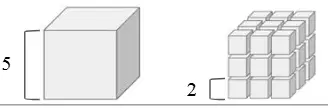
Calculate and compare the SA:V ratios of the cubes below. Which cube will have the best exchange of material through the plasma membrane?
The smallest cube
The largest cube
All cubes have the same exchange rate
The medium-sized cube
A small section of a plasma membrane is drawn. Which of the following parts should be labeled?
Phospholipid bilayer, proteins, cholesterol, carbohydrate chains
Nucleus, mitochondria, ribosomes, cytoplasm
Cell wall, vacuole, chloroplast, centriole
DNA, RNA, lysosome, spindle fibers
The plasma membrane is often referred to as a fluid mosaic model because:
it is composed of a flexible lipid bilayer with proteins embedded throughout
it is made entirely of rigid proteins
it is a solid, immobile structure
it contains only lipids and no proteins
The purpose of the plasma membrane is to:
control the movement of substances into and out of the cell
produce energy for the cell
store genetic information
synthesize proteins
The difference between unsaturated and saturated tails of the phospholipids is:
Unsaturated tails have one or more double bonds, while saturated tails have no double bonds.
Unsaturated tails have no double bonds, while saturated tails have one or more double bonds.
Both unsaturated and saturated tails have the same number of double bonds.
Saturated tails are always longer than unsaturated tails.
Kinks in the tails of phospholipids are caused by:
Double bonds in fatty acid chains
Presence of cholesterol
Saturated fatty acids
High temperature
The molecule that embeds itself within the membrane and affects fluidity is:
Cholesterol
Glucose
DNA
ATP
Integral and peripheral proteins can be differentiated based on their association with the cell membrane. Which statement correctly describes this difference?
Integral proteins are embedded within the lipid bilayer, while peripheral proteins are attached to the membrane surface.
Integral proteins are only found on the membrane surface, while peripheral proteins span the entire membrane.
Peripheral proteins are embedded within the lipid bilayer, while integral proteins are loosely attached to the surface.
Both integral and peripheral proteins are embedded within the lipid bilayer.
Human cells are able to maintain membrane fluidity in cold temperatures by:
increasing the proportion of unsaturated fatty acids in the membrane
decreasing the number of membrane proteins
increasing the length of fatty acid chains in the membrane
removing cholesterol from the membrane
An integral protein embedded within the plasma membrane has which of the following characteristics?
It has hydrophobic regions within the membrane and hydrophilic regions exposed to the aqueous environment.
It is entirely hydrophilic and does not interact with the membrane's hydrophobic core.
It is only found on the surface of the membrane and does not span the bilayer.
It is composed solely of hydrophobic amino acids and is not exposed to water.
The plasma membrane is selectively permeable, which means:
It allows some substances to pass through while blocking others.
It allows all substances to pass through freely.
It blocks all substances from entering or leaving the cell.
It only allows water to pass through.
The plasma membrane is selectively permeable due to which of the following qualities?
Its lipid bilayer and embedded proteins control the movement of substances
It is completely impermeable to all substances
It allows all substances to pass freely
It is made only of rigid cellulose fibers
Nonpolar molecules are hydrophobic or hydrophilic, and this means they can easily pass across the plasma membrane.
Hydrophobic; they can easily pass across the plasma membrane.
Hydrophilic; they can easily pass across the plasma membrane.
Hydrophobic; they cannot pass across the plasma membrane.
Hydrophilic; they cannot pass across the plasma membrane.
Polar molecules are hydrophilic or hydrophobic, and this affects their passage across the plasma membrane in what way?
Polar molecules are hydrophilic and have difficulty passing through the plasma membrane.
Polar molecules are hydrophobic and easily pass through the plasma membrane.
Polar molecules are hydrophilic and easily pass through the plasma membrane.
Polar molecules are hydrophobic and have difficulty passing through the plasma membrane.
Identify the following as (a) polar or (b) nonpolar: a. Carbon dioxide b. Ions c. Oxygen d. Water e. Glucose
a. Nonpolar b. Polar c. Nonpolar d. Polar e. Polar
a. Polar b. Nonpolar c. Polar d. Nonpolar e. Nonpolar
a. Polar b. Polar c. Nonpolar d. Nonpolar e. Polar
a. Nonpolar b. Nonpolar c. Polar d. Polar e. Nonpolar
If plant cells have a cell wall, then they cannot exchange material through their plasma membrane. True or False. Why?
True
False
Cell walls are composed of:
Cellulose
Glycogen
Chitin
Keratin
Cells that have a cell wall and the purpose of a cell wall are:
Plant cells have a cell wall, which provides structure and protection.
Animal cells have a cell wall, which helps in movement.
Bacterial cells have a cell wall, which stores energy.
Fungal cells have a cell wall, which aids in photosynthesis.
The main differences between passive and active transport are:
Passive transport does not require energy, while active transport does.
Both passive and active transport require energy.
Active transport moves substances from high to low concentration, while passive transport moves from low to high.
Passive transport only occurs in plants, while active transport only occurs in animals.
Imagine a room is a cell and someone brings in freshly popped popcorn (gas molecules). The smell slowly drifts through the room. This is an example of:
diffusion
osmosis
active transport
facilitated diffusion
Fill in the blanks: In passive transport, molecules move from _____ to _____ concentration.
high; low
low; high
equal; equal
low; equal
Molecules are able to go through diffusion because:
they are in constant random motion
they are attracted to each other strongly
they are too large to stay in one place
they require energy to move
Animal cells have a high internal concentration of potassium in comparison to their external environments because:
the sodium-potassium pump actively transports potassium into the cell.
potassium passively diffuses into the cell through open channels.
osmosis causes potassium to accumulate inside the cell.
potassium is produced inside the cell by metabolic reactions.
The molecule necessary for active transport is:
ATP
Glucose
Oxygen
Carbon dioxide
Facilitated diffusion is a type of:
Active transport
Passive transport
Endocytosis
Osmosis
The two types of transport proteins are:
Channel proteins and carrier proteins
Enzymes and receptors
Hormones and antibodies
Lipids and carbohydrates
Two ways water can pass through the cell membrane are:
osmosis and through aquaporins
active transport and endocytosis
diffusion and exocytosis
facilitated diffusion and phagocytosis
Facilitated diffusion affects the rate of diffusion in which of the following ways?
It increases the rate of diffusion.
It decreases the rate of diffusion.
It stops diffusion completely.
It has no effect on the rate of diffusion.
Predict the effect on a cell if there was a mutation that changed the amino acid sequence of the proteins that make up aquaporins.
The cell may have impaired water transport across its membrane.
The cell will produce more energy.
The cell will divide more rapidly.
The cell will become resistant to viruses.
A chemical gradient can be a source of energy for the cell (think about membrane potential) because:
it allows the cell to harness potential energy stored in the gradient to perform work, such as ATP synthesis.
it increases the temperature of the cell, providing thermal energy.
it directly supplies the cell with glucose for metabolism.
it causes the cell membrane to become rigid, aiding in structural support.
Contrast “concentration gradient” to “chemical gradient.”
A concentration gradient refers to the difference in the amount of a substance across a space, while a chemical gradient includes both concentration and charge differences.
A concentration gradient and a chemical gradient are exactly the same.
A chemical gradient only refers to gases, while a concentration gradient refers to liquids.
A concentration gradient is about temperature, while a chemical gradient is about pressure.
Osmosis is:
the movement of water molecules through a semipermeable membrane from a region of lower solute concentration to a region of higher solute concentration
the movement of solute molecules from a region of higher concentration to a region of lower concentration
the process of water boiling at 100°C
the process of solid turning directly into gas
Tonicity refers to:
the relative concentration of solutes in a solution compared to another solution
the speed at which molecules move in a solution
the temperature of a solution
the color of a solution
A hypertonic solution is:
a solution with a higher concentration of solutes than the cell
a solution with a lower concentration of solutes than the cell
a solution with the same concentration of solutes as the cell
a solution with no solutes present
An isotonic solution is:
a solution with the same solute concentration as another solution
a solution with a higher solute concentration than another solution
a solution with a lower solute concentration than another solution
a solution that contains no solutes
A hypotonic solution is:
a solution with a lower solute concentration than the cell
a solution with a higher solute concentration than the cell
a solution with the same solute concentration as the cell
a solution that causes water to leave the cell
Osmoregulation is:
the process by which organisms maintain the balance of water and salts in their bodies
the breakdown of food to release energy
the process of cell division
the movement of oxygen in the blood
Plasmolysis is:
the shrinkage of the cell membrane away from the cell wall due to loss of water
the bursting of a cell due to excess water intake
the process of cell division
the movement of water from a region of low concentration to high concentration
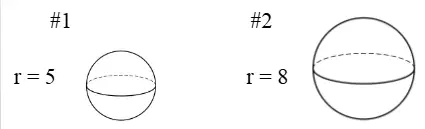
Which would have the best exchange of material through the plasma membrane?
A small, thin cell
A large, thick cell
A cell with a rigid wall
A cell with few membrane proteins
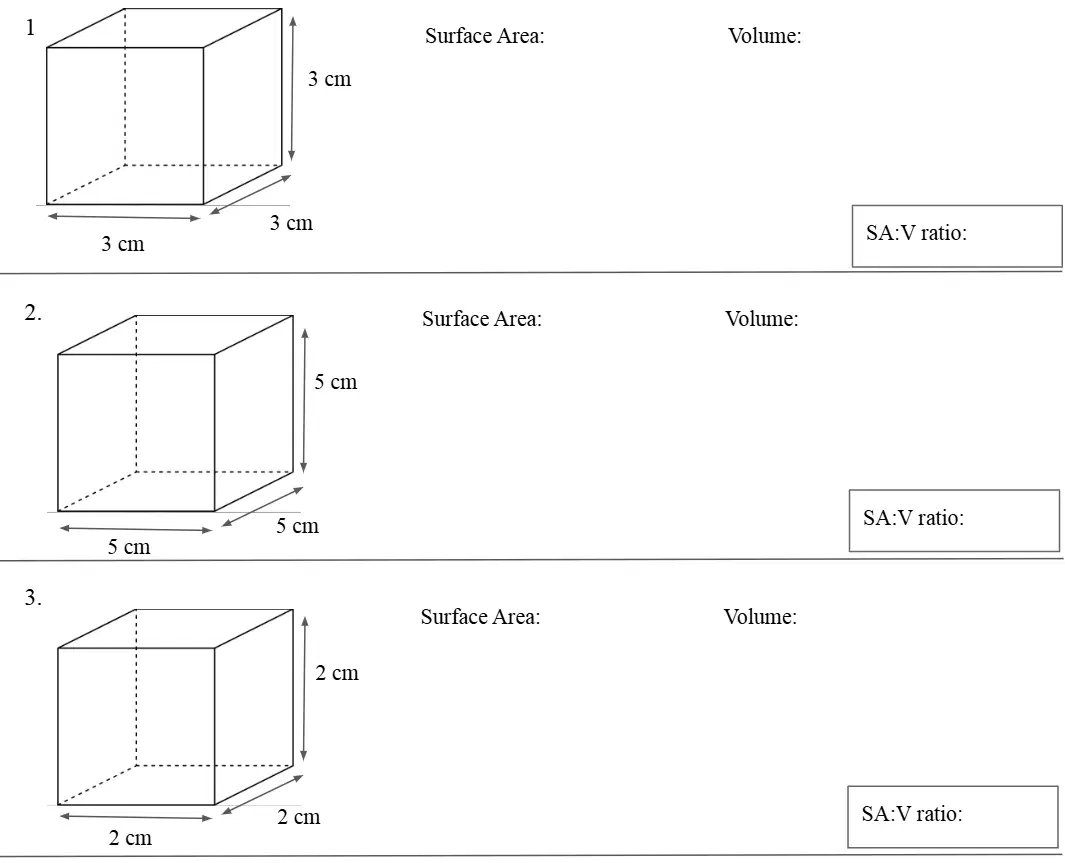
For the cuboidal cell with dimensions 3 cm x 3 cm x 3 cm:
Surface Area: 54 cm², Volume: 27 cm³, SA:V ratio: 2:1
Surface Area: 36 cm², Volume: 27 cm³, SA:V ratio: 1.33:1
Surface Area: 27 cm², Volume: 9 cm³, SA:V ratio: 3:1
Surface Area: 81 cm², Volume: 27 cm³, SA:V ratio: 3:1
The cuboidal cell with the highest surface area to volume ratio would have the most efficient transport of materials across the membrane. Which of the following best explains why?
It allows for more membrane area for exchange relative to its volume.
It has a thicker membrane for protection.
It stores more nutrients inside the cell.
It divides more rapidly than other cells.

