
 Worksheets
B - Organisms & Cells - HS-LS-1-2 - Oct. 23, 2025 - set 1
Total questions: 117
Worksheet time: 6hrs 51mins
Select the THREE characteristics of life.
have offspring that are genetically different from parents
need and use energy
able to move around
have DNA (genetic code)
are made of one or more cells
Select the THREE characteristics of all organisms.
eat plants and animals
adapt over time
breathe in oxygen
respond to stimuli
grow and develop
Select the THREE characteristics of life.
have two parents
homeostasis
breathe in oxygen
reproduce
grow and develop
Identify the heterotroph
Identify the autotroph.
Identify the prokaryote.
Identify the eukaryote.
Identify the prokaryote cells.
Identify the eukaryote cells.
Identify the process of asexual reproduction.
Identify the process of sexual reproduction.
Match each gif with the appropriate type of reproduction

Asexual Reproduction (making clones)

Sexual Reproduction
(Two Parents)

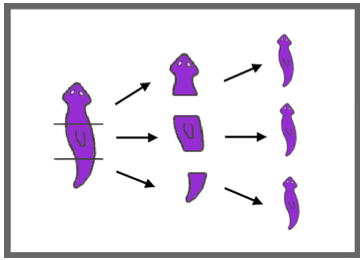
Asexual Fragmentation
(Growing from a chunk)

What type of cell is this? **Select the TWO answers that apply.
prokaryote
eukaryote
amoeba
plant cell

eukaryote

prokaryote

compound microscope
Which has a nucleus?
prokaryote
eukaryote
all cells
Which best represents change through life cycle?
Example: When a caterpillar changes into a butterfly, it has undergone _____.
development
growth
In sexual reproduction, how much DNA is given by each parent?
10%
30%
100%
50%

Hydra uses budding to make a copy of itself.
Autotrophs obtain their energy from _____.
Match the following
Sexual Reproduction
meiosis
Asexual Reproduction
mitosis
Heterotroph
eats other organisms for energy
Autotroph
makes energy from sunlight
Growth
increase in amount of cells
Match the following
cell growth function
repair worn out cells and get bigger
development function
change from one cell to different kind
prokaryote
no nucleus
eukaryote
has a nucleus
Do all cells have DNA?
yes
Match the following
Do all cells have a cell membrane?
yes
Do all cells have a cell wall?
no
Makes 2 identical cells
mitosis
Make 4 different cells
meiosis
stable conditions
homeostasis
Select the THREE
Non-living things.
bacteria
virus
water
carbon dioxide
amoeba
Something that was not alive, was never alive, and will never be alive is called ____.
biotic
dead
living
non-living

Is a shoe multicellular or unicellular?
Multicellular
Unicellular
Neither.
It doesn't have cells.

Is an ant multicellular or unicellular?
Multicellular
Unicellular
Neither.
It doesn't have cells.
Match the following
Do all cells contain ribosomes?
yes
Do all cells have a cell wall?
no
Bird beaks changes over time to eat different things.
adaptation
Plants use photosynthesis.
energy use
A plant grows toward light.
respond to stimulus
Match the following
What do ribosomes look like?
dots
Do viruses have a nucleus?
no
Do all cells have DNA?
yes
Spiders can lay 1000 eggs!
reproduction process
Bamboo plants can increase in height by 10 cm per day!
growth
Which leads to genetic diversity?
mitosis
meiosis
have offspring that are genetically different from parents
characteristic of life
not a characteristic of life
able to move
characteristic of life
not a characteristic of life
adaptations evolve over time
characteristic of life
not a characteristic of life
maintains homeostasis
characteristic of life
not a characteristic of life
responds to stimuli
characteristic of life
not a characteristic of life
exhales carbon dioxide
characteristic of life
not a characteristic of life
grows and develops
characteristic of life
not a characteristic of life
reproduces
characteristic of life
not a characteristic of life
Do all cells have a cell wall?
yes
no
Do all cells have ribosomes?
yes
no
Do all cells have DNA?
yes
no
Do all cells have a cell membrane?
yes
no
Which results in offspring that are identical to the parent?
sexual reproduction
asexual reproduction
Which has occurred when the offspring is DIFFERENT from parents?
sexual reproduction
asexual reproduction
In asexual reproduction:
only 1 parent is required
2 parents are required
no parents are required
passes on genetic information
asexual reproduction only
sexual reproduction only
both types of reproduction
When a frog’s leg becomes more massive, it is apparent that __ occurred when mass was added to the organism.
growth
development
Which has a nucleus?
prokaryote
eukaryote
all cells

What type of cell is this? **Select the TWO answers that apply.
prokaryote
eukaryote
animal cell
plant cell

What type of cell is this? **Select the TWO answers that apply.
plant cell
animal cell
prokaryote
eukaryote

What type of cell is this? **Select the TWO answers that apply.
plant cell
animal cell
bacteria
prokaryote
What type of cell is this? **Select the TWO answers that apply.
plant cell
animal cell
bacteria
prokaryote

Usually requires a microscope to be seen
Unicellular Organism
Multicellular Organism
Categorize characteristics
Uses energy
Reproduces
exhales carbon dioxide
walks & moves
Maintains homeostasis
are autotrophs
Categorize characteristics
Uses energy
Made of one or more cells
exhales breathes in oxygen
walks & moves
adapts and evolves
eats other organisms
Categorize characteristics
has DNA
Made of one or more cells
DNA is in a nucleus
walks & moves
responds to stimuli
eats other organisms
Categorize characteristics
has DNA
Made of one or more cells
DNA is in a nucleus
walks & moves
responds to stimuli
eats other organisms
Genes are small sections of _____.
DNA of chromosomes
mitochondria of cell
tissue of organ
atom of compound
Which level of organization is the smallest and simplest?
Cell
Tissue
Organ
Organ System
Organisms
Reorder from smallest to largest
Atom
carbohydrate
cell wall
eukaryote cell
Reorder from smallest to largest
Atom
protein & DNA
nucleus
eukaryote cell
Reorder from smallest to largest
Atom
lipid
cell membrane
eukaryote cell

The smallest unit that makes up the known elements.
Molecule
Organelle
Cell
Atom

The smallest unit
of a compound consisting of two or more atoms
bonded together.
Organelle
Cell
Molecule
Atom

Structures in a cell that have specialized jobs.
Similar concept to organs for the human body.
Tissue
Molecule
Atom
Organelles
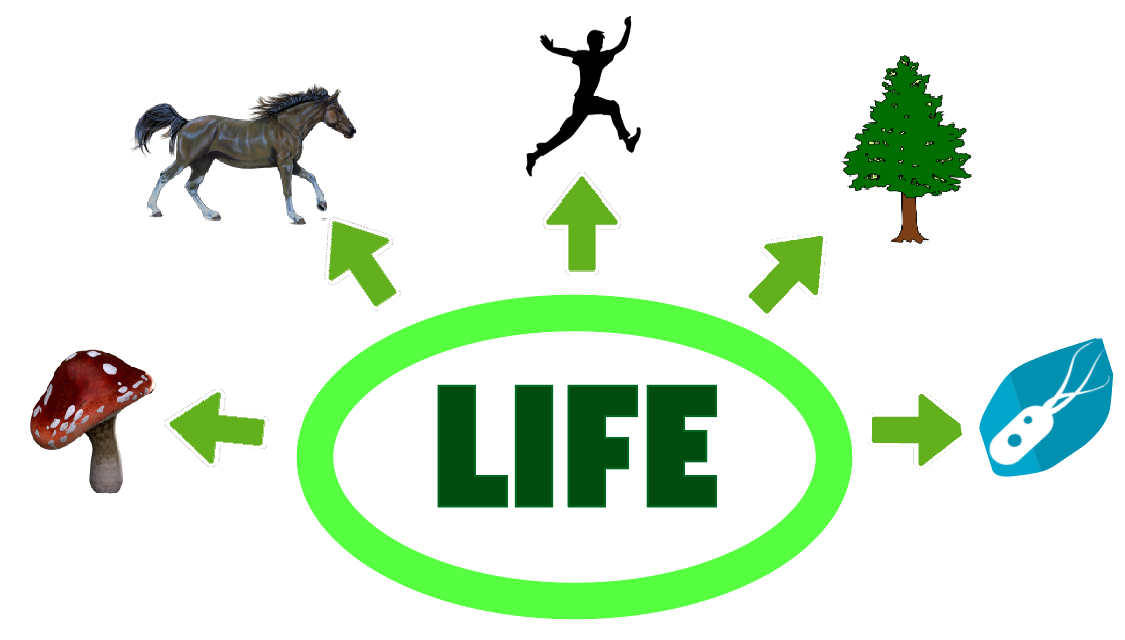
Any single living individual, and can refer to a single human, animal, plant,
Protista, bacteria, or fungi.
Community
Cell
Population
Organism
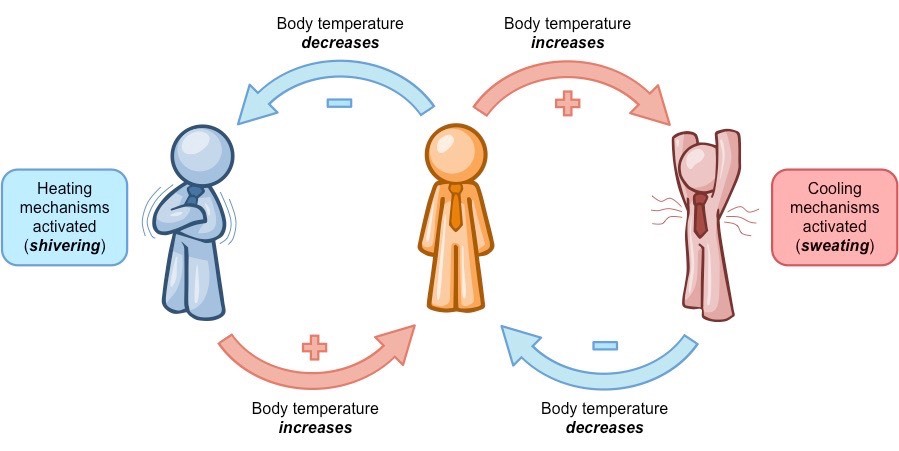
In this body temperature feedback loop, what happens when cooling mechanisms are activated?
shivering
sweating
Body temperatures increase
Body dies
Homeostasis is maintained by feedback (negative or positive) mechanisms in an organism.
Feedback mechanisms (both negative and positive) _____.
can stabilize or destabilize an organism
always help an organism
harm an organism
If anything happens within or to an organism that affects its normal state, processes to restore the normal state begin. If homeostasis is not restored, ________________.
dehydration will occur
the organism will likely survive
body temperature will rise
death might occur
process by which organisms respond to stimuli in ways that keep conditions in their body suitable for life
homeostasis
metabolism
evolution
adaptation
A pupil in bright light will appear small. The light is an example of a _____.
stimulus
response
A pupil in bright light will appear small. The size of the pupil is an example of a _____.
growth
stimulus
response
development
levels of organization: smallest to largest
cell, tissue, organ
tissue, organ, cell
cell, organ, tissue
What is the double helix structure that all cells contain?
RNA
DNA
chloroplast
nucleus
What is the sum of all the chemical reactions in an organism?
metabolism
meterology
mycology
mitral
Using the law of conservation of mass, the mass of reactants equals the ________.
mass of products
reactants
size of atoms
number of cells
Chemical reactions are represented with __________.
equations
BALANCED equations
Do chemical reactions occur in organisms?
yes
no
sometimes
Mitosis makes two identical cells. Which type of reproduction most relates to mitosis?
asexual reproduction
sexual reproduction
Which occurs when a zygote is formed?
asexual reproduction
sexual reproduction
Which occurs when an egg is fertilized by sperm?
asexual reproduction
sexual reproduction
Which produces offspring that are genetically identical to the parent?
asexual reproduction
sexual reproduction
Make a sketch of DNA.
Identify a gene on the DNA.


Genes are small sections of _____.
DNA of chromosomes
mitochondria of cell
tissue of organ
atom of compound
What is anything that has or once had all the characteristics of life?
commensalism
metabolism
organism
ecosystem
What is the basic unit of all organisms?
tissues
cell
organs
populations
What is the process by which organisms maintain a relatively stable internal environment?
homeostasis
homeomorph
heterogeneous
homo sapian
What is the double helix structure that all cells contain?
RNA
DNA
chloroplast
nucleus
Which is most related to survival of the fittest and is a mechanism for evolution?
metabolism
growth
natural selection
asexual reproduction
Which produces 2 identical cells?
meiosis
mitosis
Which does not lead to genetic diversity?
mitosis
meiosis
What are the two most important chemical reactions in biology?
photosynthesis and cellular respiration
combustion and synthesis
photosynthesis and dehydration
Do all cells have chloroplasts, a membrane-bound organelle?
yes
no

Pictured here is Rhinovirus (rhin means "nose"), a virus that causes the common cold. Rhinoviruses may also cause some sore throats, ear infections, and infection of the sinuses (openings in the bone near the nose and eyes). Found inside a rhinovirus is RNA, but not DNA.
Does rhinovirus have DNA?
yes
no
Pictured here is Rhinovirus (rhin means "nose"), a virus that causes the common cold. Rhinoviruses may also cause some sore throats, ear infections, and infection of the sinuses (openings in the bone near the nose and eyes). Found inside a rhinovirus is RNA, but not DNA.
Identify, What type of cell is a rhinovirus?
prokaryote
eukaryotes
neither, viruses are not living

Methanogens are a group of organisms that produce methane, which causes flatulence in humans and other animals. Methanogens are unicellular and do not have membrane-bound organelles. Do methanogens have DNA?
yes
no
Methanogens are a group of organisms that produce methane, which causes flatulence in humans and other animals. Methanogens are unicellular and do not have membrane-bound organelles. Is a methanogen made of a cell?
yes
no
Methanogens are a group of organisms that produce methane, which causes flatulence in humans and other animals. Methanogens are unicellular and do not have membrane-bound organelles. Distinguish -- What type of cell is a methanogen?
prokaryote
eukaryote

chloroplast
mitochondria

chloroplast
mitochondria
Sexual vs. Asexual Reproduction
two parents
one parent
Offspring are identical to parents
Offspring are genetically unique
Bacteria
Humans & most animals
can have advantages and disadvantages
traits are determined by DNA
Sexual vs. Asexual Reproduction
takes more time
take less time
2 parents
1 parent
meiosis
mitosis
genetic diversity
clones

The picture depicts which process?
Meiosis
Mitosis
The picture depicts which process?
Sexual Reproduction
Asexual Reproduction
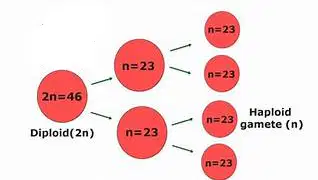
The picture depicts which process?
meiosis
mitosis
The picture depicts which process?
Sexual Reproduction
Asexual Reproduction
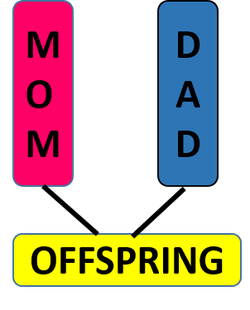
Requires two parents
sexual
asexual
Requires only one parent
sexual
asexual


California blackworms, also known as mudworms, are able to break apart. Each body section that broke apart is able to become an identical new worm. What type of reproduction does this example represent?
Sexual reproduction
Asexual reproduction

Penguins lay 1-2 fertilized eggs that the male and female take turns incubating on their feet. What type of reproduction does this example represent?
Sexual reproduction
Asexual reproduction

