
 Worksheets
Removal Exam in CAD and Learning Principles
Total questions: 90
Worksheet time: 30mins
Hands-on activities
what is an example of Vygotsky's theory?
a child knows that if they cry or scream there parent will give them a treat to clam down
a child will copy and do whatever his or her friends are doing
a child knows that somethings are private and shouldn't be shared or talked about because it culturally normal.
a child does not know when they did something wrong so he or she will be disciplined for no reason
what was his theory?
children develop their behavior and habits from treats/ prizes
children develop their behaviors and habits from their cultures and through interpersonal experiences
children develop their behaviors and habits from punishment's/ discipline
children develop their behavior and habits from friendships
What role does social interaction play in Vygotsky's theory of cognitive development?
It hinders individual learning.
It only affects language development.
It is a key factor in knowledge construction.
It is irrelevant to cognitive development.
Which of the following best describes the concept of 'scaffolding' in Vygotsky's educational approach?
Providing support that is gradually removed as students become more competent.
Allowing students to learn entirely on their own without guidance.
Using standardized tests to measure student progress.
Focusing solely on rote memorization of facts.
In Vygotsky's view, how does culture influence cognitive development?
Culture has no impact on cognitive processes.
Culture only influences social behavior, not cognitive skills.
Cognitive development is purely biological and unaffected by culture.
Cultural tools and symbols shape the way individuals think and learn.
What is the primary role of social interaction in Vygotsky's theory of cognitive development?
It has no significant impact on learning.
It is essential for language acquisition.
It only benefits children with special needs.
It is a distraction from individual learning.
In Vygotsky's framework, what does the term 'More Knowledgeable Other' refer to?
A teacher who uses standardized tests.
A child who knows less than the learner.
An adult or peer who provides guidance and support.
A peer who has similar knowledge.
How does Vygotsky's theory suggest that children learn best?
Through solitary play and exploration.
By imitating adults without guidance.
By memorizing facts and figures.
Through collaborative activities and social interactions.
Fill in the blank: The fifth stage of Erikson’s theory is Identity vs. ______.
Role Confusion
Isolation
Inferiority
Stagnation
Fill in the blank: The sixth stage of Erikson’s theory is Intimacy vs. ______.
Isolation
Confusion
Despair
Guilt
Fill in the blank: The seventh stage of Erikson’s theory is Generativity vs. ______.
Stagnation
Isolation
Despair
Inferiority
Fill in the blank: The eighth stage of Erikson’s theory is Integrity vs. ______.
Despair
Shame
Isolation
Guilt
What does 'Autonomy' mean?
Self-government; freedom to act or function independently.
A type of government ruled by a king.
The process of learning a new language.
A system of trade between countries.
What does 'Psychosocial' refer to?
Having both psychological and social aspects.
Relating only to physical health.
A term for economic status.
A type of medication.
During which stage does 'Toilet Training' occur as an important event?
Early Childhood (2 to 3 years)
Adolescence (12 to 18 years)
Late Adulthood (65 years and above)
Middle Childhood (6 to 11 years)
What is the outcome of successfully resolving the conflict in the 'School Age' stage?
Confidence
Guilt
Isolation
Inferiority
Which conflict is associated with 'Adolescence' according to Erikson's stages?
Identity vs. Role Confusion
Trust vs. Mistrust
Intimacy vs. Isolation
Autonomy vs. Shame and Doubt
What is the important event in the 'Middle Adulthood' stage?
Work and Parenthood
Retirement and Leisure
Identity vs. Role Confusion
Initiative vs. Guilt
What is the outcome of the 'Maturity' stage in Erikson's theory?
Wisdom
Love
Hope
Competence
According to Erikson, what motivates behaviors and actions?
A sense of competence.
Fear of punishment.
Desire for wealth.
Need for approval.
If a stage in Erikson's theory is handled well, what will the person feel?
A sense of mastery (ego strength or ego quality).
Confusion and doubt.
A sense of isolation.
A feeling of inferiority.
Which stage is associated with infancy?
Autonomy vs. Shame and Doubt
Trust vs. Mistrust
Initiative vs. Guilt
Industry vs. Inferiority
According to Erik Erikson, the main developmental task during the Trust vs. Mistrust stage is:
Developing a sense of trust in caregivers
Learning to be independent
Establishing a sense of identity
Developing intimate relationships
Fill in the blank: If the care the infant receives is consistent, predictable and reliable, they will develop a sense of ______ which will carry with them to other relationships.
trust
independence
fear
doubt
If an infant's needs are not consistently met, mistrust, suspicion, and anxiety may develop.
True
False
According to Erik Erikson, what virtue is developed if an infant successfully passes through the first stage of psychosocial development?
Hope
Will
Competence
Fidelity
What is the main focus for children in the 'Autonomy vs. Shame and Doubt' stage of Erikson's psychosocial development?
Developing a sense of personal control over physical skills and a sense of independence.
Learning to trust caregivers and the environment.
Establishing intimate relationships with peers.
Developing a sense of industry and competence in schoolwork.
Success in the 'Autonomy vs. Shame and Doubt' stage will lead to the virtue of:
Hope
Will
Fear
Trust
Failing to acquire the virtue of hope in the first stage of Erikson's psychosocial development may result in anxiety, heightened insecurities, and an over feeling of mistrust in the world around them.
True
False
According to Erikson, what negative outcomes may occur if children are overly controlled or criticized during this stage?
They may become overly dependent upon others, lack self-esteem, and feel a sense of shame or doubt in their abilities.
They may develop advanced problem-solving skills and become highly independent.
They may become more creative and excel in social situations.
They may show increased leadership qualities and confidence in group settings.
According to the passage, what skills illustrate a child's growing sense of independence and autonomy during the stage described?
Putting on clothes and shoes
Playing with toys
Making choices about what to wear or eat
All of the above
What should parents do to encourage a sense of control in their children, according to Erikson?
Do everything for the child
Allow the child to explore abilities in a supportive environment
Criticize the child for failures
Avoid letting the child try new things
Fill in the blank: During the stage described, children begin to assert their independence by ________ away from their mother, picking which toy to play with, and making choices about what they like to wear or eat.
walking
singing
drawing
sleeping
According to the passage, what is the aim for parents when encouraging self-control in children?
The aim is to have self-control without a loss of self-esteem.
The aim is to make children obey without question.
The aim is to ensure children never make mistakes.
The aim is to eliminate all emotional responses in children.
Initiative versus guilt is the third stage of Erik Erikson's theory of psychosocial development.
True
False
According to Erikson, what do children develop if given the opportunity to initiate activities with others?
A) A sense of guilt
B) A sense of initiative and feel secure in their ability to lead others and make decisions
C) A sense of inferiority
D) A sense of embarrassment
What might happen if a child's tendency to initiate activities is criticized or controlled too much?
The child may develop a sense of guilt, be slow to interact with others, and may inhibit their creativity.
The child may become more independent and confident in their abilities.
The child may develop advanced problem-solving skills.
The child may show increased leadership qualities.
Erikson's fourth psychosocial crisis is called ________ vs. Inferiority.
Industry
Autonomy
Initiative
Identity
What is the virtue that results from a healthy balance between initiative and guilt, according to Erikson?
Courage
Creativity
Knowledge
Control
During which age range does Erikson's industry vs. inferiority stage occur?
Birth to five years
Five to twelve years
Twelve to eighteen years
Eighteen years and above
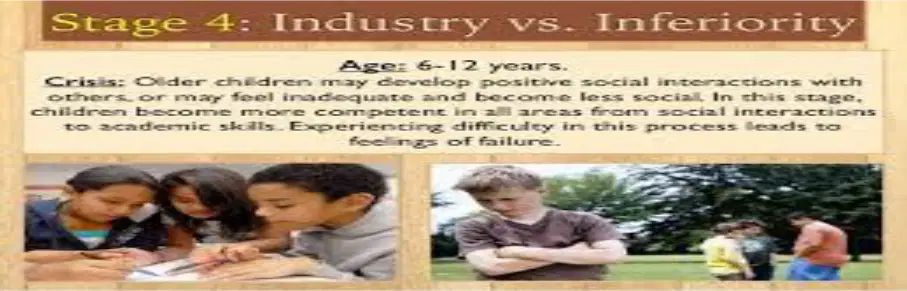
According to Erik Erikson's theory, at what age does the stage of Industry vs. Inferiority occur?
2-4 years
6-12 years
12-18 years
18-25 years
Fill in the blank: Success in the stage of Industry vs. Inferiority leads to the virtue of _________
competence
wisdom
autonomy
hope
If children are encouraged and reinforced for their initiative, they begin to feel industrious (competent) and confident in their ability to achieve goals.
True
False
The main crisis faced by adolescents during the stage of Identity vs. Role Confusion according to Erikson's theory is:
Establishing a sense of identity
Developing trust in others
Learning to be autonomous
Forming intimate relationships
During adolescence, individuals begin to look at the future in terms of which of the following?
Career
Relationships
Families
Housing
All of the above
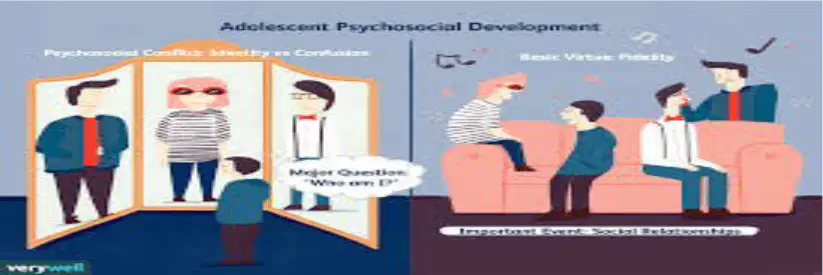
According to Erikson, what are the two identities involved in the adolescent psychosocial stage?
The sexual and the occupational.
The emotional and the intellectual.
The physical and the social.
The moral and the spiritual.
What is the virtue that results from successfully navigating the adolescent psychosocial stage, according to Erikson?
Fidelity
Wisdom
Hope
Competence
What does role confusion involve during adolescence?
The individual not being sure about themselves or their place in society.
The individual being certain about their future career.
The individual having a clear sense of identity.
The individual feeling completely accepted by peers.
Which of the following best describes 'fidelity' as discussed in the adolescent psychosocial stage?
The ability to commit one's self to others despite ideological differences
The ability to avoid making commitments
The ability to change one's identity frequently
The ability to reject all social roles
According to Erik Erikson's theory of psychosocial development, during which age range does the stage of Intimacy vs. Isolation occur?
12 to 18 years
18 to 40 years
40 to 65 years
65 years and above
What is the major conflict during the Intimacy vs. Isolation stage according to Erik Erikson's theory?
Forming intimate, loving relationships with other people
Developing a sense of identity
Creating or nurturing things that will outlast an individual
Achieving a sense of independence
Fill in the blank: Success in the Intimacy vs. Isolation stage will lead to the virtue of _____
love
wisdom
courage
hope
Avoiding intimacy and fearing commitment during the Intimacy vs. Isolation stage can lead to isolation, loneliness, and sometimes depression.
True
False
What does generativity refer to in Erik Erikson's theory of psychosocial development?
Forming intimate relationships
Making your mark on the world through creating or nurturing things that will outlast an individual
Achieving independence
Developing a sense of identity
During which age range does the Generativity vs. Stagnation stage occur according to Erik Erikson's theory?
A) 18 to 40 years
B) 40 to 65 years
C) 65 years and above
D) 12 to 18 years
Generativity during middle adulthood according to Erik Erikson's theory can be expressed by:
Contributing to the well-being of future generations
Focusing solely on personal achievements
Avoiding new responsibilities
Withdrawing from social involvement
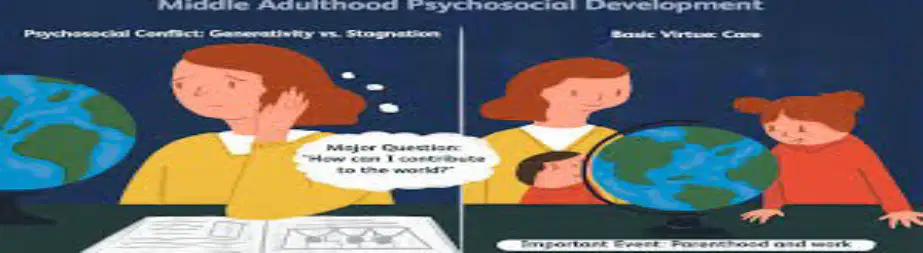
According to Erik Erikson, what is the major psychosocial conflict during middle adulthood?
Trust vs. Mistrust
Generativity vs. Stagnation
Identity vs. Role Confusion
Integrity vs. Despair
Fill in the blank: Success in the stage of middle adulthood leads to feelings of _______ and accomplishment, while failure results in shallow involvement in the world.
usefulness
regret
confusion
dependence

What virtue is developed when an individual successfully navigates the stage of Generativity vs. Stagnation according to Erikson?
Care
Wisdom
Integrity
Hope
At what age does Erikson's stage of Ego Integrity vs. Despair typically begin?
40 years
50 years
65 years
80 years
According to Erikson, ego integrity is described as "the acceptance of one's one and only life cycle as something that had to be" and later as "a sense of coherence and wholeness".
True
False

Explain what happens if an individual reflects on their life and regrets not achieving their goals during the stage of Ego Integrity vs. Despair.
They experience feelings of despair and dissatisfaction.
They feel a sense of accomplishment and peace.
They become motivated to set new goals for the future.
They ignore their past and focus only on the present.
According to Erikson, what virtue is achieved if a person successfully resolves the final stage of psychosocial development?
Wisdom
Hope
Competence
Fidelity
Erikson's theory provides a universal mechanism for crisis resolution in personality development.
True
False
What is the main purpose of Erikson's theory according to the passage?
To provide a factual analysis of development
To provide a framework for understanding development
To explain the causes of development
To describe the outcome of each psychosocial stage
Which is an example of the autonomy versus shame and doubt stage?
An infant chewing on a teething ring
A preschooler insisting on picking out her own clothes, no matter how mismatched they are
A middle-schooler completing a challenging math assignment
A teenager trying out new fashions and hairstyles
Urie Brofenbrenner is credited with developing the (a) theory?
Brofenbrenner's Ecological Systems Theory believes that a child's development is affected by everything that surrounds them
True
False
A child's family would be included in which of Urie Brofenbrenner's systems?
Macrosystem
Exosystem
Mesosystem
Microsystem
Who developed the Ecological Systems Theory?
Jean Piaget
Urie Brofenbrenner
When two microsystems interact, Brofenbrenner would term this the
Mesosystem
Exosystem
Macrosystem
Indosystem
Why is the Microsystem the most influential environmental level in a person's life?
Its the system where a person has the most direct contact with factors influencing development
Because it involves the persons cultural environment
Because it takes into account the time in which the person grew up in
Because it includes decisions that affected their life, even if they didn't make those decisions personally
How does this theory help educators? 2 Answers
It's another theory for them to learn
It helps them to understand the behaviour of their students
Helps them to understand the importance of fostering relationships with children and their families
By appreciating the way they interact and support families will affect the child's development
What is the term used to describe a broader circle of people who indirectly influences a child?
Microsystem
Exosystem
Indosystem
Minisystem
Who proposed the bio-ecological systems theory?
Hahn
Tudge
Elliott
Bronfenbrenner
What is the outermost system in the ecological model?
the macrosystem
The mesosystem
The exosystem
The chronosystem
Which level in the bio-ecological model is characterised by interactions between immediate environments?
The macrosystem
The exosystem
The mesosystem
The microsystem
In which bio-ecological system would a parent’s workplace be located?
The exosystem
The microsystem
The mesosystem
The chronosystem
Which type of parenting would be characterised as a high and nurturing involvement with the children, while placing very few restrictions on them?
Authoritarian parenting
Indulgent parenting
Authoritative parenting
Neglectful parenting
Which type of parenting would be characterised as encouraging independence, but providing clear boundaries and limits for behaviour
Authoritative parenting
Authoritarian parenting
Neglectful parenting
Indulgent parenting
in which system of Bronfenbrenner’s theory are links between the family and the school important?
The exosystem
The microsystem
The chronosystem
The mesosystem
What is the primary challenge faced during the 'Generativity vs. Stagnation' stage?
Achieving independence
Developing a personal identity
Establishing intimate relationships
Creating a sense of contribution to society
What is the key developmental task during the 'Trust vs. Mistrust' stage according to Erikson?
Forming intimate relationships
Establishing a sense of autonomy
Developing a sense of competence
Learning to trust caregivers and the environment

