
Font size
 Worksheets
Unit 7 Evolution
Total questions: 120
Worksheet time: 2hrs 5mins
What is evolution defined as in terms of genetics?
The change in the gene pool of a population over time
The change in the gene pool of an individual over time
The change in the physical traits of a population over time
The change in the environment of a population over time
What does a gene pool include?
All the alleles present in a population
Only the dominant alleles in a population
Only the recessive alleles in a population
The alleles present in one individual
What happens when the gene pool of a population changes?
The frequencies of alleles in the population change
The population size decreases
The population becomes extinct
The physical traits of individuals remain constant
Where does evolution occur?
In populations
In individuals
In ecosystems
In organ systems
What is a population defined as?
A group of the same species living in a given area
A group of different species living in a given area
A group of organisms that interbreed and produce sterile offspring
A group of organisms that do not interact with each other
Which of the following is NOT a mechanism of evolution?
Genetic recombination
Natural selection
Gene flow
Photosynthesis

Which of the following correctly represents the hierarchy of biological organization from smallest to largest?
Atoms → Molecules → Cells → Tissues → Organs → Organ Systems → Organisms → Populations
Molecules → Atoms → Cells → Organs → Tissues → Organ Systems → Organisms → Populations
Cells → Atoms → Molecules → Tissues → Organs → Organ Systems → Organisms → Populations
Organisms → Populations → Organ Systems → Organs → Tissues → Cells → Molecules → Atoms

What process during meiosis increases genetic variation in gametes and the gene pool?
Mutation
Crossing-over
Adaptation
Replication

What is the original source of all genetic variation?
Crossing-over
Adaptation
Mutation
Natural selection
Which type of mutation increases the chance of survival and reproduction?
Negative mutation
Neutral mutation
Positive mutation
Harmful mutation
What term is used to describe traits that help an organism survive and reproduce?
Mutations
Adaptations
Crossing-over
Gene pool
What happens to adaptations due to natural selection over time?
They disappear from the gene pool.
They appear less frequently in the gene pool.
They appear more frequently in the gene pool.
They remain unchanged in the gene pool.
What are the possible effects of mutations on survival and reproduction?
Only positive effects
Negative, positive, or neutral effects
Only neutral effects
Only negative effects
What is gene flow?
The movement of individuals and their alleles into and out of a population
The process of genetic mutation within a population
The random mating of individuals within a population
The isolation of populations due to geographic barriers
Which of the following is an example of gene flow?
Migration and interbreeding of animals
Genetic mutation in a population
Geographic isolation of species
Random genetic drift
How does gene flow affect allele frequencies in populations?
It leads to genetic mixing across regions
It decreases genetic variation in the gene pool
It causes genetic isolation between populations
It eliminates allele frequencies entirely

What is one result of gene flow in a population?
Increased genetic variation in the gene pool
Decreased genetic diversity within the population
Complete isolation of populations
Elimination of allele frequencies
What is genetic drift?
A change in allele frequency due to chance events or unexpected occurrences
A process where alleles are intentionally selected to increase genetic diversity
A mechanism that ensures all populations remain genetically identical
A phenomenon that increases genetic variation in a population
Which of the following is NOT true about genetic drift?
It occurs due to chance events
It reduces genetic variation in a population
It ensures the new population is representative of the original population
It can result in a smaller gene pool

What is the Bottleneck effect in genetic drift?
A random sample of alleles that accurately represents the original population
A rapid reduction in population size due to a random event, limiting genetic diversity
A process where a small group separates from the original population to form a new one
An increase in genetic variation due to environmental changes
What is the Founder effect in genetic drift?
A random sample of alleles that accurately represents the original population
A rapid reduction in population size due to a random event
A small group separates from the original population and establishes a new population with different allele frequencies
An increase in genetic variation due to environmental changes

How does genetic drift affect genetic variation in a population?
It increases genetic variation
It reduces genetic variation
It has no effect on genetic variation
It ensures genetic variation remains constant

What did Charles Darwin observe about the animals on the Galápagos Islands?
All animals on the islands were identical across different islands.
Each island had slightly different versions of animals, such as finches and tortoises.
The animals on the islands were completely unrelated to each other.
The animals on the islands were unable to adapt to their environment.
What conclusion did Darwin make about survival based on his observations?
Survival depended on an organism’s ability to adapt to its environment.
Survival was random and unrelated to traits or environment.
Survival depended on the size of the organism.
Survival was determined by the number of offspring produced.
What is the key mechanism behind Darwin’s theory of evolution?
Artificial selection.
Natural selection.
Random mutation.
Genetic engineering.
Which of the following is NOT a principle of natural selection?
Variations of traits occur within the same species and are inherited.
Organisms with traits best adapted to the environment survive and reproduce.
Competition occurs because more offspring are produced than resources available.
All organisms in a species survive equally regardless of their traits.
What role does competition play in natural selection?
It ensures all organisms survive equally.
It creates a struggle for existence due to limited resources.
It eliminates variations within a species.
It prevents reproduction in all organisms.

What happens to traits that are best adapted to the environment according to Darwin’s theory?
They are lost over time.
They are passed to the next generation through reproduction.
They are randomly distributed among all organisms.
They are replaced by less adapted traits.
What does natural selection result in over time?
Changes in individuals
Changes in populations
Evolution of individual organisms
Traits that do not change
Which statement is true about individual organisms in the context of natural selection?
Individual organisms evolve over time
Individual organisms are born with traits that change
Individual organisms do not evolve; their traits do not change
Individual organisms adapt their traits to survive
What is a key characteristic of natural selection as a process?
It eliminates variation within a population
It favors organisms with the least favorable traits
It increases allele frequency of favorable traits over time
It prevents reproduction in organisms
What happens to favorable traits in a population over time due to natural selection?
They disappear from the population
They are passed on to offspring
They remain constant in the population
They are replaced by unfavorable traits

Why do mice with black fur survive better in the given example?
Black-furred mice are more visible to predators
Black-furred mice are better suited to their environment
Black-furred mice reproduce less than white-furred mice
Black-furred mice have fewer favorable traits
What is the role of allele frequency in natural selection?
It decreases over time for favorable traits
It remains constant in the population
It increases for favorable traits in the population
It eliminates variation within the population
What is the significance of variation within a population in natural selection?
Variation prevents reproduction
Variation allows organisms with favorable traits to survive
Variation eliminates unfavorable traits immediately
Variation reduces allele frequency over time

Which of the following is an example of inherited variation in a population?
Mutations and genetic recombination creating differences in traits.
Overproduction of offspring leading to competition.
Limited environmental resources such as food and water.
Differential reproductive success of individuals.

What happens when a population produces more offspring than the environment can support?
All offspring survive and reproduce.
Competition among offspring increases.
Resources become unlimited.
Traits are passed equally to all offspring.

Which of the following is a result of limited environmental resources?
Increased reproduction of all individuals.
Competition among individuals for survival.
Unlimited access to resources.
Equal survival rates for all individuals.

What is the outcome of differential reproductive success in a population?
All individuals reproduce equally.
Traits are passed randomly to offspring.
Better-adapted individuals pass traits to offspring.
Environmental resources become unlimited.

Which of the following is a key element required for natural selection to occur?
Unlimited resources in the environment.
Equal survival rates for all individuals.
Inherited variation and competition.
Random reproduction of all individuals.

What is natural selection often described as?
Survival of the weakest
Survival of the fittest
Survival of the largest
Survival of the smallest

What does biological fitness refer to in an organism?
The ability to grow larger in size
The ability to survive and reproduce in its current environment
The ability to migrate to new environments
The ability to consume more food
How is biological fitness measured?
By the organism's size
By reproductive success
By the ability to camouflage
By the speed of movement
What role do adaptations play in biological fitness?
They decrease the chances of survival
They help organisms survive and reproduce more effectively in their environment
They make organisms migrate to new environments
They reduce the number of offspring produced
What happens to organisms that are better adapted to their environment?
They produce fewer offspring
They tend to have more offspring, increasing the chances of their traits being passed on
They lose their traits over time
They become extinct faster
What determines which adaptations are beneficial for organisms?
Environmental factors
The size of the organism
The speed of reproduction
The color of the organism
How can advantageous traits change over time?
They remain constant regardless of environmental changes
They change as environmental factors change
They disappear completely
They become less important over time

What is directional selection in the context of natural selection?
It favors the average form of a trait.
It occurs when the environment is unchanging.
It favors one extreme form of a trait.
It reduces the fitness of all traits.

Which example best illustrates directional selection?
Average birth weights in humans.
Darker peppered moths outnumbering lighter moths in industrial areas.
Traits remaining unchanged in a stable environment.
Traits shifting towards the average form.

What is stabilizing selection in the context of natural selection?
It favors one extreme form of a trait.
It occurs when the environment changes rapidly.
It favors the average form of a trait.
It reduces the fitness of the average trait.

Which example best illustrates stabilizing selection?
Darker peppered moths outnumbering lighter moths.
Traits shifting towards one extreme form.
Average birth weights in humans being most fit.
Traits becoming less adapted to the environment.
When does stabilizing selection usually occur?
When the environment is changing.
When the environment is unchanging or traits are well-adapted.
When one extreme form of a trait has greater fitness.
When traits shift towards extremes.
When does directional selection usually occur?
When the environment is unchanging.
When traits cluster around the average form.
When the environment changes.
When traits lose fitness.
What is diversifying (disruptive) selection in the context of natural selection?
A type of natural selection where individuals with average traits have greater fitness than extreme traits.
A type of natural selection where individuals with extreme traits at both ends have greater fitness than the average form of the trait.
A type of natural selection where individuals with intermediate traits have greater fitness than extreme traits.
A type of natural selection that reduces variation within a population.
What environmental condition typically leads to diversifying selection?
A stable environment with limited resources.
An environment with varied conditions and multiple resources available.
An environment with consistent intermediate traits.
An environment with no competition for resources.
What can diversifying selection lead to in terms of species development?
The extinction of species with extreme traits.
The formation of new species when groups with different traits can no longer interbreed.
The dominance of intermediate traits in a population.
The reduction of genetic variation within a population.
In the example of oysters, why are intermediate shells more likely to be prey?
Intermediate shells blend well in both shallow and deep water environments.
Intermediate shells stand out in both shallow and deep water environments, making them easier prey.
Intermediate shells are stronger and attract predators.
Intermediate shells are less visible in varied environments.
What is speciation?
The formation of a new species
The extinction of a species
The migration of species to a new area
The adaptation of species to their environment
Which of the following is true about species?
Species are organisms that cannot interbreed in nature
Species are organisms that can interbreed in nature and have fertile offspring
Species are organisms that always produce sterile offspring
Species are organisms that only reproduce asexually
What happens when populations become reproductively isolated?
They merge into a single population
They adapt to the same environment
They diverge and may form new species
They stop reproducing entirely
What is the result when populations can no longer interbreed in nature to produce fertile offspring?
They are considered the same species
They are considered different species
They become extinct
They adapt to interbreed again
What does isolation do to the gene pools of a population?
Combines them into one group
Separates them into groups
Eliminates genetic diversity
Prevents natural selection
What are the two types of speciation?
Allopatric and Sympatric
Geographic and Behavioral
Physical and Genetic
Reproductive and Environmental
What is allopatric speciation?
Formation of new species in the same area
Population divided by a physical barrier
Genetic changes leading to reproductive isolation
Adaptation to environmental changes
What is sympatric speciation?
Population divided by a physical barrier
New species form in the same area due to genetic changes or behaviors
Migration of species to a new area
Extinction of species in the same area

Diagram showing the process of speciation.
A diagram illustrating how new species form through speciation.
A diagram showing the process of photosynthesis.
A diagram depicting the water cycle.
A diagram representing cell division.

Which diagram best illustrates both sympatric speciation and allopatric speciation?
A diagram showing speciation occurring with and without geographic isolation.
A diagram showing only geographic isolation leading to speciation.
A diagram showing only reproductive isolation without any geographic factors.
A diagram showing random genetic drift without any speciation.
What does gradualism in evolution suggest about the pace of species change?
Species undergo rapid and sudden changes over short periods of time.
Species undergo slow and steady changes over long periods of time.
Species remain unchanged over time.
Species undergo random changes without any pattern.
What type of changes accumulate in a population according to gradualism?
Large genetic changes.
Small genetic changes.
Random genetic changes.
No genetic changes.
What evidence in the fossil record supports gradualism?
Sudden appearance of new species.
Many intermediate forms between ancestral and modern species.
Complete absence of transitional forms.
Fossils showing no evolutionary change.
What does gradualism emphasize about evolutionary change?
Sudden and inconsistent shifts.
Continuous and consistent change.
Random and unpredictable change.
No change over time.

Illustration showing gradual changes in phenotype over time, represented by butterfly species diverging gradually. What evolutionary process does this illustration best represent?
Gradualism
Punctuated equilibrium
Genetic drift
Artificial selection

What does punctuated equilibrium suggest about the rate of evolutionary change?
Evolution occurs at a constant, slow rate over time.
Evolution occurs in short bursts of rapid change followed by long periods of stasis.
Evolution occurs only due to genetic mutations.
Evolution occurs uniformly across all populations.

What is one cause of punctuated equilibrium according to the learning material?
Gradual genetic drift.
Sudden environmental changes.
Continuous migration of species.
Slow accumulation of mutations.

What does the term "stasis" refer to in the context of punctuated equilibrium?
Rapid evolutionary change.
A state of little or no evolutionary change.
The extinction of species.
The formation of new species.

Why are gaps or jumps seen in the fossil record explained by punctuated equilibrium?
Fossils are destroyed over time.
Evolutionary changes occur quickly in small, isolated populations.
Fossilization is a rare process.
Fossils are misinterpreted by scientists.

What does punctuated equilibrium suggest about the appearance of new species in the fossil record?
New species appear gradually over millions of years.
New species appear suddenly with few or no intermediate forms.
New species appear uniformly across all populations.
New species appear due to continuous migration.
What is a common ancestor?
An organism that shares no traits with other species
An earlier organism from which two or more species evolved
A species that exists only in fossils
A species that is geographically isolated

Which type of evidence involves the study of geographical distribution of species across different regions?
Fossil record
Biogeography
Anatomical homologies
Molecular homologies

What does the fossil record provide evidence for?
The study of DNA sequences
The remains of organisms from earlier geological periods preserved in sedimentary rock
The geographical distribution of species
The similarities in embryonic development

Which type of homology involves similarities in DNA, RNA, or protein sequences between organisms?
Anatomical homologies
Developmental homologies
Molecular homologies
Fossil record

What strengthens the support for a shared common ancestor?
Fewer types of evidence that agree
The absence of fossil records
The more types of evidence that agree
The geographical isolation of species

What are fossils typically preserved in?
Igneous rock
Sedimentary rock
Metamorphic rock
Volcanic ash

Where are the youngest fossils typically found?
Bottom layers
Middle layers
Upper layers
Same layer as the oldest fossils

What does the fossil record reveal about the sequence of evolutionary changes?
Fossils are randomly distributed across layers
Fossils in deeper layers show more recent evolutionary changes
Fossils in upper layers show long-term evolutionary changes
Fossils in deeper layers show earlier evolutionary changes

How does the fossil record provide evidence of common ancestry?
By showing the extinction of all species
By showing long-term evolutionary changes and the rise of modern species from extinct species
By showing fossils only in upper layers
By showing fossils only in bottom layers
What information can be inferred from the location of fossils?
The type of rock the fossil is found in
The location where an organism last lived
The age of the rock layer
The extinction of the organism

What is the significance of fossils found in the same layer of rock?
They are of different ages
They are approximately the same age
They are from different evolutionary periods
They are unrelated to each other
What is the study of the geographical distribution of organisms called?
Biogeography
Ecology
Paleontology
Evolutionary Biology
Why are closely related species usually found in areas that are geographically close to each other?
They share a common ancestor and evolved from populations in the same area.
They are adapted to similar climates.
They migrated to the same area.
They were artificially introduced to the same area.
What is the effect of geographic barriers, such as water or mountains, on populations?
They increase genetic diversity.
They prevent populations from sharing common ancestors over time.
They lead to faster evolution.
They encourage migration between populations.
What was Pangea?
A single landmass that existed before tectonic plates separated.
A type of fossil found in Africa and South America.
A geographic barrier that separated populations.
A species of land reptile found in Antarctica.
What evidence supports the idea of continental drift and common ancestry of organisms?
Patterns in the distribution of fossils and ancestral species.
The migration of species across continents.
The adaptation of species to different climates.
The presence of geographic barriers.

Which fossil remains can be found in both South America and Africa?
Cynognathus
Glossopteris
Lystrosaurus
Mesosaurus

Where can fossil remains of the fern Glossopteris be found?
All southern continents
Only Africa
Only South America
Only Antarctica

Which fossil remains can be found in Africa, India, and Antarctica?
Lystrosaurus
Mesosaurus
Glossopteris
Cynognathus
What does the presence of fossil remains across continents suggest about the history of Earth's landmasses?
Continents were once connected as a single landmass.
Continents have always been separated by oceans.
Fossils were artificially distributed across continents.
Fossils evolved independently on each continent.
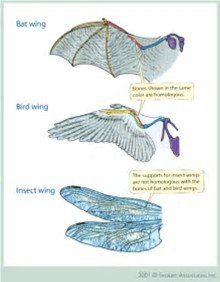
What are anatomical homologies?
Similar body structures found in different species suggesting a common ancestor
Structures that serve the same function in different species
Structures that are identical in appearance across species
Structures that are unique to each species
Which of the following is true about homologous structures?
They may look different on the outside but have similar underlying features
They always serve the same function in all species
They are identical in appearance across species
They are unique to each species
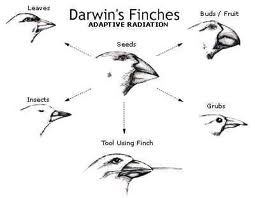
Formation of new species. (a)

According to the diagram, what is the common ancestor of ALL organisms on the phylogenetic tree?
B
C
D
E

Using the diagram, is organism 4 MORE closely related to organism 3 or 5?
3
5

According to the diagram, what was the last common ancestor of organisms 2 and 3?
A
B
C
D

According to the cladogram, which of the following is NOT a derived character?
light bones
Allosaurus
down feathers
3-toed foot; wishbone

Which group on the cladogram arose FIRST?
Theropods
Allosaurus
Robin
Velociraptor

Does Allosaurus have light bones?
yes
no

Which trait (adaptation) was developed most recently?
tetrapod limbs
feathers
amnion
They developed at the same time
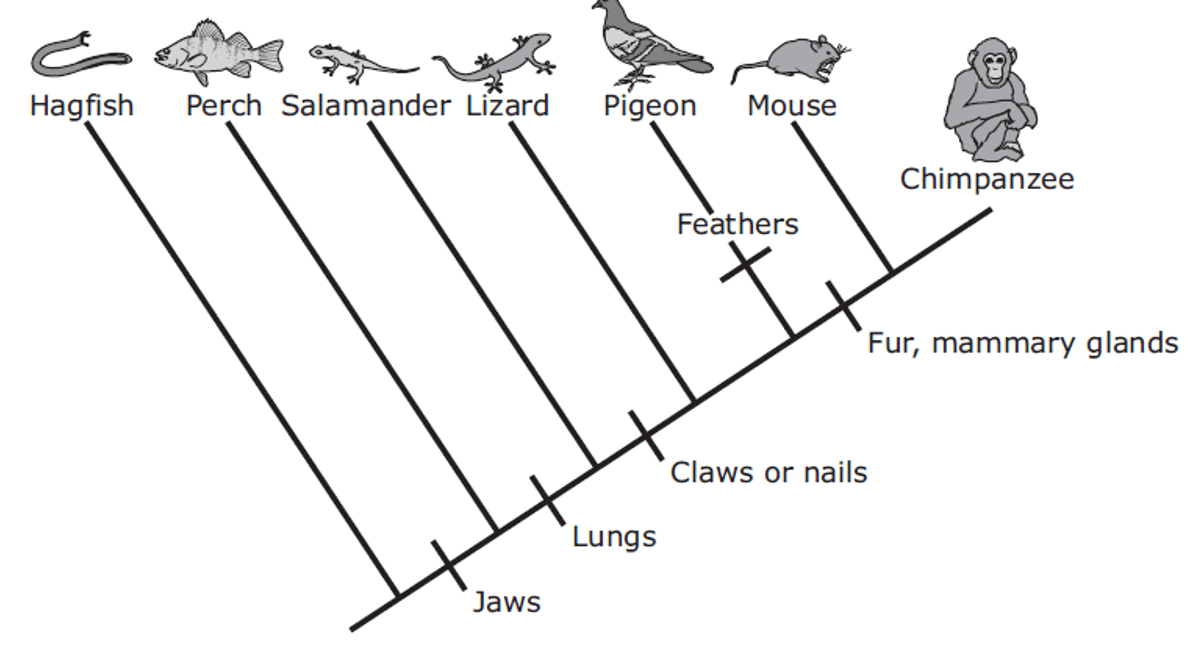
All the animals to the right of the salamander would have the common characteristic of...
Fur
Claws or nails
Lungs
Jaws

In a phylogenetic tree, the branching points represent common ancestors.
Yes
NO
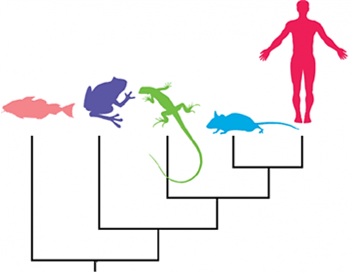
What is the human most closely related to?
Fish
mouse
Salamander
Human

Where is the alligator and T. rex's common ancestor?
Point A
Point B
Point C
Point D

Which letter represents the most recent common ancestor of sponges and mushrooms?
A
B
C
D
E

Which trait should go where A is on the cladogram?
eyes
feet
lips
hat

This diagram showing evolutionary relationships between species connected by a common ancestor is called ____.
Genetic Line
Phylogenetic Tree
Photographic Queue
Future Babies
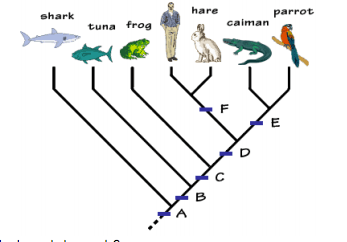
On the cladogram, which organism is the closest relative of the parrot?
Frog
Hare
Caiman
Parrot

What is the common ancestor of Letters C and E?
1
2
3
4

Who is most closely related to Taxidea taxus?
Lutra lutra
Panthera pardus
Canis latrans
Canis lupus

Which group of animals on this tree are most closely related to birds?
Saurischian dinosaurs
Ornithischian dinosaurs
Crocodiles
None of these are related to birds

