
Font size
 Worksheets
MICR210 - Final
Total questions: 70
Worksheet time: 35mins
What component of some viruses is made of up phospholipids and make organisms more susceptible to drying?
Nucleic Acid
Protein Coat
Envelope
Enzymes
What are viruses that have a tube-like structure surrounding their spiral nucleic acids called?
Helical
Icosahedral
Bacteriophage
Spherical
Why are viruses rarely grown in labs anymore?
Live cell culture is slow and costly
Viruses rarely survive transport
All viruses can be visualized with direct microscopy
All viruses are self-limiting so testing is unnecessary
Tamiflu is used to treat which virus?
HIV
Hepatitis B
Influenzae B
RSV
What is the most common specimen collected for parasitology?
Stool in Cary Blair Transport Media
Pinworm paddles
Stool in Sodium Acetate Formalin
Urine
True or false. The infective stage of a protozoan is called a trophozoite.
True
False
Which of the following is not routinely screened for on a parasitology screen in Canada?
Entamoeba histolytica
Entamoeba coli
Giardia duodenalis
Cryptosporidium sp.

ID this trophozoite.
Entamoeba histolytica
Giardia duodenalis
Trichomonas vaginalis
Schistosoma haematobium
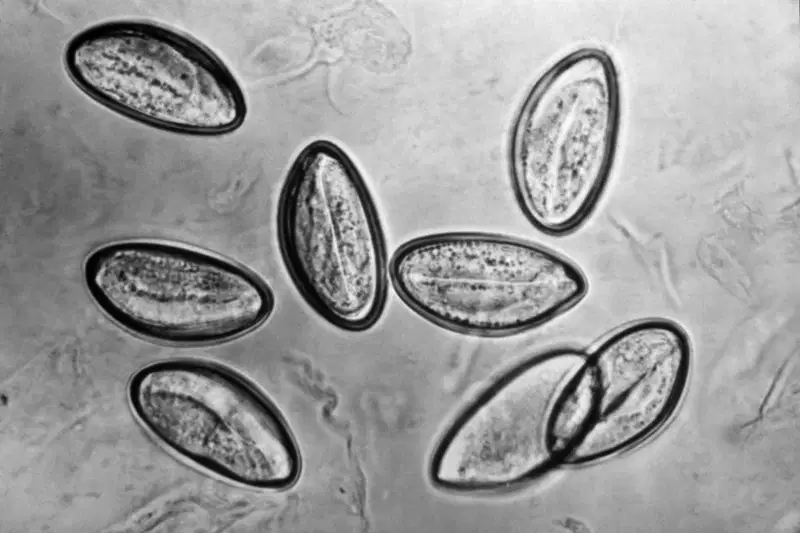
Name this parasite
Entamoeba coli
Entamoeba histolytica
Enterobius vermicularis
Cryptosporidium sp.
What antimicrobial is commonly used to treat parasitic infections?
Nitrofurantoin
Metronidazole
Penicillin
Clindamycin
What microorganism exhibits falling leaf motility?
Listeria monocytogenes
Trichomonas vaginalis
Giardia duodenalis
Treponema pallidum
Which term best described the motility of Trichomonas vaginalis?
Corkscrew
Tumbling
Quivering
Gliding
When performing a germ tube, the presence of at least how many germ tubes must be seen to call it positive?
1
5
10
25
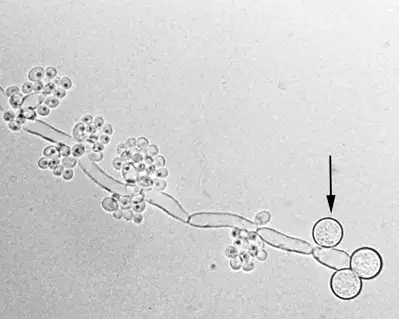
What microorganism can be identified using this structure?
Blastomyces sp.
Candida albicans
Cryptococcus neoformans
Coccidioides sp.
What does calcofluor white have an affinity for?
Peptidoglycan
Chitin
Lipids
Lipopolysaccharides
Which of the following tests would NOT be useful in the identification of Cryptococcus neoformans?
Urea
Caffeic acid
India Ink
Citrate
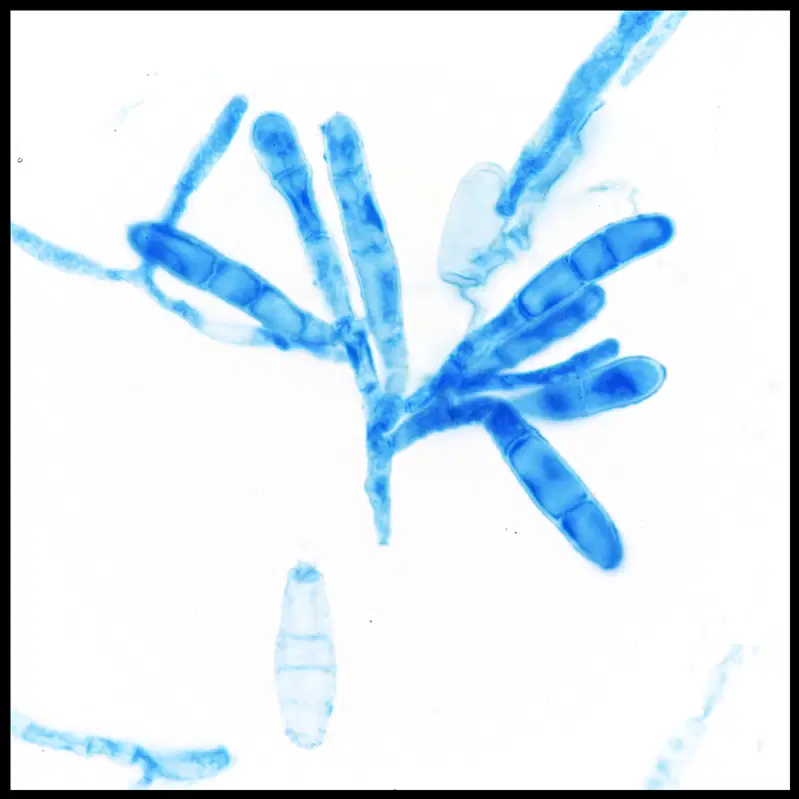
Identify the fungus.
Aspergillus sp.
Microsporum sp.
Epidermophyton sp.
Histoplasma sp.
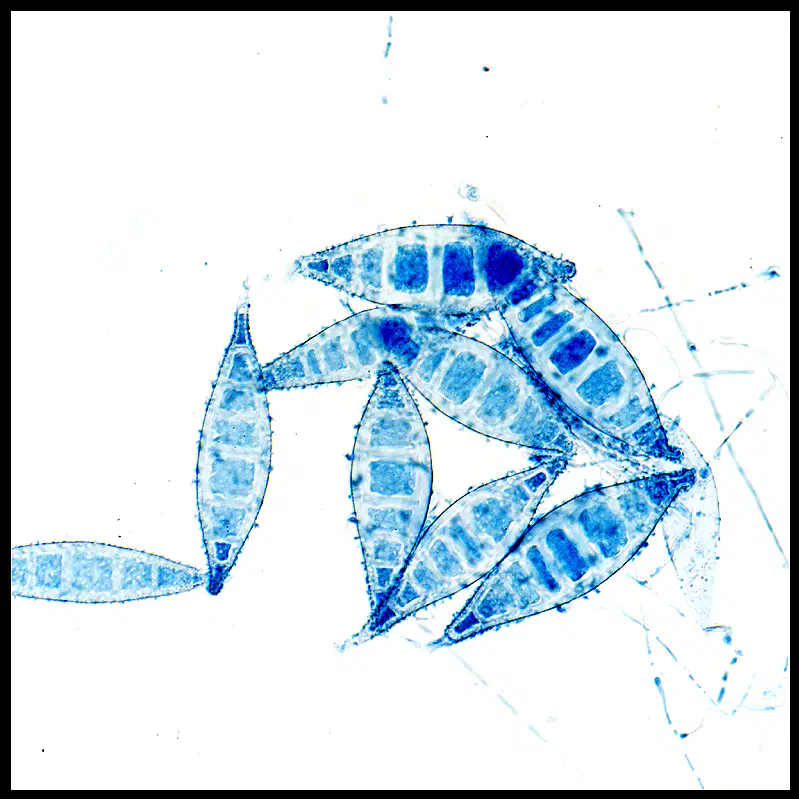
Identify the fungus.
Microsporum sp.
Trichophyton sp.
Penicillium sp.
Pneumocystic jirovecii

Identify the fungus.
Aspergillus sp.
Penicillium sp.
Epidermophyton sp.
Paracoccidioides sp.
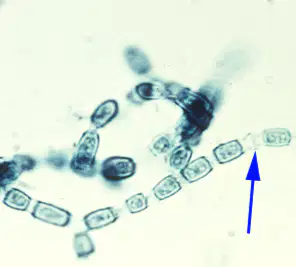
Identify the dimorphic fungus.
Blastomyces sp.
Histoplasma sp.
Paracoccidioides sp.
Coccidioides sp.
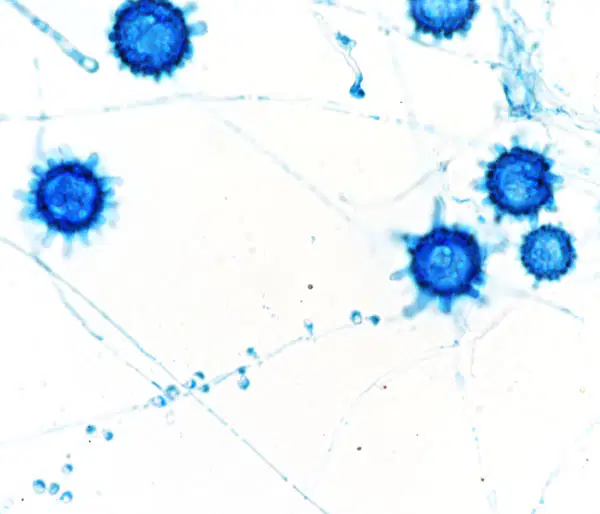
Identify the dimorphic fungus.
Blastomyces sp.
Histoplasma sp.
Paracoccidioides sp.
Coccidioides sp.
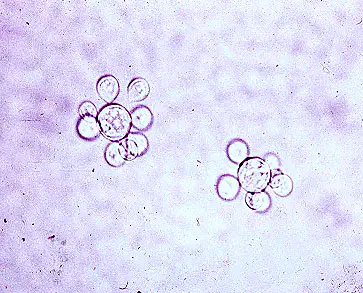
Identify the dimorphic fungus.
Blastomyces sp.
Histoplasma sp.
Paracoccidioides sp.
Coccidioides sp.
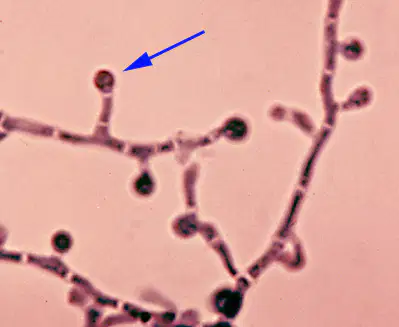
Identify the dimorphic fungus.
Blastomyces sp.
Histoplasma sp.
Paracoccidioides sp.
Coccidioides sp.
Which of the following is a common antifungal agent used for dermatophyte infections?
Flucytosine
Amphotericin B
Caspofungin
Ketoconazole cream
What is the primary function of the beta-lactam ring in beta-lactam antibiotics?
Inhibits DNA replication
Inhibits penicillin-binding proteins
Disrupts protein synthesis
Inhibits cell membrane synthesis
Which antibiotic is particularly useful in treating penicillin-resistant Gram-positive bacteria?
Aztreonam
Cefepime
Vancomycin
Meropenem
Why should patients taking aminoglycosides have their drug levels closely monitored?
To prevent toxicity due to potential kidney and auditory damage
To ensure the drug is not causing liver failure
To avoid gastrointestinal upset
To prevent allergic reactions
A bacterium possesses the enzyme carbapenemase. Which antibiotic will be ineffective at treatment?
Gentamicin
Meropenem
Colistin
Cefazolin
True or false. Beta-lactamase prevents Vancomycin from being an effective treatment option.
True
False
What antimicrobial would best be used to treat a parasitic infection caused by Giardia lamblia?
Ciprofloxacin
Cephalosporin
Metronidazole
Aztreonam
True or false. If you use a 0.3 McFarland equivalent suspension to make a susceptibility, the zone sizes will be falsely enlarged.
True
False
What susceptibility medium is used for S. pneumoniae that is an approved CLSI modification?
MH
MH with blood
HTM
GC agar
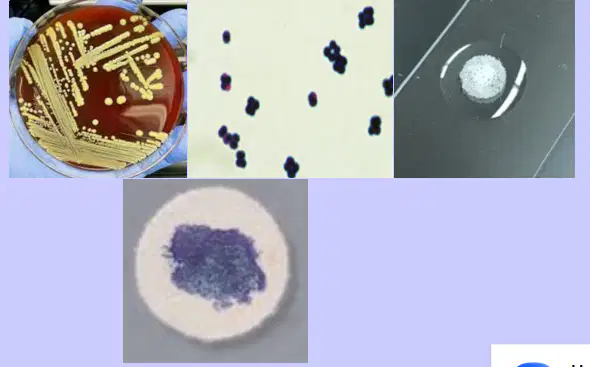
Name that organism
Staphylococcus saprophyticus
Corynebacterium sp.
Micrococcus sp.
Enterococcus sp.
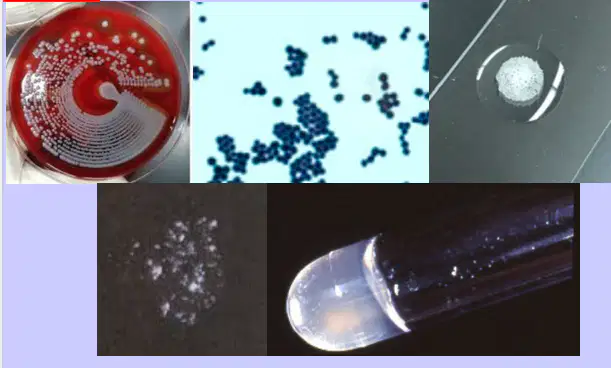
Name that organism.
Staphylococcus aureus
Streptococcus pyogenes
Staphylococcus saprophyticus
Streptococcus pneumoniae
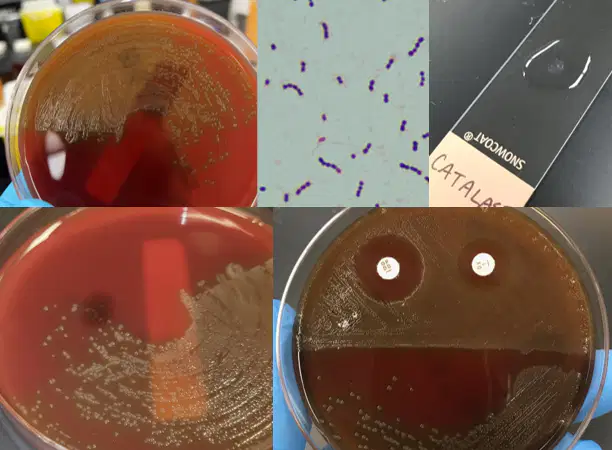
Name that organism.
Viridans group Streptococcus
Streptococcus pyogenes
Streptococcus pneumoniae
Streptococcus bovis
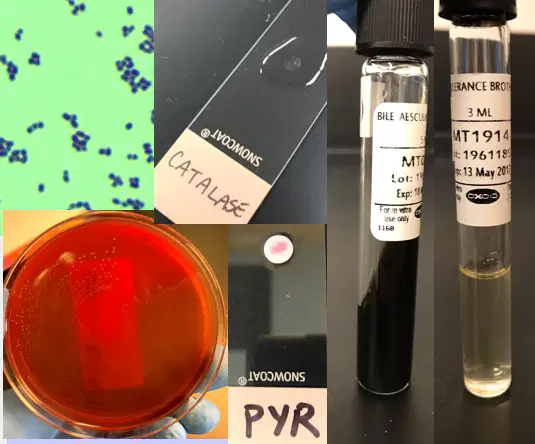
Name that organism.
Streptococcus agalactiae
Streptococcus pneumoniae
Viridans group Streptococcus
Enterococcus sp.
Review the following work sheet. What identification test should be performed next?
BA: (M) small grey AH, mucoid
Gram: Gram positive cocci in pairs
Catalase: negative
Bile Solubility: soluble
Bile Esculin
Optochin
PathoDX
Staphaurex
What confirmation test should be performed for this isolate?
BA: (A) small grey BH
Gram: Gram positive cocci in chains
Catalase: negative
PathoDX: A: negative
B: positive
Bile Solubility
Bile Esculin
PYR
CAMP
What mechanism of resistance is responsible for a positive D-zone?
mecA gene
vanB gene
erm gene
beta-lactamase
True or false. A large presence of squamous epithelial cells (SECs) in a direct Gram is suggestive of severe infection.
True
False
A direct Gram of a wound swab showed abudant Gram positive cocci in clusters. What would you expect the growth on the BA to look like?
white opaque
small grey
grey glistening
dull white
Which test result does not correlate?
BA: (A) small grey BH
Gram: Gram positive cocci in pairs
Catalase: positive
PathoDX: A: Positive
B:Negative
PYR: positive
(a)
The ELEK test is used to confirm the identification of what bacterial organism?
VRE
Corynebacterium diphtheriae
Abiotrophia sp.
Globulicatella sp.
Which of the following tests is most appropriate to differentiate Streptococcus pneumoniae from other alpha-hemolytic streptococci?
Optochin sensitivity
Indole test
Coagulase test
Novobiocin sensitivity
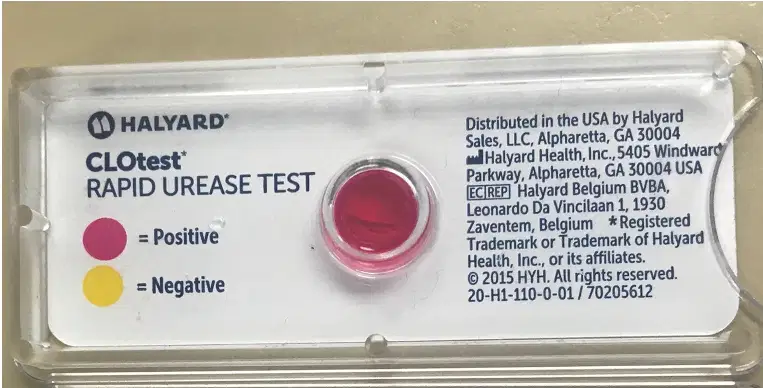
What bacteria is this test used to identify?
Campylobacter jejuni
Vibrio cholerae
Helicobacter pylori
Aeromonas hydrophila
A key symptom associate with this disease is 'rice water stool'.
Vibrio cholerae
Yersinia enterocolitica
Plesiomonas shigelloides
Shigella sonnei

What can you determine from this triple sugar iron slant?
The organism produced H2S gas
The organism fermented glucose
The organism fermented sucrose or lactose
The organism produced gas
A technologist reported Escherichia coli based on the following test results.
Gram: gnb
Oxidase: negative
TSI: A/A gas
Motility = pos
Indole = pos
Lysine = pos
Urea = pos
Citrate = neg
What test needs to be repeated for this ID to be valid?
Indole
Lysine
Urea
Citrate
Which of the following colonial morphologies is suggestive of Proteus mirabilis?


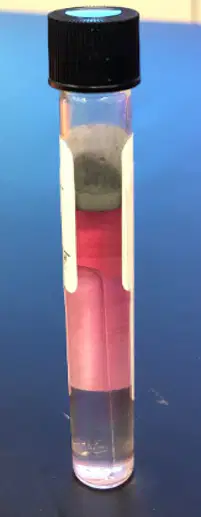
Interpret this nitrate reductase test.
Note; Sulfanilic acid, a-napthylamine and zinc dust were added to the tube)
Nitrate negative
Nitrate positive
Nitrite positive
Invalid
A shiny grey BH bacteria is growing on the BA and has a grape-like odor. What is the expected oxidase result?
positive
negative
What is the treatment of choice for Stenotrophomonas maltophilia?
Penicillin
Metrodidazole
Nitrofurantoin
Sulfamethoxazole trimethoprim
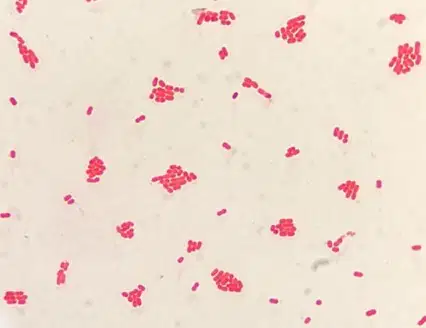
Which Gram stain most closely resemble Acinetobacter baumannii?
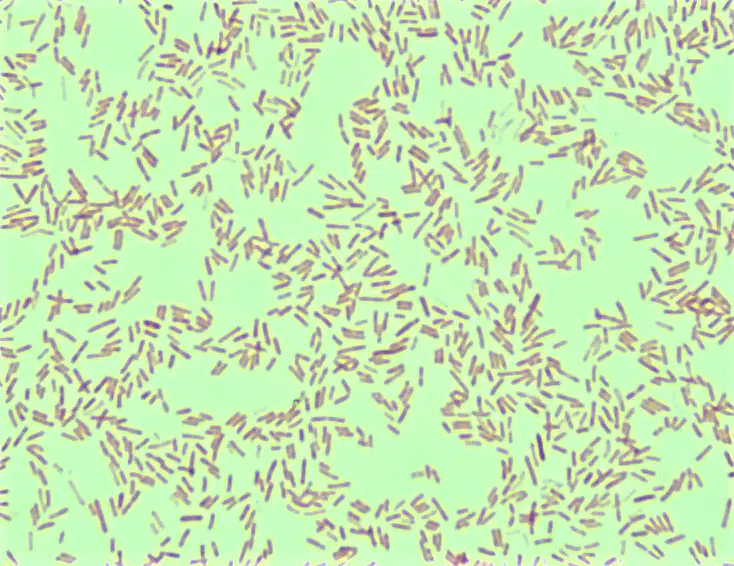
What test is used to differentiate between Haemophilus influenzae and Haemophilus parainfluenzae?
BA with staph streak
Oxidase
Porphyrin
Cefinase
An anaerobic bacteria growing on the VITK fluoresces chartreuse. What is the most likely identification of this organism?
Prevotella sp.
Porphyromonas sp.
Bacteroides fragilis group
Fusobacterium sp.
Interpret the following aerotolerance test:
CHOC: sm grey
VITK: sm grey
Gram: Gram positive cocci
Strict aerobe
Strict anaerobe
Facultative anaerobe
Capnophile
A Gram-negative cocci organism is Butyrate esterase positive. What is the likely identification.
Haemophilus influenzae
Neisseria gonorrhoeae
Moraxella catarrhalis
Pasteurella multocida

Interpret the MIL
Motility: pos
Indole: pos
Lysine: neg
Motility: neg
Indole: neg
Lysine: neg
Motility: pos
Indole: neg
Lysine: pos
Motility: neg
Indole: neg
Lysine: pos
An organism growing on VITK after 10 days shows white colonies that resemble a molar tooth. Sulfur granules were noted in the aspirate that was submitted.
What is the Gram stain of this organism?
Gram-positive bacilli, branching
Gram-positive bacilli, large
Gram-negative coccobacilli
Gram-negative diplococci
Name the organism that was isolated from a urine sample:
BA: grey glistening NH, mucoid
MAC: LF mucoid
Oxidase: negative
TSI: A/A gas
Motility: nonmotile
Indole: positive
Lysine: positive
VP: positive
Escherichia coli
Klebsiella oxytoca
Enterobacter cloacae
Citrobacter freundii
What is the presumptive organism ID?
BA: grey NH, lavender-green hue
Gram: gnb
Oxidase: negative
OF: Oxidizer
Nitrate: variable
Motility: motile
MAC: NLF
Pseudomonas aeruginosa
Acinetobacter baumanii
Stenotrophomonas maltophilia
Achromobacter xylosoxidans
A mannitol fermenter is seen on the Cefsulodin-Irgasan-Novobiocin agar. What biochemical test would help differentiate the stool pathogen from NF?
Motility
Citrate
Rhamnose
Oxidase
What biochemical test can help differentiate Peptostreptococcus anaerobius from other anaerobic Gram-positive cocci?
KVC disks
SPS disk
reverse CAMP
Indole
What bacteria appears as Gram ghosts when stained with the Gram stain?
Cryptococcus neoformans
Mycoplasma hominis
Mycobacterium tuberculosis complex
Nocardia asteroides
A bacteria has a fried-egg appearance on media and is arginine hydrolysis positive. What is the name of the organism?
Ureaplasma urealyticum
Mycoplasma hominis
Mycobacterium tuberculosis
Legionella pneumophilia
What environmental Gram negative bacillus grows on BCYE agar as mottled ground glass?
Burkholderia cepacia
Nocardia asteroides
Bordetella pertussis
Legionella pneumophila
Which member of the AACEK group pits the agar and has a bleach-like odor?
Kingella kingae
Aggregatibacter aphrophilus
Eikenella corrodens
Cardiobacterium hominis
Which of the following are considered Risk Group 3 pathogens?
Bacillus anthracis
Bordetella pertussis
Francisella tularensis
Brucella melitensis
Burkholderia mallei
Which spirochete causes acute necrotizing ulcerative gingivitis?
Borrelia recurrentis
Brachyspira sp.
Treponema vincentii
Leptospira sp.
The spirochete Borrelia burgdorferi is responsible for causing what disease?
Lyme disease
Glanders disease
Bang's disease
Pelvic Inflammatory disease

